- Company Articles
- Products and Technology
- Product knowledge
- What Is a Two Way Lean Pipe Joint Chrome? Definition & Key Features

What Is a Two Way Lean Pipe Joint Chrome? Definition & Key Features
Related Product
Two Way Lean Pipe Joint Chrome
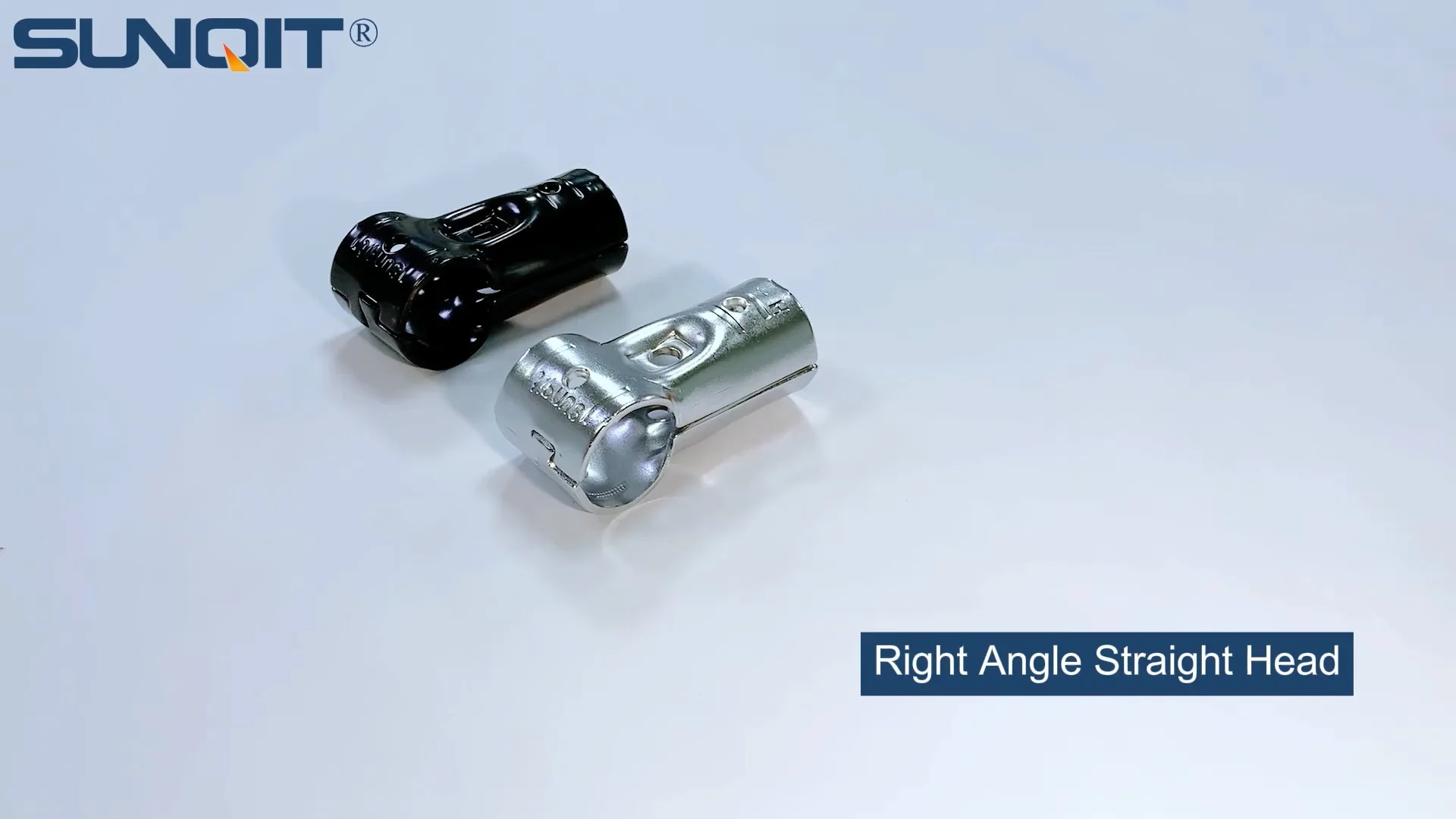
Two way lean pipe joint for 2 pcs 28MM lean pipe connection in straight angle, which used widely in workbench, flow rack, hand trolley frame connection.
Introduction: The Backbone of Lean Manufacturing Systems
In the fast-paced world of manufacturing, warehousing, and assembly lines, efficiency isn't just a buzzword—it's the cornerstone of success. Every tool, every component, and every structure in these environments plays a role in streamlining workflows, reducing waste, and keeping operations running like a well-oiled machine. One such unsung hero in this ecosystem is the lean pipe joint —a small but mighty component that holds together the modular structures that define modern lean manufacturing. Among the various types of lean pipe joints, the Two Way Lean Pipe Joint Chrome stands out for its simplicity, durability, and versatility. Whether you're building a workbench for an assembly line, a material rack for inventory storage, or a turnover trolley for moving goods across the factory floor, this joint quietly ensures stability and flexibility. In this article, we'll dive deep into what makes the Two Way Lean Pipe Joint Chrome essential, exploring its definition, key features, applications, and why it's a staple in lean system setups worldwide.
Definition: What Exactly Is a Two Way Lean Pipe Joint Chrome?
Let's start with the basics. A lean pipe —also known as a "lean tube"—is a hollow, lightweight tube (typically made of steel, aluminum, or plastic-coated steel) used in lean manufacturing to build modular structures. These structures are designed to be adaptable, allowing teams to reconfigure workspaces quickly as production needs change. But lean pipes alone can't form tables, racks, or trolleys—they need connectors. That's where lean pipe joints come in.
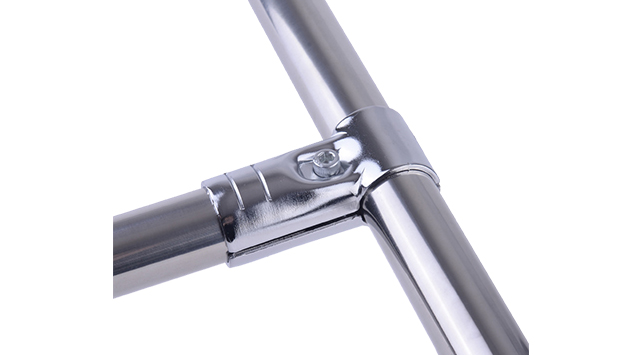
A Two Way Lean Pipe Joint Chrome is a specialized connector engineered to join two lean pipes at a fixed angle (most commonly 90 degrees, though some designs allow for slight adjustments). As the name suggests, it has two connection points, making it ideal for creating straight lines, corners, or simple T-junctions in lean structures. The "chrome" in its name refers to its surface finish: a layer of chromium plating applied to the base material (usually steel) to enhance durability, resistance to corrosion, and visual appeal.
Think of it as the "elbow" or "cornerstone" of lean pipe systems. Without it, connecting two pipes securely and reliably would require welding, adhesives, or bulky fasteners—all of which contradict the lean principles of flexibility and waste reduction. Instead, the Two Way Lean Pipe Joint Chrome lets workers assemble, disassemble, and reconfigure structures by hand, often with nothing more than a hex key or wrench, saving time and labor.
Key Features: Why This Joint Stands Out in Lean Systems
The Two Way Lean Pipe Joint Chrome isn't just a run-of-the-mill connector. Its design is the result of decades of refinement in lean manufacturing, prioritizing the needs of (shop floor) teams who demand reliability, speed, and adaptability. Let's break down its most critical features:
1. Chrome-Plated Durability: Built to Withstand the Factory Floor
Factories and warehouses are tough environments. Dust, oil, moisture, and constant physical contact can take a toll on equipment. The chrome plating on this joint isn't just for show—it's a protective barrier. Chromium is highly resistant to rust and corrosion, meaning the joint can handle spills, humidity, and even occasional exposure to cleaning chemicals without deteriorating. Underneath the chrome, the base steel construction adds strength, allowing the joint to support heavy loads (often up to 50kg or more per connection, depending on the pipe diameter and wall thickness). This durability ensures that structures like workbenches or material racks built with these joints won't loosen or fail over time, even with daily use.
2. Tool-Free (or Minimal-Tool) Assembly: Speed Without Sacrifice
One of the biggest advantages of lean pipe systems is their "plug-and-play" nature, and the Two Way Lean Pipe Joint Chrome embodies this. Unlike traditional metalworking, which requires welding or drilling, this joint connects to lean pipes using a simple clamping mechanism. Most designs feature a threaded bolt or cam lever that, when tightened, presses a metal grip against the inside of the pipe, creating a secure friction fit. This means a single worker can assemble a basic workbench in under an hour, and reconfigure it just as quickly if production needs shift. For example, if a team needs to add extra shelving to a material rack, they can simply loosen the joints, adjust the pipes, and retighten—no need for specialized tools or downtime.
3. Universal Compatibility: Works with Standard Lean Pipes
In manufacturing, consistency is key. The Two Way Lean Pipe Joint Chrome is designed to fit standard lean pipe diameters, the most common being 28mm (1.1 inches). This compatibility means it works seamlessly with most lean pipes on the market, whether they're steel, aluminum, or plastic-coated. It also pairs well with other lean pipe accessories, like casters for mobile trolleys or roller tracks for material flow systems. This universality reduces the need for custom parts, making it easy for businesses to source replacements or expand their lean structures without worrying about mismatched components.
4. Sleek, Low-Maintenance Finish: More Than Just Aesthetics
The chrome finish isn't just about looking professional (though it does add a clean, industrial aesthetic to workspaces). It's also incredibly easy to clean. Unlike painted or plastic joints, which can scratch or trap dirt, chrome resists smudges and wipes clean with a damp cloth. This is especially important in industries like electronics manufacturing, where dust and debris can compromise sensitive components. A quick wipe-down of the joints on an ESD workbench, for example, helps maintain a sterile environment—critical for preventing static damage to circuit boards.
5. Versatility: From Workbenches to Turnover Trolleys
While it's called a "two way" joint, its applications are far from limited. Sure, it excels at connecting two pipes to form corners or straight sections, but when combined with other joint types (like three-way or four-way joints), it becomes part of a modular toolkit for building almost any structure. Need a sturdy workbench for assembly? Use two-way joints to frame the legs and tabletop supports. Want a turnover trolley and rack to move parts between stations? Two-way joints can secure the trolley's frame and the rack's shelving. Even in more complex setups, like flow racks with roller tracks, this joint provides the foundational connections that keep the entire structure stable.

How It Fits into the Bigger Picture: The Role in Lean Systems
To truly appreciate the Two Way Lean Pipe Joint Chrome, it helps to understand the philosophy behind lean system design. Lean manufacturing, born from Toyota's production system, focuses on eliminating waste ("muda") in all forms—whether that's excess inventory, unnecessary movement, or downtime due to inflexible equipment. Modular structures built with lean pipes and joints are a direct response to this: they're designed to be "right-sized" for current needs, easy to adjust, and reusable.
In this context, the Two Way Lean Pipe Joint Chrome is more than a connector—it's a tool for waste reduction. For example, traditional fixed workbenches are often built to last decades, even if production needs change year to year. This leads to wasted space, inefficient workflows, or the cost of buying new benches entirely. With lean pipe systems, however, a workbench built with two-way joints can be disassembled, and its pipes and joints reused to build a new structure—say, a material rack—when needs shift. This reduces waste in materials and saves money in the long run.
Another key lean principle is "continuous improvement" ("kaizen"). Shop floor teams are constantly looking for ways to optimize their workspaces, and the Two Way Lean Pipe Joint Chrome makes this possible. If an assembly line worker notices that their workbench is too low, they can adjust the height by repositioning the joints. If a warehouse manager realizes a material rack is taking up too much space, they can shorten it by removing a section—all without calling in a maintenance crew or halting production for hours.
Comparing the Two Way Lean Pipe Joint Chrome to Other Joint Types
Not all lean pipe joints are created equal. Depending on the structure you're building, you might choose a three-way joint for branching connections, a swivel joint for adjustable angles, or a plastic joint for lighter loads. How does the Two Way Lean Pipe Joint Chrome stack up? Let's take a look at a comparison table:
| Joint Type | Number of Connections | Material & Finish | Best For | Key Advantage |
|---|---|---|---|---|
| Two Way Lean Pipe Joint Chrome | 2 (fixed angle, usually 90°) | Steel with chrome plating | Basic frames, workbench legs, trolley frames | Durable, corrosion-resistant, easy to clean |
| Three Way Lean Pipe Joint (Unplated Steel) | 3 (e.g., T-junctions or Y-junctions) | Plain steel | Branching structures, multi-level racks | More connection points for complex builds |
| Plastic Lean Pipe Joint | 2-4 (varies by design) | Polypropylene or nylon | Lightweight structures, cleanrooms | Non-conductive, affordable, lightweight |
| Swivel Lean Pipe Joint | 2 (adjustable angle, 0-180°) | Steel or aluminum | Flexible workstations, adjustable racks | Angles can be changed without disassembly |
As the table shows, the Two Way Lean Pipe Joint Chrome isn't the most feature-rich option, but it's the workhorse of the group. Its chrome plating gives it an edge in durability and maintenance, making it ideal for high-traffic, heavy-use environments. While plastic joints are great for lightweight or cleanroom applications, they can't match the load-bearing capacity of steel. And while swivel joints offer adjustability, they're often more expensive and less stable for fixed structures. For most day-to-day lean system builds—like workbenches, basic material racks, or turnover trolleys—the Two Way Lean Pipe Joint Chrome hits the sweet spot of performance, cost, and ease of use.
Real-World Applications: Where You'll Find This Joint in Action
It's one thing to talk about features and philosophy, but seeing the Two Way Lean Pipe Joint Chrome in action brings its value to life. Let's explore a few common scenarios where this joint shines:
1. Assembly Line Workbenches
Walk into any manufacturing plant, and you'll likely see rows of workbenches where operators assemble products. These workbenches need to be sturdy (to support tools and parts), the right height (to prevent worker fatigue), and sometimes mobile (to reposition as lines change). The Two Way Lean Pipe Joint Chrome is often used to build the bench's frame: connecting vertical pipes for legs, horizontal pipes for the frame, and cross-braces for stability. Chrome plating ensures the bench can handle spills from lubricants or cleaning agents, while the quick-assembly design means the bench can be adjusted if a new product requires a taller or shorter workspace.
2. Turnover Trolleys for Material Transport
In warehouses and factories, moving materials from storage to production lines is a daily task. Turnover trolleys—small, wheeled carts—are essential for this. The trolley's frame, often built with lean pipes, relies on two-way joints to connect the base, sides, and handle. The chrome finish resists scratches from repeated loading and unloading, and the joint's secure grip ensures the trolley doesn't wobble or tip, even when carrying heavy boxes. Plus, if the trolley needs to be modified (e.g., adding a shelf for smaller parts), two-way joints make it easy to bolt on extra pipes.
3. Material Racks for Inventory Storage
Material racks keep inventory organized and accessible. Whether it's storing raw materials, finished goods, or tools, these racks need to maximize vertical space while remaining stable. Two-way joints are used to build the rack's uprights and horizontal supports, creating shelves at different heights. When inventory needs change—say, a new product line requires taller shelves—the joints can be loosened, the pipes adjusted, and the structure retightened in minutes. The chrome plating also makes the racks easier to sanitize, which is crucial in industries like food processing or pharmaceuticals.
4. Temporary Workstations for Seasonal Peaks
Many businesses experience seasonal spikes in production—think holiday rushes for consumer goods or back-to-school periods for electronics. Instead of investing in permanent workstations that sit idle for half the year, companies can use lean pipe systems with two-way joints to build temporary workbenches. When the peak season ends, these workstations can be disassembled, and the pipes and joints stored compactly until needed again. This flexibility saves space and reduces capital expenditure on unnecessary equipment.
Maintenance Tips: Keeping Your Two Way Lean Pipe Joints in Top Shape
Like any piece of equipment, the Two Way Lean Pipe Joint Chrome performs best when properly maintained. Fortunately, its design makes upkeep simple. Here are a few tips to ensure your joints last for years:
- Regular Cleaning: Wipe joints with a damp cloth to remove dust, oil, or debris. For tougher grime, use a mild detergent (avoid abrasive cleaners, which can scratch the chrome). This prevents buildup that could weaken the joint's grip over time.
- Check Tightness: Over time, vibrations from daily use can loosen the joint's bolts. Every few months, give each bolt a gentle tighten with a hex key or wrench. Don't overtighten—this can strip the threads or damage the pipe.
- Inspect for Damage: Look for signs of wear, like cracks in the steel or peeling chrome. If a joint is damaged, replace it immediately—compromised joints can lead to unstable structures and safety hazards.
- Lubricate Threads (If Needed): If a joint becomes hard to tighten, apply a small amount of dry lubricant (like graphite powder) to the bolt threads. Avoid oil-based lubricants, which can attract dust and gunk.
- Store Properly When Not in Use: If you disassemble a structure, store joints in a dry, clean area. Avoid stacking heavy objects on them, as this can bend or warp the metal.
Conclusion: The Unsung Hero of Lean Flexibility
In the grand scheme of manufacturing and warehousing, the Two Way Lean Pipe Joint Chrome might seem like a small component. But as we've explored, its impact is significant. It's the quiet enabler of lean principles—flexibility, waste reduction, and continuous improvement—turning simple pipes into the workbenches, trolleys, and racks that keep operations moving. Its durability, ease of use, and compatibility make it a go-to choice for teams that need reliable structures without the hassle of traditional construction.
Whether you're a small workshop just starting to adopt lean practices or a large factory optimizing existing systems, the Two Way Lean Pipe Joint Chrome is more than just a connector—it's a tool for building better, more efficient workspaces. And in a world where every second and every dollar counts, that's a value that's hard to overstate.