- Company Articles
- Products and Technology
- Product knowledge
- What is a Two Way Lean Pipe Joint? Definition & Key Functions in Lean Manufacturing

What is a Two Way Lean Pipe Joint? Definition & Key Functions in Lean Manufacturing
Related Product
Two Way Lean Pipe Joint
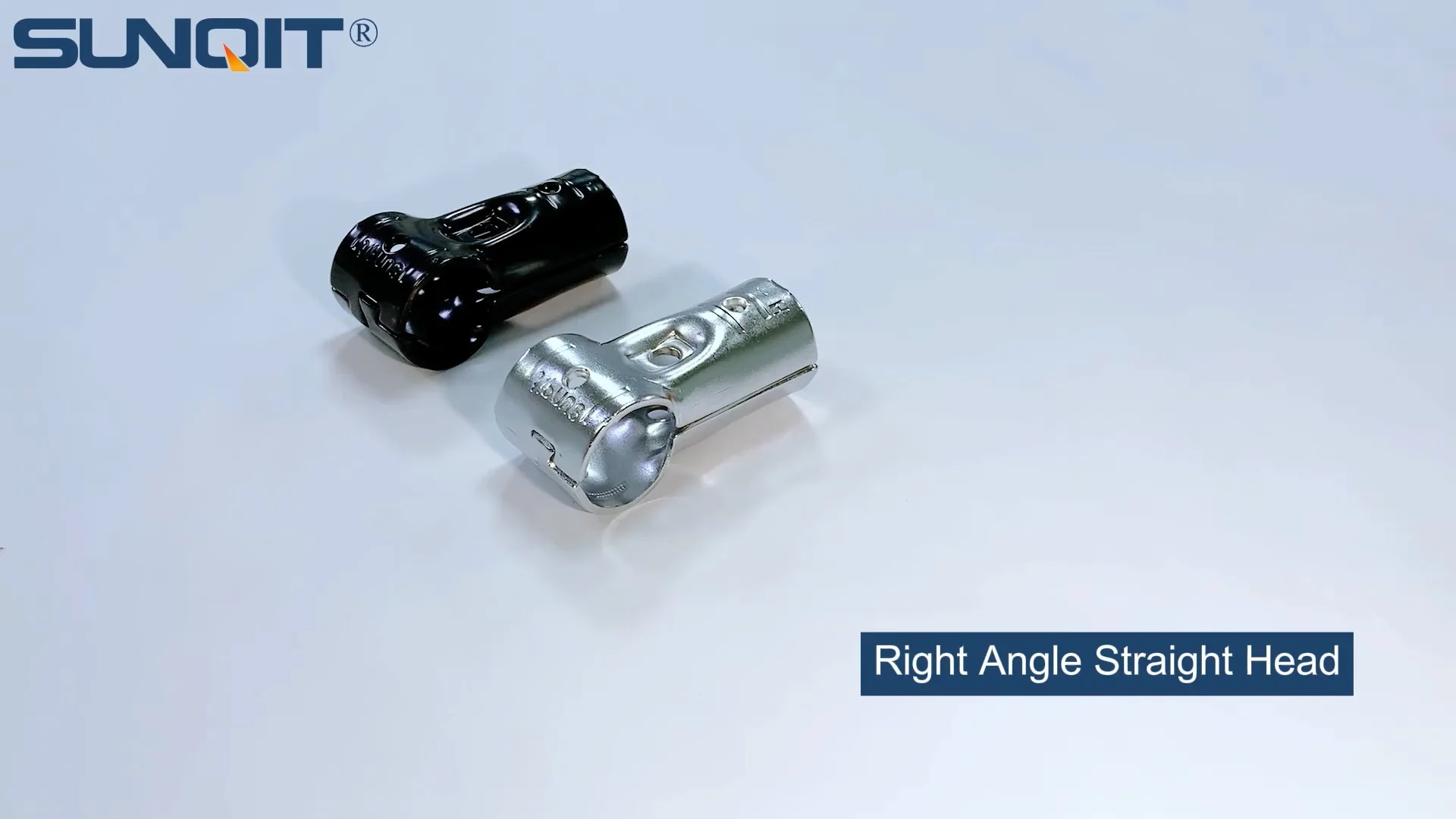
Two way lean pipe joint for 2 pcs 28MM lean pipe connection in straight angle, which used widely in workbench, flow rack, hand trolley frame connection.
In the world of manufacturing, where efficiency isn't just a goal but a daily necessity, the smallest components often hold the biggest power to transform workflows. Walk through any modern production facility, and you'll notice a common theme: flexibility. Lines that adapt to new products, workstations that reconfigure in hours, and material flows that adjust to demand spikes. Behind much of this adaptability lies a quiet hero: the lean pipe system. And at the heart of that system? Components like the two way lean pipe joint—a simple, unassuming connector that turns rigid structures into dynamic, responsive tools for lean manufacturing.
Lean manufacturing, at its core, is about eliminating waste, streamlining processes, and empowering teams to work smarter. But none of that happens without the right physical infrastructure. Traditional production setups often rely on fixed, one-size-fits-all equipment that's expensive to replace and slow to adapt. Lean pipe systems, by contrast, are built on modularity—using pipes, joints, and accessories to create everything from workbenches to flow racks, all designed to be reconfigured, reused, and repurposed. And among the many joints that make this modularity possible, the two way lean pipe joint stands out for its simplicity and versatility.
What Exactly is a Two Way Lean Pipe Joint?
Let's start with the basics. A two way lean pipe joint is a mechanical connector designed to join two lean pipes together, typically at a 90-degree angle or in a straight line (180 degrees). Think of it as the "elbow" or "T-junction" of the lean pipe world, though unlike a fixed elbow, many two way joints offer adjustability, letting users lock pipes into place at precise angles. Its primary job? To create stable, secure connections between pipes while keeping the overall structure flexible enough to modify when needs change.
Physically, most two way lean pipe joints are small, often made of metal (like steel or aluminum) with a compact, ergonomic design. They feature two hollow sockets—one on each end—where lean pipes are inserted. The connection is secured using a locking mechanism: some use set screws that tighten against the pipe, others rely on friction or spring-loaded clamps, and higher-end models might use threaded bolts for extra stability. Many are also coated, like the two way lean pipe joint chrome variant, which adds a layer of corrosion resistance and durability, making them ideal for use in factories where moisture, oil, or chemicals are present.
But what truly sets two way lean pipe joints apart from traditional connectors is their role in modularity. Unlike welded or glued joints, which are permanent and difficult to modify, two way lean pipe joints can be disassembled in minutes. Need to shorten a workbench? Loosen the joint, remove the pipe, cut it to size, and reattach. Want to add a shelf to a flow rack? Swap out a straight joint for a 90-degree one and add a new pipe. This flexibility is the cornerstone of lean manufacturing, where the ability to pivot quickly can mean the difference between meeting a deadline and falling behind.
It's also worth noting that two way lean pipe joints come in variations to suit different needs. The most common is the standard two way joint, which connects two pipes at 90 degrees (like the corner of a frame). There's also the straight two way joint, which joins two pipes in a straight line, effectively extending their length. And then there's the chrome-plated version—two way lean pipe joint chrome—designed for environments where aesthetics, corrosion resistance, or easy cleaning matter (think food processing or electronics manufacturing, where hygiene is critical).
Key Features That Make Two Way Lean Pipe Joints Indispensable
To understand why two way lean pipe joints are so widely used, let's break down their key features. These aren't just "connectors"—they're engineered to solve specific problems in lean environments, from reducing setup time to ensuring long-term reliability.
Modularity First: The biggest selling point is modularity. Unlike fixed hardware, two way joints let users build, break down, and rebuild structures with minimal effort. A single joint can be reused dozens of times across different projects, from a small parts trolley one month to a workstation the next. This cuts down on waste (no more throwing away old, rigid equipment) and keeps costs low, as there's no need to invest in new tools for every new task.
Durability That Stands Up to Factory Life: Manufacturing floors are tough places—pipes get bumped, tools get dropped, and structures take daily wear. Two way lean pipe joints are built to handle this. Most are made from high-grade steel, often with a chrome plating (hence the "two way lean pipe joint chrome" option) to resist rust and scratches. Even aluminum variants, while lighter, are treated for strength, ensuring they can support the weight of materials, tools, and even workers without bending or breaking.
Precision Fit for Stability: A wobbly workstation or a sagging flow rack isn't just inefficient—it's dangerous. Two way joints are designed to create tight, secure connections. The sockets are sized to match standard lean pipe diameters (like 28mm or 30mm), and locking mechanisms (set screws, bolts) ensure pipes don't slip or rotate once in place. This precision is critical for safety, especially in environments where heavy loads are moved or workers lean on structures.
Compatibility Across Systems: Lean pipe systems aren't one-size-fits-all, and neither are two way joints. They're designed to work with a range of lean pipe materials, from traditional steel pipes with PE coating (common in automotive plants) to lightweight aluminum pipes (ideal for cleanrooms) and even stainless steel pipes (used in food or pharmaceutical settings). This compatibility means manufacturers can mix and match components without worrying about fit issues—a huge plus for facilities with diverse needs.
Cost-Effective by Design: Let's talk numbers. Traditional fixed workbenches or racks can cost thousands of dollars and take weeks to custom-build. A lean pipe setup using two way joints? A fraction of the cost, and assembled in hours. Since joints are reusable, the initial investment pays off over time—especially for small to medium manufacturers that need to scale or pivot frequently. Even better, replacement parts are cheap: if a joint wears out, you can swap it for a new one without replacing the entire structure.
How Two Way Lean Pipe Joints Work with Lean Pipes
To really appreciate two way lean pipe joints, it helps to see them in action—specifically, how they interact with the lean pipes themselves. Lean pipes (also called "lean tubes") are the backbone of the system: long, cylindrical tubes made from materials like steel, aluminum, or stainless steel, often with a protective coating (like PE plastic) to prevent scratches and reduce noise.
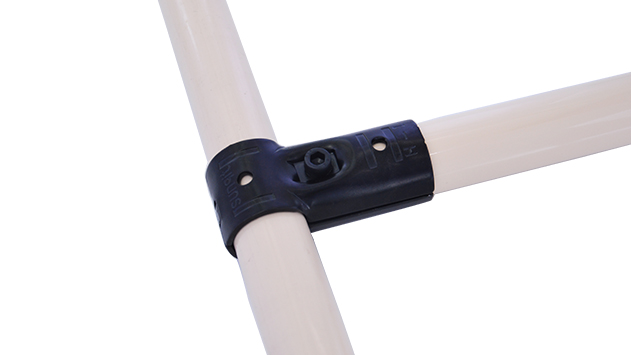
The magic lies in the joint-pipe relationship. Here's how it typically works: First, you cut your lean pipes to the desired length (using a pipe cutter or saw). Then, you insert each pipe end into the sockets of the two way joint. Depending on the joint design, you'll secure the connection by tightening a set screw (using a hex key), clamping a lever, or twisting a bolt. Once locked, the joint holds the pipes firmly in place, creating a rigid connection that can support weight but still be released when needed.
Take a simple example: building a basic workbench frame. You'd start with four vertical pipes (the legs), then use two way joints to connect horizontal pipes across the top and bottom, forming a rectangle. Add a few more two way joints to connect cross-braces for stability, and suddenly you have a sturdy frame—all without welding, drilling, or specialized tools. If later you need the workbench taller, just swap out the vertical pipes for longer ones and reattach the joints. It's that simple.
What about angles? Most two way joints aren't limited to 90 or 180 degrees. Many are "multi-angle," meaning you can rotate the sockets to set pipes at custom angles (like 45 degrees for a sloped shelf) before locking them down. This adjustability is key for building things like flow racks, where materials need to glide downhill via gravity—you can angle the rack slightly by tilting the pipes using the joint's rotation feature.
And let's not forget compatibility with accessories. Two way joints often have threaded holes or slots that let you attach extras like casters (for mobile trolleys), shelves, or tool hooks. This turns a basic pipe frame into a fully functional workstation, all by leveraging the joint's built-in versatility.

Key Functions in Lean Manufacturing Systems
So, we know what two way lean pipe joints are and how they work—but why do they matter in lean manufacturing? Let's break down their core functions, each tied directly to lean principles like waste reduction, flexibility, and continuous improvement.
1. Enabling Rapid Reconfiguration (No More "Set It and Forget It")
Lean manufacturing thrives on adaptability. A product line that makes 100 units of Product A today might need to switch to Product B tomorrow, requiring a whole new setup. Traditional fixed equipment can't keep up—you'd spend hours (or days) dismantling and rebuilding. Two way lean pipe joints change that. With their tool-free assembly (or minimal tools), teams can reconfigure workstations, flow racks, or conveyors in minutes. For example, a electronics manufacturer might use two way joints to build a temporary testing station for a new device, then disassemble it and reuse the pipes/joints for a packaging line next week. This cuts down on "setup waste"—one of the seven wastes of lean—and keeps production moving.
2. Reducing Material Waste (Reuse > replace)
Waste reduction isn't just about time—it's about materials, too. In traditional manufacturing, if a workstation becomes obsolete, you might have to scrap the entire thing, sending metal and plastic to the landfill. With two way lean pipe joints, nothing goes to waste. The joints, pipes, and accessories are all reusable. A flow rack that's no longer needed for one department can be taken apart, and its components used to build a new conveyor in another. This circular approach aligns with lean's "reduce, reuse, recycle" ethos and lowers long-term material costs.
3. Supporting Continuous Improvement (Kaizen in Action)
Kaizen—the practice of continuous improvement—relies on small, incremental changes to processes. But how do you test a new workflow idea if your equipment can't change? Two way lean pipe joints make kaizen experiments possible. A team might notice that parts are piling up at a workstation, so they quickly reconfigure the flow rack (using two way joints) to add an extra shelf, reducing bottlenecks. If the change works, they keep it; if not, they revert—no harm, no waste. This empowers frontline workers to take ownership of their space, driving innovation from the ground up.
4. Enhancing Safety (Stability When It Counts)
Safety is non-negotiable in lean manufacturing, and unstable structures are a major hazard. Two way lean pipe joints are engineered for security: their tight, precise connections prevent pipes from slipping or collapsing, even under heavy loads. For example, a workbench built with two way joints can safely support tools, parts, and workers leaning on it, reducing the risk of accidents. Many joints also have rounded edges (to prevent cuts) and corrosion-resistant coatings (to avoid rust flakes in sensitive environments like electronics assembly), further boosting safety.
5. Lowering Total Cost of Ownership (More Bang for Your Buck)
At the end of the day, lean is about value—and two way lean pipe joints deliver value by lowering the total cost of ownership (TCO) of manufacturing equipment. Let's compare: A custom-built, fixed workbench might cost $500 and last 5 years, but can't be modified. A lean pipe workbench using two way joints might cost $300 upfront, but can be reconfigured 10 times over 5 years, adapting to new needs without additional purchases. Plus, replacement joints are cheap (often under $10 each), so if one wears out, you don't replace the whole bench—just the joint. Over time, this adds up to significant savings.

Applications: Where You'll Find Two Way Lean Pipe Joints in Action
Two way lean pipe joints aren't just theoretical—they're hard at work in factories, warehouses, and workshops around the world. Here are some of the most common applications, each highlighting how the joint's flexibility and reliability drive real-world efficiency.
Workbenches: The Heart of the Production Line
Walk into any assembly line, and you'll see workbenches everywhere—each tailored to a specific task, from soldering to packaging. Most of these are built with lean pipe systems, and two way joints are the stars here. They connect the vertical legs to the horizontal frames, support the work surface (often a plywood or metal top), and attach extras like tool rails or storage bins. For example, in an automotive parts plant, a workbench for assembling brake components might use two way joints to add a sloped shelf (angled via adjustable joints) for easy access to small parts, plus a lower shelf for tools. If the assembly process changes, the team can reposition the joints to add a new shelf or raise the work surface—no new bench needed.
Flow Racks: Keeping Materials Moving
Flow racks (also called "gravity racks") are a lean staple, used to store and feed materials to production lines via gravity. They're typically sloped, so boxes or bins slide down as the front ones are removed. Two way lean pipe joints are critical here, as they form the frame and support the roller tracks that the bins glide on. For instance, a warehouse supplying a food packaging line might use two way joints to build a flow rack with 3 rows and 3 floors (sound familiar? That's "material rack b (3 row and 3 floor)" from the keyword list), where each level is angled slightly using adjustable two way joints. This ensures materials flow smoothly to the line, reducing the need for workers to bend or reach, and cutting down on "motion waste."
Conveyors: Moving Products Without the Fuss
Conveyors are another area where two way lean pipe joints shine—especially small, lightweight conveyors for moving parts between workstations. Unlike heavy, motorized conveyors, lean pipe conveyors use gravity or manual pushing, with roller tracks supported by pipe frames. Two way joints connect the frame pipes, while additional joints attach the roller tracks (like "roller track placon mount for rail connection" accessories). For example, a electronics manufacturer might use a lean pipe conveyor with two way joints to move circuit boards from the soldering station to the testing station. If the line layout changes, the conveyor can be disassembled and rebuilt in the new location in under an hour.
Turnover Trolleys: Mobile Material Handling
Trolleys are essential for moving materials around the factory, and lean pipe trolleys (often called "turnover trolleys") are built for maximum flexibility. Two way joints connect the frame, while casters (attached via joint-compatible mounts) make them mobile. A common setup: vertical pipes for the frame, horizontal pipes for shelves, and two way joints at the corners to keep it all stable. If a trolley needs to carry taller loads, just add longer vertical pipes and reattach the joints. It's a far cry from heavy, fixed metal trolleys that can't be modified.
Comparing Two Way Joints to Other Lean Pipe Joints
Two way lean pipe joints are versatile, but they're not the only game in town. Let's compare them to other common joint types to see when to use each—because choosing the right joint for the job is key to building effective lean structures.
| Joint Type | Design | Primary Use Case | Material Options | Flexibility Rating (1-5) |
|---|---|---|---|---|
| Two Way Lean Pipe Joint | Connects 2 pipes; adjustable angles (90°, 180°, custom) | Basic frames, workbench legs, flow rack sides | Chrome-plated steel, aluminum, stainless steel | 4 (great for simple, adaptable structures) |
| Three Way Lean Pipe Joint | Connects 3 pipes (e.g., T-junction or Y-shape) | Adding cross-braces, T-shaped shelves | Steel, aluminum | 3 (more complex but less adaptable than two way) |
| Four Way Lean Pipe Joint | Connects 4 pipes (e.g., X-shape or square corner) | Multi-directional frames, cube-shaped structures | Steel, aluminum | 2 (fixed design limits reconfiguration) |
| 90° Crossing Lean Pipe Joint | Connects 2 pipes crossing perpendicularly (e.g., overhead rails) | Overhead conveyors, ceiling-mounted racks | Steel, stainless steel | 1 (highly specialized, minimal adjustability) |
The takeaway? Two way joints are your go-to for simplicity and adaptability. They're perfect for most basic to moderately complex structures, where you need to connect two pipes and possibly adjust the angle later. Three way or four way joints are better for more intricate setups (like adding a middle shelf to a rack), but they're less flexible—once you build a T-junction with a three way joint, changing it to a straight line requires swapping the joint entirely. Two way joints, by contrast, can be reused in almost any structure, making them the most cost-effective choice for lean environments that prioritize adaptability.
Choosing the Right Lean Pipe Supplier for Two Way Joints
Not all two way lean pipe joints are created equal. The quality of the joint—how well it's made, how durable the materials are, how precise the fit—is critical to the safety and longevity of your lean structures. That's why choosing the right lean pipe supplier matters.
A good supplier will offer two way joints made from high-grade materials (like chrome-plated steel for corrosion resistance or aluminum for lightweight applications) and test their products for load capacity and durability. They'll also provide a range of sizes to fit different pipe diameters (common options include 28mm and 30mm pipes) and offer both standard and specialty joints (like the two way lean pipe joint chrome variant for harsh environments).
Beyond the joints themselves, look for suppliers that offer a full range of lean pipe accessories—pipes, roller tracks, casters, and workbench tops. This ensures compatibility: you won't end up with joints that don't fit your pipes or roller tracks that won't attach to your joints. A supplier that understands lean manufacturing will also provide technical support, helping you design structures or troubleshoot assembly issues.
Price is important, but don't skimp on quality. A cheap, poorly made two way joint might save you a few dollars upfront, but it could fail under load, leading to damaged materials, downtime, or even injuries. Invest in joints from a reputable lean pipe supplier—one with positive reviews, certifications (like ISO standards), and a track record of serving manufacturers in your industry.
Final Thoughts: The Small Joint with a Big Impact
In the grand scheme of manufacturing, the two way lean pipe joint might seem. It's small, often overlooked, and rarely gets the spotlight. But for anyone who's worked in a lean environment, it's clear: this little connector is a workhorse. It turns rigid pipes into flexible systems, enables teams to adapt on the fly, and keeps lean principles like waste reduction and continuous improvement alive in the day-to-day.
Whether you're building a simple workbench, a complex flow rack, or a mobile trolley, the two way lean pipe joint is there—quietly holding it all together, ready to be taken apart and rebuilt when the next challenge (or opportunity) comes along. It's a reminder that in lean manufacturing, the most powerful tools aren't always the biggest or most expensive. Sometimes, they're the ones that let you work smarter, not harder—one joint at a time.