- Company Articles
- Products and Technology
- Product knowledge
- What Is a Vertical Lean Pipe Joint? Definition & Core Functions in Lean Systems

What Is a Vertical Lean Pipe Joint? Definition & Core Functions in Lean Systems
Related Product
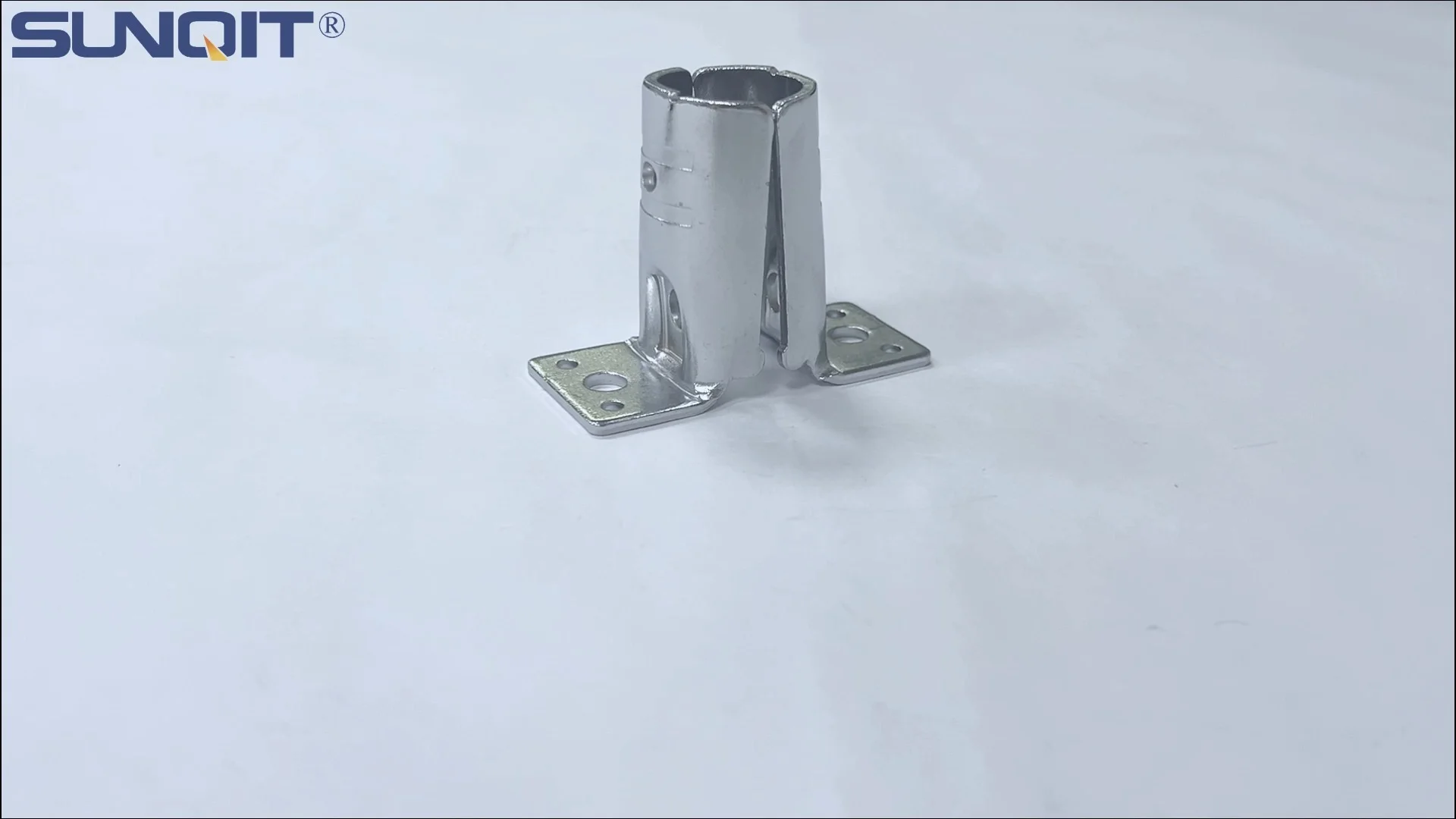
Vertical Lean Pipe Joint
Vertical lean pipe joint is used for 28mm lean pipe fixed on ground and keep it stable.
The Backbone of Lean Systems: Why Small Components Matter
Walk into any modern manufacturing facility, and you'll likely notice a common theme: efficiency. From the smooth flow of materials on the production floor to the ergonomic design of workstations, every element is intentional. This focus on streamlining processes, reducing waste, and maximizing productivity is the heart of lean system philosophy. But what makes these systems truly adaptable and effective? Often, it's the small, unassuming components that hold everything together—like the vertical lean pipe joint.
Lean systems thrive on flexibility. Unlike rigid, one-size-fits-all setups, they're designed to evolve with changing production needs. A factory might reconfigure a assembly line one month, add a new workbench the next, or adjust a flow rack to accommodate larger materials. Behind these transformations are modular tools that make adaptation possible, and vertical lean pipe joints are among the most critical of these tools. They're the silent workhorses that turn simple pipes and accessories into sturdy, functional structures—structures that keep lean manufacturing moving forward.
In this article, we'll dive deep into what a vertical lean pipe joint is, how it functions, and why it's indispensable in lean systems. Whether you're a plant manager looking to optimize your floor layout, a procurement specialist sourcing lean pipe accessories, or simply curious about the mechanics of efficient manufacturing, understanding this small but mighty component will give you a new appreciation for the ingenuity behind lean operations.
What Is a Vertical Lean Pipe Joint? Breaking Down the Basics
At its core, a vertical lean pipe joint is a specialized connector designed to join lean pipes (also known as or "lean tubes") in vertical configurations. Think of it as the "elbow" or "cornerstone" of a lean structure, but engineered specifically to handle vertical loads and maintain stability. Made typically from durable materials like chrome-plated steel or stainless steel, these joints are built to withstand the daily rigors of factory environments—from the weight of tools and materials to the constant movement of workers and equipment.
Physically, vertical lean pipe joints come in a range of designs, but most share a few key features. They often have a cylindrical or hexagonal body with threaded holes or clamping mechanisms that secure the lean pipes in place. Some models include locking levers or bolts to ensure a tight, wobble-free connection, while others use friction-based systems that allow for quick adjustments. What sets them apart from other joints (like 90° fixed or 180° swivel joints) is their focus on vertical alignment: they're shaped to keep pipes perfectly upright, preventing sagging or tilting even when supporting heavy shelves, bins, or work surfaces.
To visualize this, imagine building a simple workbench. The vertical pipes that support the tabletop need to stay straight and sturdy—no one wants a wobbly work surface when assembling delicate electronics or heavy machinery. A vertical lean pipe joint connects these vertical pipes to horizontal crossbars or bases, distributing weight evenly and ensuring the entire structure stays stable. Without it, the pipes might shift, the workbench could lean, and the whole system would fail to meet the reliability standards that lean manufacturing demands.
But vertical lean pipe joints aren't just about rigidity. They're also designed with modularity in mind. Unlike welded connections, which are permanent and hard to modify, these joints let you disassemble and reassemble structures in minutes. Need to raise a shelf by a few inches? Loosen the joint, adjust the pipe, and retighten. Want to add a second tier to a flow rack? Swap out a short pipe for a longer one using the same vertical joint. This flexibility is what makes them a cornerstone of lean systems—they grow and change with your needs, rather than limiting them.

Core Functions: How Vertical Lean Pipe Joints Power Lean Efficiency
Vertical lean pipe joints might seem simple, but their role in lean systems is multi-faceted. Let's break down their core functions and why each matters for maintaining a smooth, efficient workflow.
1. Stability: The Foundation of Safe, Reliable Structures
First and foremost, vertical lean pipe joints provide stability. In manufacturing, even a small amount of wobble can lead to errors, delays, or safety hazards. A workbench that shifts during assembly might cause parts to misalign; a flow rack that tilts could send materials sliding off onto the floor. Vertical joints counteract these risks by creating a solid vertical anchor. Their design ensures that pipes stay perpendicular to the ground, distributing weight evenly across the structure. For example, in a material rack with three rows and three floors (a common setup in warehouses), vertical joints at each corner prevent the shelves from bowing under the weight of boxes or components. This stability isn't just about safety—it's about consistency. When workers trust that their tools and materials are secure, they can focus on their tasks without distraction, boosting productivity.
2. Flexibility: Adapting to Changing Production Needs
Lean manufacturing isn't static. Customer demands change, product designs evolve, and production volumes fluctuate. A system that can't adapt quickly gets left behind, which is where vertical lean pipe joints shine. Unlike fixed connections (like welding or glue), these joints allow for tool-free adjustments. Need to shorten a workbench leg to fit under a new conveyor? Just loosen the vertical joint, trim the pipe, and reattach. Want to repurpose a turnover trolley into a temporary storage rack? Swap out the horizontal pipes for longer ones using the same vertical joints. This flexibility reduces downtime and eliminates the need to buy entirely new equipment whenever your process changes. It's why many factories refer to vertical lean pipe joints as "the Swiss Army knife of lean accessories"—they're versatile enough to handle almost any reconfiguration.
3. Compatibility: Working Seamlessly with Lean Pipe Accessories
A vertical lean pipe joint rarely works alone. It's part of a larger ecosystem of lean pipe accessories , from caster wheels and roller tracks to workbench surfaces and material bins. These joints are engineered to play well with others, ensuring that all components fit together seamlessly. For instance, a vertical joint at the base of a workbench can connect to a caster wheel mounting plate, turning a stationary workbench into a mobile one. On a flow rack, it might attach to a roller track placon mount, securing the track in place while materials glide along it. This compatibility is key to building customized solutions without reinventing the wheel. Whether you're adding a shelf, a tool hook, or a safety rail, vertical lean pipe joints act as the "hub" that ties everything together.
4. Durability: Withstanding the Demands of Industrial Use
Manufacturing floors are tough environments. Pipes get bumped, joints get jostled, and surfaces get exposed to oils, chemicals, and heavy loads. Vertical lean pipe joints are built to stand up to this abuse. Most are made from high-grade steel with chrome plating or stainless steel finishes, which resist rust and corrosion. The clamping mechanisms are designed to maintain their grip even after hundreds of adjustments, and the materials are thick enough to avoid bending or cracking under stress. Consider a stainless steel vertical joint used in a food processing plant, where constant washdowns with water and sanitizers are required—its corrosion-resistant finish ensures it won't degrade over time. In automotive factories, where tools and parts can weigh dozens of pounds, the joint's sturdy construction prevents sagging or failure, keeping workers safe and production on track.

How Vertical Lean Pipe Joints Compare to Other Lean Pipe Joints
Not all lean pipe joints are created equal. While vertical lean pipe joints excel at vertical stability, other joints are designed for different angles, movements, or load types. Understanding how they stack up can help you choose the right joint for your project. Let's compare the vertical lean pipe joint to three common alternatives: 90° fixed joints, 180° swivel joints, and 45° fixed joints.
| Joint Type | Primary Function | Common Applications | Material Options | Key Advantage |
|---|---|---|---|---|
| Vertical Lean Pipe Joint | Supports vertical pipes; maintains upright stability | Workbenches, flow racks, material racks, turnover trolleys | Chrome-plated steel, stainless steel | Exceptional vertical load capacity; prevents sagging/tilting |
| 90° Fixed Joint | Connects pipes at a right angle (horizontal-vertical or horizontal-horizontal) | Shelving units, corner supports, workbench frames | Steel, aluminum, plastic | Strong angular stability; ideal for rigid corner connections |
| 180° Swivel Joint | Allows pipes to rotate 180° horizontally; enables movement | Adjustable workbench arms, folding conveyor guides | Steel with bearings, aluminum | Flexibility for rotating components; reduces fixed positioning |
| 45° Fixed Joint | Connects pipes at a 45° angle; adds diagonal support | Bracing for tall racks, sloped material chutes | Steel, stainless steel | Reinforces structures against lateral (sideways) movement |
The vertical lean pipe joint's standout feature is its focus on vertical load support. While a 90° joint can connect a vertical pipe to a horizontal one, it's not designed to bear the same downward weight as a vertical joint. For example, a workbench with four vertical legs supported by vertical lean pipe joints will be far sturdier than one using 90° joints alone, especially when workers lean on the surface or place heavy equipment on it. Similarly, in a flow rack, vertical joints ensure the vertical posts don't bow under the weight of stacked materials, while 90° joints handle the horizontal beams that hold the roller tracks.
Swivel joints, on the other hand, prioritize movement over stability. They're great for parts that need to rotate (like a workbench arm that swings out of the way), but they'd be a poor choice for supporting a vertical load—they'd simply rotate under pressure. Vertical joints, by contrast, lock pipes in place, making them the go-to for any structure where upright stability is non-negotiable.

Real-World Applications: Where Vertical Lean Pipe Joints Make a Difference
To truly understand the value of vertical lean pipe joints, let's look at how they're used in everyday manufacturing scenarios. From workbenches to flow racks, these joints are the unsung heroes that keep operations running smoothly.
1. Workbenches: The Heart of Assembly Lines
A workbench is where the magic happens—whether it's assembling circuit boards, packing products, or inspecting parts. But a workbench is only as good as its foundation, and vertical lean pipe joints are what make that foundation strong and adaptable. Most lean workbenches use four vertical pipes (one at each corner) connected by horizontal crossbars, with vertical joints securing the legs to the crossbars and the base. This setup ensures the workbench stays level and stable, even when workers lean on it or place heavy tools (like drills or soldering irons) on the surface. Some workbenches also add middle vertical supports (using vertical joints) to hold shelves or tool hooks, turning a simple table into a fully equipped workstation. And when the workbench needs to grow? Just add more vertical pipes and joints to extend the length or height.
2. Flow Racks: Keeping Materials Moving
Flow racks are designed to let materials "flow" from the back to the front, using gravity to feed parts to assembly lines. They're common in automotive and electronics factories, where components need to be easily accessible to workers. Vertical lean pipe joints play a critical role here by supporting the vertical posts that hold the rack's shelves. Each shelf is typically a series of roller tracks (another key lean accessory), and the vertical joints ensure the posts don't bend under the weight of stacked bins or boxes. For example, a material rack with three rows and three floors (like "Material Rack B" in many catalogs) relies on vertical joints at each post to maintain spacing between shelves and prevent the entire structure from leaning forward under load. Without these joints, the rack might collapse or the roller tracks might misalign, grinding production to a halt.
3. Turnover Trolleys: Mobile Storage That Lasts
Turnover trolleys are the workhorses of material transport, shuttling parts from storage to the production line and back. They need to be durable (to handle bumps and jostles), lightweight (to be pushed easily), and stable (to prevent loads from tipping). Vertical lean pipe joints are used to build the trolley's frame, connecting the vertical legs to the horizontal rails and the caster wheel mounts. The joints ensure the legs stay straight, even when the trolley is loaded with heavy parts, and they allow for quick adjustments—like adding a taller vertical pipe to accommodate taller bins. Many factories also use vertical joints to attach side rails or handles to the trolley, making it safer and easier to maneuver.
Case Study: How Vertical Lean Pipe Joints Solved a Factory's Wobble Problem
A mid-sized electronics manufacturer was struggling with wobbly workbenches on their assembly line. Workers complained that the benches shifted when they leaned on them, causing parts to fall off and slowing down production. The factory had originally built the workbenches using 90° fixed joints for all connections, including the vertical legs. While the 90° joints worked well for horizontal beams, they lacked the vertical stability needed to support the workbench's weight.
The solution? Replacing the 90° joints on the vertical legs with vertical lean pipe joints. The new joints clamped the vertical pipes more tightly, distributing weight evenly and preventing wobble. Workers immediately noticed a difference—parts stayed in place, and the workbenches felt solid even under heavy use. Best of all, the factory didn't need to buy new workbenches; they just swapped out the joints, saving time and money. "It was like giving our workbenches a backbone," said the plant manager. "We haven't had a single wobble complaint since."
Choosing the Right Vertical Lean Pipe Joint: Key Considerations
Not all vertical lean pipe joints are created equal, and choosing the right one for your needs can make a big difference in performance and longevity. Here are the top factors to keep in mind:
1. Load Capacity: Match the Joint to Your Needs
The most critical factor is load capacity—how much weight the joint can support vertically. If you're building a small workbench for light assembly (like phone chargers), a standard vertical joint with a 50kg load capacity might suffice. But for a flow rack holding heavy automotive parts (like engine components), you'll need a heavy-duty joint rated for 150kg or more. Always check the manufacturer's specs, and err on the side of overestimating—adding extra weight later (like new shelves or tools) is common in lean systems.
2. Material: Chrome-Plated vs. Stainless Steel
Vertical lean pipe joints are typically made from chrome-plated steel or stainless steel. Chrome-plated steel is affordable and durable for most dry environments (like electronics assembly lines). Stainless steel, on the other hand, resists rust and corrosion, making it ideal for wet or humid settings (like food processing plants or outdoor warehouses). If your factory uses chemicals or frequent washdowns, stainless steel is worth the extra cost—it will last longer and require less maintenance.
3. Compatibility: Check Pipe Size and Accessories
Lean pipes come in different diameters (common sizes include 28mm, 30mm, and 40mm), and vertical joints are designed to fit specific sizes. A joint for a 28mm pipe won't work with a 40mm pipe, so double-check the pipe diameter before buying. Also, consider the accessories you'll be using—if you're attaching caster wheels, make sure the vertical joint has holes or mounting points that align with the caster's plate. Most manufacturers list compatible pipe sizes and accessories in their product descriptions, so don't skip this step.
4. Supplier Reliability: Quality Matters
Finally, choose a reputable lean pipe supplier . A cheap, poorly made vertical joint might save you money upfront, but it will bend, crack, or loosen quickly, leading to rework, downtime, or safety risks. Look for suppliers with positive reviews, certifications (like ISO 9001), and a track record in the industry. Many reliable suppliers also offer samples, so you can test the joint's fit and durability before ordering in bulk.
Installation and Maintenance: Getting the Most Out of Your Vertical Lean Pipe Joints
Even the best vertical lean pipe joint won't perform well if it's installed incorrectly or neglected. Here are some tips to ensure your joints last and keep your lean system running smoothly:
Installation Tips
- Align pipes first: Before tightening the joint, make sure the vertical pipe is perfectly straight (use a level if needed). Misaligned pipes will put extra stress on the joint, leading to premature wear.
- Don't over-tighten: Most vertical joints use bolts or clamping levers—tighten them until they're snug, but not so much that you strip the threads or crack the joint body. A good rule of thumb: hand-tighten, then give an extra quarter-turn with a wrench.
- Use thread lockers for permanent setups: If you don't plan to adjust the joint often, apply a small amount of thread locker (like Loctite) to the bolts to prevent them from loosening due to vibration.
Maintenance Practices
- Inspect regularly: Check joints monthly for signs of wear, like cracks, bent bolts, or loose connections. Tighten any loose bolts and replace damaged joints immediately—don't wait for them to fail.
- Clean and lubricate: Wipe down chrome-plated joints with a dry cloth to prevent dust buildup. For stainless steel joints in wet environments, rinse with fresh water occasionally to remove chemicals or salt.
- replace when needed: Even the best joints wear out eventually. If a joint starts to wobble despite being tightened, or if the clamping mechanism no longer grips the pipe securely, replace it. It's a small cost compared to the downtime a failed joint could cause.
The Future of Vertical Lean Pipe Joints: Innovations in Lean Manufacturing
As lean manufacturing evolves, so do the tools that power it. Vertical lean pipe joints are no exception, with new materials and designs emerging to meet the demands of modern factories. One trend is the shift toward aluminum joints, which are lighter than steel but still strong enough for many applications. Aluminum lean pipe systems are gaining popularity in industries where weight matters, like aerospace or medical device manufacturing, where trolleys and workbenches need to be moved frequently.
Another innovation is the integration of smart features, like sensors that monitor joint tightness or load capacity. These "smart joints" can send alerts to maintenance teams if a connection loosens or if the load exceeds the joint's rating, preventing failures before they happen. While still in the early stages, this technology could revolutionize predictive maintenance in lean systems.
Finally, sustainability is becoming a key focus. Many manufacturers are now offering vertical lean pipe joints made from recycled steel or aluminum, with eco-friendly finishes (like water-based chrome plating). This aligns with the lean philosophy of reducing waste—not just in production, but in the materials used to build the system itself.
Conclusion: The Unsung Hero of Lean Efficiency
Vertical lean pipe joints may be small, but their impact on lean systems is huge. They're the quiet foundation that makes workbenches stable, flow racks reliable, and turnover trolleys durable. By providing vertical stability, flexibility, and compatibility with other lean pipe accessories, these joints enable factories to adapt quickly, reduce waste, and keep production running smoothly.
Whether you're building a new lean system from scratch or upgrading an existing one, don't overlook the importance of choosing the right vertical lean pipe joint. Consider your load needs, environment, and supplier carefully, and invest in quality—your workers, your productivity, and your bottom line will thank you.
In the end, lean manufacturing is about the details. And when it comes to details, few matter more than the vertical lean pipe joint. It's not just a connector—it's the backbone of efficiency.