- Company Articles
- Products and Technology
- Product knowledge
- What is Aluminum Workbench A? A Complete Overview of Its Design and Purpose

What is Aluminum Workbench A? A Complete Overview of Its Design and Purpose
Related Product
Aluminum Workbench A
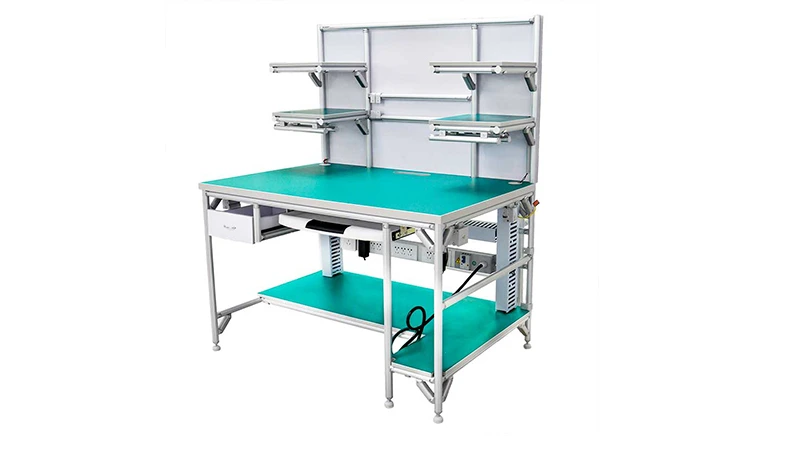
Aluminum tube workbench is more flexible and durable, compared with traditional PE/ABS coated steel tube. It is easy to assemble, anti corrosion, rust protection, and recycle use after disassemble.
Introduction: The Workbench That Grows With Your Workspace
Walk into any busy workshop, manufacturing floor, or even a home garage, and you'll notice a silent workhorse holding everything together: the workbench. It's where ideas take shape, where components are assembled with precision, and where the rhythm of productivity hums along. But not all workbenches are created equal. For years, many relied on heavy wooden tables that warped over time or clunky steel frames that were tough to move and even harder to customize. That's where Aluminum Workbench A comes in—a modern solution that's redefining what a workbench can be.
If you've ever struggled with a workbench that couldn't keep up—too wobbly for delicate tasks, too rigid to reconfigure when your workflow changed, or too heavy to shift as your team grows—you're not alone. Aluminum Workbench A was designed to solve these frustrations. It's a blend of durability and flexibility, built with the needs of today's dynamic workspaces in mind. Whether you're running a small electronics assembly line, a bustling auto repair shop, or a precision lab, this workbench doesn't just hold your tools—it adapts to how you work.
In this guide, we'll dive deep into what makes Aluminum Workbench A unique. We'll explore its design, from the materials that make it strong yet lightweight to the clever components that let you tweak it on the fly. We'll uncover its purpose—how it fits into everything from lean manufacturing setups to home hobbyist garages. And we'll explain why it's quickly becoming the go-to choice for anyone who values efficiency, durability, and adaptability in their workspace.
Design Elements: The Building Blocks of Aluminum Workbench A
At first glance, Aluminum Workbench A might look like a simple table—but its design is anything but basic. Every part is intentional, from the frame to the worktop, chosen to balance strength, weight, and versatility. Let's break down the key elements that make this workbench stand out.
1. The Backbone: Aluminum Profile
The star of the show here is the aluminum profile that forms the workbench's frame. Aluminum was a deliberate choice, and for good reason. Unlike steel, which is strong but heavy, aluminum strikes a rare balance: it's lightweight (about a third the weight of steel) but surprisingly sturdy, able to support heavy tools, equipment, and materials without bending or warping. It's also naturally resistant to corrosion, so even in damp garages or factories with frequent cleaning, you won't see rust eating away at the frame over time.
The aluminum profiles used in Workbench A aren't just plain tubes, either. They're often extruded with a T-slot design—a series of grooves running along the length of the profile. These slots are like built-in connection points, making it easy to attach accessories, shelves, or tool holders without drilling holes or welding. Imagine needing an extra shelf for your drills or a side rack for cables—with T-slot aluminum profiles, you can snap on a bracket in minutes, no special tools required. It's this detail that turns a static table into a workspace that evolves with you.
2. The Worktop: Where the Magic Happens
A workbench is only as good as its surface, and Aluminum Workbench A doesn't skimp here. The worktop is typically made from a dense, durable material—often aluminum honeycomb panel or high-pressure laminate. Aluminum honeycomb panels are lightweight but incredibly strong, with a core of hexagonal aluminum cells sandwiched between flat aluminum sheets. This design resists dents and scratches, even when you're hammering, sawing, or placing heavy machinery on top. Plus, it's easy to clean—spills wipe away with a damp cloth, and oil or grease won't stain it like it would on wood.
For workspaces that need extra protection, some models come with a non-slip surface or ESD (electrostatic discharge) properties, which are critical in electronics manufacturing. ESD worktops prevent static electricity from damaging sensitive components like circuit boards—a small feature that can save big headaches (and costly mistakes) down the line.
3. Assembly Made Simple: Aluminum Pipe Accessories
What truly sets Aluminum Workbench A apart is how easy it is to put together and modify, thanks to aluminum pipe accessories . These aren't your average nuts and bolts. Think of them as building blocks for adults: corner brackets that snap into T-slots, joint connectors that let you angle the frame, and end caps that give the bench a clean, finished look. Even if you're not handy with tools, you can assemble Workbench A in under an hour—no welding, no complicated instructions, just a few simple steps.
Take the internal rotary aluminum joint, for example. This small accessory lets you pivot sections of the frame, so you can adjust the height of a shelf or tilt the worktop slightly for better ergonomics (no more hunching over a flat surface!). Or consider the caster accessories—while Workbench A often comes as a single-deck model without casters (as noted in some product specs), adding wheels is a breeze with the right brackets. Suddenly, your stationary workbench can roll to wherever you need it, whether that's across the shop for a team project or out of the way when you're cleaning.
4. Stability: No Wobbles, No Compromises
A wobbly workbench is a recipe for frustration (and mistakes). Aluminum Workbench A avoids this with a thoughtful frame design. The legs are typically wide-set for balance, and many models include adjustable feet—small threaded pads at the bottom of each leg that let you level the bench on uneven floors. Ever tried working on a table that rocks back and forth? Just twist the adjustable feet until the bench sits solid, and you're good to go. It's a small detail, but it makes a world of difference when you're trying to drill a straight hole or assemble a delicate part.

Purpose & Applications: Where Aluminum Workbench A Shines
So, who exactly is Aluminum Workbench A for? The short answer: anyone who needs a reliable, adaptable workspace. But let's get specific—because this bench isn't a one-size-fits-all solution. It's tailored to solve unique challenges in different industries and settings.
1. Manufacturing & Assembly Lines
In factories, time is money, and space is often tight. Aluminum Workbench A thrives here because it's lightweight enough to rearrange when production lines change, but strong enough to handle the daily grind of assembly work. Imagine a car parts factory switching from building sedans to SUVs—suddenly, the assembly stations need to be wider, or tools need to be positioned differently. With Workbench A, workers can disassemble and rebuild the bench in hours, not days. The T-slot profiles also make it easy to mount fixtures like jigs or clamps, ensuring every part is assembled with precision, reducing errors and waste.
2. Labs & Research Facilities
Labs demand cleanliness, precision, and flexibility. Aluminum Workbench A checks all three boxes. The corrosion-resistant frame and easy-to-clean worktop mean it can withstand frequent sanitization, which is crucial in medical or chemical labs. The modular design lets researchers add shelves for equipment, attach cable management systems to keep wires organized, or even mount microscopes or spectrometers at eye level. And because aluminum is non-magnetic, it won't interfere with sensitive experiments—unlike steel benches, which can disrupt magnetic measurements.
3. Home Workshops & Garages
It's not just big industries that benefit. Hobbyists and DIYers are falling in love with Aluminum Workbench A, too. If you're a woodworker, you can add a vice to the corner using T-slot brackets. If you're a mechanic, mount a tool board above the bench to keep wrenches and screwdrivers within arm's reach. And because it's lightweight, you can move it outside for a messy project (like painting) and roll it back in when you're done. No more struggling with a heavy wooden bench that's stuck in one spot forever.

Why Aluminum Workbench A Beats Traditional Workbenches
You might be thinking, "Why not just stick with a wooden or steel workbench?" Let's break down the differences. We've created a quick comparison to show why Aluminum Workbench A is worth the investment:
| Feature | Aluminum Workbench A | Wooden Workbench | Steel Workbench |
|---|---|---|---|
| Weight | Lightweight (easy to move) | Heavy (hard to reposition) | Very heavy (often permanent) |
| Durability | Corrosion-resistant, scratch-proof | Prone to warping, staining, and rot | Strong, but rusts without paint |
| Customization | Easy (T-slots + aluminum pipe accessories) | Hard (requires drilling, sanding) | Difficult (needs welding or drilling) |
| Maintenance | Wipe clean; no painting needed | Needs staining/sealing; repairs are messy | Requires repainting to prevent rust |
| Cost Over Time | Higher upfront, but lasts decades with no upkeep | Cheap upfront, but needs replacement every 5-10 years | Mid-range upfront, but rust repair adds costs |
The takeaway? Aluminum Workbench A might cost a bit more initially, but it pays for itself in durability, flexibility, and time saved. It's not just a purchase—it's an investment in your workspace's future.
Fitting Into Lean Systems: Efficiency That Saves Time and Money
In today's fast-paced world, many businesses are adopting lean system principles—focusing on reducing waste, streamlining workflows, and maximizing value. Aluminum Workbench A aligns perfectly with this mindset, and here's how:
First, it eliminates waste from rework. A wobbly or poorly designed workbench can lead to mistakes—parts that don't fit, tools that go missing, or workers hunched over in uncomfortable positions (which slows them down). Workbench A's stable, ergonomic design reduces these errors, saving time and materials.
Second, it supports "5S" organization—a key part of lean systems. 5S stands for Sort, Set in Order, Shine, Standardize, and Sustain. With T-slot accessories, you can "Set in Order" tools and materials exactly where they're needed, reducing the time workers spend searching for things. Shelves, tool hooks, and bins can be positioned at arm level, so everything has a place—and stays there. And because the bench is easy to clean ("Shine"), maintaining a clutter-free workspace becomes second nature.
Third, it adapts to "just-in-time" production. Lean systems thrive on flexibility—producing only what's needed, when it's needed. If a customer suddenly orders a new product, your workspace needs to shift quickly. Aluminum Workbench A's modular design lets you reconfigure stations in hours, not days, so you can keep up with demand without overspending on new equipment.
Maintenance Tips: Keeping Your Workbench in Top Shape
Aluminum Workbench A is built to last, but a little care goes a long way. Here's how to keep it looking and performing like new for years:
- Clean regularly: Wipe the worktop and frame with a mild soap and water solution. Avoid abrasive cleaners, which can scratch the aluminum.
- Tighten joints: Over time, aluminum pipe accessories like brackets or connectors might loosen. A quick check with a hex key every few months will keep the bench stable.
- Lubricate moving parts: If you've added casters or pivoting shelves, a drop of silicone lubricant on the wheels or hinges will keep them rolling smoothly.
- Protect the worktop: Use a cutting mat for sharp tools, and avoid dragging heavy objects across the surface (lift instead of sliding to prevent scratches).
With these simple steps, your Workbench A will outlast most of the tools on it.
Conclusion: More Than a Workbench—A Partner in Productivity
Aluminum Workbench A isn't just a piece of furniture. It's a tool for problem-solving, a canvas for creativity, and a silent partner in every project you tackle. Its design—built around aluminum profiles, easy-to-use accessories, and durable materials—blends strength and flexibility in a way that traditional workbenches can't match. Whether you're running a factory, a lab, or a home workshop, it adapts to your needs, grows with your business, and saves you time and frustration.
In a world where workspaces are constantly changing, having a workbench that can keep up isn't a luxury—it's a necessity. Aluminum Workbench A doesn't just meet that need; it redefines what a workspace can be. So the next time you're setting up a new area or upgrading an old one, ask yourself: Do I want a workbench that holds my tools, or one that helps me work smarter? The answer, we think, is clear.