- Company Articles
- Products and Technology
- Product knowledge
- What Is Aluminum Workbench B? A Comprehensive Guide to Its Core Features

What Is Aluminum Workbench B? A Comprehensive Guide to Its Core Features
Related Product
Aluminum Workbench B
Aluminum tube workbench is more flexible and durable, compared with traditional PE/ABS coated steel tube. It is easy to assemble, anti corrosion, rust protection, and recycle use after disassemble.
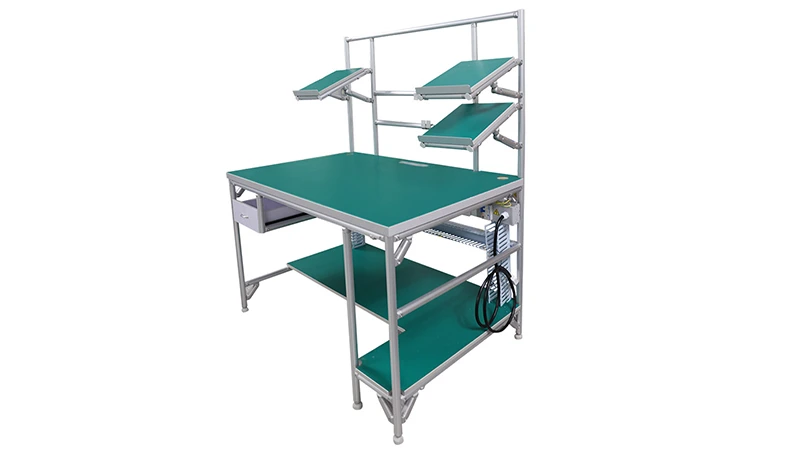
Walk into any modern manufacturing facility, electronics workshop, or laboratory, and you'll likely spot a common workhorse: the aluminum workbench. But not all workbenches are created equal. Among the many options, Aluminum Workbench B stands out as a versatile, durable, and user-centric solution designed to adapt to the ever-changing demands of today's workspaces. Whether you're assembling intricate components, organizing tools, or streamlining production lines, this workbench isn't just a piece of furniture—it's a catalyst for efficiency. Let's dive into what makes Aluminum Workbench B a game-changer, exploring its design, features, and why it's become a staple in lean system environments worldwide.
The Basics: What Defines Aluminum Workbench B?
At its core, Aluminum Workbench B is a modular work surface built around a frame of high-quality aluminum extrusion profiles. Unlike traditional wooden or steel workbenches that are heavy, fixed, or prone to corrosion, this design prioritizes flexibility, strength, and longevity. Think of it as a blank canvas for your workspace: sturdy enough to support heavy equipment, yet adaptable enough to reconfigure when your needs shift. Whether you're setting up a single workstation or an entire production line, Aluminum Workbench B is engineered to grow with you.
One of the first things you'll notice about Aluminum Workbench B is its clean, industrial aesthetic. The frame, crafted from aluminum extrusion profiles, features sleek lines and a lightweight feel—no bulky welds or rough edges here. But don't let its appearance fool you: aluminum extrusion profiles are renowned for their impressive strength-to-weight ratio. This means the workbench can handle daily wear and tear, from heavy toolboxes to constant material movement, without bending or warping over time.
Key Note: Aluminum Workbench B is often specified as a "single deck-without caster" model, making it ideal for stationary setups where stability is paramount. Need mobility later? No problem—thanks to its modular design, you can easily add casters (from a range of caster accessories) down the line, turning it into a mobile workstation in minutes.
Core Feature 1: The Backbone of Strength—Aluminum Extrusion Profiles
To understand Aluminum Workbench B's durability, we need to start with its foundation: aluminum extrusion profiles. These profiles are created through a process where aluminum alloy is pushed through a die, forming consistent, precision-engineered shapes. For workbenches, the most common profiles are T-slot designs—long, hollow tubes with grooves (T-slots) running along their length. These slots are more than just a design choice; they're the secret to the workbench's versatility.
Aluminum extrusion profiles used in Workbench B are typically made from 6063-T5 aluminum alloy, a material prized for its corrosion resistance, machinability, and strength. This alloy can withstand up to 150 MPa of tensile strength—more than enough to support the average industrial workload (think 300-500 kg per shelf). What's more, aluminum's natural resistance to rust means the workbench holds up in humid environments, chemical labs, or even outdoor workshops, unlike steel which requires constant painting or coating.
The T-slots in the profiles are where customization truly shines. Using aluminum profile accessories like brackets, connectors, and clamps, you can attach shelves, tool hooks, monitor arms, or even LED task lights directly to the frame—no drilling or welding required. This "build-as-you-go" approach saves time during setup and lets you tailor the workbench to your exact needs. For example, a mechanic might add a pegboard for wrenches, while an electronics assembler could mount an anti-static mat and cable management trays—all using the same T-slot system.

Core Feature 2: Modular Design for Unmatched Flexibility
In today's fast-paced workplaces, rigidity is the enemy of efficiency. A workbench that works for one project might become obsolete when the next project comes along. Aluminum Workbench B solves this with a modular design that lets you adapt on the fly. Every component—from the frame to the work surface—is designed to be easily disassembled, reconfigured, or expanded.
Let's say your team needs to add a second shelf to store more materials. With traditional workbenches, this might mean buying a whole new unit or hiring a welder. With Aluminum Workbench B? Simply slide aluminum profile accessories (like shelf brackets) into the T-slots, secure them with bolts, and attach a new aluminum panel—done in under an hour. Need to shorten the workbench to fit a new layout? Loosen the connectors, remove a section of the aluminum extrusion profile frame, and reattach the remaining parts. It's like building with giant, industrial-grade Legos.
This modularity also makes Aluminum Workbench B cost-effective in the long run. Instead of replacing the entire workbench when your needs change, you can upgrade individual components. A worn work surface? Swap it out for a new one. Need more storage? Add a material rack (like the popular "material rack b (3 row and 3 floor)" model) alongside it. This reduces waste and ensures your investment grows with your business—core principles of lean system thinking.

Core Feature 3: A Work Surface Built for the Real World
The work surface is where the magic happens, and Aluminum Workbench B doesn't cut corners here. While the frame steals the spotlight, the deck itself is designed to handle the daily grind. Most models feature a thick, solid aluminum panel or a composite board (like aluminum honeycomb panel for lightweight strength), chosen for its resistance to scratches, stains, and impacts.
For industries like electronics manufacturing, where static electricity can damage sensitive components, optional ESD (electrostatic discharge) work surfaces are available. These surfaces dissipate static charges, protecting circuit boards and microchips during assembly. In labs or food processing facilities, the workbench's non-porous surface is easy to sanitize, making it compliant with strict hygiene standards. No more worrying about bacteria hiding in wood grain or paint chips flaking off—just a smooth, durable surface that stands up to harsh cleaners.
How Aluminum Workbench B Fits Into Lean System Environments
Lean system principles—focused on eliminating waste, optimizing flow, and continuous improvement—have revolutionized how businesses operate. Aluminum Workbench B aligns perfectly with these principles, making it a favorite in lean-focused facilities. Here's how:
- Waste Reduction: By being modular, Aluminum Workbench B reduces the need for multiple fixed workbenches. One bench can adapt to different tasks, cutting down on excess furniture and storage costs.
- Optimized Flow: In production lines, material movement is critical. Aluminum Workbench B can be paired with flow racks or roller tracks (like the "plastic roller track guide rail yellow" or "aluminum guide rail a" models) to create a seamless workflow. Parts glide from the rack to the workbench, reducing manual lifting and speeding up assembly.
- Standardization: Across a facility, using identical Aluminum Workbench B units ensures consistency. Workers know exactly where tools and materials go, reducing training time and errors—a key lean goal.
- Continuous Improvement: Since the workbench is easy to reconfigure, teams can experiment with layouts (e.g., U-shaped vs. linear setups) to find what works best. This fosters a culture of experimentation, a cornerstone of lean system success.
Accessorizing Your Workbench: Beyond the Basics
What truly sets Aluminum Workbench B apart is its compatibility with a vast ecosystem of aluminum profile accessories. These accessories turn a basic workbench into a fully customized workstation tailored to your unique needs. Let's explore some of the most popular options:
1. Shelving and Storage Solutions
Need to keep tools and materials within arm's reach? Add adjustable shelves using T-slot brackets and aluminum panels. For bulk storage, pair the workbench with a "material rack b (3 row and 3 floor)"—a sturdy rack with three levels of storage, perfect for organizing boxes, bins, or raw materials. The rack's frame, also made from aluminum extrusion profiles, matches the workbench's aesthetic, creating a cohesive look.
2. Tool Organization
Cluttered workbenches slow down productivity. Aluminum profile accessories like tool hooks, pegboards, and magnetic strips can be mounted directly to the frame, keeping wrenches, screwdrivers, and scissors visible and accessible. For smaller parts, add drawer units (with T-slot mounts) to store screws, nuts, and washers—no more digging through messy bins.
3. Ergonomic Add-Ons
Comfort equals productivity, and Aluminum Workbench B can be upgraded with ergonomic features. Adjustable height mechanisms (using internal rotary aluminum joints) let workers set the bench to elbow height, reducing strain. LED task lights, mounted via T-slot brackets, illuminate the work surface without casting shadows, while anti-fatigue mats (placed under the bench) ease pressure on feet during long shifts.
4. Mobility Upgrades
Even though Aluminum Workbench B starts as a stationary model, adding mobility is simple. Choose from a range of caster accessories, like swivel stem casters with brakes, to move the bench around the workshop. Lock the brakes, and it stays put—stable enough for precision work. This is a game-changer for facilities where workstations need to shift based on production schedules.
Comparing Aluminum Workbench B to Traditional Workbenches: A Quick Table
| Feature | Aluminum Workbench B | Traditional Steel Workbench | Traditional Wooden Workbench |
|---|---|---|---|
| Weight | Lightweight (easy to move if casters added) | Heavy (difficult to reposition) | Moderate to heavy (prone to warping with moisture) |
| Customization | High (T-slots and aluminum profile accessories) | Low (fixed design, requires welding to modify) | Limited (screws may damage wood over time) |
| Durability | Excellent (corrosion-resistant, scratch-proof) | Good (prone to rust without maintenance) | Low (scratches, stains, and rot over time) |
| Lean System Compatibility | High (modular, reduces waste) | Low (fixed, leads to excess inventory of benches) | Low (not adaptable, requires frequent replacement) |
Maintenance Tips: Keeping Your Workbench in Top Shape
Aluminum Workbench B is designed to be low-maintenance, but a little care goes a long way in extending its lifespan. Here are simple tips to keep it performing like new:
- Clean Regularly: Wipe the work surface and frame with a damp cloth to remove dust and debris. For tough stains, use a mild detergent—avoid abrasive cleaners that can scratch the aluminum.
- Check Connections: Every few months, tighten T-slot bolts and brackets to ensure stability. Loose connections can lead to wobbling, which strains the frame over time.
- Protect Against Impact: While the workbench is impact-resistant, heavy blows (like dropping a metal tool) can dent the surface. Use rubber mats or tool trays to cushion falls.
- Lubricate Moving Parts: If you've added casters or adjustable height mechanisms, lubricate the joints with a silicone-based spray to keep them moving smoothly.
Real-World Success Stories: Aluminum Workbench B in Action
Still not convinced? Let's look at how Aluminum Workbench B has transformed real workspaces:
Case Study 1: Electronics Manufacturer
A mid-sized electronics company was struggling with static damage during circuit board assembly. They replaced their wooden workbenches with Aluminum Workbench B units fitted with ESD surfaces. Within six months, static-related defects dropped by 40%, and the modular design allowed them to add tool organizers and LED lights, cutting assembly time by 15%.
Case Study 2: Automotive Repair Shop
A busy auto shop needed workbenches that could handle heavy engine parts. They chose Aluminum Workbench B for its 500kg weight capacity and paired it with material racks for storing parts. The T-slot system let them mount vice grips and diagnostic tools directly to the frame, reducing clutter and saving mechanics 10 minutes per repair on average.
Choosing the Right Aluminum Workbench B: What to Consider
Ready to invest in Aluminum Workbench B? Here are key factors to keep in mind:
- Workload: Determine the maximum weight the bench will need to support. Most standard models handle 300-500kg, but heavy-duty versions are available for industrial use.
- Space: Measure your workspace to ensure the bench fits. Remember, modularity means you can start small and expand later.
- Accessories: List the tools and materials you'll need to store. This will help you choose the right aluminum profile accessories (shelves, hooks, racks) upfront.
- Industry Needs: ESD surfaces for electronics, chemical-resistant panels for labs, or food-grade materials for kitchens—ensure the workbench meets your industry's standards.
Final Thoughts: Why Aluminum Workbench B Is More Than Just a Workbench
Aluminum Workbench B is a testament to how thoughtful design can transform a simple workspace into a hub of productivity. By combining the strength of aluminum extrusion profiles, the flexibility of modularity, and the practicality of lean system compatibility, it's more than just a place to work—it's a tool that empowers teams to do their best. Whether you're setting up a home workshop or outfitting a factory floor, this workbench adapts to you, not the other way around.
In a world where change is constant, Aluminum Workbench B is a steady, reliable partner. It doesn't just keep up with your needs—it anticipates them. So, if you're ready to build a workspace that's efficient, durable, and future-proof, look no further. Aluminum Workbench B isn't just a purchase; it's an investment in better workflows, happier teams, and a leaner, more successful operation.