- Company Articles
- Products and Technology
- Product knowledge
- What Is Aluminum Workbench C? A Comprehensive Guide to Its Design and Function

What Is Aluminum Workbench C? A Comprehensive Guide to Its Design and Function
Related Product
Aluminum Workbench C
aluminum-tube-workbench-is-more-flexible-and-durable,-compared-with-traditional-pe/abs-coated-steel-tube.-it-is-easy-to-assemble,-anti-corrosion,-rust-protection,-and-recycle-use-after-disassemble.
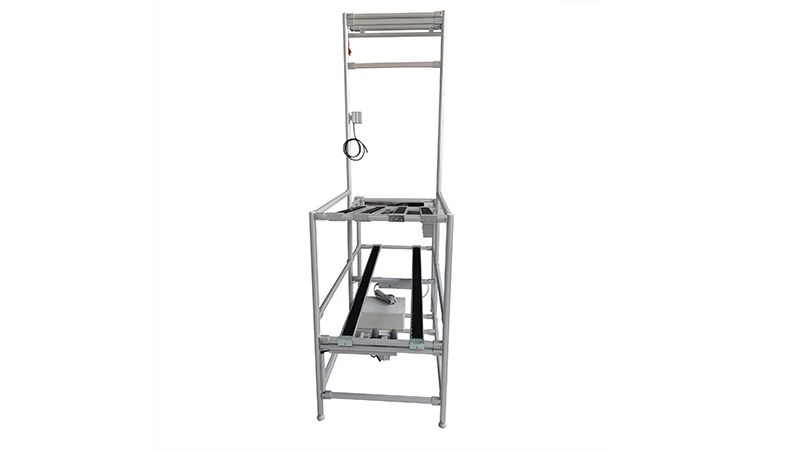
In the bustling world of manufacturing, workshops, and laboratories, the workbench isn't just a piece of furniture—it's the silent backbone of productivity. It's where ideas take shape, components are assembled, and precision meets purpose. But not all workbenches are created equal. Enter the Aluminum Workbench C —a modern solution designed to adapt to the demands of today's dynamic workspaces. Whether you're running a small electronics repair shop or managing a large-scale production line, understanding what makes this workbench stand out can transform how you approach daily operations. In this guide, we'll dive deep into its design, functionality, and why it's becoming a go-to choice for professionals across industries.
The Basics: What Defines Aluminum Workbench C?
At first glance, Aluminum Workbench C might look like any other work surface, but its true value lies in the details. Unlike traditional wooden or steel workbenches that often feel clunky or rigid, this model is built around the principles of flexibility and durability—two traits that matter most in fast-paced environments. Let's start with the obvious: the material. As the name suggests, it's crafted primarily from aluminum extrusion profile , a material celebrated for its unique blend of strength and lightness. But what exactly is an aluminum extrusion profile? Imagine molten aluminum being pushed through a die to create a specific cross-sectional shape—think T-slots, grooves, or channels. This process allows for precision engineering, resulting in components that fit together seamlessly and stand up to daily wear and tear.
Aluminum Workbench C typically features a single-deck design (though variations exist) without built-in casters, making it ideal for stationary workstations where stability is key. But don't mistake "stationary" for "inflexible." Thanks to the modular nature of aluminum profiles, this workbench can be customized with shelves, tool holders, lighting, or even ESD (Electrostatic Discharge) protection—more on that later. Its clean, minimalist aesthetic also sets it apart; gone are the rust-prone steel surfaces or warped wooden tops. Instead, you get a sleek, corrosion-resistant work area that's easy to clean and maintain, even in environments where spills or dust are common.
Design Deep Dive: The Engineering Behind the Durability
To truly appreciate Aluminum Workbench C, let's break down its design elements. At the core is the aluminum profile frame—a skeleton that provides structural integrity without adding unnecessary weight. Most models use profiles with standard T-slot designs, which act as a universal interface for accessories. Need to add a shelf? Slide in a bracket. Want to mount a power strip? Use a T-slot nut and bolt. This adaptability means the workbench can evolve with your needs, rather than becoming obsolete when workflows change.
The worktop itself is another standout feature. Depending on the application, it might be made from a high-density aluminum panel, a composite material, or even a wood-aluminum hybrid. For industries like electronics manufacturing, where static electricity can damage sensitive components, the top can be treated with an ESD-safe coating, blurring the line between a standard workbench and an ESD workstation . This versatility is a game-changer for businesses that handle both general assembly and delicate tasks.
Joints and connectors are the unsung heroes of this design. Aluminum Workbench C relies on precision-engineered joints, often made from aluminum or reinforced plastic, to hold the frame together. Unlike welded steel frames, these joints allow for easy disassembly and reconfiguration. If a section gets damaged, you don't need to replace the entire workbench—just swap out the faulty part. This not only reduces maintenance costs but also extends the workbench's lifespan, making it a sustainable choice in the long run.
Let's not forget about weight distribution. Aluminum's natural lightness means the workbench is easy to move during initial setup (even without casters), but once in place, its low center of gravity ensures stability. You can load it with heavy tools, machinery, or materials without worrying about wobbling or tipping—a crucial safety feature in busy workshops.

Functionality: How It Enhances Daily Workflows
Design is important, but what really matters is how a workbench performs day in and day out. Aluminum Workbench C shines here, thanks to a focus on user-centric features that address common pain points in traditional workspaces.
First and foremost: ergonomics. Many models are height-adjustable (either manually or via motorized controls), allowing workers to customize the surface to their comfort level. This might seem like a small detail, but anyone who's spent hours hunched over a too-low workbench knows how much it impacts productivity and long-term health. By reducing strain on the back, neck, and shoulders, Aluminum Workbench C helps keep teams focused and injury-free.
Then there's the integration with lean system principles. Lean manufacturing is all about minimizing waste—whether that's time, space, or resources. Aluminum Workbench C supports this by keeping tools and materials within arm's reach. With T-slot accessories like tool hooks, bins, and monitor mounts, everything has a designated place, reducing the time spent searching for supplies. The worktop's smooth surface also makes cleaning a breeze; no more scrubbing sticky residues or dealing with splinters, which means less downtime and more time spent on actual work.
For industries that require strict cleanliness, like pharmaceuticals or food processing, the aluminum construction is a boon. Unlike wood, which can harbor bacteria, or steel, which rusts when exposed to moisture, aluminum is non-porous and resistant to corrosion. A quick wipe with a disinfectant is all it takes to keep the surface sterile—a must in environments where contamination risks are high.
Another key function is adaptability. Let's say your workshop expands, and you need to add more workspace. Instead of buying a brand-new workbench, you can extend Aluminum Workbench C by adding extra aluminum profiles and a matching top. Or, if you shift from assembling small parts to testing larger equipment, you can remove shelves or add a heavier-duty top. This scalability makes it a cost-effective investment, especially for growing businesses.

Applications: Where Aluminum Workbench C Thrives
Now that we've covered design and function, let's talk about where this workbench truly excels. Its versatility means it's not limited to one industry—but there are a few sectors where it's particularly transformative.
Electronics Manufacturing: Here, precision and ESD protection are non-negotiable. Aluminum Workbench C can be equipped with an ESD-safe top and grounding accessories, making it a reliable ESD workstation . The T-slot profiles also make it easy to mount anti-static mats, ionizers, or cable management systems, keeping sensitive components safe from static damage during assembly.
Automotive Repair Shops: Mechanics deal with heavy tools, greasy parts, and constant movement. Aluminum Workbench C's durable surface stands up to oil spills and impacts, while its modular design allows for custom tool storage—think pegboards, drawer units, or even a built-in vice. Its lightweight frame also means it can be positioned near vehicles without requiring heavy lifting equipment.
Laboratories and R&D Facilities: In labs, cleanliness and organization are critical. The non-porous aluminum surface resists chemicals and is easy to sanitize, while the T-slot system lets researchers attach microscopes, lab equipment, or storage racks. Height adjustability is especially useful here, as it accommodates different experiments and user preferences.
Small to Medium-Sized Workshops: For businesses with limited space, Aluminum Workbench C's compact design and customizable features help maximize every square foot. Whether you're a jewelry maker, a 3D printing enthusiast, or a hobbyist woodworker, you can tailor the workbench to fit your specific tools and projects without overcrowding the space.
Aerospace and Defense: These industries demand components that meet strict quality standards. Aluminum Workbench C's precision engineering and resistance to corrosion make it ideal for assembling or inspecting delicate parts, where even a small imperfection can have big consequences.

Aluminum Workbench C vs. Traditional Workbenches: A Side-by-Side Comparison
Still on the fence about whether Aluminum Workbench C is right for you? Let's compare it to two common alternatives: steel and wooden workbenches. The table below breaks down key features to help you decide.
| Feature | Aluminum Workbench C | Steel Workbench | Wooden Workbench |
|---|---|---|---|
| Material | Aluminum extrusion profile | Carbon steel (often powder-coated) | Hardwood (e.g., maple, oak) |
| Weight | Lightweight (easy to move during setup) | Heavy (requires multiple people to reposition) | Moderate to heavy (varies by wood type) |
| Durability | Corrosion-resistant, scratch-resistant, long lifespan | Prone to rust if coating chips; dents easily | Scratches, warps with moisture, requires refinishing |
| Customization | High (modular T-slot accessories, easy to reconfigure) | Low (welded or bolted frames, hard to modify) | Limited (drilling required for additions) |
| ESD Compatibility | Yes (with ESD top and grounding kits) | Possible (with ESD coating, but adds cost) | No (wood is conductive, risks static buildup) |
| Maintenance | Low (wipe clean with mild detergent) | Moderate (touch up paint to prevent rust) | High (sand, refinish, and seal regularly) |
| Cost | Mid-range (higher upfront, lower long-term costs) | Low to mid-range (cheaper upfront, higher replacement costs) | Mid-range (varies by wood quality, high maintenance costs) |
As the table shows, Aluminum Workbench C strikes a balance between durability, flexibility, and cost-effectiveness. While steel might be cheaper upfront, its tendency to rust and lack of customization make it a less practical choice for long-term use. Wood, on the other hand, offers a classic look but requires constant upkeep and can't match aluminum's resistance to wear and tear. For businesses that value adaptability and longevity, Aluminum Workbench C is the clear winner.
Customization: Making It Your Own
One of the biggest advantages of Aluminum Workbench C is its ability to grow with your needs. Let's explore some of the most popular customization options that turn a basic workbench into a tailored workstation.
Accessories Galore: The T-slot aluminum profiles are a playground for accessories. Need more storage? Add a overhead shelf or a set of stackable bins. Working with computers? Mount a monitor arm or a cable management tray to keep wires tidy. For assembly work, consider a parts organizer with dividers, or a LED task light to brighten up the workspace. Even small touches like cup holders or tool hooks can make a big difference in daily comfort.
ESD Upgrades: If you work with electronics, ESD protection is a must. Many suppliers offer ESD-safe tops made from materials like conductive rubber or laminate, which dissipate static charges to prevent damage to components. Grounding kits—including wrist straps and floor mats—can also be integrated into the workbench, ensuring a fully protected environment.
Height Adjustment: While the standard Aluminum Workbench C is stationary, some models come with manual or electric height adjustment. This is a game-changer for teams with multiple users, as everyone can set the worktop to their ideal height (typically between 30 and 40 inches). Electric models even allow for programmable presets, so switching between users takes seconds.
Mobile Add-Ons: Remember earlier we mentioned it usually doesn't have casters? That doesn't mean you can't add them later. If your workflow changes and you need mobility, simply attach locking casters to the base—no tools required, thanks to the T-slot design. This flexibility lets you move the workbench to different areas of the shop and lock it in place when stability is needed.
Specialty Tops: The standard aluminum top is great for most tasks, but you can upgrade to materials like stainless steel (for extreme durability), phenolic resin (chemical-resistant), or even bamboo (eco-friendly). Each material caters to specific needs, whether you're working with harsh chemicals or prioritizing sustainability.
The Future of Workbenches: Why Aluminum Workbench C Leads the Way
As workspaces evolve—becoming more tech-driven, space-conscious, and focused on employee well-being—the tools we use must evolve too. Aluminum Workbench C isn't just a trend; it's a reflection of how work is changing. Its modular design aligns with the rise of agile manufacturing, where teams need to pivot quickly and adapt to new projects. Its focus on ergonomics speaks to a growing awareness of worker health, a priority that's no longer optional in competitive industries. And its use of sustainable materials like aluminum (which is 100% recyclable) fits into the global push for eco-friendly business practices.
Looking ahead, we can expect even more innovations in this space. Imagine smart workbenches with built-in sensors that monitor tool usage or alert you to maintenance needs. Or integration with IoT (Internet of Things) devices, where the workbench itself becomes part of a connected workflow system. With aluminum extrusion profiles as the foundation, these advancements are not just possible—they're practical. The T-slot design makes it easy to add sensors, cameras, or other tech without overhauling the entire structure.
Final Thoughts: Is Aluminum Workbench C Right for You?
At the end of the day, choosing a workbench comes down to your specific needs. If you value durability without the weight of steel, flexibility without the hassle of constant maintenance, and a design that grows with your business, then Aluminum Workbench C is worth serious consideration. It's not just a work surface—it's an investment in productivity, safety, and adaptability.
Whether you're outfitting a new workshop or upgrading an existing one, take the time to assess your daily workflows. Do you need ESD protection? Will you require extra storage in the future? How important is mobility? Answering these questions will help you determine which customization options matter most. And remember: while the upfront cost might be higher than a basic steel or wooden workbench, the long-term savings—from reduced maintenance, fewer replacements, and increased productivity—make it a wise choice for any forward-thinking business.
In a world where efficiency and innovation are key, Aluminum Workbench C isn't just keeping up—it's setting the standard. It's a reminder that even the most essential tools can evolve, and in doing so, transform the way we work for the better.