- Company Articles
- Products and Technology
- Product knowledge
- What Is Aluminum Workbench D? A Comprehensive Guide to Its Design and Lean Manufacturing Role

What Is Aluminum Workbench D? A Comprehensive Guide to Its Design and Lean Manufacturing Role
Related Product
Aluminum Workbench D
Aluminum tube workbench is more flexible and durable, compared with traditional PE/ABS coated steel tube. It is easy to assemble, anti corrosion, rust protection, and recycle use after disassemble.
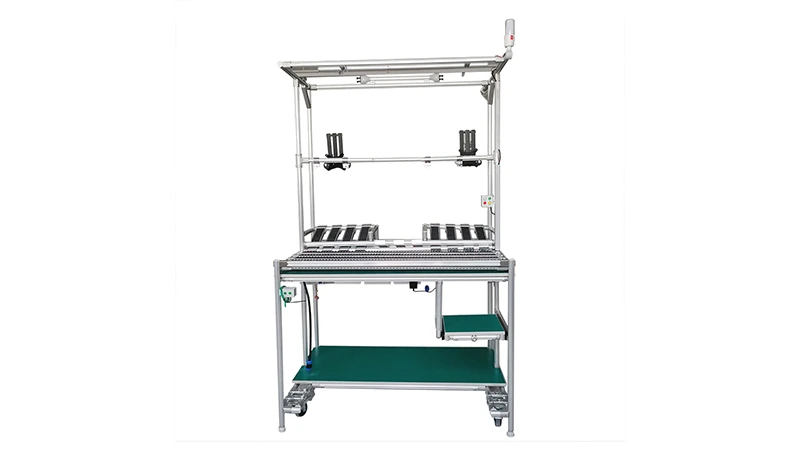
Walk into any modern manufacturing facility, and you'll quickly spot the difference between a workspace stuck in the past and one built for the future. Cluttered benches, rigid layouts, and tools that fight against rather than for the team—these are the hallmarks of inefficiency. But in forward-thinking plants, there's a quiet hero transforming how work gets done: the Aluminum Workbench D. More than just a table, it's a cornerstone of lean manufacturing, designed to reduce waste, boost productivity, and adapt to the ever-shifting needs of production lines. In this guide, we'll dive deep into what makes Aluminum Workbench D unique, how its design supports lean principles, and why it's become a go-to choice for teams serious about operational excellence.
What Exactly Is Aluminum Workbench D?
Let's start with the basics: Aluminum Workbench D is a specialized workstation engineered for precision, durability, and flexibility—key pillars of any lean system. If you've ever scanned a list of workbench models, you might have noticed labels like "E" or "F" thrown around; the "D" here denotes a specific configuration tailored for stability and efficiency. Unlike mobile workbenches with casters, Workbench D typically features a fixed, single-deck structure (though some variants offer optional mobility upgrades). Its defining trait? It's built from high-grade aluminum extrusion profile, a material that balances strength and lightness to create a workstation that's both sturdy and adaptable.
Think of it as the backbone of a well-organized workspace. Whether you're assembling small electronics, sorting parts, or conducting quality checks, Workbench D provides a clean, ergonomic surface that integrates seamlessly with other lean tools—like flow racks for material storage or roller tracks for smooth part conveyance. It's not just about having a flat surface to work on; it's about creating a workspace that works with your team, not against them.
The Design Behind the Efficiency: Materials and Structure
Aluminum Extrusion Profile: The Building Block
At the core of Aluminum Workbench D is aluminum extrusion profile—a material that's revolutionized industrial workspaces. Unlike solid steel or flimsy plastic, aluminum extrusion is created by forcing heated aluminum through a die, resulting in custom cross-sections (like T-slots) that make assembly and customization a breeze. This isn't just about looks; the T-slot design lets you attach accessories—think tool holders, shelves, or even mini flow racks—without drilling or welding. Need to add a side rail for holding documents? Screw a bracket into the T-slot. Want to mount a light above the bench? Slide in a clamp. It's modularity at its finest, and it's why aluminum extrusion profile is the gold standard for lean-friendly workstations.
But why aluminum? For starters, it's lightweight. A typical Aluminum Workbench D weighs 30-40% less than a steel equivalent, making it easier to reposition (even without casters) if your layout changes. Yet it's surprisingly strong—strong enough to support heavy tools, bins of parts, or even small machinery. It's also corrosion-resistant, so unlike steel, it won't rust in humid factories or after accidental spills. And let's not forget aesthetics: its clean, silver finish brightens up workspaces, reducing eye strain and creating a more pleasant environment for teams to thrive in.
Structure: Simplicity Meets Functionality
Aluminum Workbench D's structure is a masterclass in "less is more." Most models feature a single, solid deck (hence "single deck" in some product descriptions) made from aluminum honeycomb panels or thick aluminum sheets—both lightweight and rigid enough to prevent sagging under load. The legs are constructed from heavy-duty aluminum profile, reinforced with internal rotary aluminum joints that lock the frame into place, ensuring zero wobble even during repetitive tasks like assembly or packaging.
One of the most underrated features? Its height. Most Workbench D models are adjustable (between 75-90cm) to suit different workers, reducing back strain and fatigue—a critical factor in lean systems, where minimizing physical waste (like unnecessary bending or reaching) directly boosts productivity. And because it's built without casters (unless specified), it sits firmly on the ground, making it ideal for tasks requiring stability, like precision measurements or delicate assembly work.
Accessories: Tailoring the Bench to Your Needs
What truly sets Aluminum Workbench D apart is its compatibility with aluminum profile accessories. These aren't just add-ons; they're the secret to turning a basic bench into a fully optimized work cell. Common accessories include:
- Tool rails: Mounted along the back or sides, these hold wrenches, screwdrivers, or power tools within arm's reach, eliminating time wasted hunting for tools.
- Flow rack attachments: Small, overhead or side-mounted flow racks (think "material rack B (3 row and 3 floor)" from your keyword list) keep parts organized and gravity-fed, so the next component is always ready—no more bending to grab bins from the floor.
- Roller track guides: Plastic or aluminum roller track guide rails (yellow or grey, depending on your preference) can be added to the edge of the deck, allowing parts to slide smoothly from one worker to the next, reducing manual handling.
- ESD protection: For electronics manufacturing, optional ESD (electrostatic discharge) mats or surfaces can be added to prevent static damage to sensitive components—though Workbench D itself isn't an ESD workstation by default, it's easy to upgrade.
The beauty of these accessories is that they're not permanent. If your production line switches from assembling widgets to gadgets, you can swap out the tool rails for a roller track, or add a shelf for extra storage—all in minutes, without specialized tools. That's the power of modular design: your workstation evolves with your workflow.

Aluminum Workbench D in Lean Manufacturing: More Than Just a Workspace
Lean manufacturing is all about eliminating waste—whether that's wasted time, wasted motion, or wasted space. Aluminum Workbench D isn't just a tool; it's a lean enabler . Here's how it fits into the lean system philosophy:
Reducing Motion Waste: Everything in Its Place
Motion waste—walking, reaching, bending—is one of the biggest productivity killers in factories. Aluminum Workbench D attacks this head-on. By integrating with flow racks and roller tracks, it ensures materials and tools are always within a 1-2 foot radius of the worker. Imagine a line assembling small engine parts: instead of a worker stepping away to grab a bin from a distant shelf, the parts slide down a flow rack directly onto the bench. The result? Less time moving, more time building. Studies show this can reduce non-value-added motion by up to 25% in high-volume lines—translating to hundreds of extra units produced per shift.
Flexibility: Adapting to Change
Lean systems thrive on adaptability. Product runs get shorter, new models launch faster, and customer demands shift overnight. A traditional wooden or steel workbench locks you into one layout; Aluminum Workbench D breaks that mold. Thanks to its T-slot aluminum profile and aluminum profile accessories, you can reconfigure the bench in hours, not days. Need to add a second deck for more storage? Attach aluminum brackets. Switching to a new product that requires a wider workspace? Remove the side rails. This flexibility means your workstation never becomes obsolete, saving you from the waste of buying new benches every time your process changes.
Visual Management: A Clean, Organized Workspace
Lean isn't just about efficiency—it's about clarity. A cluttered bench hides problems: missing tools, defective parts, or bottlenecks. Aluminum Workbench D's sleek design and modular accessories enforce visual order. Tool rails have designated spots for each tool (so a missing wrench is immediately obvious). Flow racks use color-coded bins (yellow for screws, grey for washers) to prevent mix-ups. Even the bench's flat, uncluttered deck makes it easy to spot debris or misplaced parts. When everything has a place, mistakes drop, and accountability rises—key for continuous improvement, the heart of lean.
Ergonomics: Investing in Your Team
Lean isn't just about machines and materials; it's about people. A tired, sore team can't perform at their best. Aluminum Workbench D's adjustable height and sturdy, non-slip surface reduce physical strain. Workers can set the bench to elbow height, minimizing shoulder and back fatigue during repetitive tasks. The aluminum deck's smooth surface is easy to clean, reducing the risk of cuts from splinters (unlike wood) or rust (unlike steel). When your team is comfortable, they're more focused, less prone to errors, and less likely to take sick days—all of which boost overall productivity.

Aluminum Workbench D vs. Traditional Workstations: A Clear Winner
Still on the fence about whether Aluminum Workbench D is right for your facility? Let's compare it to common alternatives:
| Feature | Aluminum Workbench D | Steel Workbench | Wooden Workbench |
|---|---|---|---|
| Material | Aluminum extrusion profile | Carbon steel | Plywood or solid wood |
| Weight | Light (50-70kg) | Heavy (100-150kg) | Medium (70-90kg) |
| Customization | High (T-slot accessories, modular design) | Low (welding/ drilling required) | Very low (fixed structure) |
| Lean Compatibility | Excellent (integrates with flow racks, roller tracks) | Poor (rigid, hard to reconfigure) | Very poor (prone to damage, no modularity) |
| Durability | High (corrosion-resistant, scratch-resistant) | High (prone to rust without coating) | Low (dents, warping, splinters) |
| Long-term Cost | Low (adaptable, no replacement needed) | High (needs replacement when layout changes) | Very high (frequent repairs/replacement) |
The verdict? Aluminum Workbench D outperforms traditional options in nearly every category that matters for lean systems. It's an investment that pays off in lower waste, higher productivity, and a happier, more efficient team.
Real-World Applications: Where Aluminum Workbench D Shines
Aluminum Workbench D isn't a one-trick pony. It's found in industries across the board, from automotive to electronics to pharmaceuticals. Here are a few examples of how it's making an impact:
Automotive Assembly Lines
In auto plants, where precision and speed are critical, Aluminum Workbench D is a staple. Workers assembling dashboard components use the bench's adjustable height to stay comfortable during 8-hour shifts. Flow racks mounted to the bench hold screws, clips, and wiring harnesses, while roller tracks feed completed subassemblies to the next station. One major automaker reported a 15% increase in dashboard assembly speed after switching to Aluminum Workbench D, citing reduced motion waste and faster access to parts.
Electronics Manufacturing
Electronics assembly demands cleanliness and static control. While Aluminum Workbench D isn't inherently ESD-safe, it's easy to upgrade with ESD mats and grounding kits (using aluminum profile accessories). In one smartphone factory, the bench's T-slot rails were used to mount anti-static tool holders and small flow racks for microchips, reducing the risk of static damage by 40% and cutting down on part mix-ups.
Small-Part Warehousing
Even warehouses benefit from Aluminum Workbench D. Picking and packing small parts (like hardware or jewelry) requires a workspace that's organized and efficient. By adding mini flow racks and roller track guide rails to the bench, workers can sort, count, and pack parts without ever leaving their station. A hardware distributor reported a 20% increase in order accuracy after implementing the bench, as the clear, visual layout reduced picking errors.
Maintaining Your Aluminum Workbench D: Tips for Longevity
Like any tool, Aluminum Workbench D performs best with proper care. Here's how to keep it in top shape for years:
- Clean regularly: Wipe the deck and legs with a damp cloth weekly to remove dust, oil, or debris. Avoid harsh chemicals (like bleach) that can damage the aluminum finish.
- Tighten joints: Check aluminum joints and brackets monthly. Over time, vibrations can loosen screws—simply tighten them with a hex key to prevent wobbling.
- replace worn accessories: Roller tracks, tool holders, or flow rack bins will wear out eventually. replace them with genuine aluminum profile accessories to ensure a perfect fit.
- Protect from heavy impacts: While aluminum is strong, it can dent if hit with heavy tools. Use corner guards or rubber bumpers if the bench is near high-traffic areas.
With minimal maintenance, Aluminum Workbench D can last 10+ years—far longer than wooden benches (which warp or rot) or steel benches (which rust). It's another example of how the bench reduces waste: by standing the test of time, it avoids the environmental and financial cost of frequent replacements.
Conclusion: Aluminum Workbench D—Building the Lean Factory of Tomorrow
Aluminum Workbench D isn't just a workstation. It's a statement: that your team deserves tools that work as hard as they do, that waste has no place in your operation, and that adaptability is key to staying competitive. By combining aluminum extrusion profile's strength and modularity with lean principles like motion reduction and visual management, it transforms workspaces from cluttered, rigid obstacles into engines of efficiency.
Whether you're running a small workshop or a large manufacturing plant, the question isn't whether you need a better workbench—it's whether you're ready to invest in a tool that grows with you, reduces waste, and empowers your team to do their best work. Aluminum Workbench D isn't just part of the lean system; it's the foundation on which you'll build a more productive, more efficient, and more successful future.