- Company Articles
- Products and Technology
- Product knowledge
- What is an Aluminum Foot Base? Core Functions in Lean Manufacturing Systems

What is an Aluminum Foot Base? Core Functions in Lean Manufacturing Systems
Related Product
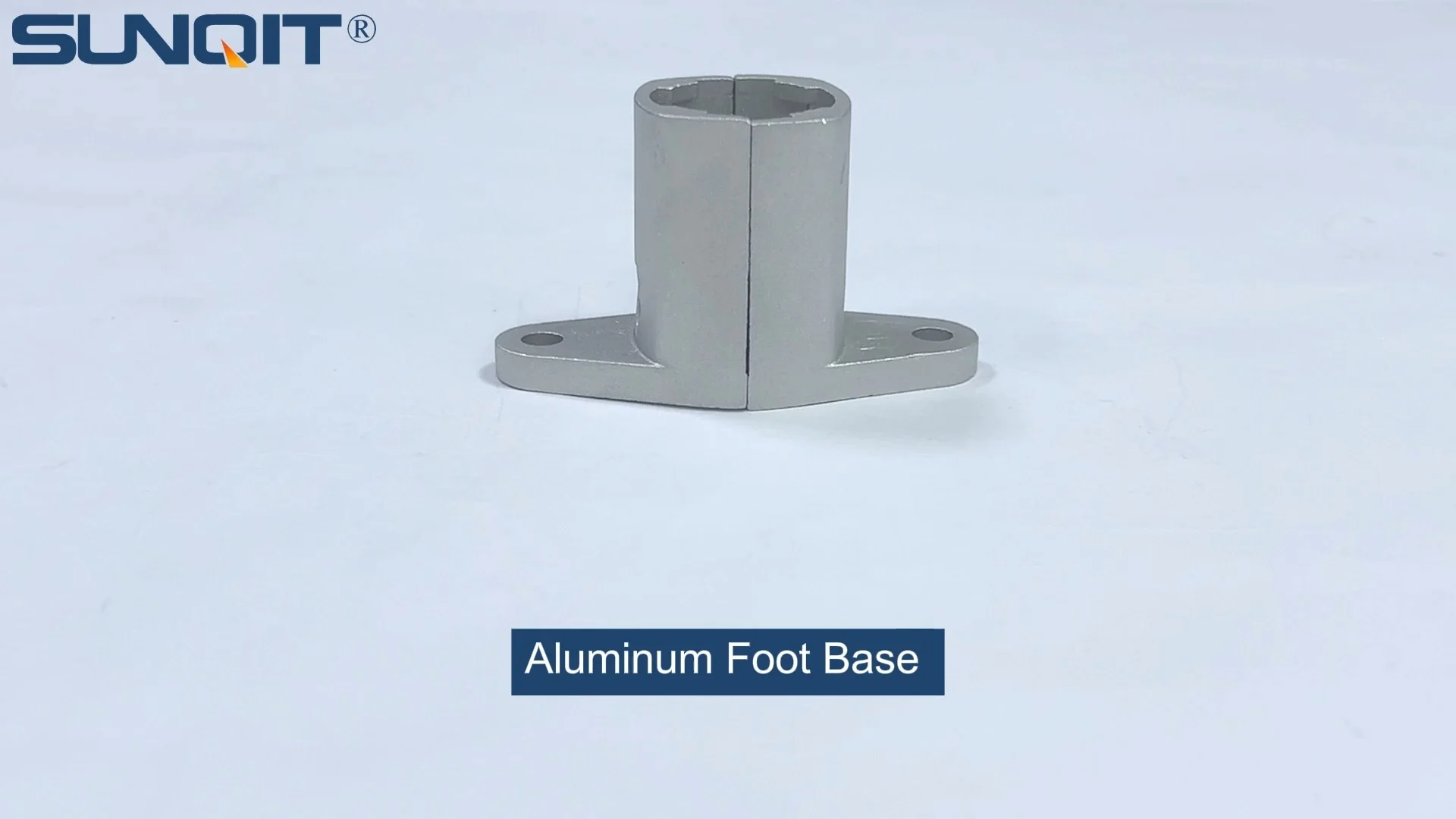
Aluminum Foot Base
Aluminum foot base to connect 28mm aluminum pipe and fixed it on the ground and prevent pipe fall and move.
Walk into any modern manufacturing facility, and you'll notice a symphony of moving parts: conveyor belts gliding with precision, workbenches bustling with assembly tasks, and flow racks keeping materials within arm's reach of workers. Behind this harmony lies a network of unsung components that hold everything together—literally. One such component, often overlooked but critical to operational stability, is the aluminum foot base. It's the quiet foundation that ensures workbenches don't wobble, flow racks stay level, and aluminum profiles stand firm even under heavy loads. In lean manufacturing, where efficiency, safety, and adaptability are paramount, the aluminum foot base isn't just a "part"; it's a cornerstone of productive systems. Let's dive into what makes this component so essential, how it functions, and why it's become a staple in lean environments worldwide.
What is an Aluminum Foot Base?
At its core, an aluminum foot base is a structural component designed to provide stable, adjustable support for a wide range of lean manufacturing equipment—think workbenches, flow racks, aluminum profile structures, and even lightweight conveyors. Unlike generic plastic or steel feet, it's engineered specifically for the demands of industrial settings, where precision and durability can't be compromised. Made from high-grade aluminum alloys (typically 6061-T6 or 6063-T5, known for their strength-to-weight ratio), it balances robustness with lightweight flexibility, making it easy to install and reconfigure as production needs change.
Materials: The Backbone of Durability
Aluminum might seem like an unexpected choice for a "base"—after all, steel is often associated with strength. But aluminum alloys used in foot bases are anything but flimsy. 6061-T6 aluminum, for example, has a tensile strength of 42,000 psi (pounds per square inch) and a yield strength of 35,000 psi, meaning it can withstand significant pressure without deforming. What's more, aluminum naturally forms a protective oxide layer when exposed to air, making it resistant to rust and corrosion—critical in factories where moisture, oils, or chemicals might be present. This resistance eliminates the need for frequent repainting or coating, reducing long-term maintenance costs.
Design Features: More Than Just a "Foot"
An aluminum foot base isn't a one-size-fits-all component. Its design is tailored to solve specific industrial challenges: adjustability , compatibility , and stability . Most models feature a threaded rod or bolt that allows users to (fine-tune) the height by turning a nut, making it easy to level equipment on uneven factory floors—a common issue in older facilities or spaces with concrete that's settled over time. The base itself is often wider than the component it supports (think a "footprint" of 3–6 inches in diameter or square) to distribute weight evenly, preventing sinking or tilting. Many also include anti-slip rubber pads on the bottom to grip floors and reduce vibration, which is especially important for precision work like electronics assembly, where even a small shake can ruin a delicate component.
Another key design element is compatibility with aluminum profiles and accessories. Most aluminum foot bases feature pre-drilled holes or T-slot connections that align with standard aluminum profile systems, allowing for quick attachment without custom drilling or welding. This modularity is a hallmark of lean manufacturing, where the ability to reconfigure workstations or storage systems in hours (not days) can mean the difference between meeting a tight deadline and falling behind.
Core Functions of the Aluminum Foot Base in Lean Systems
In lean manufacturing, every component must justify its place by adding value—whether through reducing waste, improving safety, or boosting efficiency. The aluminum foot base delivers on all three fronts, thanks to five core functions that make it indispensable.
1. Stability and Load Distribution: Preventing "The Wobble Effect"
Imagine assembling a smartphone on a workbench that rocks back and forth with every movement. A single misaligned screw or a dropped part could cost time, materials, and money. This is where the aluminum foot base's primary function—stability—shines. By providing a wide, solid foundation, it distributes the weight of the workbench (and whatever's on it) across a larger area, minimizing pressure on the floor and preventing tipping or (shaking). Even when loaded with heavy tools, bins of parts, or finished products, a properly installed aluminum foot base keeps the structure steady. For example, a standard workbench with four aluminum foot bases can typically support 500–1000 kg of weight without so much as a creak—critical for environments where consistency is key.
2. Height Adjustability: Leveling the Playing Field (Literally)
Factory floors are rarely perfect. Cracks, uneven concrete, or even slight slopes can turn a "level" workstation into a frustrating, inefficient space. Aluminum foot bases solve this with their built-in adjustability. Most models use a threaded stem that screws into the base of the equipment (like a workbench leg or aluminum profile), with a rotating nut that raises or lowers the height by fractions of an inch. A quick turn with a wrench is all it takes to compensate for a dip in the floor or align multiple workbenches in a straight line. This isn't just about comfort; it's about safety, too. An uneven flow rack, for instance, can cause materials to jam or slide off unexpectedly, risking damage or injury. With adjustable foot bases, workers can ensure every shelf is perfectly level, keeping materials moving smoothly through the production line.
3. Compatibility with Aluminum Profiles and Accessories
Lean manufacturing thrives on modularity—the ability to mix and match components to create custom solutions. Aluminum foot bases are designed with this in mind, seamlessly integrating with aluminum profiles, which are the building blocks of everything from workstations to material racks. Thanks to standardized T-slot designs, foot bases can be attached to aluminum profiles using simple bolts or brackets, no welding required. This means a manufacturer can start with a basic workbench, then later add a flow rack extension or a conveyor feed—all using the same foot base system. It's this flexibility that makes aluminum foot bases a favorite among lean practitioners; they grow with the business, adapting to new products, higher volumes, or changing workflows without requiring a complete overhaul of equipment.
4. Corrosion Resistance: Longevity in Harsh Environments
Manufacturing floors are tough on equipment. Spills, humidity, cleaning chemicals, and even airborne particles can take a toll on metal components over time. Steel foot bases, for example, might rust if not regularly painted or coated, weakening their structure and leaving unsightly stains on floors. Aluminum foot bases, however, are naturally corrosion-resistant. The oxide layer that forms on their surface acts as a barrier, preventing moisture and chemicals from eating away at the metal. This longevity reduces maintenance costs—no need for frequent replacements or touch-ups—and ensures the foot bases remain reliable for years, even in demanding settings like food processing plants (where stainless steel is often used alongside aluminum) or electronics factories (where cleanliness is critical).
5. Safety Enhancement: Reducing Workplace Risks
In any factory, safety is non-negotiable. A wobbly workstation can lead to repetitive strain injuries for workers; an unstable flow rack might collapse, causing damage or harm. The aluminum foot base directly mitigates these risks in two ways: first, by keeping equipment stable, and second, by incorporating safety-focused design features. Many models include anti-slip rubber pads that grip the floor, preventing the structure from sliding during use. Others have rounded edges to reduce the risk of cuts or bruises if a worker bumps into them. Even the adjustability plays a safety role—by ensuring equipment is level, it minimizes the chance of materials falling or workers overreaching to compensate for uneven surfaces. In short, the aluminum foot base doesn't just support equipment; it supports a safer work environment.

The Aluminum Foot Base's Role in Lean Manufacturing Systems
Lean manufacturing is a philosophy built on eliminating waste—whether that's wasted time, materials, or effort. The aluminum foot base aligns perfectly with this ethos by enabling systems that are efficient, adaptable, and user-centric. Let's explore how it integrates with key lean components to drive value.
Supporting Workbenches: The Heart of Assembly Lines
The workbench is where the magic happens in many factories—where parts become products, and workers spend the majority of their shifts. For a workbench to be lean, it needs to be ergonomic (reducing worker fatigue), organized (minimizing motion waste), and stable (ensuring precision). The aluminum foot base is the foundation of this. By keeping the workbench level and steady, it allows workers to focus on the task at hand, not on adjusting their tools or compensating for a wobbly surface. Adjustable height also means the bench can be tailored to individual workers, reducing strain on backs and shoulders. In lean terms, this translates to fewer errors, faster cycle times, and happier, more productive employees.
Optimizing Flow Racks: Keeping Materials "Pulled" Efficiently
Flow racks are a cornerstone of lean's "pull system," where materials are delivered to the production line only when needed, reducing inventory waste. For a flow rack to work, gravity must gently guide materials from the back (where they're stocked) to the front (where workers access them). If the rack is even slightly tilted, materials might jam or move too quickly, causing spills. Aluminum foot bases solve this by allowing precise leveling, ensuring a consistent, gentle slope that keeps materials flowing smoothly. This reliability means workers never have to stop production to unjam a rack or retrieve fallen parts—keeping the line moving and waste to a minimum.
Enabling Modular Aluminum Profile Systems
Aluminum profiles are the "Lego blocks" of lean manufacturing, used to build everything from custom storage racks to machine guards. But without a stable base, even the most well-designed profile structure is useless. Aluminum foot bases provide that stability, allowing manufacturers to create lightweight yet sturdy systems that can be reconfigured as needs change. For example, a car parts supplier might use aluminum profiles and foot bases to build a temporary workstation for a new model launch, then disassemble and rebuild it as a storage rack once production ramps up. This flexibility eliminates the waste of buying new equipment for every project, aligning with lean's focus on resource efficiency.

Aluminum Foot Base vs. Other Foot Base Materials
To truly appreciate the aluminum foot base, it helps to compare it to other common options: steel and plastic. Each has its place, but in lean manufacturing, aluminum often comes out on top. Let's break down the differences.
| Feature | Aluminum Foot Base | Steel Foot Base | Plastic Foot Base |
|---|---|---|---|
| Material | 6061-T6 or 6063-T5 aluminum alloy | Mild steel or carbon steel | Polypropylene or nylon |
| Load Capacity | High (500–1000 kg per base) | Very high (1000–2000 kg per base) | Low (100–300 kg per base) |
| Corrosion Resistance | Excellent (natural oxide layer) | Poor (requires painting/coating) | Good (resistant to moisture, oils) |
| Weight | Light (1–3 kg per unit) | Heavy (3–5 kg per unit) | Very light (0.5–1.5 kg per unit) |
| Adjustability | High (threaded rods for precise leveling) | Medium (adjustable, but heavier to maneuver) | Low (limited thread strength; prone to stripping) |
| Compatibility with Lean Systems | Excellent (integrates with aluminum profiles, T-slots) | Limited (often requires welding or custom brackets) | Low (designed for lightweight, non-industrial use) |
| Cost (per unit) | Moderate ($15–$40) | Low ($8–$25) | Low ($5–$15) |
| Best For | Lean manufacturing workbenches, flow racks, aluminum profile systems | Heavy machinery, fixed industrial equipment | Light-duty shelving, office furniture, non-industrial use |
While steel offers higher load capacity, its weight and corrosion issues make it less ideal for lean's need for adaptability. Plastic is cheap and light but lacks the durability for industrial use. Aluminum strikes the perfect balance: strong enough for most lean applications, lightweight enough to reconfigure, and resistant to the elements—making it the go-to choice for forward-thinking manufacturers.

Case Study: How an Electronics Manufacturer Boosted Efficiency with Aluminum Foot Bases
The Challenge: Wobbly Workstations and Unplanned Downtime
A mid-sized electronics manufacturer in Southeast Asia was struggling with a recurring issue: their assembly workbenches kept wobbling, especially during peak production times. The benches, originally fitted with plastic foot bases, couldn't handle the weight of tools, component bins, and semi-finished products. Workers reported frequent delays as they stopped to adjust the benches or retrieve parts that had fallen off. Worse, the uneven surfaces were causing minor defects in circuit board assembly, leading to higher rework rates. The company's lean team knew they needed a solution that would stabilize the workstations without sacrificing the ability to reconfigure lines for new product launches.
The Solution: Upgrading to Aluminum Foot Bases
After evaluating their options, the manufacturer chose to replace the plastic foot bases with aluminum models compatible with their existing aluminum profile workbenches. The new foot bases featured adjustable threaded rods, anti-slip rubber pads, and T-slot connections that aligned perfectly with their profiles. Installation was quick—maintenance teams swapped out the old bases in under two hours per workstation, minimizing downtime.
The Results: Stability, Speed, and Savings
Within a month, the results were clear: workbench wobble was eliminated, reducing part falls by 90%. Defect rates dropped by 15% as workers could focus on precision rather than compensating for unstable surfaces. Perhaps most importantly, the adjustable foot bases made it easier to reconfigure lines when the company launched a new smartphone model. What would have taken two days with the old setup (involving shims and custom cutting) now took just four hours, thanks to the aluminum foot bases' compatibility with new aluminum profile extensions. The manufacturer estimates the upgrade paid for itself in three months through reduced rework, faster changeovers, and fewer worker injuries.
Installation and Maintenance Tips for Long-Lasting Performance
To get the most out of aluminum foot bases, proper installation and maintenance are key. Here's how to ensure they perform at their best for years to come.
Installation: Getting It Right the First Time
1. Check the floor condition first. Before installing, inspect the floor for cracks, bumps, or unevenness. Mark problem areas so you know where to focus adjustability. A quick sweep with a level can save time later. 2. Align with the equipment's weight distribution. For workbenches or racks, place foot bases at the corners and near any heavy components (like tool cabinets) to ensure even load distribution. 3. Use a torque wrench for threaded connections. Over-tightening can strip threads; under-tightening can lead to loosening over time. Follow the manufacturer's torque specs (usually 15–20 Nm for aluminum alloys). 4. Test stability after installation. Gently push and pull the equipment from all sides to check for movement. If it wobbles, (fine-tune) the foot bases until it's rock-solid.
Maintenance: Simple Steps for Longevity
1. Clean regularly. Wipe down the foot bases with a damp cloth to remove dust, oil, or debris. Avoid harsh chemicals that might damage the aluminum finish. 2. Inspect threads and rubber pads monthly. Look for stripped threads (a sign of over-tightening) or worn anti-slip pads (which can reduce grip). replace pads if they're cracked or smooth. 3. Re-tighten connections quarterly. Vibration from machinery can loosen bolts over time. A quick check with a wrench ensures everything stays secure. 4. Lubricate adjustable rods annually. A drop of light machine oil on the threaded portion prevents seizing, making height adjustments easier.
Conclusion: The Aluminum Foot Base—Small Component, Big Impact
In the world of lean manufacturing, success often hinges on the details. The aluminum foot base may not be the most glamorous component on the factory floor, but its impact is undeniable. By providing stable, adjustable support for workbenches, flow racks, and aluminum profile systems, it enables the efficiency, safety, and adaptability that lean systems demand. It's a testament to the lean principle that "good enough" isn't enough—investing in quality components, even small ones, pays dividends in the long run.
As manufacturers continue to embrace lean methodologies, the aluminum foot base will only grow in importance. Its ability to balance strength, flexibility, and durability makes it more than a "base"—it's a foundation for innovation. So the next time you walk through a smoothly running factory, take a moment to look down. Chances are, you'll see the quiet work of aluminum foot bases keeping everything moving forward.