- Company Articles
- Products and Technology
- Product knowledge
- What Is an External Straight Aluminum Joint? Definition & Core Functions in Lean Systems

What Is an External Straight Aluminum Joint? Definition & Core Functions in Lean Systems
Related Product
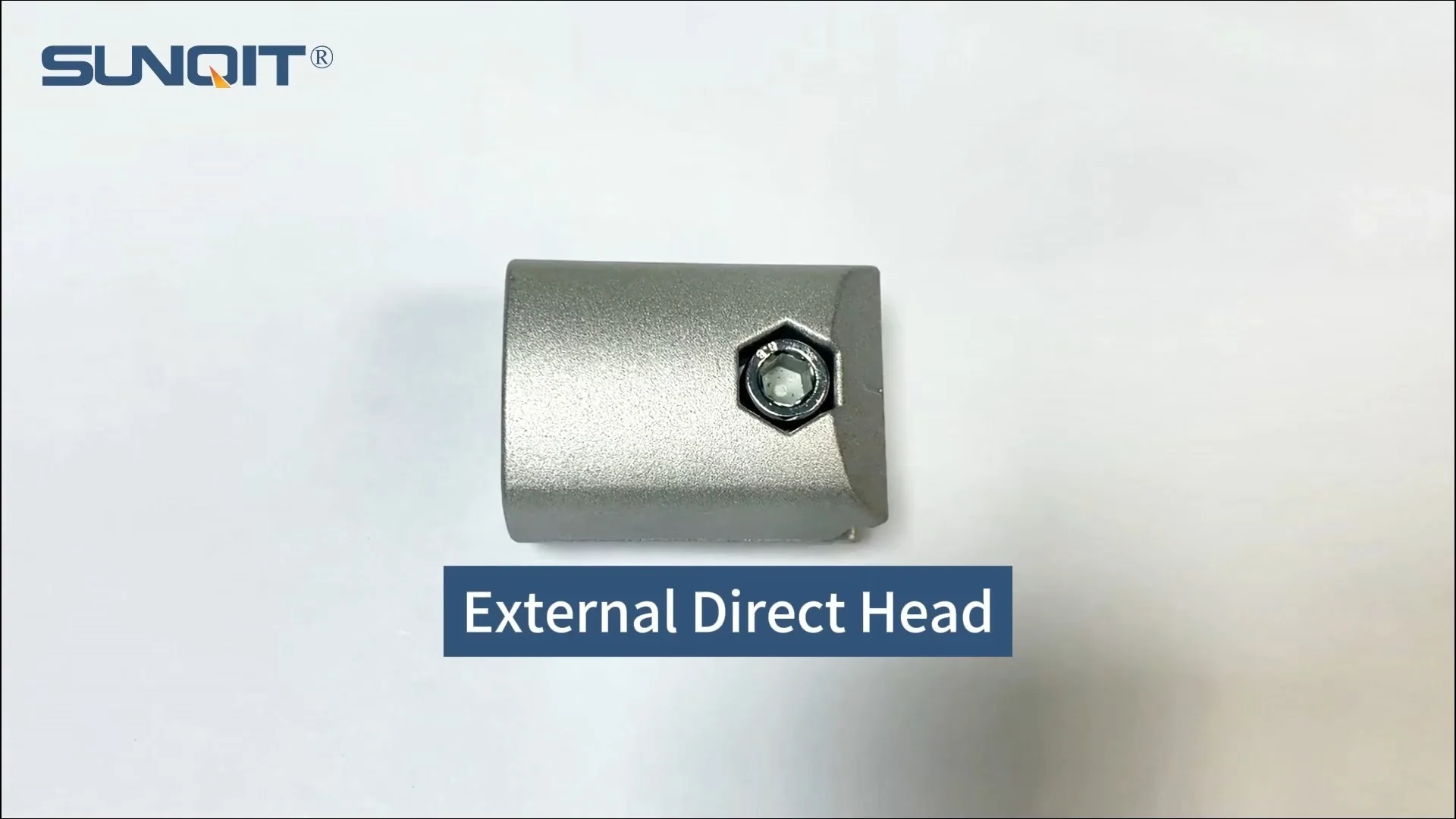
External Straight Aluminum Joint
Aluminum pipe joint outside connection used for two pcs 28pcs aluminum pipe connection in straight angle,it connects two pcs pipe from outside.
In the fast-paced world of manufacturing and production, where efficiency and adaptability are the cornerstones of success, every component—no matter how small—plays a critical role in shaping operational outcomes. Lean systems, designed to minimize waste, streamline workflows, and maximize value, rely heavily on modular, durable, and flexible tools to keep production lines running smoothly. Among these unsung heroes of lean manufacturing is the external straight aluminum joint —a seemingly simple component that quietly holds together the backbone of countless production setups, from workbenches to material racks. In this article, we'll dive deep into what an external straight aluminum joint is, explore its key features, and uncover why it's become an indispensable part of modern lean systems.
1. Defining the External Straight Aluminum Joint: A Small Part with a Big Role
At first glance, the external straight aluminum joint might appear unassuming—a compact, cylindrical piece of metal with precision-engineered grooves and slots. But its design is anything but accidental. Simply put, an external straight aluminum joint is a connecting component specifically designed to join two or more aluminum profiles in a straight line, creating stable, rigid structures that form the basis of lean manufacturing systems. Made from high-grade aluminum alloy (often 6063, known for its excellent strength-to-weight ratio and corrosion resistance), these joints are lightweight yet remarkably sturdy, making them ideal for both stationary and semi-mobile applications.
Physically, most external straight aluminum joints feature a hollow or solid cylindrical body with external threads, T-slots, or protrusions that lock into the corresponding T-slots of aluminum profiles. Unlike traditional welded connections or bulky steel brackets, these joints require no specialized tools for assembly—typically, they can be secured with simple bolts, screws, or clamping mechanisms. This "tool-less" design is a game-changer in lean environments, where minimizing setup time and reducing labor costs are top priorities.
2. Key Features: Why Aluminum and "Straight" Matter
To understand why external straight aluminum joints have become a staple in lean systems, let's break down their core features:
2.1 Material: Aluminum's Winning Combination
Aluminum is the material of choice for these joints for several reasons. First, it's lightweight—significantly lighter than steel, which reduces the overall weight of structures like lean pipe workbenches or material racks, making them easier to move or reconfigure. Second, aluminum naturally resists corrosion, a critical advantage in manufacturing environments where exposure to moisture, oils, or chemicals is common. Third, it's malleable enough to be precision-machined into complex shapes (like T-slots or threaded sections) while retaining impressive structural integrity.
2.2 "Straight" Design: Stability in Simplicity
The "straight" in the name refers to the joint's primary function: connecting profiles along a linear axis. Unlike angled joints (which connect profiles at 45° or 90°), external straight joints excel at creating long, uninterrupted runs of aluminum profiles—think the horizontal beams of a workbench or the vertical supports of a flow rack. This linear connection ensures that force is distributed evenly along the length of the structure, preventing wobbling or weak points that could compromise safety or efficiency.
2.3 Modularity: Adaptable by Design
Perhaps the most critical feature for lean systems is modularity. External straight aluminum joints are designed to be easily attached and detached from aluminum profiles without damaging either component. This means that if a production line needs to be reconfigured—say, to accommodate a new product size or increase workflow capacity—teams can disassemble the existing structure, reuse the joints and profiles, and build a new setup in hours rather than days. In lean terms, this eliminates "waste of inflexibility," a common pitfall in rigid, fixed manufacturing systems.

3. Core Functions in Lean Systems: Beyond Just "Connecting"
While the primary job of an external straight aluminum joint is to connect aluminum profiles, its role in lean systems extends far beyond simple assembly. Let's explore its core functions:
3.1 Building the Backbone of Lean Infrastructure
Lean systems rely on sturdy, adaptable infrastructure—think workbenches , flow racks, and material trolleys. External straight aluminum joints are the "glue" that holds this infrastructure together. For example, a lean pipe workbench used in electronics assembly might consist of 40x40mm aluminum profiles connected by external straight joints to form the tabletop frame and legs. The joints ensure that the workbench can support heavy equipment (like soldering stations or testing tools) without bending, while still allowing for adjustments—such as adding a shelf or extending the table length—by simply adding more profiles and joints.
3.2 Enabling Continuous Improvement (Kaizen)
Kaizen, the Japanese philosophy of continuous improvement, is at the heart of lean manufacturing. It encourages small, incremental changes to processes to boost efficiency. External straight aluminum joints support Kaizen by making it easy to test and implement these changes. For instance, if a team notices that a flow rack is causing bottlenecks because it's too short, they can quickly add another section of aluminum profile using external straight joints, extending the rack in minutes. No welding, no cutting, no waiting for custom parts—just rapid adaptation.
3.3 Reducing Waste in Material Handling
Waste reduction is a cornerstone of lean, and external straight aluminum joints contribute here by enabling the creation of custom material handling solutions. For example, a turnover trolley built with aluminum profiles and external straight joints can be tailored to the exact size of a company's products, eliminating the need for oversized, generic trolleys that waste space and energy. Similarly, roller tracks (used in flow racks to move materials smoothly) can be mounted onto aluminum profiles using these joints, ensuring the tracks are perfectly aligned to prevent jams or slowdowns.
3.4 Supporting Safety and Ergonomics
In lean systems, employee safety and ergonomics are non-negotiable. External straight aluminum joints help here by ensuring structures are stable and adjustable. A workbench built with these joints can be raised or lowered by swapping out leg profiles of different lengths, reducing strain on workers' backs. Similarly, material racks can be designed with precise spacing (thanks to the joint's consistent connection points) to prevent items from tipping or falling, minimizing the risk of accidents.

4. Comparing External Straight Aluminum Joints to Traditional Alternatives
To truly appreciate the value of external straight aluminum joints, let's compare them to two common alternatives: welded steel joints and plastic connectors. The table below highlights key differences:
| Feature | External Straight Aluminum Joint | Welded Steel Joint | Plastic Connector |
|---|---|---|---|
| Weight | Lightweight (100-300g per joint) | Heavy (500-1000g per joint) | Light (50-150g per joint) |
| Assembly Time | 5-10 minutes (tool-less) | 30-60 minutes (requires welding equipment) | 5-10 minutes (tool-less) |
| Reusability | High (can be disassembled and reused) | Low (welds must be cut, damaging profiles) | Medium (plastic may degrade with repeated use) |
| Load Capacity | High (supports 50-150kg per joint, depending on size) | Very High (supports 200+kg per joint) | Low (supports 10-50kg per joint) |
| Corrosion Resistance | High (aluminum oxide layer prevents rust) | Low (requires painting/coating to prevent rust) | High (resistant to most chemicals) |
| Cost | Moderate ($5-15 per joint) | High ($20-50 per joint + labor) | Low ($2-8 per joint) |
As the table shows, external straight aluminum joints strike a balance between strength, cost, and flexibility that welded steel and plastic simply can't match. They're lighter than steel, stronger than plastic, and reusable—making them the ideal choice for lean systems that demand both durability and adaptability.

5. Practical Applications: Where You'll Find External Straight Aluminum Joints
Now that we understand the "what" and "why," let's look at real-world applications where external straight aluminum joints shine:
5.1 Lean Pipe Workbenches
Lean pipe workbenches are the workhorses of assembly lines, and external straight aluminum joints are critical to their construction. For example, the "Workbench E (Single Deck-Without Caster)" (a common model in many factories) uses these joints to connect aluminum profiles into a rectangular frame, supporting a plywood or aluminum honeycomb top. The joints ensure the frame stays square and stable, even when tools or products are placed on the edge. If the workbench needs to be extended to accommodate more workers, additional profiles and external straight joints can be added in minutes.
5.2 Material Racks and Flow Racks
Material racks, like "Material Rack B (3 Row and 3 Floor)," rely on external straight aluminum joints to build vertical supports and horizontal beams. These joints connect the aluminum profiles that form the rack's frame, while additional joints secure the shelves or roller tracks. In flow racks, the joints ensure the roller tracks are aligned at a slight angle, allowing materials to glide from the back to the front (a key feature of "first-in, first-out" inventory systems in lean manufacturing).
5.3 Turnover Trolleys
Turnover trolleys are used to transport materials between workstations, and their frames are often built with aluminum profiles and external straight joints. These joints allow the trolley to be customized to the size of the materials being transported—for example, a trolley carrying small electronic components might be narrow and tall, while one carrying large automotive parts is wide and low. The joints also connect the caster mounts, ensuring the wheels are securely attached and the trolley moves smoothly.
5.4 Conveyor Systems
While conveyor systems are more complex, external straight aluminum joints play a role in their supporting structures. For example, the frame that holds a belt or roller conveyor is often made of aluminum profiles connected by these joints. This allows the conveyor to be extended or shortened as production needs change, without requiring a complete overhaul of the system.
6. Choosing the Right External Straight Aluminum Joint: Key Considerations
Not all external straight aluminum joints are created equal. When selecting joints for your lean system, keep these factors in mind:
6.1 Profile Compatibility
Aluminum profiles come in different sizes (e.g., 20x20mm, 30x30mm, 40x40mm), and joints are designed to fit specific profile sizes. Always check that the joint's inner diameter or T-slot spacing matches your profiles—using a 40mm joint with a 30mm profile will result in a loose, unstable connection.
6.2 Load Capacity
Consider the weight the joint will need to support. Heavier applications (like workbenches holding machinery) require joints with thicker walls or reinforced clamping mechanisms. Most manufacturers list load ratings (e.g., "supports up to 100kg per joint")—always err on the side of caution and choose a joint with a higher capacity than you think you'll need.
6.3 Environment
If your facility is humid, dusty, or exposed to chemicals, look for joints with anodized or powder-coated finishes, which enhance corrosion resistance. For cleanrooms (common in electronics or pharmaceutical manufacturing), choose joints with smooth surfaces that are easy to sanitize.
6.4 Supplier Reliability
Finally, partner with a reputable aluminum profile accessories supplier who can provide consistent quality and quick lead times. Lean systems thrive on minimal downtime, so having a reliable source for replacement joints (or custom sizes) is essential.
7. Conclusion: Small Component, Big Impact
In the grand scheme of manufacturing, the external straight aluminum joint might seem like a minor detail. But as we've explored, it's a detail that makes a major difference in lean systems. By enabling quick assembly, modularity, and durability, these joints help companies reduce waste, adapt to change, and keep production lines running efficiently. Whether you're building a simple workbench or a complex flow rack system, the external straight aluminum joint is more than just a connector—it's a catalyst for lean success.
So the next time you walk through a factory, take a closer look at the structures around you. Chances are, you'll spot these unassuming aluminum joints hard at work, quietly supporting the lean systems that power modern manufacturing. And now, you'll know just how much they contribute to making those systems faster, safer, and more efficient.