- Company Articles
- Products and Technology
- Product knowledge
- What is an Internal Straight Aluminum Joint? Definition, Structure & Core Functions

What is an Internal Straight Aluminum Joint? Definition, Structure & Core Functions
Related Product
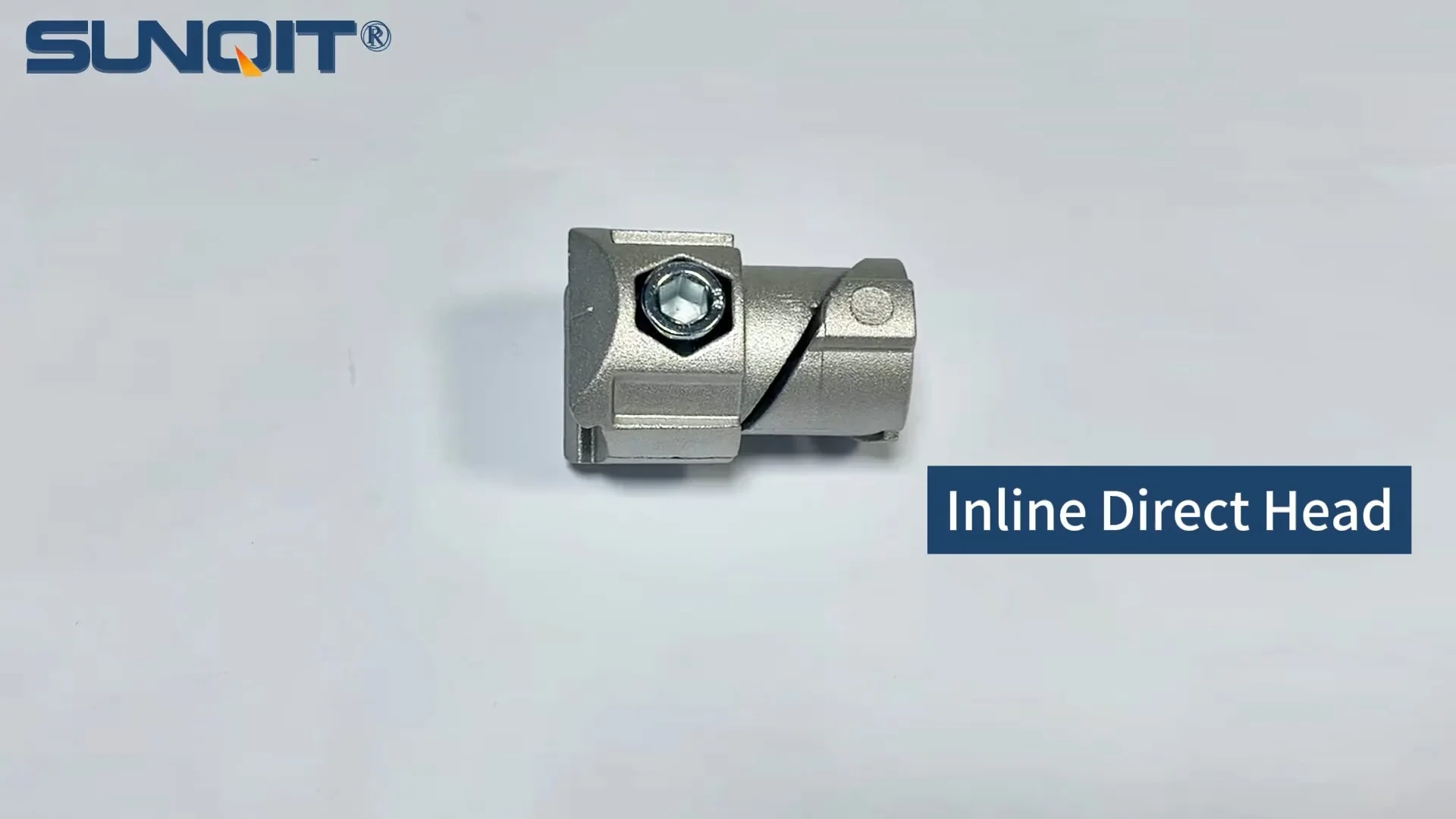
Internal straight aluminum joint
Aluminum pipe joint inside connection used for two pcs 28pcs aluminum pipe connection in straight angle,it connects two pcs pipe from inside.
In the fast-paced world of manufacturing, warehousing, and industrial design, the ability to build flexible, durable, and efficient workspaces is more critical than ever. Lean systems, which prioritize waste reduction and process optimization, rely heavily on modular components that can adapt to changing needs. At the heart of these systems lies the humble yet indispensable aluminum profile—a lightweight, strong, and versatile building block. But even the best profiles are only as effective as the joints that hold them together. Enter the internal straight aluminum joint : a unsung hero that quietly ensures stability, precision, and adaptability in countless industrial setups. Whether you're constructing a workbench, assembling a material rack, or designing a conveyor system, understanding this small but mighty component can make all the difference in creating a setup that's both functional and future-proof.
Defining the Internal Straight Aluminum Joint
At its core, an internal straight aluminum joint is a specialized connector designed to join two aluminum pipes or profiles in a straight, linear configuration. Unlike external joints that clamp around the outside of profiles, this type of joint is engineered to fit internally —meaning it slides inside the hollow channels of aluminum pipes or T-slot profiles, creating a seamless, flush connection. This internal design not only enhances the structural integrity of the assembly but also contributes to a cleaner, more streamlined appearance, which is particularly valuable in environments where aesthetics and space efficiency matter.
Think of it as the "invisible glue" of modular aluminum systems. While it may not be the most visible component, its role is foundational: it transforms individual aluminum pipes into a unified structure capable of supporting tools, materials, or even heavy machinery. Whether you're building a simple workbench or a complex production line, the internal straight aluminum joint ensures that every straight section of your setup stays aligned, stable, and ready to withstand the demands of daily use.
Anatomy of an Internal Straight Aluminum Joint: Structure & Design
To truly appreciate the value of an internal straight aluminum joint, it's essential to break down its structure and design. These joints are precision-engineered to balance strength, ease of use, and compatibility with standard aluminum profiles. Let's explore their key components and design features in detail.
Materials: The Foundation of Durability
Most internal straight aluminum joints are crafted from high-grade aluminum alloys, typically 6063-T5 or 6061-T6. These alloys are chosen for their exceptional combination of strength, corrosion resistance, and lightweight properties—qualities that make them ideal for industrial applications. 6063-T5, in particular, is favored for its excellent extrudability, which allows manufacturers to create intricate joint designs with tight tolerances. This material choice ensures the joint can withstand the stresses of repeated assembly, disassembly, and heavy loads without deforming or corroding, even in harsh factory environments.
Key Design Features
The design of an internal straight aluminum joint is a masterclass in functional simplicity. Here are the most critical features that set it apart:
- Hollow Core Compatibility: The joint is precisely sized to fit inside standard hollow aluminum pipes or T-slot profiles (such as 2020, 3030, or 4040 series). This internal fit ensures a snug connection that minimizes lateral movement.
- Locking Mechanism: To secure the joint in place, most models feature a locking screw (often a hex socket screw) that tightens against the inner wall of the aluminum profile. When tightened, the screw creates friction, holding the joint firmly in position. Some advanced designs may include spring-loaded pins or cam locks for tool-free assembly, though screw-based mechanisms remain the most common for their reliability.
- Smooth External Profile: Since the joint sits inside the aluminum pipe, its external surface is typically flush with the pipe's outer diameter. This creates a seamless, unobtrusive look and prevents snags or interference with other components (e.g., conveyor belts, material handlers).
- Symmetrical Design: The joint is often symmetrical along its central axis, allowing it to connect two pipes of the same diameter in a straight line. This symmetry ensures balanced load distribution, reducing stress on individual components.
Components Breakdown
While designs vary slightly by manufacturer, a typical internal straight aluminum joint consists of three main components:
- Body: The main cylindrical or rectangular section that inserts into the aluminum pipe. Its outer diameter is machined to match the inner diameter of the target profile with minimal clearance (usually 0.1–0.3mm) for a tight fit.
- Locking Screw Port: A threaded hole (often M5 or M6) drilled radially through the body, designed to accept a locking screw. This port is positioned to ensure the screw makes direct contact with the profile's inner wall when tightened.
- Chamfered Ends: The ends of the joint are often chamfered (slightly beveled) to facilitate easy insertion into the aluminum pipe, reducing the risk of damaging the profile or joint during assembly.

Core Functions: What Does It Actually Do?
At first glance, the internal straight aluminum joint might seem like a simple piece of hardware, but its functions are critical to the performance of modular aluminum systems. Let's break down its core roles in industrial setups:
1. Creating Secure Linear Connections
The primary function of the internal straight aluminum joint is to connect two aluminum pipes or profiles in a straight line. This might sound straightforward, but in industrial environments, where vibrations, heavy loads, and constant use are the norm, "secure" is the operative word. The joint's friction-based locking mechanism ensures that once tightened, the connection remains stable, even under dynamic stress (e.g., a conveyor belt transporting parts or a workbench supporting heavy machinery). Without this stability, modular structures would wobble, shift, or even collapse—compromising safety and efficiency.
2. Enabling Modularity and Adaptability
Lean systems thrive on adaptability, and the internal straight aluminum joint is a key enabler of this flexibility. Unlike welded connections, which are permanent and require specialized tools to modify, joints allow for quick assembly and disassembly. Need to extend a workbench by 2 feet? Simply loosen the locking screws, add a new section of aluminum pipe with a joint, and retighten. This modularity reduces downtime when reconfiguring workspaces, making it easier to adapt to new production needs, seasonal demands, or layout changes. In essence, the joint turns static structures into dynamic, evolving systems.
3. Ensuring Precision Alignment
In applications like conveyor systems or material racks, even minor misalignment can cause major issues—parts getting stuck, uneven wear on components, or reduced throughput. The internal straight aluminum joint's tight tolerances and symmetrical design ensure that connected profiles remain perfectly aligned along their central axis. This precision is especially critical for roller tracks and conveyors, where items must glide smoothly from one point to another. By maintaining alignment, the joint helps minimize friction, reduce wear and tear, and keep operations running smoothly.
4. Supporting Load Distribution
Industrial structures often bear significant weight, from stacked materials on a rack to workers leaning on a workbench. The internal straight aluminum joint plays a vital role in distributing these loads evenly across connected profiles. By creating a rigid connection, it prevents stress from concentrating at a single point, which could lead to bending or failure. The aluminum alloy material further enhances this function, as its strength-to-weight ratio allows the joint to support heavy loads without adding unnecessary bulk to the structure.
5. Simplifying Assembly and Maintenance
Time is money in manufacturing, and the internal straight aluminum joint is designed to save both. Unlike welding or bolting external brackets, which require specialized skills and tools, assembling with internal joints is straightforward: insert the joint into the pipe, tighten the locking screw with a hex key, and you're done. This simplicity reduces assembly time and training requirements for workers. Maintenance is equally hassle-free—if a joint becomes loose over time, a quick turn of the screw is all it takes to restore stability. This ease of use makes modular systems more accessible to small and large facilities alike, democratizing the benefits of lean manufacturing.

Applications: Where Can You Find It?
The internal straight aluminum joint is a versatile component with applications across a wide range of industries. Anywhere modular aluminum profiles are used, there's a good chance this joint is hard at work. Here are some of its most common uses:
Workbenches and Assembly Stations
Workbenches are the backbone of manufacturing and repair operations, and aluminum profiles are a popular choice for building them due to their strength and customizability. Internal straight aluminum joints are used to connect the horizontal and vertical rails of the workbench frame, ensuring a sturdy surface for tools, parts, and assembly tasks. For example, a basic aluminum workbench (like "Workbench E (Single Deck-Without Caster)" from common industrial catalogs) relies on these joints to connect the front, back, and side rails, creating a stable platform that can support hundreds of pounds of equipment.
Material Racks and Storage Systems
In warehouses and factories, efficient storage is essential for maintaining lean operations. Material racks, such as "Material Rack B (3 Row and 3 Floor)"—a common design for organizing small parts or components—use aluminum profiles for their shelves and uprights. Internal straight aluminum joints connect the horizontal shelf rails to the vertical uprights, ensuring the shelves remain level and stable, even when fully loaded. The joint's modularity also allows users to adjust shelf heights by adding or removing pipe sections, adapting the rack to different storage needs.
Conveyor and Roller Track Systems
Conveyors and roller tracks are critical for moving materials efficiently through production lines. Aluminum profiles form the frame of these systems, and internal straight aluminum joints connect the straight sections of the track. For instance, in a roller track setup using "38 Aluminum Roller Track Yellow" or "40 Steel Roller Track Black ESD Wheel," the joints ensure the track remains perfectly aligned, allowing parts to glide smoothly without jamming. The joint's flush design is especially important here, as any protrusion could catch on moving parts or damage sensitive components like circuit boards or delicate machinery parts.
Turnover Trolleys and Carts
Turnover trolleys are used to transport materials between workstations, and their frames are often built from lightweight aluminum profiles. Internal straight aluminum joints connect the trolley's rails, ensuring the structure can withstand the bumps and vibrations of being moved across factory floors. The joint's secure connection also prevents the trolley from flexing under load, protecting the materials being transported and reducing the risk of accidents.
Benefits: Why Choose Internal Straight Aluminum Joints?
With so many joint types available—external brackets, plastic connectors, welded fittings—why opt for internal straight aluminum joints? Let's explore the advantages that make them a top choice for industrial applications:
Durability That Stands the Test of Time
Aluminum alloys are inherently resistant to corrosion, rust, and wear, making internal straight aluminum joints ideal for long-term use. Unlike plastic joints, which can degrade under UV light or chemical exposure, or steel joints, which may rust in humid environments, aluminum joints maintain their integrity for years. This durability reduces the need for frequent replacements, lowering maintenance costs and downtime.
Precision and Consistency
Manufactured with tight tolerances (often ±0.05mm), internal straight aluminum joints ensure consistent performance across every connection. This precision is critical in modular systems, where even small variations can lead to misalignment or instability. Whether you're building one workbench or a hundred, you can trust that each joint will fit and function the same way, ensuring uniformity in your setups.
Aesthetic and Space-Saving Design
External joints or brackets can create bulky, uneven surfaces that catch on materials or look unprofessional. Internal straight aluminum joints, by contrast, sit flush inside the profile, creating a clean, streamlined appearance. This is especially valuable in customer-facing areas (e.g., demo labs, retail displays) or in tight spaces where every inch counts. The smooth surface also makes cleaning easier, as there are no crevices for dirt or debris to accumulate.
Cost-Effectiveness in the Long Run
While internal straight aluminum joints may cost slightly more upfront than plastic alternatives, their durability and reusability make them more cost-effective over time. Plastic joints often need replacement after a few years of heavy use, while aluminum joints can be reused indefinitely—even in new configurations. Additionally, their ease of assembly reduces labor costs, and their compatibility with standard aluminum profiles means you won't need to invest in specialized or proprietary components.
How Does It Compare to Other Joint Types?
To fully appreciate the value of internal straight aluminum joints, it helps to compare them to other common joint types used in modular systems. The table below highlights key differences between internal straight aluminum joints, external straight aluminum joints, and plastic straight joints:
| Feature | Internal Straight Aluminum Joint | External Straight Aluminum Joint | Plastic Straight Joint |
|---|---|---|---|
| Installation Type | Fits inside the aluminum profile | Clamps around the outside of the profile | Slides over or around the profile (external) |
| Material | Aluminum alloy (6063-T5/6061-T6) | Aluminum alloy (6063-T5/6061-T6) | ABS or nylon plastic |
| Load Capacity | High (up to 500kg per joint, depending on profile size) | High (similar to internal, but bulkier) | Low to medium (up to 100kg per joint) |
| Profile Compatibility | Designed for hollow profiles (T-slot or round) | Works with solid or hollow profiles | Limited to lightweight, small-diameter profiles |
| Finish | Flush, seamless with profile | Bulky, creates external protrusions | Bulky, may have visible seams |
| Reusability | Excellent (can be disassembled and reused indefinitely) | Excellent (same as internal) | Fair (plastic may weaken after repeated use) |
| Best For | Precision linear connections, clean aesthetics, high loads | Heavy-duty applications where external clamping is preferred | Light-duty, temporary setups, or low-cost projects |
As the table shows, internal straight aluminum joints excel in scenarios where precision, aesthetics, and durability are priorities. They outperform plastic joints in load capacity and longevity and offer a cleaner alternative to external aluminum joints, making them the go-to choice for most modular lean systems.
Installation Guide: How to Use an Internal Straight Aluminum Joint
Installing an internal straight aluminum joint is a straightforward process, but attention to detail ensures a secure, long-lasting connection. Here's a step-by-step guide to help you get it right:
- Gather Your Tools: You'll need a hex key (Allen wrench) matching the size of the joint's locking screw (typically 4mm or 5mm), a tape measure, and a rubber mallet (optional, for tapping the joint into place).
- Prepare the Aluminum Profiles: Cut your aluminum pipes or profiles to the desired length, ensuring the ends are square and free of burrs (use a deburring tool if necessary). Chamfered ends on the profiles will make insertion easier, but if not, the joint's chamfered ends should still help.
- insert the Joint: Slide one end of the internal straight aluminum joint into the first profile until it is seated fully (usually until the joint's midpoint aligns with the profile's end). For tight fits, gently tap the joint with a rubber mallet—avoid using a metal hammer, as this can damage the aluminum.
- Add the Second Profile: Slide the second profile onto the exposed end of the joint, pushing it until the two profiles are flush (or spaced as needed for your design). Ensure the connection is straight—use a level if precision alignment is critical.
- Tighten the Locking Screw: Using the hex key, tighten the locking screw until it is snug against the profile's inner wall. Do not overtighten, as this can strip the threads or deform the profile. A good rule of thumb is to tighten until you feel resistance, then give it a quarter-turn more.
- Test the Connection: Gently wiggle the connected profiles to ensure there's no movement. If the joint feels loose, check that the screw is tight and the joint is fully inserted into both profiles. If needed, disassemble and reinsert, ensuring proper alignment before retightening.
Pro tip: For applications with high vibration (e.g., near machinery), apply a small amount of thread-locking compound (like Loctite) to the locking screw to prevent it from loosening over time. Just be sure to use a removable formula so you can disassemble the joint later if needed.
Maintenance Tips: Keeping Your Joints in Top Shape
With minimal maintenance, internal straight aluminum joints will provide years of reliable service. Here are a few simple tips to keep them performing at their best:
- Inspect Regularly: Check joints monthly for looseness, especially in high-vibration areas. A quick tightening with a hex key can prevent larger issues down the line.
- Clean When Needed: Wipe joints with a damp cloth to remove dust, oil, or debris. For stubborn grime, use a mild detergent—avoid harsh chemicals that could damage the aluminum finish.
- Lubricate Threads: If you disassemble a joint, apply a small amount of dry lubricant (like graphite powder) to the locking screw threads before reassembly. This makes tightening easier and prevents seizing.
- replace Damaged Joints: While aluminum joints are durable, they can be damaged if overtightened or bent. If a joint is deformed, cracked, or has stripped threads, replace it immediately—compromised joints put the entire structure at risk.
Conclusion: The Quiet Workhorse of Modular Systems
In the world of industrial design and lean manufacturing, it's often the smallest components that make the biggest impact. The internal straight aluminum joint is a perfect example: a simple, unassuming piece of hardware that plays a vital role in creating flexible, efficient, and durable workspaces. By securely connecting aluminum profiles in straight lines, enabling modularity, and ensuring precision, this joint helps turn visionary layouts into functional realities.
Whether you're building a workbench, a material rack, or a conveyor system, choosing the right joint matters. Internal straight aluminum joints offer the ideal balance of strength, precision, and adaptability, making them a cornerstone of modern modular systems. So the next time you walk through a factory or warehouse, take a moment to appreciate the invisible connections holding everything together—chances are, an internal straight aluminum joint is hard at work, keeping things straight, stable, and ready for whatever the day brings.