- Company Articles
- Products and Technology
- Product knowledge
- What Is End Support for Roller Track Placon Mount with Wheel? Definition & Core Functions

What Is End Support for Roller Track Placon Mount with Wheel? Definition & Core Functions
Related Product
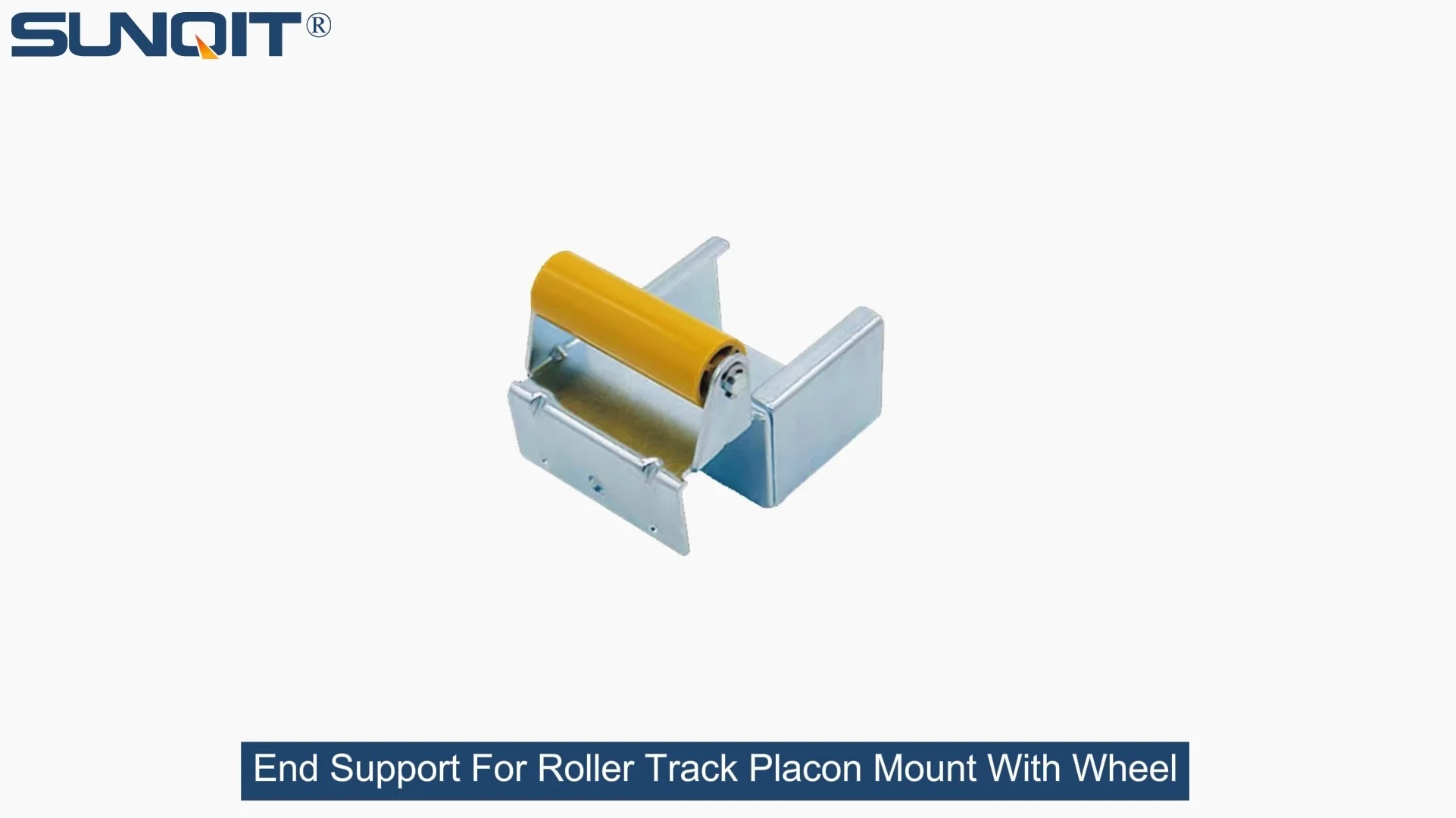
End Support for Roller Track Placon Mount with Wheel
End support for roller track placon mount with wheel,the special design with end wheel,make it with more flexible function for roller track and pipe connection and give more option for selection for building flow rack system.
In the bustling world of manufacturing, where every second counts and precision is non-negotiable, the difference between a smooth workflow and a frustrating bottleneck often lies in the smallest components. Think about the last time you walked through a factory floor—rows of conveyor belts gliding, workbenches organized with pinpoint accuracy, and materials flowing seamlessly from one station to the next. It's a symphony of efficiency, but what keeps that symphony in tune? More often than not, it's the unsung heroes: the humble, hardworking parts that hold everything together. Today, we're shining a spotlight on one such hero: the End Support for Roller Track Placon Mount with Wheel . If you've ever wondered how roller tracks stay stable, materials slide without jamming, or production lines adapt to different needs, this is the component you need to know about. Let's dive in.
Let's Start with the Basics: What Exactly Is It?
First things first—let's break down the name. It sounds technical, but it's simpler than you might think. "End Support" tells us it's a support structure at the end of something. "Roller Track Placon Mount" refers to the roller track system it's attached to (placon mount is just a specific mounting design that ensures a tight, secure fit). And "with Wheel"? That's the game-changer: a built-in wheel that adds flexibility and adjustability. Put it all together, and you've got a sturdy, adaptable support bracket that anchors the end of a roller track while letting you tweak its position, height, or angle with ease.
Picture a roller track (you know, those metal or plastic tracks with small wheels that let materials slide along) in a warehouse or factory. Without an end support, that track might wobble, sag under heavy loads, or even detach from its frame. Add this end support, and suddenly the track has a rock-solid foundation. But the wheel? That's what makes it smarter than a basic metal bracket. It lets you move the support (and thus the track) slightly if needed, level it on uneven floors, or even adjust the angle to match the next workbench or conveyor. It's like the track's "stabilizer with a little extra swagger."
Quick Facts at a Glance
| Primary Role | Stabilize roller tracks; enable smooth material flow |
| Key Design Feature | Integrated wheel for adjustability |
| Common Materials | Aluminum alloy (lightweight, rust-resistant) or steel (heavy-duty) |
| Typical Industries | 3C assembly, medical device manufacturing, warehousing, automotive |
Core Functions: Why It's More Than Just a "Bracket"
Now that we know what it is, let's talk about what it does . This little component wears many hats, and each one is critical to keeping your production line or warehouse running like a well-oiled machine. Here are its top five superpowers:
1. Stability: The "Rock" of Your Roller Track
Imagine stacking boxes on a shelf that's missing a leg—it's going to tilt, right? Roller tracks are no different. When you're moving heavy materials (think circuit boards in 3C assembly or medical tools in a sterile facility), the track needs to stay perfectly aligned. The End Support for Roller Track Placon Mount with Wheel acts like that missing leg, but better. Its sturdy aluminum or steel body anchors the track to the frame (often an aluminum profile, which is lightweight yet strong), preventing sagging or swaying even when loaded with goods. No more wobbly tracks, no more materials getting stuck halfway—just steady, reliable support.
2. Smooth Sailing: Guides Materials Without a Hitch
What good is a stable track if materials get stuck at the end? That's where the "wheel" part comes in. The integrated wheel isn't just for moving the support—it also helps guide materials as they exit the track. Think about a conveyor belt feeding parts onto a workbench: if the track ends abruptly, parts might slide off at an odd angle, scratch against the edge, or even fall. This end support's wheel creates a gentle transition, letting materials glide smoothly onto the next surface (like a workbench or another conveyor). It's the difference between "thud, clatter, oops" and "whoosh, there we go."
3. Adaptability: One Support, a Million Setups
Factories and warehouses aren't one-size-fits-all. One day you might be assembling smartphones (small, lightweight parts), the next day you're moving bulky medical equipment cases. Your roller tracks need to keep up, and so do their supports. The wheel on this end support lets you adjust the track's height or angle in minutes. Uneven concrete floor? Just tweak the wheel to level the track. Need to align the track with a taller conveyor? Lift the support slightly using the wheel. It's like having a "one-tool-fits-all" solution for track setup, which saves time, reduces frustration, and lets you reconfigure your space without calling in a team of engineers.
4. Built to Last: Tough Enough for the Toughest Floors
Let's talk durability. Factories are rough places: heavy loads, constant movement, spills, even the occasional bump from a forklift. A flimsy support would bend or break in weeks. But this end support? It's built to take a beating. Most are made from high-grade aluminum alloy (hello, aluminum profile family!) or stainless steel, which resists rust, dents, and corrosion. The wheel itself is usually made from tough plastic or rubber that won't scratch floors or wear down quickly. Whether you're using it in a clean 3C assembly line or a dusty warehouse, it's going to keep working—day in, day out.
5. Team Player: Plays Nice with Your Existing Lean System
Here's the best part: it doesn't care what other parts you're using. It plays well with almost any roller track, aluminum profile frame, workbench, or conveyor. Got a custom lean system set up? No problem. Need to add it to an older roller track to upgrade your workflow? It'll fit right in. This compatibility is key for lean manufacturing—you don't want to replace your entire setup just to fix one weak spot. This end support lets you boost your existing system's performance without starting from scratch.

Where Does It Shine? Real-World Applications
Enough theory—let's talk about where you'll actually find this end support hard at work. Spoiler: if there's a roller track, conveyor, or material flow system, it's probably there. Here are three industries where it's making a big difference:
3C Assembly: Precision Matters (A Lot)
3C products (computers, communication devices, consumer electronics) are all about tiny, delicate parts. A scratched smartphone screen or a bent laptop hinge can ruin an entire product. In 3C assembly lines, roller tracks move these parts from station to station—so the track needs to be perfectly stable and the parts need to glide smoothly . This end support ensures the track doesn't wobble (no scratched screens!), and the wheel lets workers align the track with their workbenches down to the millimeter. It's why your new phone looks flawless—because the parts never took a bad bump during assembly.
Medical Device Manufacturing: Clean, Sterile, and Reliable
Medical facilities and device factories have zero tolerance for errors. When you're moving surgical tools or sensitive diagnostic equipment parts, you can't risk jostling, dropping, or contaminating them. The End Support for Roller Track Placon Mount with Wheel is a favorite here because it's easy to clean (no nooks for dirt to hide), rust-resistant (thanks to aluminum or stainless steel), and gentle on parts (the wheel ensures smooth, vibration-free movement). It's one less thing to worry about, so medical teams can focus on making life-saving equipment—not fixing wonky tracks.
Warehouse Logistics: Keep the Supply Chain Moving
Warehouses are all about speed: get products in, get them sorted, get them out. Roller tracks are the backbone of this process, moving boxes from storage racks to packing stations. Without reliable end supports, tracks would slow down, jam, or break under heavy cartons. This support keeps the tracks stable even when loaded with 50+ kg boxes, and the wheel makes it easy to reconfigure tracks during peak seasons (hello, holiday rush!). It's why your online order arrives on time—because the warehouse's roller tracks (and their end supports) didn't skip a beat.

Why Bother with This End Support? (Spoiler: It Saves You Money)
You might be thinking, "Can't I just use a basic metal bracket instead?" Sure, you could—but here's why you won't want to. Basic brackets are rigid: they don't adjust, they don't guide materials gently, and they wear out faster. That means more downtime (fixing sagging tracks), more product damage (scratched parts from jams), and more replacement costs (buying new brackets every few months). This end support? It's an investment that pays off. It reduces downtime, cuts down on product waste, and lasts years longer than basic brackets. Plus, its adaptability means you won't need to buy new supports every time you reconfigure your line. In short: it's not just a support—it's a cost-saver.
And let's not forget the human factor. Workers hate fighting with wobbly tracks or jamming materials. It slows them down, frustrates them, and even increases the risk of injuries (bending to lift stuck boxes, for example). A smooth, stable track with a reliable end support makes their jobs easier, faster, and safer. Happier workers = more productive workers, and that's priceless.

Works Great with Friends: How It Fits Into Your Lean System
No component is an island, and this end support is no exception. It's part of a bigger family of lean system tools that work together to make your workflow better. Here's how it teams up with other stars:
- Roller Track: The main partner! The end support stabilizes the track, and the track carries the materials. Together, they're the "dynamic duo" of material flow.
- Aluminum Profile Frames: Most roller tracks are mounted on aluminum profile frames (lightweight, strong, easy to build with). This end support bolts right onto these frames, so you don't need special tools or custom parts.
- Workbenches: Ever seen a workbench with a roller track feeding parts onto it? The end support ensures the track lines up perfectly with the bench, so parts slide right where the worker needs them—no reaching, no stretching.
- Conveyors: When a roller track feeds into a powered conveyor, the end support's wheel lets you align the two systems so materials transfer smoothly (no more "clunk" as parts hit the conveyor belt).
It's all about creating a lean system—one where every part has a purpose, nothing is wasted, and everything works in harmony. This end support isn't just a "part"—it's a bridge between your track, your tools, and your team.
You Asked, We Answered: Common Questions
We get it—you've got questions. Let's tackle the ones we hear most often:
Q: How much weight can it support? Will it bend under heavy boxes?
A: Great question! Most models can handle 50–100 kg per support (check the specs for your specific model). They're built with thick, reinforced aluminum or steel, so even with daily use, they won't bend or sag. Think of it like a sturdy chair leg—designed to hold weight without breaking a sweat.
Q: Can I install it myself, or do I need a professional?
A: You can absolutely install it yourself! It usually comes with simple instructions and basic hardware (screws, bolts). Just line up the support with the end of your roller track, bolt it to your aluminum profile frame, and adjust the wheel to level it. No special skills needed—most people finish in 10–15 minutes per support.
Q: Is it compatible with non-aluminum roller tracks?
A: Yep! While it pairs perfectly with aluminum profile systems, it works with most standard roller tracks (steel, plastic, etc.) as long as they have a flat mounting surface. Just check the track's width and mounting hole positions to be sure (most manufacturers list compatibility info online).
Q: How do I maintain it? Do I need to oil the wheel or anything?
A: Low maintenance is the name of the game! The wheel is usually pre-lubricated, so you won't need to oil it. Just wipe down the support with a damp cloth occasionally to remove dust or debris, and tighten the mounting bolts if they get loose (though that's rare). It's basically "set it and forget it."
Final Thoughts: The Little Support That Does Big Things
At the end of the day, manufacturing and logistics are all about the details. It's not just the big machines or the fancy software—it's the small parts that keep everything moving, stable, and efficient. The End Support for Roller Track Placon Mount with Wheel might not have a flashy name, but it's a detail that makes a huge difference. It stabilizes, guides, adapts, and endures—so your roller tracks can do their job, your workers can do theirs, and your business can keep thriving.
Whether you're running a 3C assembly line, a medical device factory, or a busy warehouse, this end support is more than a tool—it's a partner in productivity. It's proof that even the "small stuff" can have a big impact on your bottom line, your team's morale, and your ability to stay competitive in a fast-paced world. So the next time you see a roller track gliding smoothly, take a second to appreciate the unsung hero holding it all together. Spoiler: it's probably this end support, doing what it does best—making hard work look easy.