- Company Articles
- Products and Technology
- Product knowledge
- What Is Lean Pipe Clamp Chrome? A Complete Definition

What Is Lean Pipe Clamp Chrome? A Complete Definition
Related Product
Lean Pipe Clamp Chrome
Lean pipe clamp is used for rack system hang monitor or other panel for workbenck, flowrack in production daily use.
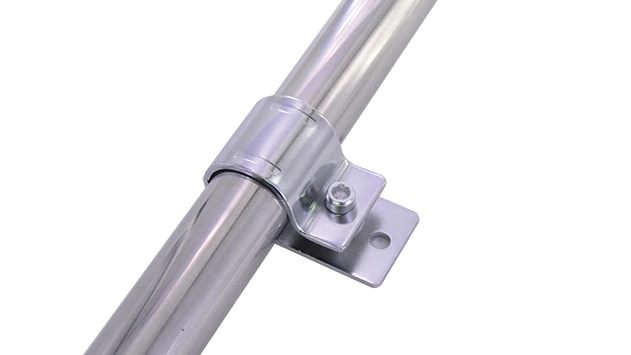
Walk into any modern manufacturing facility, warehouse, or assembly line, and you'll likely spot a common thread: structures built from sleek, modular pipes and joints that seem to adapt and evolve with the needs of the operation. These aren't just random metal pieces—they're the backbone of lean manufacturing, a philosophy centered on minimizing waste, maximizing efficiency, and fostering continuous improvement. At the heart of this modular magic lies a small but mighty component: the lean pipe clamp chrome . In this guide, we'll unpack everything you need to know about this unassuming yet critical tool, from its design and function to its role in building the flexible workspaces that drive today's most productive operations.
1. Defining the Lean Pipe Clamp Chrome: More Than Just a "Clamp"
Let's start with the basics. A lean pipe clamp chrome is a specialized connector designed to join lean pipes (also called "lean tubes") into stable, configurable structures. But to call it just a "clamp" is a bit like calling a smartphone a "phone"—it undersells its versatility. These clamps are the unsung heroes of modular systems, enabling teams to build, modify, and rebuild workbenches, flow racks, conveyors, and turnover trolleys with minimal effort and zero welding.
What sets the "chrome" variant apart? It's all in the finish. Most lean pipe clamps are made from steel, but chrome plating adds a layer of protection and polish. This plating isn't just for looks—though it does give the clamps a clean, professional appearance. Chrome resists corrosion, stands up to frequent handling, and wipes clean easily, making it ideal for environments where hygiene and durability matter, like electronics assembly lines or food processing facilities.
At its core, the lean pipe clamp chrome solves a fundamental problem in manufacturing: rigidity. Traditional fixed structures—think bolted steel shelves or welded workbenches—are expensive to modify and slow to adapt to new production needs. A single design change might require cutting, welding, or even replacing the entire structure. With chrome-plated clamps, though, reconfiguring a workbench to fit a new product or adjusting a flow rack to accommodate larger parts becomes as simple as loosening a few bolts, rearranging the pipes, and tightening them back down. It's flexibility personified.
2. The Anatomy of a Lean Pipe Clamp Chrome: What Makes It Tick?
To truly understand how lean pipe clamp chrome works, let's break down its components. While designs vary slightly by manufacturer, most clamps share a few key parts:
The Body: The Backbone of Strength
The clamp's body is typically made from high-grade steel, chosen for its strength and ability to withstand heavy loads. Steel ensures the clamp can support the weight of tools, materials, and even entire workbenches without bending or warping. After shaping, the body undergoes chrome plating—a process where a thin layer of chromium is electroplated onto the steel surface. This not only enhances corrosion resistance but also adds a smooth, low-friction finish that makes adjustments easier (no more struggling with rough, rusted edges).
The Clamping Mechanism: Grip That Lasts
At the heart of the clamp is its clamping mechanism, which usually consists of a bolt, nut, and pressure plate. When you tighten the bolt, the pressure plate squeezes the lean pipe against the clamp's body, creating a secure, non-slip connection. What's clever here is the design of the pressure plate: it often features teeth or a textured surface that digs gently into the pipe's outer layer (whether it's a PE coating, aluminum, or stainless steel) to prevent slippage, even under vibration or heavy use. This balance of strength and gentleness is crucial—you want a tight grip, but not one that damages the pipe or makes future adjustments impossible.
Joint Angles: Flexibility in Every Direction
Not all clamps are created equal, and one of the biggest variables is the angle at which they connect pipes. Some clamps are fixed at 90 degrees, perfect for building square frames or vertical supports. Others are swivel or multi-angle, allowing pipes to be joined at 45°, 135°, or even fully rotated (360°) for diagonal braces or custom configurations. This variety is what makes lean systems so adaptable—whether you need a straight line, a corner, or a complex geometric structure, there's a clamp angle to match.

3. How Lean Pipe Clamp Chrome Works: From Loose Parts to Solid Structures
Imagine building with Tinkertoys, but for adults—and with the strength to hold hundreds of pounds. That's essentially how lean pipe clamp chrome operates. Here's a step-by-step look at its role in constructing a typical structure, say, a simple workbench:
Step 1: select Your Pipes and Clamps – First, you'll choose lean pipes (often 28mm in diameter for standard applications) and the appropriate clamps. For a workbench, you might need 90° fixed clamps for the corners, straight clamps for horizontal supports, and maybe adjustable clamps for the shelf heights.
Step 2: Assemble the Frame – Start by connecting the vertical pipes (legs) to the horizontal pipes (top frame) using 90° clamps. Slide the clamp onto the end of one pipe, position the second pipe at the desired angle, and tighten the bolt until the connection feels secure but not over-tightened (you can always adjust later).
Step 3: Add Supports and Shelves – Once the frame is up, use straight or multi-angle clamps to add cross-braces for stability and shelves at the desired height. The beauty here is that if you later decide the shelf is too low, you don't need to disassemble the whole thing—just loosen the clamps, slide the shelf pipes up, and retighten.
Step 4: Test and Adjust – Give the structure a gentle shake to check for wobbles. If something feels loose, tighten the corresponding clamp. If a pipe is misaligned, loosen the clamp, realign, and retighten. No welding, no cutting, no waiting for glue to dry—just instant adjustments.
The key takeaway? Lean pipe clamp chrome turns individual pipes into a unified system that's both strong and flexible. It's the reason a single team can reconfigure a production line overnight to accommodate a new product launch, or a warehouse can repurpose a flow rack from storing small parts to bulky equipment in an hour.
4. Types of Lean Pipe Clamp Chrome: Choosing the Right One for the Job
Not all lean pipe clamp chrome are designed for the same tasks. Manufacturers offer a range of types to suit different needs, load capacities, and angles. Here are the most common varieties you'll encounter:
| Clamp Type | Angle Range | Typical Load Capacity | Best For |
|---|---|---|---|
| 90° Fixed Clamp | 90° only | Up to 200kg per joint | Square frames, vertical/horizontal connections (e.g., workbench legs, shelf corners) |
| 180° Straight Clamp | 180° (straight line) | Up to 150kg per joint | Extending pipes into longer sections (e.g., conveyor rails, long shelves) |
| Swivel (Multi-Angle) Clamp | 0°–360° (adjustable) | Up to 120kg per joint | Diagonal braces, custom angles, or structures with non-standard geometry |
| Cross Clamp (90° Crossing) | 90° (overlapping pipes) | Up to 180kg per joint | Reinforcing frames with overlapping cross-supports (e.g., heavy-duty workbench tops) |
| Three-Way Clamp | 90°/180° (three pipes) | Up to 160kg per joint | Adding a third pipe to a corner (e.g., a shelf bracket on a vertical leg) |
When selecting a clamp, load capacity is critical. A lightweight swivel clamp might work for a small parts bin, but a heavy-duty workbench supporting power tools will need a 90° fixed clamp with a higher weight rating. Always check the manufacturer's specs to ensure the clamp can handle your application's demands.
5. The Role of Lean Pipe Clamp Chrome in Lean Systems: Building the Foundation of Efficiency
Lean manufacturing isn't just a buzzword—it's a mindset that relies on tools and systems to eliminate waste (think: unnecessary movement, excess inventory, downtime) and streamline workflows. Lean pipe clamp chrome plays a starring role in this by enabling the creation of lean systems that adapt to the needs of the process, not the other way around.
Flexibility: The Antidote to Waste
In traditional manufacturing, rigid structures lock teams into fixed workflows. If a product design changes, or demand spikes for a different item, the entire workspace might need an overhaul—costing time, money, and labor. With lean pipe clamp chrome, however, structures evolve with the workflow. A flow rack used for small electronic components today can be reconfigured next week to hold larger automotive parts by simply adjusting the pipe lengths and clamp positions. This flexibility reduces "waste of waiting" and "waste of overproduction" by ensuring the workspace always matches the task at hand.
Standardization: Consistency Without Rigidity
Lean systems thrive on standardization—consistent processes, tools, and workspaces that reduce variability and errors. Lean pipe clamp chrome supports this by providing a uniform way to build structures. Whether you're assembling a workbench in Detroit or a turnover trolley in Shanghai, the clamps and pipes follow the same modular design, ensuring teams can collaborate, troubleshoot, and rebuild with minimal confusion. It's standardization with a twist: the parts are consistent, but the final structure is anything but.
Continuous Improvement: Learning and Adapting
Lean isn't a one-and-done process—it's about constantly asking, "How can we do this better?" Lean pipe clamp chrome makes experimentation easy. Suppose a team notices workers bending too far to reach tools on a workbench. With clamps, they can raise the shelf by 6 inches in 10 minutes and test the new setup. If it works, great—if not, they can lower it back down. This "test, learn, adjust" cycle is the heartbeat of continuous improvement, and clamps make it possible without costly overhauls.
6. Benefits of Lean Pipe Clamp Chrome Over Other Joints
You might be wondering: Why choose chrome-plated lean pipe clamps over other connectors, like plastic joints or welded steel brackets? Let's break down the advantages:
Durability That Stands the Test of Time
Chrome plating isn't just for show—it's a protective barrier. Unlike plastic joints, which can crack under heavy loads or degrade in harsh environments (think: oil, chemicals, extreme temperatures), chrome-plated steel clamps are built to last. They resist rust, corrosion, and impact, making them ideal for industrial settings where reliability is non-negotiable. Even after years of adjustments and heavy use, a quality chrome clamp will maintain its grip and structural integrity.
Cost-Effectiveness in the Long Run
Welded steel structures might seem cheaper upfront, but they're a one-time expense with no room for change. If your needs shift, you'll pay to cut, re-weld, or replace the entire structure. Plastic joints are affordable but wear out quickly, requiring frequent replacements. Lean pipe clamp chrome strikes a balance: the initial cost is higher than plastic but lower than custom welding, and because they're reusable and adjustable, they save money over time by adapting to new needs instead of being discarded.
Ease of Use: No Special Skills Required
Welding requires trained professionals and specialized equipment. Plastic joints can be finicky, with tight tolerances that make alignment tricky. Lean pipe clamp chrome, though? Anyone with a wrench can use them. There's no learning curve—just slide, tighten, and go. This democratizes the building process, empowering frontline workers (the people who know the workflow best) to design and adjust their own workspaces without waiting for maintenance or engineering teams.
7. Real-World Applications: Where Lean Pipe Clamp Chrome Shines
To see lean pipe clamp chrome in action, let's explore a few industries and use cases where it makes a tangible difference:
Automotive Manufacturing: Building Flexible Assembly Lines
In automotive plants, where model changes and customizations are common, lean pipe clamp chrome is everywhere. Teams use it to build modular assembly workstations that can be reconfigured in hours to accommodate new car models. For example, a workstation used to assemble door panels for a sedan can be adjusted to fit an SUV's larger doors by adding a few extra pipes and repositioning the clamps. Flow racks built with chrome clamps ensure parts (like screws, bolts, and gaskets) are always within arm's reach, reducing the time workers spend walking and searching.
Electronics Production: Clean, Static-Safe Workspaces
Electronics assembly demands precision and cleanliness—two areas where chrome-plated clamps excel. When paired with ESD (electrostatic discharge) lean pipes, these clamps help build ESD workstations that protect sensitive components from static damage. The smooth chrome surface is easy to wipe clean, preventing dust and debris buildup, and the modular design allows for custom tool placement (e.g., soldering irons, magnifying lamps) to minimize errors during intricate tasks like circuit board assembly.
Warehousing and Logistics: Streamlining Material Flow
In warehouses, time is money—and nothing wastes time like inefficient material handling. Lean pipe clamp chrome helps solve this by enabling the creation of custom flow racks, conveyor systems, and turnover trolleys. A flow rack built with chrome clamps, for example, uses gravity to feed boxes or bins from the back to the front, ensuring first-in, first-out (FIFO) inventory management and reducing the need for manual lifting. Trolleys, too, can be customized with shelves, bins, and tool holders, making it easy to transport exactly what's needed, exactly where it's needed.
8. Installation Best Practices: Getting the Most Out of Your Clamps
Even the best tools perform poorly if misused. Here are some tips to ensure your lean pipe clamp chrome installations are safe, stable, and long-lasting:
Use the Right Tools
Most clamps use hex bolts, so a hex key (Allen wrench) or socket wrench is a must. Avoid using pliers or adjustable wrenches, which can round off the bolt heads and make future adjustments difficult. For larger projects, consider a torque wrench to ensure bolts are tightened to the manufacturer's recommended torque (usually 25–30 Nm for standard clamps)—over-tightening can strip threads or damage the pipe, while under-tightening can lead to loose connections.
Mind the Pipe Alignment
Before tightening a clamp, double-check that the pipes are aligned correctly. Misaligned pipes can create uneven stress on the clamp, leading to premature wear or failure. For straight connections, use a level to ensure pipes are horizontal or vertical. For angles, use a protractor or angle finder if precision is critical (e.g., in structures that need to fit through doorways or align with other equipment).
Don't Overload the Joints
Every clamp has a maximum load capacity—exceeding it is a recipe for disaster. If you're building a structure that will hold heavy items (e.g., a workbench with power tools), distribute the weight evenly across multiple clamps and add cross-braces for stability. When in doubt, consult the manufacturer's load charts or err on the side of using more clamps than you think you need.
Inspect Regularly
Lean systems are meant to be adjusted, but that doesn't mean they should be neglected. Periodically check clamps for signs of wear, like loose bolts, bent pressure plates, or rust (though chrome plating should minimize this). Tighten any loose connections and replace damaged clamps immediately—small issues can quickly escalate into safety hazards or structural failures.
9. Choosing a Lean Pipe Clamp Chrome Supplier: What to Look For
Not all lean pipe clamp chrome suppliers are created equal. To ensure you're getting a quality product, keep these factors in mind:
Material Quality
Ask about the base material (e.g., "Is the clamp made from cold-rolled steel or mild steel?") and the chrome plating process (e.g., "What's the thickness of the chrome layer?"). Reputable suppliers will be transparent about materials and may even provide test reports for corrosion resistance or load capacity.
Product Range
A good supplier should offer a full range of clamps (fixed, swivel, three-way, etc.) as well as compatible lean pipes, accessories (e.g., casters, shelves), and custom options. This ensures you can source all your modular components from one place, reducing lead times and compatibility issues.
Customer Support
Lean systems can get complex—you want a supplier that offers more than just products. Look for companies that provide design assistance, installation guides, or even on-site support for large projects. A supplier with a knowledgeable team can help you choose the right clamps for your needs and troubleshoot issues if they arise.
Price vs. Value
Cheaper clamps might save you money upfront, but they'll cost more in the long run if they fail or wear out quickly. Balance price with quality—look for suppliers that offer competitive pricing without cutting corners on materials or manufacturing.
10. The Future of Lean Pipe Clamp Chrome: Innovation in Modular Design
As manufacturing and logistics continue to evolve, so too will the tools that support them. What does the future hold for lean pipe clamp chrome? Here are a few trends to watch:
Smart Integration
Imagine clamps with built-in sensors that monitor load capacity or alert you when a bolt starts to loosen. While still in the early stages, the integration of IoT (Internet of Things) technology into modular components could add a new layer of safety and efficiency to lean systems.
Sustainable Materials
As sustainability becomes a priority for businesses, suppliers are exploring eco-friendly options, such as recycled steel for clamp bodies or chrome plating processes that use less water and energy. These innovations will allow companies to build lean systems that are both efficient and environmentally responsible.
Enhanced Ergonomics
Future clamps may feature ergonomic designs, such as easier-to-tighten bolts or quick-release mechanisms, to reduce strain on workers during assembly and adjustments. This aligns with the lean principle of respecting people—ensuring the tools that build efficient workspaces are also kind to the people using them.
11. Conclusion: The Small Component That Powers Big Change
At first glance, a lean pipe clamp chrome might seem like just another piece of hardware. But look closer, and you'll see it's much more: a symbol of the lean philosophy in action. It's the tool that turns rigid workspaces into flexible, adaptive environments. It's the connector that joins pipes—and people—to build systems that grow, learn, and improve. It's proof that even the smallest components can drive big change in how we work.
Whether you're setting up a new assembly line, revamping a warehouse, or simply looking to make your workshop more efficient, lean pipe clamp chrome deserves a spot at the center of your modular toolkit. It's not just about building structures—it's about building a culture of flexibility, innovation, and continuous improvement. And in today's fast-paced world, that's the ultimate competitive advantage.