- Company Articles
- Products and Technology
- Product knowledge
- What Is Shore Hardness? Choosing the Right Hardness for T-Slot Rubber Seal Covers

What Is Shore Hardness? Choosing the Right Hardness for T-Slot Rubber Seal Covers
Related Product
T-slot Rubber Seal Cover
The rubber T-slot seal cover prevents dust and debris buildup, covers wires in the T-slot channel, and adds an extra layer of protection to applications. It rolls into the T-slot, making it easy to assemble.
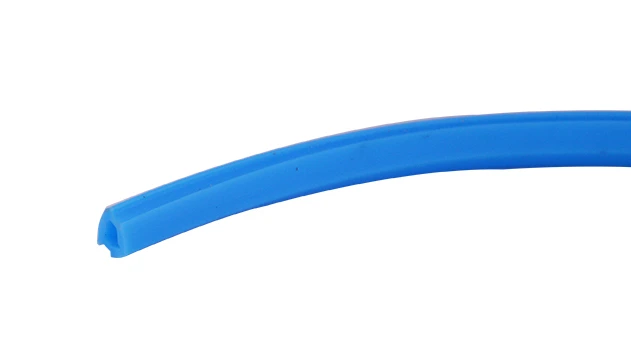
A guide to understanding hardness measurements and selecting the best seal covers for your aluminum profile projects
Introduction: The Unsung Hero of Aluminum Profile Accessories
When you think about aluminum extrusion profile projects—whether it's a workbench, a production line rack, or a material handling system—your mind probably jumps to the big components: the sturdy aluminum profiles themselves, the connectors that hold everything together, or the casters that make carts mobile. But if there's one small part that quietly keeps these systems running smoothly, it's the
If you've ever felt two different rubber products and noticed one was softer, more flexible, while the other was firmer, almost rigid, you've experienced the difference Shore hardness makes. For anyone working with
What Is Shore Hardness, Anyway?
Shore hardness is a standardized way to measure how resistant a material is to indentation—basically, how "hard" or "soft" it feels. The term comes from Albert F. Shore, the American inventor who developed the first durometer (the tool used to measure hardness) in the 1920s. Today, it's the most widely used method for testing the hardness of elastomers (rubbers), plastics, and other non-metallic materials—including the rubber used in T-slot seal covers.
Here's the simple version: When you press a durometer against a material, the depth the indenter sinks into the surface determines its hardness. Softer materials let the indenter sink deeper, resulting in a lower Shore hardness number. Firmer materials resist indentation, giving a higher number. But there's a catch: different materials (like very soft gels vs. hard plastics) require different scales to measure accurately. That's where Shore hardness scales come in.

Understanding Shore Hardness Scales: It's Not One-Size-Fits-All
Shore hardness isn't measured on a single scale. Instead, there are several scales tailored to different material types. For T-slot rubber seal covers, the most relevant scales are Shore A and Shore D. Let's break them down:
Shore A: This is the scale you'll encounter most often for flexible rubbers and soft plastics. It ranges from 0 (extremely soft, like a gel) to 100 (nearly rigid, like a hard rubber eraser). Most T-slot seal covers fall between 40A and 90A on this scale. Think of 40A as a soft, squishy rubber (similar to a pencil eraser), 70A as a medium-soft rubber (like a car tire's sidewall), and 90A as a firm rubber (closer to a shoe sole).
Shore D:
For harder materials that Shore A can't measure accurately—like rigid plastics or very hard rubbers—Shore D is used. It ranges from 0 (soft plastic) to 100 (glass-hard). You're unlikely to need Shore D for T-slot seal covers, but it's good to know it exists for stiffer
Why does this matter? A seal cover that's too soft (low Shore A) might tear easily when inserting it into a T-slot, or wear down quickly if exposed to friction. One that's too hard (high Shore A) might crack in cold temperatures or fail to conform to slightly uneven slot edges, leaving gaps where dust and debris can sneak in. The goal is to find that "just right" hardness that balances flexibility, durability, and performance.

Why Shore Hardness Matters for T-Slot Rubber Seal Covers
Let's get specific: What problems can the wrong Shore hardness cause in real-world aluminum profile projects? Imagine you're building a material rack using
On the flip side, say you opt for a 95A seal cover for an outdoor aluminum profile sign frame. It's tough, rigid, and seems durable. But when winter hits, the cold weather makes the rubber even stiffer. One cold morning, a strong wind shakes the frame, and the seal cover cracks along its length. Now water seeps into the T-slots, leading to corrosion over time. Both scenarios could have been avoided with a better understanding of Shore hardness.
In short, the right hardness ensures your T-slot rubber seal covers:
- Fit snugly into T-slots without tearing or stretching
- Resist wear from friction, chemicals, and environmental factors
- Maintain flexibility in temperature extremes (hot or cold)
- Provide a tight seal to keep out dust, dirt, and moisture
Factors to Consider When Choosing Hardness
Selecting the right Shore hardness for your T-slot seal covers isn't a guessing game. It depends on a few key factors specific to your project. Let's walk through them:
1. Application Environment: Where will your aluminum profile system live? Indoor environments with controlled temperatures (like a factory floor) are less demanding than outdoor setups exposed to rain, snow, or extreme heat. For outdoor use, aim for a slightly firmer seal cover (70A–80A) to resist UV damage and temperature swings. Indoor, you might get away with softer (50A–60A) if flexibility is more important.
2. Frequency of T-Slot Use: Are you using the T-slots often to add or remove accessories (like brackets, lights, or tool holders)? If so, you need a seal cover that can handle repeated insertion and removal without tearing. A medium-hardness rubber (65A–75A) works best here—it's flexible enough to bend when accessories are inserted but tough enough to spring back into shape afterward.
3. Exposure to Chemicals or Oils: In industrial settings, seal covers might come into contact with lubricants, cleaning agents, or coolants. Some chemicals can degrade soft rubber over time, so look for a firmer, more chemical-resistant option (80A–90A) if this is a concern. Manufacturers often list chemical resistance ratings for their seal covers, so check those specs!
4. Aesthetic vs. Functional Needs: Sometimes, seal covers are chosen for looks—like in retail displays or office furniture where a clean, finished appearance matters. Softer seal covers (50A–60A) have a smoother, more matte finish, while firmer ones (70A+) might have a slight sheen. If aesthetics are key, ask for samples to compare how different hardness levels look on your aluminum profile.
Common Hardness Levels for T-Slot Applications: A Quick Reference
To make it easier, here's a breakdown of the most common Shore A hardness levels for T-slot rubber seal covers and when to use them. For a more detailed comparison, check out the table below!
50A–60A (Soft): Best for indoor, low-wear applications where flexibility and a smooth feel are priorities. Think: office workbenches, display shelves, or aluminum profile frames that rarely get moved. These seal covers are easy to install (they bend easily) and feel soft to the touch.
65A–75A (Medium): The "all-purpose" hardness. Ideal for most industrial and commercial projects, including production line racks, material handling carts, and workshop tables. They balance flexibility and durability, handling moderate wear and occasional accessory adjustments.
80A–90A (Firm): Designed for high-wear, outdoor, or chemical-exposed environments. Use these for heavy-duty aluminum profile systems like factory conveyor rails, outdoor storage racks, or automotive assembly lines. They're less flexible but stand up to rough treatment.
| Shore A Hardness | Feel & Flexibility | Best Applications | Key Advantages | Potential Drawbacks |
|---|---|---|---|---|
| 50A–60A (Soft) | Very flexible, squishy; bends easily with light pressure | Indoor workbenches, display frames, low-wear systems | Easy to install, smooth finish, quiet operation | Prone to tearing with frequent use; not ideal for outdoor use |
| 65A–75A (Medium) | Moderate flexibility; bends with moderate pressure, springs back quickly | Production lines, material carts, workshop racks, general industrial use | Balances durability and flexibility; handles temperature changes well | May wear in high-friction environments (e.g., constant accessory insertion) |
| 80A–90A (Firm) | Stiff, minimal flexibility; requires force to bend | Outdoor systems, high-wear conveyor rails, chemical-exposed areas | Resists UV, chemicals, and heavy wear; long lifespan | Harder to install; may crack in extreme cold if not rated for low temperatures |
Case Study: How the Right Hardness Solved a Production Line Problem
Let's look at a real-world example to see how Shore hardness impacts outcomes. A small electronics manufacturer was using 50A T-slot seal covers on their aluminum extrusion profile assembly line racks. At first, they loved how soft and easy to install the covers were. But after a few months, they noticed a problem: the seal covers along the racks were tearing and fraying where workers slid circuit boards into place. The soft rubber couldn't handle the constant friction, and replacement covers were eating into their budget.
After consulting with their
How to Test Shore Hardness (Without Buying a Durometer)
If you're unsure about the hardness of a T-slot seal cover you already have, or if you want to verify a supplier's claims, you don't need to invest in an expensive durometer (though they're affordable if you work with rubber often). Here's a quick at-home test:
Press your thumbnail firmly into the rubber. If it leaves a deep, slow-to-disappear indentation, it's likely soft (50A–60A). If it leaves a shallow indentation that fades quickly, it's medium (65A–75A). If your thumbnail barely makes a mark, it's firm (80A+). For more accuracy, many suppliers will send free samples—ask to test a few hardness levels before placing a bulk order.
Conclusion: Hardness = Performance
At the end of the day, T-slot rubber seal covers might be small, but their impact on your aluminum profile system's performance is huge. By taking the time to understand Shore hardness and how it relates to your project's needs—whether it's indoor vs. outdoor use, frequent accessory changes, or chemical exposure—you can choose a seal cover that lasts longer, fits better, and saves you from costly replacements down the line.
Remember: soft isn't always better, and hard isn't always tougher. It's about balance. For most general industrial applications, a medium-hardness seal cover (65A–75A) will hit that sweet spot. And when in doubt, reach out to your aluminum profile supplier—they've seen it all and can help you pick the perfect hardness for your unique setup.
So next time you're planning an aluminum extrusion profile project, don't overlook the T-slot rubber seal cover. With the right Shore hardness, it'll be the unsung hero that keeps your system running smoothly for years to come.