- Company Articles
- Products and Technology
- Product knowledge
- What Is the Lifespan of a Two Way Aluminum Pipe Joint? Factors That Affect Durability

What Is the Lifespan of a Two Way Aluminum Pipe Joint? Factors That Affect Durability
Related Product
Two Way Aluminum Pipe Joint
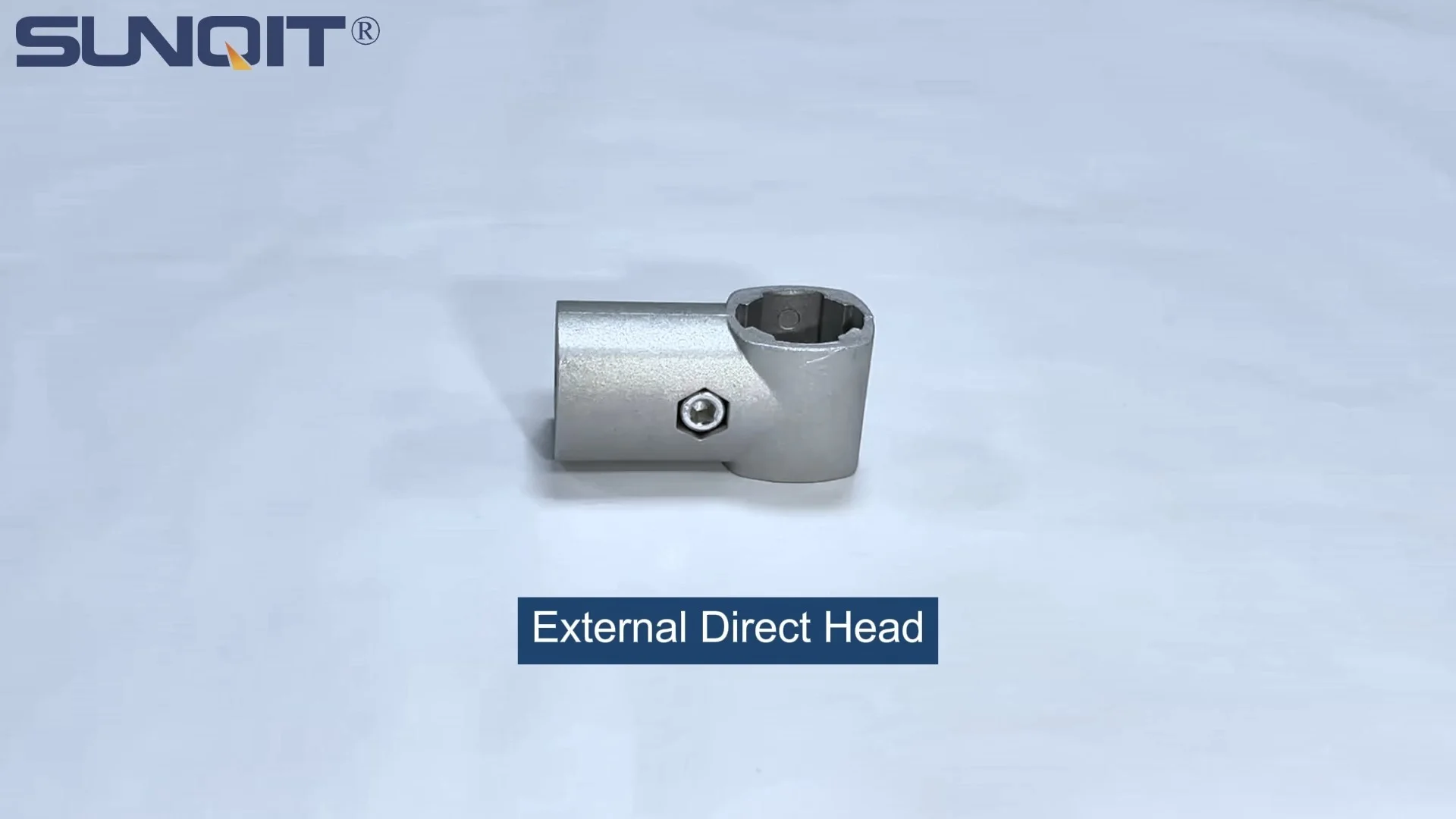
Aluminum 2 way pipe joint for 28mm aluminum pipe connection in 2 direction.
Introduction: The Unsung Hero of Modern Workspaces
Walk into any manufacturing facility, warehouse, or even a busy workshop, and you'll likely spot a network of aluminum profiles and pipes holding everything together—from workbenches to material racks, and from conveyor systems to lean production lines. At the heart of this interconnected world lies a small but mighty component: the two way aluminum pipe joint. These unassuming connectors are the glue that transforms simple aluminum pipes into functional, flexible structures, making them indispensable in lean system setups. But have you ever stopped to wonder: how long do these joints actually last? And what factors determine whether they'll stand the test of time or fail prematurely?
If you're a facility manager, a small business owner setting up a workshop, or just someone curious about the mechanics of industrial workspaces, understanding the lifespan of two way aluminum pipe joints is crucial. After all, these joints directly impact the safety, efficiency, and cost-effectiveness of your operations. A joint that fails unexpectedly could disrupt production, damage equipment, or even pose safety risks to your team. On the flip side, a well-maintained joint can outlast the structures it connects, saving you from frequent replacements and downtime.
In this article, we'll dive deep into the world of two way aluminum pipe joints. We'll explore their average lifespan, break down the key factors that influence how long they last, and share practical tips to extend their durability. Whether you're using them to build a custom workbench, assemble a material rack, or design a lean production line, this guide will help you make informed decisions and get the most out of your aluminum pipe accessories.
Understanding the Basics: What Is a Two Way Aluminum Pipe Joint?
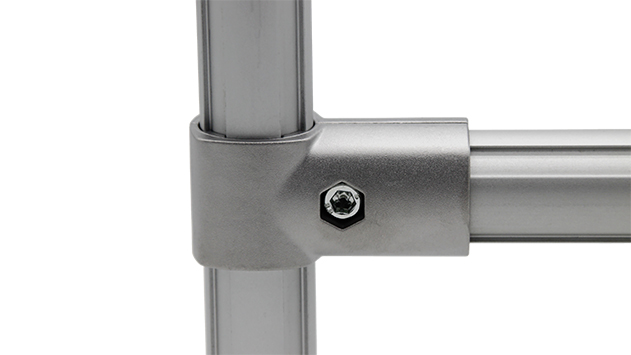
Before we talk about lifespan, let's make sure we're all on the same page about what a two way aluminum pipe joint actually is. Simply put, it's a connector designed to join two aluminum pipes at a specific angle—most commonly 90 degrees, though some variants allow for adjustments. Unlike rigid welds or permanent fasteners, these joints are modular, meaning they can be disassembled, repositioned, and reused, which is a big part of why they're so popular in lean system environments where adaptability is key.
Two way aluminum pipe joints come in various designs, but most share a few core features: a central body with openings for the pipes, internal threading or clamping mechanisms to secure the pipes, and sometimes additional holes for screws or bolts to reinforce the connection. They're typically made from aluminum alloys (more on that later) or sometimes steel with an aluminum coating, and they work hand-in-hand with other aluminum pipe accessories like end caps, clamps, and foot bases to create stable structures.
Think of them as the "elbows" of the industrial world—small, but essential for directing the flow of your workspace. Whether you're building a workbench where two pipes meet at a corner, or a material rack where vertical and horizontal pipes intersect, the two way joint ensures those connections are strong enough to hold tools, materials, or even heavy machinery. But strength alone isn't enough; durability over time is what really matters.
Average Lifespan: How Long Can You Expect Them to Last?
The million-dollar question: what's the average lifespan of a two way aluminum pipe joint? The short answer is: it depends. Under ideal conditions, a high-quality two way aluminum pipe joint can last anywhere from 5 to 15 years. In some cases, with meticulous maintenance and light usage, they might even push past 20 years. But in harsh environments or with poor care, that lifespan could plummet to just 2 or 3 years.
To put that in perspective, consider a workbench in a climate-controlled electronics assembly plant. The two way joints here are exposed to moderate temperatures, low humidity, and minimal physical stress (since the workbench holds small components, not heavy machinery). In this scenario, the joints might last 10–15 years without issue. Now contrast that with a material rack in a busy warehouse near the coast, where the air is salty and humid, and the rack is loaded with heavy boxes that shift and jostle the joints daily. Here, the same joints might start showing signs of wear after just 3–5 years.
So, what separates the 15-year joints from the 3-year ones? It all comes down to a handful of critical factors, which we'll explore in detail next. Understanding these factors isn't just about predicting when you'll need replacements—it's about proactively extending the life of your joints and getting the best return on your investment in aluminum pipe accessories and lean system infrastructure.

Key Factors Affecting Durability: What Makes or Breaks a Joint
Let's break down the most influential factors that determine how long your two way aluminum pipe joint will last. From the materials it's made of to the way you install and maintain it, each element plays a role in its longevity.
1. Material Quality: Not All Aluminum Alloys Are Created Equal
The first and most obvious factor is the quality of the aluminum itself. Two way aluminum pipe joints are typically made from aluminum alloys, which are mixtures of aluminum and other metals (like magnesium, silicon, or copper) to enhance strength and durability. The most common alloys used are 6061 and 6063, both known for their balance of strength, corrosion resistance, and machinability.
6061 aluminum, for example, has higher tensile strength (around 45,000 psi) and is often used in applications where the joint will bear heavy loads, like material racks or industrial workbenches. 6063 aluminum, while slightly less strong (tensile strength around 30,000 psi), offers better corrosion resistance and a smoother finish, making it ideal for environments with moisture or chemicals. Cheaper joints might use pure aluminum or lower-grade alloys, which are softer, more prone to bending, and less resistant to rust—all of which shorten lifespan.
Another material consideration is the thickness of the joint's walls. Thicker walls mean more material to withstand stress and wear, so a joint with a 2mm wall thickness will generally outlast one with a 1mm wall. Additionally, some joints come with protective coatings, like anodization (a process that creates a hard, corrosion-resistant oxide layer on the surface). Anodized joints can resist scratches, rust, and chemical damage far better than uncoated ones, especially in humid or industrial settings.
2. Load Capacity: Don't Overburden the Joint
Even the strongest two way aluminum pipe joint has a breaking point, and exceeding its load capacity is a surefire way to shorten its lifespan. Every joint is rated for a maximum weight it can safely support, which depends on its design, alloy, and wall thickness. For example, a small two way joint made for lightweight aluminum profiles might have a load capacity of 50 kg, while a heavy-duty joint for industrial material racks could handle 200 kg or more.
Overloading happens more often than you might think. It could be intentional (e.g., stacking heavier boxes on a rack than recommended) or accidental (e.g., leaning on a workbench joint repeatedly, adding cumulative stress). When a joint is overloaded, it experiences plastic deformation—meaning it bends or warps and doesn't return to its original shape. Over time, this warping weakens the joint, making it prone to cracking or snapping.
Weight distribution matters too. A joint that's supporting a evenly distributed load (like a shelf with boxes spread out) will last longer than one supporting a concentrated load (like a single heavy tool hanging from one point). Even if the total weight is under the maximum rating, a concentrated load puts extra stress on specific parts of the joint, leading to premature wear.
3. Environmental Conditions: Humidity, Temperature, and Corrosion
Aluminum is naturally resistant to corrosion, thanks to the thin oxide layer that forms on its surface when exposed to air. But this layer isn't invincible, and harsh environmental conditions can break it down, leading to rust (or more accurately, aluminum oxide buildup) and weakened joints.
Humidity and Salt:
High humidity, especially with salt in the air (like near coastal areas or in winter with road salt), is a major enemy. The moisture and salt react with the aluminum, slowly eating away at the joint's surface. Over time, this can cause pitting (small holes) or cracks, which compromise the joint's structural integrity.
Temperature Extremes:
Aluminum expands when heated and contracts when cooled. In environments with frequent temperature swings—like a warehouse that's scorching hot in summer and freezing cold in winter—the joint can undergo thermal stress. This constant expansion and contraction weakens the connection between the joint and the pipe, leading to looseness or even separation over time.
Chemicals and Contaminants:
Exposure to chemicals (like oils, solvents, or cleaning agents) can also damage the joint's protective oxide layer. For example, a workbench in an auto repair shop might come into contact with motor oil or degreasers, which can corrode the aluminum if not cleaned off promptly. Similarly, dust and grit in manufacturing environments can act like sandpaper, wearing down the joint's surfaces when pipes are adjusted or moved.
4. Installation Precision: A Loose Joint Is a Short-Lived Joint
Even the best two way aluminum pipe joint will fail prematurely if installed incorrectly. Installation might seem straightforward—just slide the pipe into the joint and tighten the screws, right? But there's more to it than that. Poor alignment, over-tightening, or under-tightening can all spell trouble for your joint's lifespan.
Alignment:
If the two pipes being joined aren't perfectly straight or at the correct angle (e.g., trying to join a bent pipe to a straight one), the joint will be under constant stress. Imagine trying to connect two sticks at a 90-degree angle, but one stick is warped—the joint holding them will have to "pull" the sticks into place, creating tension that weakens the joint over time.
Tightening Torque:
Most two way joints use screws or bolts to secure the pipes. Under-tightening means the pipes can wiggle and shift, causing friction that wears down the joint's internal threads. Over-tightening, on the other hand, can strip the threads or even crack the joint itself (especially with brittle alloys). The solution? Use a torque wrench to tighten the screws to the manufacturer's recommended torque—usually between 8–12 Nm for standard joints.
Using the Right Accessories:
Two way joints are designed to work with specific types of aluminum pipes and accessories. Using a joint meant for 20mm pipes with 25mm pipes, for example, will result in a loose fit that can't hold securely. Similarly, skipping essential accessories like pipe end caps (which prevent the pipe from crushing inside the joint) can lead to uneven stress distribution and joint failure.
5. Maintenance Practices: A Little Care Goes a Long Way
Finally, how you maintain your two way aluminum pipe joint plays a huge role in its lifespan. Think of it like a car—even a reliable model will break down quickly if you never change the oil or check the tires. The same goes for your joints: regular inspection and upkeep can add years to their life.
Cleaning:
Dust, grime, and moisture can accumulate in the joint's crevices, leading to corrosion or friction. Wiping down the joints with a dry cloth every few months (or more often in dirty environments) removes these contaminants. For greasy or oily joints, a mild detergent and soft brush can help—just make sure to dry thoroughly afterward to prevent water spots.
Lubrication:
If your joint has moving parts (like some adjustable two way joints), applying a small amount of lubricant (like silicone spray or machine oil) can reduce friction and wear. Be careful not to overdo it, though—excess lubricant can attract dust, which becomes abrasive.
Inspection:
Regularly check for signs of wear, like cracks, looseness, or corrosion. If a joint feels wobbly, tighten the screws (but don't overdo it). If you notice pitting or cracks, replace the joint immediately—waiting can lead to structural failure and safety hazards.

Real-World Examples: How These Factors Play Out in Practice
To better understand how these factors interact, let's look at two real-world scenarios involving two way aluminum pipe joints, aluminum profiles, and lean system setups.
Scenario 1: A Lean Production Line in a Food Processing Plant
A food processing plant uses a lean system with workbenches, conveyor belts, and material racks made from aluminum profiles and two way joints. The environment is kept clean (to meet food safety standards), but it's also humid (from steam used in cleaning) and occasionally exposed to acidic cleaning agents. The joints here are installed by trained technicians who use torque wrenches to ensure proper tightening, and the plant schedules monthly inspections to check for corrosion.
Result:
Despite the humidity, the regular cleaning and inspections help catch early signs of corrosion, and the high-quality 6061 aluminum joints last 8–10 years before needing replacement.
Scenario 2: A DIY Workbench in a Home Garage
A hobbyist builds a workbench using budget two way aluminum pipe joints (made from a lower-grade alloy) and reclaimed aluminum pipes. They skip the torque wrench, tightening the screws "by feel" (some too loose, some too tight), and the workbench is used daily for woodworking, exposing the joints to sawdust, moisture from sweat, and occasional impacts from heavy tools. No maintenance is performed—after all, it's "just a garage workbench."
Result:
The joints start loosening within 6 months, and by year 2, one joint cracks under the weight of a power tool, requiring a full replacement of the joint and the damaged pipe.
These examples show that while some factors (like environment) are hard to change, others (like installation and maintenance) are entirely within your control. By focusing on the factors you can manage, you can significantly extend the life of your two way aluminum pipe joints.
Summary Table: Factors, Impact, and Mitigation Tips
| Factor | Impact Level | Key Considerations | Maintenance Tips |
|---|---|---|---|
| Material Quality (Alloy Type) | High | Choose 6061 or 6063 aluminum for strength and corrosion resistance; avoid pure aluminum or low-grade alloys. | Buy from reputable suppliers; check for material certifications. |
| Load Capacity | High | Never exceed the joint's rated weight; distribute loads evenly. | Label racks/workbenches with maximum weight limits; avoid concentrated loads. |
| Environmental Conditions | Medium to High | Humidity, salt, temperature swings, and chemicals accelerate wear. | Use anodized joints in humid/salty areas; clean joints regularly; avoid chemical exposure. |
| Installation Precision | High | Poor alignment, over/under-tightening causes stress and wear. | Use torque wrenches; ensure pipes are straight and aligned; use proper aluminum pipe accessories. |
| Maintenance Practices | Medium | Neglect leads to corrosion, looseness, and unnoticed damage. | Inspect monthly; clean dust/debris; tighten loose screws; replace damaged joints promptly. |
Extending Lifespan: Proactive Steps to Get the Most Out of Your Joints
Now that you know what affects your two way aluminum pipe joint's lifespan, here are some actionable steps to extend it:
1. Invest in Quality from the Start:
It's tempting to cut costs with cheap joints, but high-quality 6061/6063 aluminum joints from reputable suppliers will pay off in the long run. Look for suppliers who provide material certifications and have good reviews for durability.
2. Train Your Team on Proper Installation:
Ensure anyone installing joints knows how to align pipes, use torque wrenches, and select the right aluminum pipe accessories. A 30-minute training session can prevent years of premature failures.
3. Create a Maintenance Schedule:
Set calendar reminders for monthly inspections, quarterly cleanings, and annual lubrication (for moving joints). Even 10 minutes a month can add years to your joint's life.
4. Adapt to Your Environment:
If you're in a humid area, use anodized joints or apply a corrosion-resistant coating. In high-temperature areas, avoid placing joints near heat sources (like ovens or radiators).
5. replace Proactively:
Don't wait for a joint to fail—if you notice cracks, severe corrosion, or persistent looseness, replace it immediately. The cost of a new joint is far less than the cost of downtime or a safety incident.
Conclusion: The Lifespan of Your Joints Is in Your Hands
The lifespan of a two way aluminum pipe joint isn't fixed—it's a result of the choices you make, from the materials you buy to the way you install and care for them. While factors like environment and load are sometimes out of your control, focusing on quality materials, precise installation, and regular maintenance can significantly extend their life.
Whether you're building a lean system in a manufacturing plant, a workbench in a workshop, or material racks in a warehouse, remember that your two way aluminum pipe joints are the unsung heroes holding it all together. Treat them with care, and they'll reward you with years of reliable service, keeping your operations running smoothly and your investment in aluminum pipe accessories and aluminum profiles paying off for the long haul.
So, the next time you look at that workbench or material rack, take a moment to appreciate the two way joints. They might be small, but their impact on your workspace's durability and efficiency is enormous. And with the right care, they'll be there supporting you for years to come.