- Company Articles
- Products and Technology
- Product knowledge
- What Is the Lifespan of M10*56 Rubber Leveling Feet? Expert Insights

What Is the Lifespan of M10*56 Rubber Leveling Feet? Expert Insights
Related Product
M10*56 Rubber Leveling Feet
Adjustable leveling feet are designed to keep machines level when placed on uneven or sloped ground. Otherwise known as adjustable equipment feet, they are available to order in a wide variety of size and load capacity combinations.
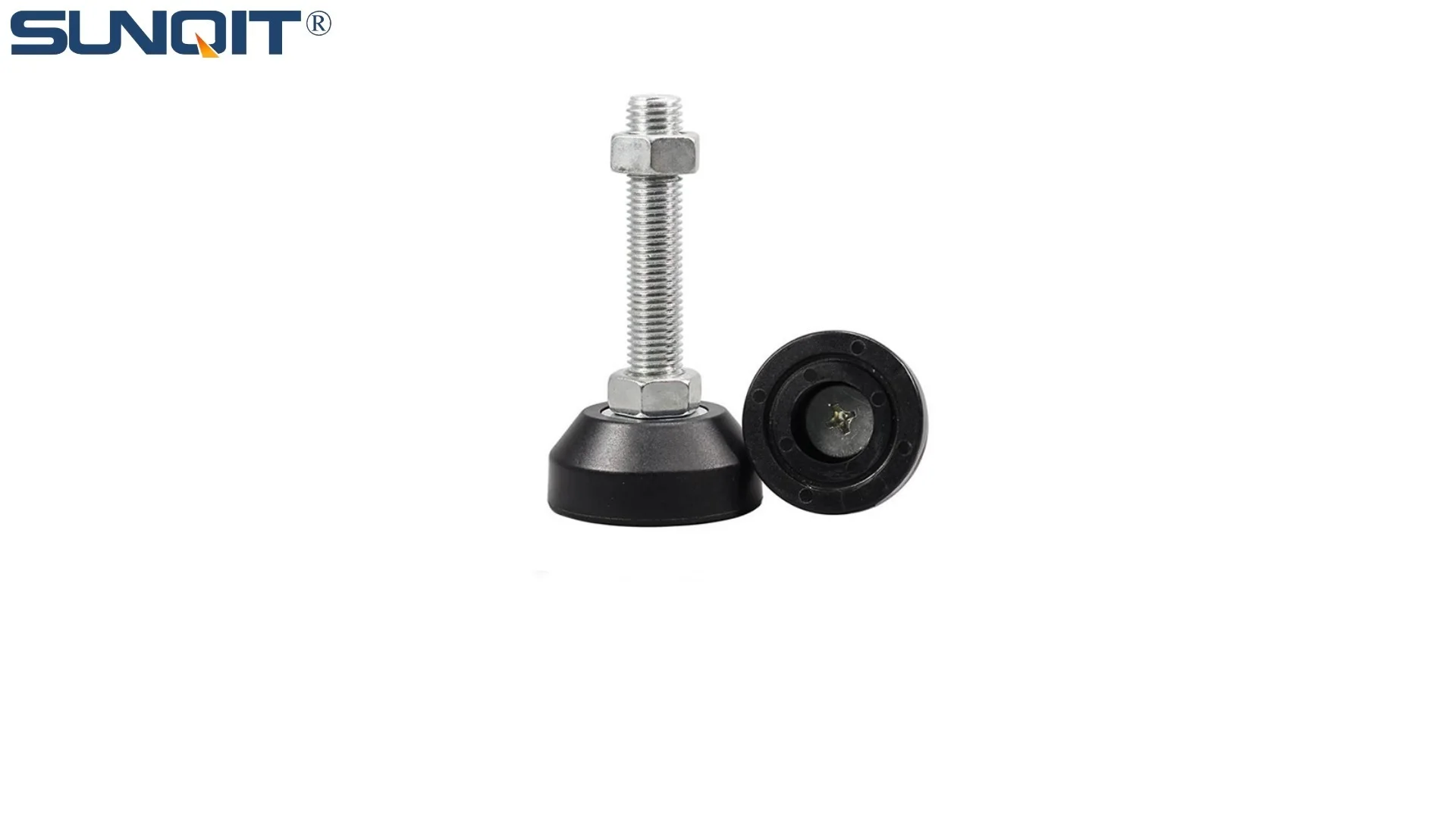
Walk into any busy workshop, manufacturing plant, or even a small garage, and you'll likely spot a common unsung hero keeping things steady: leveling feet. These small but critical components are the silent guardians of stability, ensuring workbenches don't wobble, conveyor systems run smoothly, and production lines stay aligned. Among the many types available, the M10*56 rubber leveling foot stands out for its versatility and reliability. But here's the question on every facility manager's mind: How long do these little workhorses actually last?
In this article, we're diving deep into the lifespan of M10*56 rubber leveling feet. We'll break down what they are, where they're used, and the key factors that determine how long they'll keep your equipment stable. We'll also tap into insights from industry experts—suppliers, engineers, and maintenance pros—who deal with these components daily. Plus, we'll share practical tips to extend their lifespan and even compare them to other leveling foot types. Whether you're setting up a new lean pipe workbench or maintaining an existing production line, this guide will help you make smarter choices and avoid costly downtime.
What Are M10*56 Rubber Leveling Feet, Anyway?
Before we talk about lifespan, let's make sure we're all on the same page: What exactly is an M10*56 rubber leveling foot? At first glance, it might look like a simple chunk of rubber with a metal rod sticking out, but there's more to it than meets the eye.
The "M10*56" refers to its dimensions: The metal thread is an M10 metric thread (10mm in diameter), and the overall length from the base of the rubber pad to the top of the thread is 56mm. The base is typically made of rubber—often a durable synthetic blend like nitrile or EPDM—while the threaded rod is usually steel (sometimes coated in zinc or nickel for rust resistance). The rubber pad provides grip and shock absorption, while the threaded rod lets you adjust the height to level uneven surfaces.
Think of them as the "feet" of your equipment. Just as a chair with wobbly legs is frustrating, a workbench or conveyor system that isn't level can throw off precision, slow down production, and even create safety hazards. M10*56 rubber leveling feet solve this by letting you tweak each foot's height individually, ensuring everything sits flat and stable.
Where Do M10*56 Rubber Leveling Feet Show Up? Common Applications
These little components are everywhere, but you might not notice them until something goes wrong. Let's look at some of their most common uses:
1. Workbenches (Especially Lean Pipe Workbenches)
Lean pipe workbenches—those modular, customizable workstations built with aluminum profile or steel pipes—are a staple in factories, labs, and workshops. They're designed for flexibility, but flexibility means nothing if the bench itself isn't stable. M10*56 rubber leveling feet are often the go-to choice here because they're affordable, easy to install, and provide just the right amount of grip to keep the bench from sliding during use. Whether you're assembling electronics on a lightweight bench or heavy machinery on a sturdier model, these feet ensure every tool, part, and measurement stays precisely where it should be.
2. Conveyor Systems and Material Racks
Conveyor belts and flow racks rely on perfect alignment to move products smoothly. A single uneven foot can cause jams, misfeeds, or even damage to delicate items. M10*56 feet are frequently used here because their adjustable height lets technicians fine-tune the conveyor's angle, ensuring gravity (or motors) do their job without hiccups. Material racks, too—like those stacked with boxes or parts—depend on stable feet to prevent tipping, especially when loaded to capacity.
3. Production Assemble Lines
In high-speed production environments, every second counts. Imagine a line where workers assemble car parts or package goods: if the workstation wobbles, tools slip, parts fall, and efficiency plummets. M10*56 rubber leveling feet act as a foundation here, absorbing minor vibrations from nearby machinery and keeping the workspace steady. They're also resistant to oil and grease, which is a must in automotive or mechanical shops.
4. Turnover Trolleys and Mobile Workstations
Not all equipment stays put. Turnover trolleys—used to move parts between stations—often have both caster wheels for mobility and leveling feet for stability when parked. When the trolley is in use, the feet are lowered to "lock" it in place, preventing rolling. M10*56 feet are ideal here because they're compact enough to fit alongside casters but strong enough to support the trolley's weight, even when fully loaded.

What Determines How Long They Last? Key Factors Influencing Lifespan
So, how long does an M10*56 rubber leveling foot last? The short answer: It depends. We spoke to several experts, including suppliers and maintenance managers, and they all agreed—lifespan varies widely based on five critical factors. Let's break them down.
1. Material Quality: Not All Rubber (or Metal) Is Created Equal
The first thing that affects lifespan is the quality of the materials. Let's start with the rubber pad. Cheaper leveling feet often use low-grade rubber that hardens, cracks, or wears down quickly—especially when exposed to heat, chemicals, or heavy loads. High-quality feet, on the other hand, use synthetic rubbers like EPDM or nitrile, which are resistant to oil, temperature extremes, and abrasion. "We once had a client who bought generic feet for their lean pipe workbenches and had to replace them every 6 months," says Lisa, a product specialist at a leading lean pipe supplier. "They switched to our EPDM-based M10*56 feet, and now they're going on 3 years with no issues."
Then there's the metal thread. Most use steel, but the coating matters. Zinc-plated threads resist rust better than uncoated ones, while stainless steel threads are ideal for wet or corrosive environments (like food processing plants). A rusted thread won't adjust smoothly, and over time, it can seize up entirely—rendering the foot useless even if the rubber pad is still intact.
2. Load Capacity: Are You Overloading Them?
Every leveling foot has a maximum load rating, and exceeding it is a surefire way to shorten its lifespan. M10*56 feet typically handle between 200–500 kg per foot, but that number drops if the load is unevenly distributed. For example, a workbench with a heavy vice on one corner will put extra stress on that foot, causing the rubber to compress permanently or the thread to bend. "We see this all the time in workshops," notes Mike, a maintenance engineer with 20 years in manufacturing. "A team will pile tools, parts, and even coffee mugs on one side of the bench, and suddenly that foot is flattened. It's not that the foot is bad—it's just being asked to do too much."
The key here is to calculate total load (workbench + tools + materials) and divide by the number of feet, then choose feet rated for 1.5x that weight to be safe. Over-engineering might cost a little more upfront, but it saves money on replacements later.
3. Environment: Heat, Moisture, and Chemicals Take a Toll
Where you use the leveling feet matters almost as much as how you use them. Let's break down common environmental culprits:
- Moisture: Damp floors, steam, or frequent cleaning (like in commercial kitchens) can cause metal threads to rust and rubber to degrade. In coastal areas, salt air accelerates this process even more.
- Temperature Extremes: Rubber gets brittle in cold environments (like freezers) and softens in hot ones (like near industrial ovens). Both extremes weaken the material, leading to cracks or deformation.
- Chemicals: Oils, solvents, acids, or cleaning agents can break down rubber over time. A foot used near a machine that leaks hydraulic fluid, for example, might last half as long as one in a dry, clean area.
- Dust and Debris: Fine particles can get stuck between the rubber pad and the floor, acting like sandpaper and wearing down the pad. They can also clog the thread, making adjustments harder and causing extra friction when turning.
4. Installation: Tightening (or Not Tightening) the Right Way
Even the best leveling feet will fail early if installed poorly. Two common mistakes here: overtightening and undertightening. Overtightening the thread into the equipment can strip the metal or crack the rubber pad (yes, rubber can crack under too much pressure!). Undertightening, on the other hand, means the foot might loosen over time, leading to wobbling and uneven wear. "We always tell clients to hand-tighten until snug, then give it a quarter-turn more—no power tools," says Lisa. "Power drills make it too easy to go overboard."
Another installation issue is misalignment. If the foot isn't perpendicular to the floor (e.g., the equipment leg is bent), the load isn't distributed evenly across the rubber pad. This causes "point loading," where one part of the pad wears down much faster than the rest, leading to premature failure.
5. Maintenance: Out of Sight, Out of Mind… Until It Breaks
Let's be honest: Leveling feet are easy to ignore. They're on the bottom of equipment, out of sight, and only noticed when something goes wrong. But a little maintenance goes a long way. Simple steps like cleaning the rubber pad to remove debris, lubricating the thread to keep it adjustable, and checking for cracks or rust every few months can double or triple lifespan. "We include a 'foot check' in our monthly maintenance checklist now," says Maria, a facility manager at a mid-sized electronics plant. "It takes 5 minutes per workstation, but we've cut replacement costs by 70% in a year."

Expert Insights: How Long Do They Really Last?
To get a clearer picture, we talked to three industry experts with decades of combined experience: John, a senior engineer at a lean system supplier; Sarah, a product manager at a leading adjustable leveling feet manufacturer; and Raj, a maintenance director at a large automotive parts plant. Here's what they had to say about average lifespans in real-world conditions:
John's Take: "It's All About Balance"
"In ideal conditions—dry, moderate temperature, average load—M10*56 rubber leveling feet can last 5–7 years," John explains. "But 'ideal' is rare. Most workshops are somewhere in the middle: maybe a little dusty, occasional moisture, and light overloading. In those cases, 3–4 years is more realistic. The worst-case scenario? A client in a coastal seafood processing plant once had feet fail in 18 months because of saltwater spray and constant hosing. They switched to stainless steel threads and nitrile rubber, and now they get 3+ years. It's all about matching the foot to the environment."
Sarah's Perspective: "Quality Trumps Everything"
"We test our feet rigorously in the lab, and under controlled conditions, they last 10,000+ cycles of loading/unloading and adjustment," Sarah says. "But lab tests don't account for real-world abuse. The biggest difference I see is between budget feet and premium ones. A $2 generic foot might last 6–12 months in a busy shop, while our $5 foot lasts 3–5 years. The math is simple: paying 2.5x more upfront saves replacing them 3–5x as often. Clients who skimp on quality always come back asking for better feet later—after spending more on downtime and replacements."
Raj's Real-World Experience: "Maintenance Makes or Breaks It"
"At our plant, we have 200+ workbenches, all with M10*56 feet. The ones on the night shift? They last about 2 years. The day shift? 4–5 years. Why? Because the day shift team does monthly checks—they clean the feet, lube the threads, and report loose ones. The night shift? They're focused on hitting production targets, and maintenance takes a backseat. It's not that the night shift is harder on the equipment; it's that small, consistent care adds years to lifespan. We're rolling out a mandatory check for all shifts next quarter—I expect to see night shift lifespans jump to 3+ years easily."
The consensus? With good quality, proper loading, a moderate environment, and regular maintenance, you can expect 3–5 years from M10*56 rubber leveling feet. Cut corners on any of these, and you might be replacing them annually.

Comparing M10*56 Rubber Leveling Feet to Other Types
Rubber isn't the only material for leveling feet. Let's see how M10*56 rubber feet stack up against aluminum, stainless steel, and caster wheel combinations. This table will help you decide if rubber is right for your needs—or if another type might last longer.
| Type | Average Lifespan (Years) | Load Capacity (Per Foot) | Best For | Pros | Cons |
|---|---|---|---|---|---|
| M10*56 Rubber Leveling Feet | 3–5 (with maintenance) | 200–500 kg | Indoor workshops, lean pipe workbenches, dry environments | Affordable, good grip, shock-absorbent, easy to adjust | Not ideal for extreme heat/moisture, rubber wears over time |
| Aluminum Adjustable Feet | 5–8 | 500–1000 kg | Heavy machinery, cleanrooms, high-load applications | Durable, corrosion-resistant, lightweight | More expensive, less grip (slippery on smooth floors) |
| Stainless Steel Feet | 7–10 | 800–1500 kg | Wet environments (food, marine), chemical exposure | Extremely corrosion-resistant, high load capacity | Costly, heavy, no shock absorption |
| Caster Wheel + Leveling Foot Combo | 2–4 (casters wear faster) | 150–400 kg | Mobile workstations, equipment that moves occasionally | Flexible (move and lock), good for dynamic environments | Casters add cost, wheels wear quickly on rough floors |
Rubber feet shine here for balance: they're affordable, versatile, and long-lasting enough for most indoor applications. If you need something for wet or heavy-duty use, stainless steel or aluminum might be better—but expect to pay 2–3x more.
5 Maintenance Tips to Extend Lifespan
Want to get the most out of your M10*56 rubber leveling feet? Follow these simple maintenance steps. They take minutes per month but add years to lifespan:
1. Clean the Rubber Pad Regularly
Dirt, grease, and debris trapped under the rubber pad act like sandpaper, wearing it down over time. Once a month, slide a putty knife or old credit card under the pad to scrape out gunk, then wipe with a damp cloth. For sticky residue (like oil), use a mild detergent—avoid harsh chemicals that can degrade rubber.
2. Lubricate the Thread
A dry thread will seize up, making adjustments hard and causing the metal to wear. Every 3 months, apply a small amount of silicone-based lubricant (WD-40 works, but specialized thread lubricant is better) to the thread. Turn the foot a few times to distribute the lube, then wipe off excess to prevent attracting dust.
3. Check for Wear and Tightness
Inspect the rubber pad for cracks, flattening, or hardening. If the pad feels rock-hard or has visible splits, it's time to replace. Also, check that the foot is tight to the equipment—loose feet wobble, causing uneven wear. Hand-tighten any that feel loose, but don't overtighten!
4. Protect Against Moisture and Chemicals
If you're in a damp environment, coat the metal thread with a thin layer of anti-rust spray (like Rust-Oleum). For chemical exposure, place a plastic or rubber mat under the equipment to shield the feet from spills. In extreme cases, consider upgrading to stainless steel threads—they cost more but resist corrosion far better.
5. Rotate Feet (If Possible)
On equipment with 4+ feet, the ones under heavier areas (like near a vice) wear faster. If your workbench is modular (common with lean pipe systems), swap feet between heavy and light load areas every 6 months. This distributes wear evenly, extending the life of all feet.
Real-World Case Study: From Annual Replacements to 5+ Years
Company: XYZ Electronics, a mid-sized circuit board manufacturer with 50 lean pipe workbenches.
Problem: Their workbench leveling feet were failing every 8–12 months. The maintenance team was spending 10+ hours monthly replacing feet, and wobbling benches were causing 2% of boards to be misaligned (costing $10,000/year in scrap).
Solution: After consulting with their lean pipe workbench supplier, they made three changes:
- Upgraded to high-quality M10*56 rubber feet with nitrile pads and zinc-plated threads (cost: $7/foot vs. $2 generic ones).
- Implemented a monthly maintenance checklist: cleaning feet, lubricating threads, and checking tightness.
- Trained operators to report loose/worn feet immediately instead of waiting for wobbles.
Result: After 2 years, only 5 feet have needed replacement (down from 50+/year). Scrap rates dropped to 0.5%, saving $7,500/year. The maintenance team now spends 2 hours/month on feet instead of 10. Total savings: ~$15,000/year, with a 6-month ROI on the upgraded feet.
This case shows that small investments in quality and care pay huge dividends. XYZ didn't just extend lifespan—they improved productivity and reduced waste, too.
Conclusion: Investing in Lifespan Saves Time and Money
M10*56 rubber leveling feet might be small, but their impact on your workshop's efficiency and safety is huge. While their lifespan varies, the experts agree: with good quality, proper loading, a moderate environment, and regular maintenance, you can expect 3–5 years of reliable service. Cut corners, and you'll be replacing them annually—wasting time, money, and productivity.
The next time you're setting up a lean pipe workbench, conveyor, or workstation, don't overlook these unsung heroes. Choose high-quality feet rated for your load, keep them clean and lubricated, and train your team to spot early signs of wear. Your future self (and your budget) will thank you.
After all, in manufacturing and workshops, stability isn't just about keeping things steady—it's about keeping things moving forward.