- Company Articles
- Products and Technology
- Product knowledge
- What Is the Lifespan of Turning Angle Code 4040? Maintenance Best Practices

What Is the Lifespan of Turning Angle Code 4040? Maintenance Best Practices
Related Product
Turning Angle Code 4040
The turning angle aluminum profile connector provides a 90 degree hidden corner connection. 4040 it is means this size is used for 40 series aluminum profile.The corner code comes with set screws that allow for quick, easy connections.
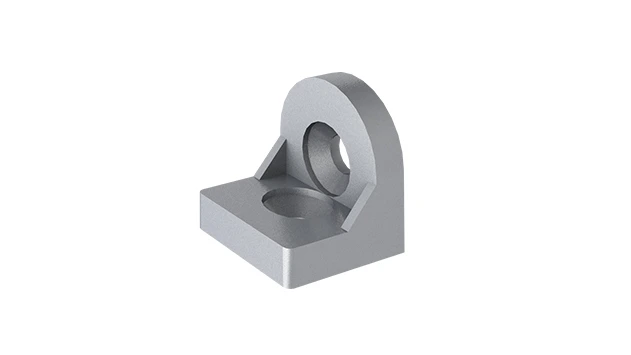
On a bustling factory floor, in a busy warehouse, or even in a small workshop, there's a silent hero working behind the scenes—components so (unassuming) that they're often overlooked until something goes wrong. Today, we're shining a spotlight on one such workhorse: the turning angle code 4040 . If you've ever wondered how those sturdy aluminum workbenches stay upright, or how material racks hold hundreds of pounds of inventory without wobbling, chances are this small but mighty connector is doing the heavy lifting. But like any hardworking tool, it has a lifespan—and knowing how to care for it can save you time, money, and headaches down the line.
In this article, we'll break down what a turning angle code 4040 is, what factors influence its lifespan, how long you can realistically expect it to last, and most importantly, the maintenance habits that will keep it performing at its best. Whether you're a facility manager, a maintenance technician, or just someone curious about the mechanics of industrial setups, this guide is for you. Let's dive in.
First Things First: What Exactly Is a Turning Angle Code 4040?
Before we talk about lifespan and maintenance, let's make sure we're all on the same page. The turning angle code 4040 is a type of connector designed specifically for aluminum profile systems—those modular, T-slot aluminum frames you see in everything from workbenches to production lines. As the name suggests, it's engineered to join 4040 aluminum profiles (profiles with a 40mm x 40mm cross-section) at angles, typically 90 degrees, though some designs allow for adjustments. Think of it as the "elbow" that holds the frame together, ensuring stability and structural integrity.
Part of the broader family of aluminum profile accessories , this little component is usually made from die-cast aluminum alloy (often 6061 or 6063-T5, known for strength and corrosion resistance) and may feature a surface treatment like anodizing or powder coating to boost durability. It typically comes with pre-drilled holes for bolts or screws, making installation a breeze—when done correctly, that is. Without it, your aluminum frame would be little more than a pile of loose tubes.
Factors That Shape the Lifespan of Your Turning Angle Code 4040
So, how long does a turning angle code 4040 actually last? The short answer: It depends. Just like a car's lifespan varies based on how you drive it, where you park it, and how often you service it, your angle code's longevity hinges on a few key factors. Let's break them down one by one.
1. Material Quality: Not All Aluminum Is Created Equal
The first thing to check is what your turning angle code is made of. Most reputable manufacturers use high-grade aluminum alloys, which are lightweight, strong, and resistant to rust. But if you've opted for a cheaper, low-quality version (maybe from a supplier cutting corners), you might be looking at a shorter lifespan. For example, a code made from pure aluminum (softer and more prone to bending) won't hold up as well as one made from 6063-T5 alloy, which is heat-treated for extra strength. Surface treatments matter too—anodized coatings add a protective layer against scratches and corrosion, while untreated aluminum might start to dull or pit over time, especially in humid environments.
2. Usage Intensity: How Hard Is It Working?
Imagine two identical angle codes: one holding up a lightweight workbench in a quiet lab, and another supporting a loaded material rack b (3 row and 3 floor) in a warehouse where forklifts zoom by and pallets are dropped (accidentally, of course) nearby. Which one do you think will wear out faster? Unsurprisingly, the code under constant stress—carrying heavy loads, enduring vibrations, or being jostled regularly—will fatigue more quickly. Even something as simple as leaning on the workbench repeatedly or overloading the material rack beyond its weight limit can strain the angle code, leading to micro-cracks or loosening over time.
3. Environment: The Hidden Enemy
Your workshop or factory's environment can be a silent killer for metal components. High humidity, extreme temperatures, or exposure to chemicals (like oils, solvents, or even salt in coastal areas) can (accelerate) wear and tear. For instance, a turning angle code in a food processing plant with frequent washdowns (using harsh detergents) might corrode faster than one in a dry, climate-controlled electronics assembly line. Even dust and debris can sneak into the crevices, acting like sandpaper every time the frame shifts slightly, wearing down the code's surface and threads.
4. Installation: Measure Twice, Tighten Once
You've heard the saying, "A chain is only as strong as its weakest link." Well, the same goes for your aluminum frame—and poor installation can turn your angle code into that weak link. Over-tightening the bolts, for example, can strip the threads or even crack the code (aluminum is strong, but it's not indestructible). Under-tightening, on the other hand, leaves the joint loose, causing wobbling and unnecessary stress every time the frame is moved or loaded. Misalignment is another culprit: if the profiles aren't perfectly straight when the code is installed, the angle code will bear uneven weight, leading to premature failure.

Typical Lifespan: What to Expect
Now that we know what affects lifespan, let's get to the number you're probably wondering about: How many years can you realistically get out of a turning angle code 4040? In ideal conditions—high-quality material, moderate usage, a dry environment, and proper installation—you can expect it to last 5 to 10 years . In some cases, with meticulous maintenance, it might even push 15 years. But if any of those factors are less than ideal? You could be looking at 2 to 3 years before issues start popping up.
To put that in perspective, let's compare it to other aluminum profile accessories . Rollers or casters, which have moving parts, might need replacement every 2-3 years. But angle codes, being static connectors, have a longer runway—if you take care of them. The table below summarizes how different scenarios can impact lifespan:
| Scenario | Expected Lifespan | Key Factors at Play |
|---|---|---|
| Lab workbench (light use, dry environment) | 8–10 years | Low weight, stable conditions, minimal vibration |
| Warehouse material rack (medium-heavy loads, occasional jostling) | 5–7 years | Moderate weight, periodic stress from loading/unloading |
| Outdoor workshop (exposed to rain, humidity) | 3–5 years | Moisture, temperature fluctuations, potential corrosion |
| Low-quality code on overloaded rack | 2–3 years | Poor material, excessive weight, possible installation errors |

Maintenance Best Practices: How to Extend Your Angle Code's Life
The good news? You don't have to sit back and wait for your turning angle code to fail. With a little proactive care, you can significantly extend its lifespan. Think of it like maintaining a car: regular check-ups and small fixes now prevent big breakdowns later. Here's your step-by-step maintenance guide.
1. Keep It Clean: Dust and Debris Are Public Enemies
Dust, dirt, and grime might seem harmless, but they can slowly eat away at your angle code. Over time, particles can work their way into the bolt holes or between the code and the aluminum profile, causing friction and even small scratches that weaken the surface. Make it a habit to wipe down the angle codes (and the entire frame) with a soft, dry cloth every month. For stubborn dirt (like oil or grease), use a mild detergent mixed with water—avoid harsh chemicals like bleach or abrasive cleaners, which can strip the protective coating. After cleaning, dry thoroughly to prevent water spots or rust.
2. Inspect Regularly: Catch Problems Early
Set a schedule for visual inspections—monthly for high-use areas (like the material rack b) and quarterly for lower-stress setups (like the lab workbench). What should you look for? Start with the obvious: cracks, dents, or bending in the angle code itself. Even a tiny hairline crack near the bolt hole is a red flag—it can spread under pressure. Next, check the bolts: are they loose? Are the threads stripped? Wobbly bolts mean the joint isn't secure, which puts extra strain on the code. Finally, look for signs of corrosion: white or greenish spots (aluminum oxide) might start forming in humid environments. A little corrosion is normal, but if it's flaking or spreading, it's time to act.
3. Tighten (But Don't Over-Tighten) the Bolts
Vibration is the enemy of tight bolts. Over time, even properly installed bolts can loosen, especially if the frame is moved or jostled regularly. During your inspections, grab a hex key or wrench and gently tighten any loose bolts— but go easy . Aluminum is softer than steel, and over-tightening can strip the threads in the profile or crack the angle code. A good rule of thumb: tighten until you feel resistance, then give it a quarter-turn more. If the bolt spins freely or the head strips, replace it immediately—don't try to "make do" with a damaged bolt; it's a safety hazard.
4. Protect Against Corrosion
If your workspace is humid, near the coast (salty air), or exposed to chemicals, take extra steps to protect the angle code. A light coat of anti-corrosion spray (like WD-40 Specialist Long-Term Corrosion Inhibitor) can add a protective barrier. For outdoor setups, consider upgrading to anodized or powder-coated angle codes—they're more resistant to the elements. If you notice small spots of corrosion, gently sand them away with fine-grit sandpaper (2000 grit or higher) and apply a touch-up of clear enamel paint to seal the area.
5. replace When Necessary: Know When to Let Go
Even with perfect maintenance, there will come a time when your turning angle code needs to be replaced. Signs it's time to retire it include: severe cracking, significant bending, stripped bolt holes, or corrosion that can't be cleaned. Don't wait for a catastrophic failure—like a workbench collapsing or a material rack toppling—to replace it. A new angle code costs a fraction of the price of repairing damaged equipment or inventory (not to mention the risk of injury). When replacing, stick to the same size (4040) and material quality—mixing and matching with cheaper codes can throw off the frame's stability.
Real-World Examples: How Maintenance Makes a Difference
To bring this all to life, let's look at two real-world scenarios (inspired by actual cases we've encountered) that show how maintenance habits impact a turning angle code's lifespan.
Case Study 1: The Neglected Warehouse Rack
A mid-sized logistics company installed a material rack b (3 row and 3 floor) in their warehouse five years ago. The setup was perfect: high-quality aluminum profiles, heavy-duty angle codes, and proper installation. But as the warehouse got busier, maintenance fell by the wayside. The rack was loaded beyond its recommended weight, bolts were never tightened, and dust and moisture built up. By year 4, inspectors noticed several angle codes had developed cracks near the bolt holes, and the rack was starting to lean. The company had to shut down operations for two days to replace all 24 angle codes—costing them thousands in lost productivity. The lesson? Even the best equipment can fail without basic care.
Case Study 2: The Well-Loved Workshop Bench
A small machine shop owner installed a simple aluminum workbench 12 years ago. From day one, he made it a habit to wipe down the bench (and angle codes) every Friday, tighten bolts monthly, and check for corrosion. When he noticed a tiny crack in one angle code after 10 years, he replaced it immediately. Today, the bench is still going strong—even with daily use. The owner estimates he's saved hundreds of dollars by extending the bench's life instead of replacing it prematurely.
Common Myths About Turning Angle Codes (Debunked)
Before we wrap up, let's clear up a few misconceptions that might be floating around:
- Myth: "Aluminum doesn't rust, so I don't need to clean it." Fact: While aluminum doesn't rust (rust is iron oxide), it does corrode—forming aluminum oxide, which can weaken the surface over time. Cleaning prevents buildup and corrosion.
- Myth: "Tighter bolts mean a stronger joint." Fact: Over-tightening can crack the angle code or strip the aluminum profile's threads. Follow the manufacturer's torque guidelines (usually 2-3 Nm for M5 bolts).
- Myth: "If it's not broken, don't fix it." Fact: Small issues (like a loose bolt or tiny crack) grow into big problems. Regular inspections catch these early, saving you from costly repairs.
Final Thoughts: Invest in the Small Stuff
The turning angle code 4040 might be small, but its role in keeping your workbenches, material racks, and aluminum frames stable is huge. By understanding its lifespan, recognizing the factors that affect it, and following these maintenance best practices, you can ensure it serves you well for years to come. Remember: a little time spent cleaning, inspecting, and tightening today can prevent a lot of stress (and expense) tomorrow.
So, the next time you walk past that sturdy workbench or loaded material rack, take a second to appreciate the turning angle code 4040. It's not just a piece of metal—it's the unsung hero holding everything together. And with the right care, it'll keep holding on for years to come.