- Company Articles
- Products and Technology
- Product knowledge
- What Is the Load Capacity of Parallel Lean Pipe Joint One Side Rotatory Chrome?

What Is the Load Capacity of Parallel Lean Pipe Joint One Side Rotatory Chrome?
Related Product
Parallel Lean Pipe Joint One Side Rotatory Chrome
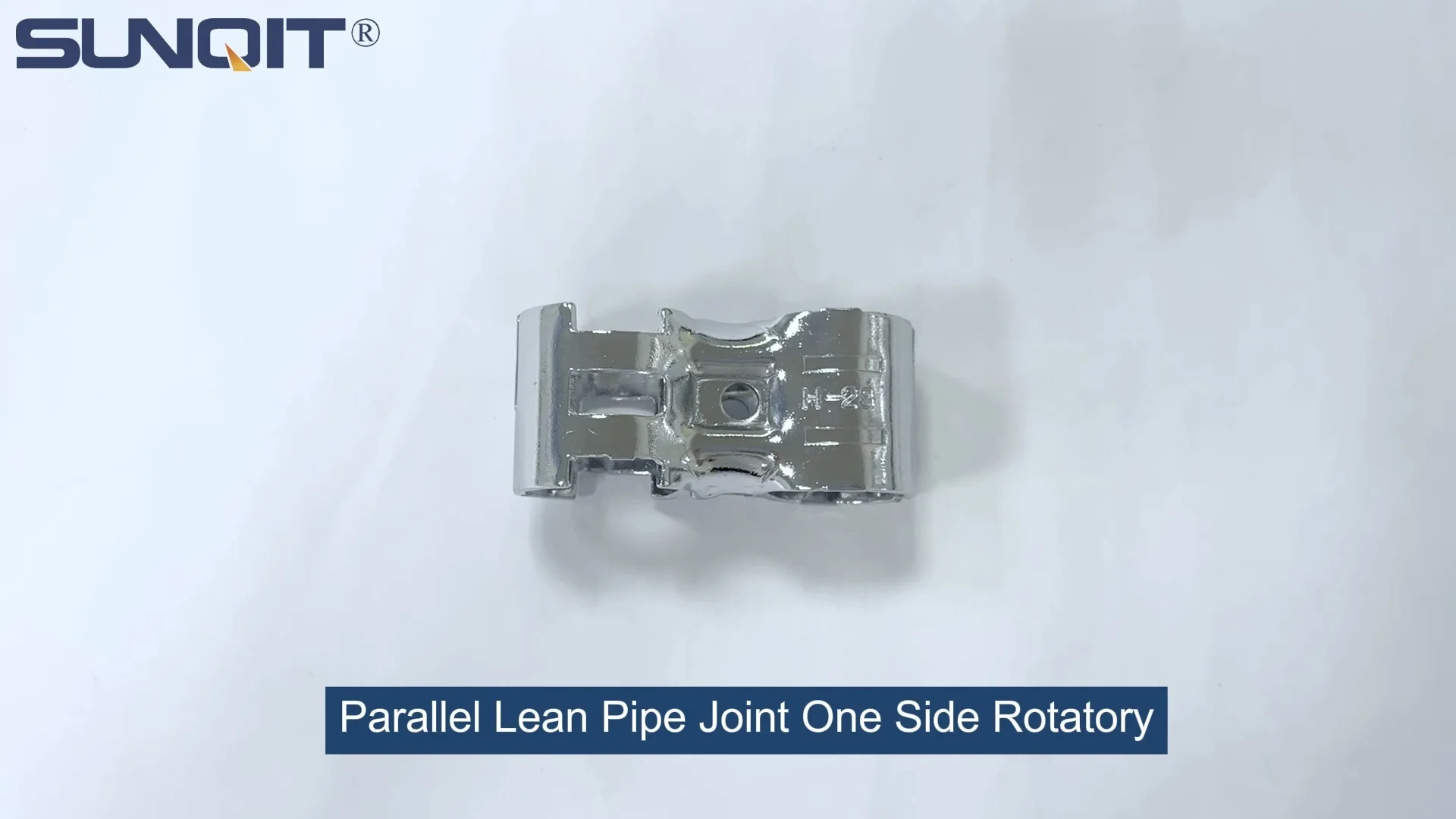
Parallel rotatory lean pipe joint, for 2 pcs 28mm pipe conenction in parallel direction with one side rotatory function.
Walk into any modern manufacturing facility, and you'll likely spot a hive of activity: assembly lines humming, workers moving materials with precision, and workbenches stacked with tools and components. Behind this orchestrated chaos lies a silent hero of lean manufacturing: the lean pipe system. These modular, flexible structures—think workbenches, flow racks, and material trolleys—are built to adapt to changing production needs, and at their core are the unsung components that hold everything together: lean pipe joints. Today, we're zeroing in on one specific joint that's become a staple in factories worldwide: the Parallel Lean Pipe Joint One Side Rotatory Chrome. If you've ever wondered how much weight this small but mighty component can handle, you're in the right place. Let's dive in.
Understanding Lean Pipe Systems: The Backbone of Modern Factories
Before we get into the nitty-gritty of load capacity, let's take a step back and appreciate what lean pipe systems are all about. Born from the principles of lean manufacturing—efficiency, waste reduction, and adaptability—these systems are made up of lightweight pipes (often steel or aluminum) and a variety of joints that allow for quick assembly and reconfiguration. Unlike rigid, fixed structures, lean pipe setups can be adjusted on the fly: a workbench today might become a flow rack tomorrow, or a material trolley next week. This flexibility is why they're a favorite in industries ranging from automotive and electronics to pharmaceuticals and logistics.
At the heart of this flexibility are the joints. Think of them as the "building blocks" of lean systems. They connect pipes at various angles, allow for rotation, and provide stability. And among the many types of joints available, the Parallel Lean Pipe Joint One Side Rotatory Chrome stands out for its unique combination of strength and movement. Let's break down what makes this joint special.
Meet the Star: Parallel Lean Pipe Joint One Side Rotatory Chrome
First, let's decode the name. "Parallel" means this joint is designed to connect two pipes that run alongside each other—think of the horizontal rails on a workbench or the side supports of a flow rack. "One Side Rotatory" tells us that one end of the joint can rotate, adding a layer of flexibility: maybe you need a section of your workbench to tilt slightly, or a material rack to adjust to different angles as parts move through the line. And "Chrome" refers to the coating on the joint, which isn't just for looks—it adds corrosion resistance and durability, crucial in busy factory environments where spills, humidity, or chemicals might take a toll.
So, what does this joint actually look like? Picture a small, metallic component with two connection points for pipes. One end is fixed, providing a stable anchor, while the other can swivel or rotate within a certain range (often 180 degrees or more). The chrome plating gives it a sleek, silver finish, and the internal mechanism—usually a bearing or pivot point—allows for smooth rotation without compromising strength. It's a simple design, but one that solves a big problem: how to make rigid pipe systems just a little more dynamic.
Now, where do you find these joints in action? They're everywhere you need both stability and adjustability. For example, on a lean pipe workbench, they might connect the vertical legs to the horizontal shelves, letting workers tilt the shelf slightly to reduce strain when reaching for tools. In a flow rack, they could link the side rails to the roller track, allowing the track to angle downward to guide materials toward the assembly line. Even in turnover trolleys, they might help adjust the height of handles for workers of different heights. In short, if a structure needs to stay strong but also move a little, this joint is often the go-to choice.

The Big Question: Load Capacity—How Much Weight Can It Really Handle?
Here's the million-dollar question: when you install a Parallel Lean Pipe Joint One Side Rotatory Chrome, how much weight can you safely put on it? The answer isn't as simple as a single number, because load capacity depends on a handful of factors. Let's break them down one by one.
1. Material Matters: The Strength of Chrome-Plated Steel
First and foremost, the material of the joint itself plays a huge role. Most Parallel Lean Pipe Joints—including the One Side Rotatory Chrome variety—are made from steel, then coated with chrome. Steel is chosen for its high tensile strength and durability, but not all steel is created equal. The thickness of the steel, the quality of the alloy, and the manufacturing process (casting vs. forging) all affect how much weight the joint can bear.
Chrome plating adds a thin layer (usually a few micrometers thick) to the surface. While this layer doesn't significantly increase the structural strength of the steel, it does protect against rust and corrosion. A rusted joint weakens over time, so the chrome coating indirectly helps maintain load capacity by keeping the steel intact. In humid or wet environments, this can make a big difference in long-term performance.
So, what's the baseline? Most steel-based Parallel Lean Pipe Joints have a minimum tensile strength of around 300-500 MPa (megapascals), which translates to a decent load-bearing capacity. But remember, this is the strength of the material itself—not the joint as a whole. The design of the joint (like the size of the connection points or the thickness of the metal around the pivot) will also influence how much weight it can handle.
2. Design: Rotation vs. Strength—A Delicate Balance
The rotatory feature is what makes this joint unique, but it also introduces a trade-off: moving parts can sometimes be weaker than fixed ones. The pivot point—the part that allows rotation—has to be designed to handle both the weight and the movement. If the pivot is too loose, the joint might wobble under load; if it's too tight, rotation becomes stiff, and the metal might crack under stress.
Manufacturers solve this by using precision engineering. The pivot often includes a hardened steel pin or bearing that distributes weight evenly across the joint. The fixed end is reinforced with extra metal to prevent bending, while the rotatory end is designed to flex slightly without breaking. For example, a well-made joint might have a thicker wall around the fixed connection and a slightly thinner, but stronger, material around the pivot. It's all about balancing flexibility and strength.
Another design factor is the size of the joint. Larger joints (which connect thicker pipes, like 28mm or 30mm lean pipes) will naturally handle more weight than smaller ones (for 20mm or 25mm pipes). So, if you're using a 30mm steel lean pipe, the Parallel Lean Pipe Joint One Side Rotatory Chrome designed for that pipe size will have a higher load capacity than one made for a smaller pipe.
3. Installation: Tighten Up—But Not Too Tight
Even the strongest joint will fail if it's installed incorrectly. How you attach the joint to the pipes matters a lot. Most lean pipe joints use a setscrew or a clamping mechanism to hold the pipe in place. If the setscrew is too loose, the pipe will slip, reducing the joint's effective load capacity. If it's too tight, you might strip the threads or warp the pipe, weakening the connection.
Manufacturers usually provide torque specifications for installation—for example, "tighten the setscrew to 15 Nm" (newton-meters, a unit of torque). Following these specs ensures the joint grips the pipe securely without damaging it. It's also important to check that the pipe is clean and free of debris before installation; dirt or rust can prevent the joint from clamping properly, leading to slippage under load.
4. Environmental and Usage Conditions
Finally, where and how you use the joint affects its load capacity. Let's say you install the joint in a freezing cold warehouse—metal contracts in low temperatures, which might make the pivot stiffer and reduce its ability to handle sudden impacts. In a hot, humid environment, even with chrome plating, corrosion could slowly weaken the metal over time. And if the joint is used in a high-vibration area (like near a heavy machine), the constant shaking might loosen the connection or wear down the pivot mechanism, lowering load capacity over time.
Dynamic vs. static load is another key distinction. Static load is the weight of something that's not moving—like a stack of boxes sitting on a shelf. Dynamic load is the weight of something that's moving or being placed/removed—like a worker setting a heavy tool on the workbench or a pallet being lowered onto a flow rack. Dynamic loads are harder on joints because they add impact force. A joint might handle 100kg static load but only 80kg dynamic load, since the sudden weight could stress the pivot or connection points.
Putting It All Together: Typical Load Capacity Ranges
Okay, so with all these factors in mind, what's a realistic load capacity for a Parallel Lean Pipe Joint One Side Rotatory Chrome? Let's look at data from leading lean pipe suppliers, who test their joints under controlled conditions to provide safe working loads.
For most standard sizes (connecting 28mm or 30mm lean pipes), you'll find load capacities ranging from 50kg to 150kg per joint. That might sound like a big range, but remember, it depends on the factors we discussed: material quality, design, installation, and usage. Let's break it down with examples:
- Light-duty use (e.g., small workbenches for tools): A smaller joint (for 25mm pipes) with basic chrome plating might handle 50-80kg static load and 30-50kg dynamic load.
- Medium-duty use (e.g., flow racks for small parts): A standard joint (28mm pipes) with reinforced steel and a precision pivot could handle 80-120kg static load and 60-90kg dynamic load.
- Heavy-duty use (e.g., material trolleys for automotive parts): A large joint (30mm+ pipes) with thick steel walls and a high-quality bearing might handle 120-150kg static load and 90-120kg dynamic load.
To give you a clearer picture, let's look at a test table from a hypothetical lean pipe supplier, showing load capacity under different conditions:
| Joint Size (Pipe Diameter) | Static Load Capacity (kg) | Dynamic Load Capacity (kg) | Rotation Range | Chrome Thickness |
|---|---|---|---|---|
| 25mm | 50-70kg | 30-45kg | 180° | 8-10μm |
| 28mm | 80-100kg | 60-80kg | 180° | 10-12μm |
| 30mm | 100-130kg | 80-100kg | 270° | 12-15μm |
| 32mm | 130-150kg | 100-120kg | 270° | 15-20μm |
*Note: These are example values and may vary by manufacturer. Always check the supplier's specifications for your specific joint.*
One thing to remember: these are per-joint capacities. Most structures use multiple joints, so the total load capacity of the system is higher than a single joint. For example, a workbench shelf might have four Parallel Lean Pipe Joints, each handling 100kg, so the shelf could theoretically hold 400kg (though you'd also need to consider the strength of the pipes themselves!).

Real-World Examples: When Load Capacity Matters Most
To see why load capacity is so important, let's look at a few real-world scenarios where choosing the right Parallel Lean Pipe Joint One Side Rotatory Chrome made all the difference.
Scenario 1: Electronics Manufacturing—Precision and ESD Safety
In an electronics factory, workers assemble circuit boards on ESD workbenches (ESD stands for electrostatic discharge, which can damage sensitive components). These workbenches need to hold tools, circuit boards, and testing equipment—all while preventing static buildup. The workbench might have a tilting section to reduce neck strain for workers, connected by Parallel Lean Pipe Joints One Side Rotatory Chrome. If the joint's load capacity is too low, the tilted section could sag under the weight of a microscope or soldering station, misaligning the circuit board and leading to errors. Here, a medium-duty joint (80-120kg capacity) ensures the section stays stable, even with tools weighing 50-60kg on it.
Scenario 2: Automotive Assembly—Heavy Parts and Constant Motion
On an automotive assembly line, flow racks are used to feed parts (like bolts, washers, or small components) to workers. These racks often angle downward, using gravity to move parts toward the line, and the angle is adjusted with rotatory joints. The racks might hold hundreds of small parts, adding up to 100kg or more. A heavy-duty joint (120-150kg capacity) is essential here—if the joint fails, the rack could collapse, halting production and risking injury. The chrome coating also helps resist oil and grease from the assembly line, preventing corrosion that could weaken the joint over time.
Scenario 3: Warehouse Logistics—Turnover Trolleys on the Move
In a warehouse, turnover trolleys transport boxes and packages between stations. The trolley's handle might be connected with a rotatory joint, allowing workers to adjust the handle height. When fully loaded, the trolley could weigh 200kg or more, with part of that weight resting on the joint. A heavy-duty joint ensures the handle stays in place, even when the trolley is pushed over uneven floors (adding dynamic load from bumps and vibrations). Here, a joint with 120kg+ dynamic load capacity is critical to prevent the handle from slipping mid-transport.
Comparing to Other Joints: Why Choose Parallel Lean Pipe Joint One Side Rotatory Chrome?
You might be wondering: why not just use a fixed joint instead? Fixed joints are simpler and often cheaper, but they lack the rotation that makes the Parallel Lean Pipe Joint One Side Rotatory Chrome so versatile. For example, a fixed 90° joint can connect pipes at a right angle, but it can't adjust if you need to tilt a shelf. A swivel joint (which rotates 360°) offers more movement but might have lower load capacity because the rotating mechanism is more complex.
Another alternative is aluminum joints, which are lighter but less strong than steel. Aluminum lean pipe joints might be better for lightweight applications (like small workbenches), but for heavy loads, steel with chrome plating is still the gold standard. The Parallel Lean Pipe Joint One Side Rotatory Chrome strikes a balance: enough movement to add flexibility, enough strength to handle medium-to-heavy loads, and enough durability to last in tough environments.
Maintenance Tips: Keeping Your Joints Strong for the Long Haul
Even the best joint will wear out over time, but with proper maintenance, you can extend its life and keep its load capacity intact. Here are a few tips:
- Inspect regularly: Check joints monthly for signs of wear—loose setscrews, rust on the chrome coating, or wobbling in the pivot. Tighten screws or replace corroded joints before they fail.
- Lubricate the pivot: A drop of machine oil on the rotatory end every few months keeps the movement smooth and prevents friction from wearing down the bearing.
- Clean the chrome: Wipe down joints with a damp cloth to remove dirt, oil, or chemicals that could eat away at the plating. Avoid abrasive cleaners, which might scratch the chrome.
- Don't overload: Even if the joint is rated for 100kg, it's smart to stay under that limit to account for dynamic loads or unexpected impacts. Think of it as a safety buffer.
Choosing the Right Supplier: Quality Matters
Finally, the load capacity of your Parallel Lean Pipe Joint One Side Rotatory Chrome depends heavily on where you buy it. Reputable lean pipe suppliers test their joints rigorously, providing detailed specs on load capacity, material thickness, and rotation range. They also use high-quality steel and chrome plating, ensuring the joint lives up to its rating. Cheap, untested joints might claim the same load capacity, but cut corners on material or manufacturing—putting your workers and production at risk.
When shopping for joints, look for suppliers who provide certification (like ISO 9001) for their manufacturing processes, and ask for test reports showing load capacity under different conditions. A good supplier will also help you choose the right joint for your needs, considering pipe size, load, and environment. Remember, a few extra dollars on a quality joint is worth it to avoid costly downtime or accidents later.
Conclusion: The Unsung Hero of Lean Manufacturing
The Parallel Lean Pipe Joint One Side Rotatory Chrome might be small, but it's a powerhouse in the world of lean manufacturing. Its ability to balance strength, flexibility, and durability makes it indispensable in factories, warehouses, and assembly lines worldwide. And when it comes to load capacity, the key takeaway is this: it's not just about the number—it's about understanding the factors that influence it, choosing the right joint for your needs, and maintaining it properly.
So, the next time you walk through a factory and see a workbench tilting smoothly or a flow rack guiding parts with precision, take a second to appreciate the little chrome joint holding it all together. It's proof that in lean manufacturing, even the smallest components can make the biggest difference.