- Company Articles
- Products and Technology
- Product knowledge
- What Is the Maximum Temperature Four Way Straight Lean Pipe Joint Can Withstand?

What Is the Maximum Temperature Four Way Straight Lean Pipe Joint Can Withstand?
Related Product
Four Way Straight Lean Pipe Joint
Four way lean pipe joint for 4 pcs 28MM lean pipe connection in straight angle, which used widely in workbench, flow rack, hand trolley frame connection.
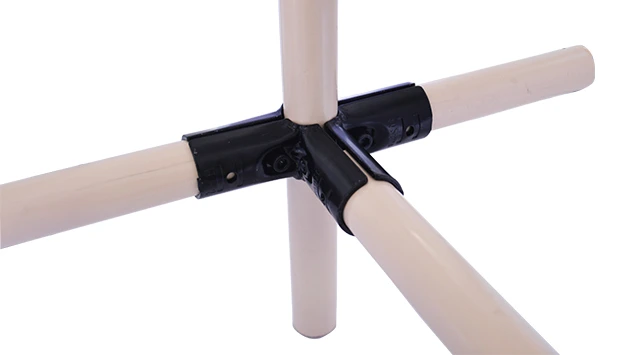
Exploring the heat resistance of a critical component in modern lean manufacturing systems
Introduction: The Unsung Backbone of Lean Systems
In the fast-paced world of manufacturing, where efficiency and reliability are the cornerstones of success, lean systems have emerged as game-changers. These systems—built on the principles of minimizing waste, streamlining workflows, and optimizing space—depend on a network of interconnected components that work in harmony. At the heart of this network lies the lean pipe : a simple yet versatile tube that, when combined with joints and accessories, forms everything from workbenches and material racks to conveyors and assembly lines. Among the many types of connectors that bring these systems to life, the four way straight lean pipe joint stands out for its ability to create stable, multi-directional structures. But here's a question that often flies under the radar for facility managers and engineers: Just how much heat can this small but crucial component handle?
Imagine a bustling automotive assembly plant, where welding stations emit intense bursts of heat, or a food processing facility where conveyor lines pass near ovens. In these environments, lean systems are not just tools—they're the backbone of daily operations. A single failed joint could disrupt production, delay deadlines, or even compromise safety. That's why understanding the temperature resistance of components like the four way straight lean pipe joint isn't just a technical detail; it's a critical factor in ensuring the longevity and reliability of the entire lean system.
In this article, we'll dive deep into the world of lean pipe joints, focusing specifically on the four way straight variant. We'll explore the materials that make them tick, the factors that influence their ability to withstand heat, and the real-world implications of temperature limits. By the end, you'll have a clear picture of how hot these joints can get before they fail, and why that matters for your operations.
What Is a Four Way Straight Lean Pipe Joint?
Before we can talk about temperature resistance, let's make sure we're all on the same page about what a four way straight lean pipe joint actually is. In the simplest terms, it's a connector designed to join four lean pipes at a 90-degree angle, forming a straight, cross-like structure. Unlike corner joints or T-joints, which connect two or three pipes, the four way straight joint is all about creating stability in multi-directional frameworks. Think of it as the "hub" of a wheel, where pipes extend outward in four perpendicular directions—up, down, left, and right—to build sturdy workbenches, shelving units, or material flow racks.
These joints are typically made from a combination of materials, including plastic, aluminum, or stainless steel, often with coatings like polyethylene (PE) for added durability or electrostatic discharge (ESD) protection. Their design is deceptively simple: a central body with four openings, each sized to fit standard lean pipe diameters (usually 28mm or 30mm for traditional lean pipes, or smaller sizes for aluminum variants). Inside each opening, you'll find a gripping mechanism—often a set of metal teeth or a friction fit—that locks the pipe in place when tightened, usually with a hex key or wrench. This simplicity is part of their appeal: they're easy to assemble, disassemble, and reconfigure, which aligns perfectly with the flexibility required in lean manufacturing.
But don't let their simplicity fool you. Four way straight lean pipe joints play a vital role in distributing weight and stress across a structure. When you load a workbench with heavy tools or stack materials on a rack, the joints bear the brunt of that pressure. Add heat to the mix, and suddenly their mechanical properties—tensile strength, flexibility, and grip—can change. That's why understanding their temperature limits is so important.

Materials Matter: The Building Blocks of Heat Resistance
The maximum temperature a four way straight lean pipe joint can withstand starts with one key factor: the materials it's made from. Let's break down the most common materials and how they react when the heat turns up.
1. Polyethylene (PE) Coated Joints
Many lean pipe joints—especially those designed for lightweight applications—feature a plastic outer layer, often polyethylene (PE). PE coatings are popular because they're affordable, resistant to corrosion, and provide a smooth, non-slip surface. But when it comes to heat, PE has its limits. Pure polyethylene starts to soften at around 80°C (176°F) and melts completely at approximately 115°C (239°F). That means if a PE-coated joint is exposed to temperatures above 80°C for an extended period, you might notice it becoming pliable or losing its grip on the pipes. In extreme cases, the coating could bubble, crack, or even melt, compromising the joint's structural integrity.
It's worth noting that not all PE coatings are created equal. Some manufacturers add heat-stabilizing additives to boost resistance, pushing the softening point up to 90°C (194°F) or higher. But even with these additives, PE-coated joints are generally not recommended for environments where temperatures regularly exceed 60°C (140°F) for prolonged periods. They're better suited for cool or room-temperature settings, like electronics assembly lines or office supply storage.
2. Aluminum Joints
For applications where heat is a concern, aluminum joints are a step up. Aluminum is a lightweight metal with excellent thermal conductivity, meaning it can dissipate heat quickly—a useful trait in warm environments. Pure aluminum has a melting point of 660°C (1220°F), which is far higher than what most manufacturing facilities will ever encounter. But here's the catch: aluminum joints are rarely made of pure aluminum. They're usually alloyed with other metals like magnesium or silicon to improve strength, and they often have anodized coatings to prevent corrosion.
Anodized aluminum coatings are thin (usually 5-20 microns) and composed of aluminum oxide, which is stable up to around 200°C (392°F). Beyond that, the coating can start to oxidize further, turning white or flaking off. The base aluminum alloy, however, remains strong up to much higher temperatures. Most aluminum four way straight lean pipe joints can handle continuous temperatures of 150°C (302°F) without issues, and short bursts of up to 200°C (392°F) before showing signs of weakening. This makes them a solid choice for industries like automotive manufacturing, where paint curing ovens or engine testing areas generate moderate heat.
3. Stainless Steel Joints
When heat resistance is non-negotiable, stainless steel joints are the gold standard. Stainless steel is an alloy of iron, chromium, and nickel, known for its high strength and resistance to corrosion and heat. Most stainless steel lean pipe joints are made from 304 or 316 grade stainless steel. 304 stainless steel can withstand continuous temperatures of up to 870°C (1598°F), while 316—often used in high-heat or chemical environments—can handle even more, up to 925°C (1697°F). That's way beyond the needs of most manufacturing settings, but it's reassuring to know these joints won't budge when exposed to welding sparks, high-temperature ovens, or industrial furnaces.
Of course, all that heat resistance comes with a trade-off: cost. Stainless steel joints are significantly more expensive than PE-coated or aluminum options, and they're heavier, which can make structures bulkier. But for facilities like foundries, glass manufacturing plants, or aerospace factories—where temperatures regularly top 200°C—they're worth every penny.

Factors Beyond Materials: What Else Affects Temperature Resistance?
While materials are the foundation of heat resistance, they're not the only factor at play. The maximum temperature a four way straight lean pipe joint can withstand also depends on a handful of other variables, some of which are just as critical as the material itself. Let's explore these one by one.
1. Exposure Time: Short Bursts vs. Continuous Heat
Not all heat exposure is created equal. A joint might survive a 10-second blast of 200°C heat from a welding torch but fail after an hour of sitting at 100°C next to a heat lamp. Why? Because heat takes time to penetrate materials and cause damage. PE coatings, for example, can handle brief spikes above their softening point because the heat doesn't have time to fully reach the core of the joint. But continuous exposure allows heat to build up, weakening the material over time. Manufacturers often specify two temperature limits for joints: one for short-term exposure (minutes or seconds) and one for continuous exposure (hours or days). Always check these specs before installing joints near heat sources!
2. Joint Design and Fit
The way a joint is designed can also impact its heat resistance. Joints with tight, precision-machined openings tend to handle heat better than those with loose fits or gaps. Why? Because gaps allow heat to seep into the joint more easily, and they can expand when heated, causing the joint to loosen. For example, a four way straight joint with metal-to-metal contact (like a stainless steel joint) will conduct heat evenly across its surface, reducing hot spots. In contrast, a PE-coated joint with air gaps between the plastic and the inner metal core might trap heat, leading to localized melting.
Another design factor is the presence of vents or drainage holes. Some joints include small holes to release moisture or air, but these can also act as heat conduits, allowing hot air to circulate inside the joint. While this isn't a dealbreaker in most cases, it's something to consider if you're working in extremely hot environments.
3. Coating Thickness and Quality
For coated joints—like PE or ESD-coated aluminum—the thickness and quality of the coating matter. A thicker PE coating (say, 2mm vs. 1mm) might take longer to heat up, giving the joint a slightly higher resistance to short-term heat. But if the coating is poorly applied—with bubbles, thin spots, or uneven coverage—it can fail prematurely. Bubbles, for example, create air pockets that insulate the coating, causing it to heat up faster and melt in those areas. That's why it's important to source joints from a reputable lean pipe supplier that uses high-quality coating processes.
4. Environmental Factors: Humidity and Chemicals
Heat rarely acts alone in industrial environments. It's often accompanied by humidity, chemicals, or other elements that can amplify its effects. High humidity, for example, can cause metal joints to corrode faster at high temperatures, weakening their structure. Chemicals like oils, solvents, or cleaning agents can react with coatings or metals when heated, breaking them down. A PE coating that's resistant to 80°C in dry air might start to degrade at 60°C if exposed to mineral oil fumes, for instance. Always consider the full environment when evaluating a joint's heat resistance—not just the temperature.
Testing the Limits: How Manufacturers Determine Maximum Temperature
You might be wondering: How do manufacturers actually figure out the maximum temperature a four way straight lean pipe joint can withstand? It's not guesswork—there's a rigorous testing process involved, often following industry standards set by organizations like ASTM International or ISO. Let's walk through the most common tests.
1. Thermal Cycling Tests
Thermal cycling is exactly what it sounds like: exposing the joint to repeated cycles of heating and cooling to simulate real-world conditions. For example, a joint might be heated to 100°C for 4 hours, then cooled to 20°C for 4 hours, and this cycle repeated 100 times. Afterward, engineers check for signs of failure: cracks, warping, loosening of the grip on pipes, or degradation of coatings. If the joint still functions as intended, it passes. This test is great for evaluating long-term durability in environments with fluctuating temperatures, like a warehouse that gets hot in summer and cold in winter.
2. Melting Point Determination
For plastic or coated joints, melting point tests are straightforward. The joint is placed in a controlled oven, and the temperature is gradually increased until the material softens or melts. The temperature at which this happens is recorded as the "failure point." For PE coatings, this is usually around 115°C, as we mentioned earlier, but additives can push it higher. For metals, the test is less about melting (since they melt at much higher temps) and more about "annealing"—the point at which the metal loses its strength and becomes ductile. For aluminum, this starts around 300°C, but since most aluminum joints are used well below that, it's rarely a concern.
3. Load-Bearing Tests Under Heat
A joint might survive high temperatures on its own, but what happens when it's under load? That's where load-bearing tests come in. Engineers mount the joint in a test rig, attach pipes, and apply a standard load (say, 50kg) to simulate the weight of tools or materials. Then they heat the environment to a specific temperature and monitor how the joint holds up over time. If the joint starts to bend, slip, or collapse under load, that temperature is marked as its limit. This is critical because in real life, joints are never "unloaded"—they're always supporting something.
4. Real-World Simulation
Finally, some manufacturers go the extra mile with real-world simulation tests. They build small-scale lean structures using four way straight joints and expose them to conditions that mimic specific industries: welding sparks, hot air from ovens, or even chemical sprays. This gives a more accurate picture of how the joints will perform in actual factories, where heat sources are unpredictable and conditions are rarely "controlled."
Putting It All Together: Typical Temperature Ranges by Material
Now that we've covered materials, design factors, and testing, let's summarize the typical maximum temperatures you can expect from four way straight lean pipe joints, based on their material. The table below breaks it down by material type, including both continuous and short-term exposure limits.
| Joint Material | Max Continuous Temperature (°C) | Max Short-Term Exposure (°C) | Best For |
|---|---|---|---|
| PE-Coated Plastic/Metal | 60-80°C | 80-100°C (5-10 minutes) | Electronics assembly, offices, cool warehouses |
| Aluminum (Anodized) | 150-200°C | 200-250°C (15-30 minutes) | Automotive, food processing, moderate-heat environments |
| Stainless Steel (304 Grade) | 600-800°C | 800-900°C (1-2 hours) | Welding areas, foundries, high-heat industrial settings |
| Stainless Steel (316 Grade) | 700-900°C | 900-1000°C (1-2 hours) | Chemical plants, aerospace manufacturing, extreme heat |
Keep in mind these are general guidelines, not hard-and-fast rules. Always check the manufacturer's specifications for the exact joint model you're using, as additives, coatings, and design tweaks can change these numbers. For example, a PE-coated joint with a heat-stabilized additive might handle 90°C continuously, while a standard PE joint tops out at 70°C. When in doubt, reach out to your lean pipe supplier —they should be able to provide detailed thermal performance data for their products.
Real-World Scenarios: When Temperature Resistance Matters Most
To make this more concrete, let's look at a few real-world scenarios where the temperature resistance of four way straight lean pipe joints can make or break a lean system.
Scenario 1: Automotive Paint Curing Ovens
Automotive factories use lean systems extensively to transport car parts through assembly lines. One critical stage is the paint curing oven, where freshly painted parts are heated to 150-180°C to dry the paint. The conveyor racks carrying these parts are often built with lean pipes and four way straight joints. If the joints are made of PE-coated plastic, they'd start to soften at 80°C, leading to sagging racks and potentially damaged parts. Aluminum joints, however, can handle 150°C continuously, making them the go-to choice here. In fact, many automotive plants specify aluminum joints for oven-conveyor systems to avoid costly breakdowns.
Scenario 2: Food Processing Lines
Food processing facilities use lean systems for everything from ingredient storage racks to packaging lines. Near ovens or fryers, ambient temperatures can reach 40-60°C, with occasional spikes when doors are opened (exposing joints to 80-90°C heat for a few minutes). PE-coated joints might work here, but only if they're heat-stabilized. Some facilities opt for aluminum joints to be safe, especially if they use steam cleaning (which adds moisture to the mix, accelerating PE degradation).
Scenario 3: Welding Workstations
Welding workstations are a hot spot—literally. Sparks from welding torches can reach temperatures of 2000°C or more, though they're short-lived (a fraction of a second). Stainless steel joints are ideal here because they won't melt or catch fire when hit by sparks. Aluminum joints might survive, but repeated spark exposure can cause pitting or discoloration over time. PE-coated joints, on the other hand, would melt instantly if a spark lands directly on them, so they're a no-go in welding areas.
Tips for Choosing the Right Joint for High-Temperature Environments
Now that you understand the basics of temperature resistance, how do you choose the right four way straight lean pipe joint for your facility? Here are a few practical tips to guide you:
- Start with a temperature audit. Measure the ambient temperature in your facility, plus any heat sources (ovens, welding stations, machinery) near your lean systems. Note both continuous and peak temperatures. This will give you a baseline for what your joints need to withstand.
- Don't overbuy, but don't cut corners. If your facility stays cool (20-30°C), PE-coated joints are probably fine and will save you money. But if you're near heat sources, splurge on aluminum or stainless steel. Remember: a failed joint could cost more in downtime than the price difference between materials.
- Check for ESD or chemical resistance if needed. Some high-heat environments also require ESD protection (like electronics manufacturing) or resistance to oils/chemicals. Look for joints labeled "ESD-safe" or "chemical-resistant" if these apply to you.
- Consult your supplier. A good lean pipe supplier will have technical experts who can help you match joints to your environment. They might even have case studies from similar facilities to reference.
- Inspect regularly. Even the best joints need check-ups. In high-heat areas, inspect joints monthly for signs of damage: cracks, warping, loose pipes, or coating degradation. replace any joints that look compromised—better safe than sorry.
Conclusion: Small Joints, Big Impact
At first glance, the four way straight lean pipe joint might seem like a component—a small piece of plastic, aluminum, or steel that connects pipes. But as we've explored, its ability to withstand heat is crucial to the reliability, safety, and efficiency of entire lean systems. Whether you're running a cool electronics plant or a scorching foundry, understanding the temperature limits of these joints can save you from costly breakdowns, delays, and accidents.
To recap: PE-coated joints are great for cool environments but struggle above 80°C. Aluminum joints step up to 150-200°C, making them versatile for moderate heat. And stainless steel joints? They're the heavyweights, handling temperatures most of us will never encounter. By pairing the right material with your facility's heat profile, consulting your supplier, and inspecting regularly, you can ensure your lean system stands strong—no matter how hot things get.
So the next time you walk through your facility, take a second to look at those four way straight lean pipe joints. They might be small, but they're working hard to keep your operations running smoothly. And now, you know just how much heat they can handle.