- Company Articles
- Products and Technology
- Product knowledge
- What Is the Rotation Angle of Parallel Rotatory Lean Pipe Joint Chrome?

What Is the Rotation Angle of Parallel Rotatory Lean Pipe Joint Chrome?
Related Product
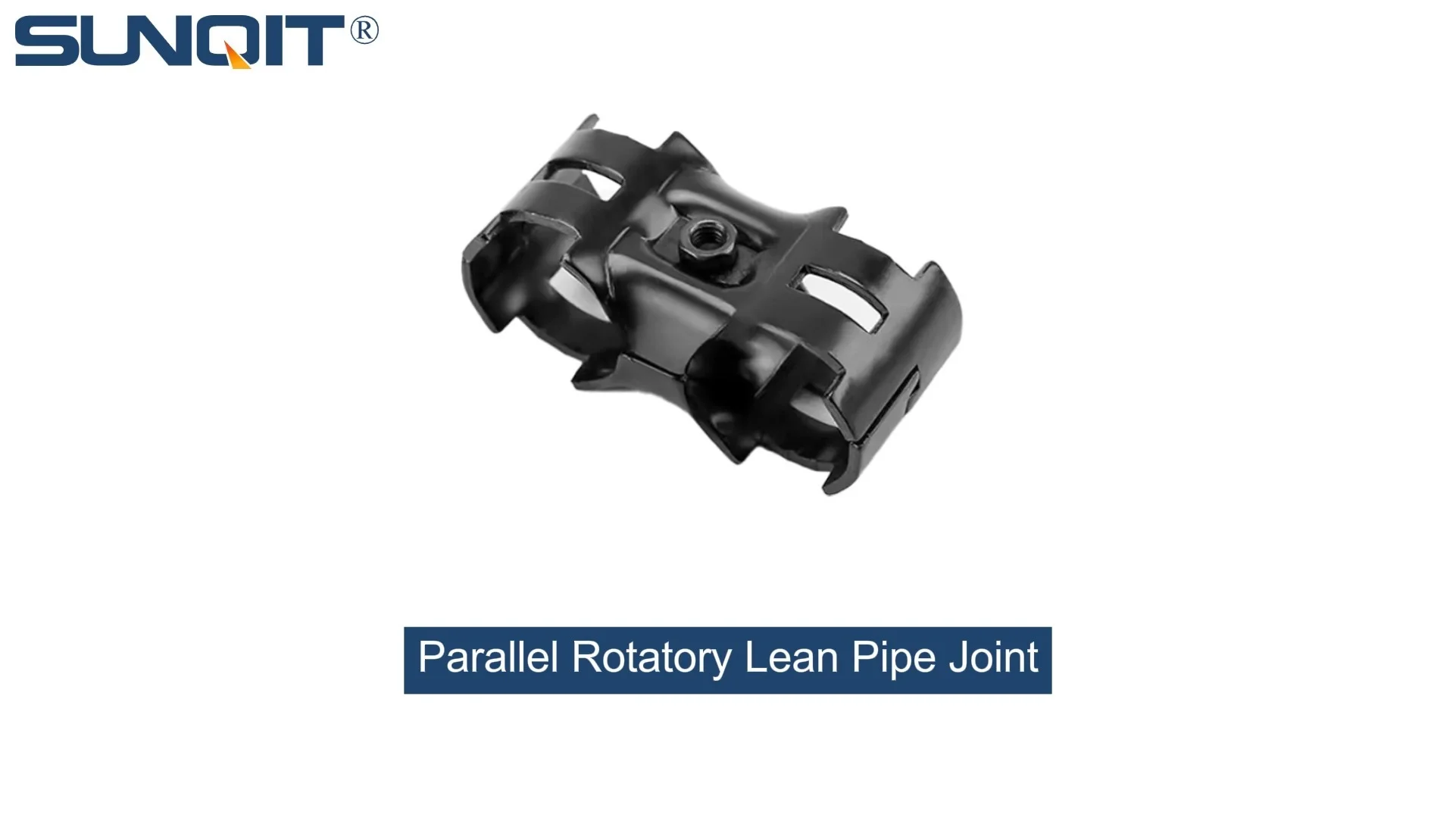
Parallel Rotatory Lean Pipe Joint
Parallel rotatory lean pipe joint, for 2 pcs pipe conenction in parallel direction with rotatory function.
In the fast-paced world of manufacturing and production, efficiency isn't just a buzzword—it's the backbone of success. Every tool, every component, and every workflow tweak contributes to the bottom line, which is why lean manufacturing has become a cornerstone for businesses aiming to eliminate waste, streamline processes, and boost productivity. At the heart of many lean systems lies a humble yet powerful element: the lean pipe system. These modular, versatile structures—composed of pipes, joints, and accessories—are the unsung heroes of modern workspaces, enabling everything from custom workbenches to dynamic material racks. Today, we're diving deep into one critical component of these systems: the parallel rotatory lean pipe joint chrome . Specifically, we'll answer a question that matters to engineers, facility managers, and lean enthusiasts alike: What is its rotation angle, and why does it matter?
Before we get into the nitty-gritty of rotation angles, let's take a step back. Lean pipe systems, often referred to as "flexible pipe systems," are built on the idea of adaptability. Unlike rigid, fixed structures, these systems use lightweight yet durable pipes (typically steel, aluminum, or stainless steel) and a variety of joints to create customizable workspaces. Think of them as the industrial equivalent of building blocks—only instead of childhood play, they're used to construct workbenches, flow racks, conveyor systems, and turnover trolleys that adapt to a company's evolving needs.
At the center of this adaptability are the joints. Without the right joints, lean pipe systems would be little more than static collections of metal tubes. Joints connect pipes, allow for movement, and enable the reconfiguration that makes lean systems so valuable. Among the many types of joints available—fixed, rotating, crossing, three-way, and more—the parallel rotatory lean pipe joint chrome stands out for its unique ability to balance stability with flexibility. But to understand its value, we first need to unpack what it is, how it's designed, and yes, that all-important rotation angle.
Lean Pipe Systems: The Backbone of Modern Manufacturing
Before we zoom in on the parallel rotatory joint, let's set the stage with a quick overview of lean pipe systems. Also known as "kitchen pipe systems" (a nod to their early use of affordable, off-the-shelf materials like galvanized steel pipes), lean pipe systems were popularized by Toyota as part of their Toyota Production System (TPS), the precursor to modern lean manufacturing. The goal was simple: create low-cost, easy-to-assemble structures that could be quickly modified to meet changing production demands.
Today, lean pipe systems have evolved far beyond their humble beginnings. Modern systems use high-quality materials like lean pipe (often coated in plastic or chrome for durability), aluminum, and stainless steel, along with precision-engineered joints and accessories. They're used in industries ranging from automotive and electronics to pharmaceuticals and logistics, and their applications are endless: assembly workbenches, material handling racks, conveyor lines, storage solutions, and even ergonomic workstations designed to reduce worker fatigue.
What makes these systems so indispensable? Three key traits: flexibility , affordability , and simplicity . Unlike welded metal structures or custom-built furniture, lean pipe systems require no specialized tools to assemble or reconfigure. With a few basic hand tools, a team can disassemble a workbench in the morning and reassemble it as a flow rack by afternoon. This adaptability is critical in today's manufacturing landscape, where product lines change frequently, and downtime is costly.
But none of this flexibility would be possible without the joints. Joints are the connectors that turn individual pipes into functional structures, and they come in a dizzying array of shapes and sizes to suit different needs. There are fixed joints for static structures, three-way joints for branching pipes, crossing joints for intersecting lines, and rotating joints for systems that need movement. It's the rotating joints—specifically, the parallel rotatory lean pipe joint chrome—that we're here to explore.
Lean Pipe Joints: More Than Just Connectors
Joints are the unsung heroes of lean pipe systems. They're small, often overlooked, but without them, the entire structure falls apart—literally. To appreciate the parallel rotatory joint, it helps to first understand the different types of joints available and what they're used for. Let's break down some common options:
Fixed Lean Pipe Joints
As the name suggests, fixed joints lock pipes into place at a specific angle (usually 90°, 45°, or 180°) with no movement. They're ideal for static structures like the legs of a workbench or the vertical supports of a material rack. They're simple, affordable, and provide maximum stability, but they offer zero flexibility once installed.
90-Degree Crossing Lean Pipe Joints
These joints are designed to connect two pipes that cross at a 90° angle, like the horizontal and vertical supports of a shelf. They're often used in multi-tiered racks or workbenches with overhead storage. While they allow for crossing pipes, they don't rotate—once installed, the angle is fixed.
Three-Way Lean Pipe Joints
Three-way joints connect three pipes at a single point, typically in a T-shape or Y-shape. They're useful for creating branches in a structure, such as adding a side shelf to a workbench or a diagonal brace for extra stability. Like fixed joints, most three-way joints don't rotate, though some specialized versions offer limited movement.
Rotatory Lean Pipe Joints
Rotatory joints are where the magic of flexibility happens. These joints allow pipes to rotate around an axis, enabling movement and reconfiguration. Some rotate 360°, while others are limited to a specific range (e.g., 180°). They're used in applications where adjustability is key—think of the adjustable shelves in a material rack or the tilting surface of a workbench.
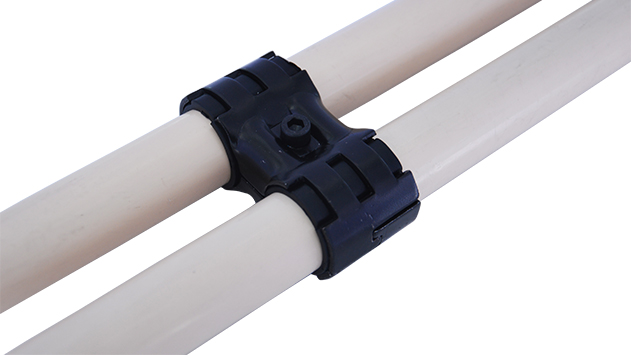
And then there's the parallel rotatory lean pipe joint chrome . This specialized joint is designed for a specific purpose: connecting two parallel pipes while allowing them to rotate relative to each other. Unlike some rotatory joints that spin freely, this one is engineered to maintain parallel alignment between pipes, making it ideal for structures where pipes need to move in sync—like the rails of a conveyor system or the adjustable arms of a workbench.
The Parallel Rotatory Lean Pipe Joint Chrome: Design and Function
Now that we've covered the basics, let's focus on the star of the show: the parallel rotatory lean pipe joint chrome. What sets it apart from other joints, and why would you choose it for your lean system?
Design Basics
At first glance, the parallel rotatory joint looks similar to other lean pipe joints: a metal connector with holes or clamps to attach to pipes. But under the hood, its design is optimized for one key function: parallel rotation. Most models consist of two pipe connectors linked by a central pivot mechanism. This pivot allows the two connected pipes to rotate relative to each other while staying parallel—meaning if one pipe is horizontal, the other stays horizontal as it rotates, rather than tilting or twisting.
The "chrome" in the name refers to the coating on the joint. Chrome plating adds a layer of protection against rust, corrosion, and wear, making the joint more durable in harsh industrial environments (think factories with high humidity or exposure to oils and chemicals). It also gives the joint a smooth, professional finish that resists scratches and is easy to clean—an added bonus for workspaces that prioritize cleanliness, like pharmaceutical or food production facilities.
Compatibility with Lean Pipes
Like most lean pipe joints, the parallel rotatory chrome joint is designed to work with standard lean pipe sizes. The most common pipe diameter is 28mm (about 1.1 inches), though some manufacturers offer joints for smaller (e.g., 20mm) or larger (e.g., 38mm) pipes. It's important to check the pipe diameter compatibility before purchasing, as a joint that's too loose or too tight won't function properly.
Most joints use a clamping mechanism to attach to pipes—typically a setscrew or a bolt that tightens around the pipe. This allows for easy installation and removal without welding or drilling, which aligns with the "lean" philosophy of minimizing setup time and tooling requirements.

The Rotation Angle: What Is It, and Why Does It Matter?
Now, let's tackle the question that brought us here: What is the rotation angle of the parallel rotatory lean pipe joint chrome? Simply put, the rotation angle is the range of motion the joint allows—how far it can rotate before hitting a stop or reaching its mechanical limit.
Typical Rotation Angle for Parallel Rotatory Joints
While rotation angles can vary slightly by manufacturer, most parallel rotatory lean pipe joint chrome models offer a rotation angle of 180 degrees . This means the joint can rotate from 0° (fully closed, with the pipes aligned in a straight line) to 180° (fully open, with the pipes still parallel but facing opposite directions). Some high-end models may offer a slightly wider range (e.g., 270°), but 180° is standard for most applications.
Why 180°? Because beyond that, the parallel alignment starts to break down. The joint is engineered to keep the connected pipes parallel, and rotating more than 180° would require a more complex (and expensive) design with gears or additional pivots. For most industrial applications, 180° is more than enough range to achieve the desired flexibility.
How Is the Rotation Angle Measured?
Rotation angle is typically measured from the "neutral" position, where the two connected pipes are in a straight line (0°). As the joint rotates, the angle increases until it hits a mechanical stop—a small tab or pin that prevents over-rotation and protects the internal components (like bearings or gears) from damage. For example, a 180° rotation angle would allow the joint to rotate 90° to the left and 90° to the right of the neutral position, or a full 180° in one direction (depending on the design).
It's important to note that the rotation angle is not the same as "swivel" or "pivot" angle. Swivel joints often allow 360° rotation (full circular movement), but they don't maintain parallel alignment between pipes. The parallel rotatory joint's 180° range is a trade-off to keep the pipes parallel, which is critical for applications like conveyor rails or adjustable workbench surfaces where alignment affects functionality.
Why the Rotation Angle Matters
You might be thinking: "So it rotates 180°—why does that matter for my workflow?" The rotation angle directly impacts the joint's versatility and how it can be used in a lean system. Here are a few real-world examples:
1. Adjustable Workbenches
Imagine a workbench used for assembling small electronics. Some tasks require the worker to stand, while others are easier to perform seated. With a parallel rotatory joint, the workbench surface can be tilted or adjusted in height by rotating the joint, allowing the worker to find the most ergonomic position. A 180° rotation angle ensures the surface can be tilted from flat (0°) to fully vertical (180°), making it easy to access tools or materials stored underneath or to reposition the bench for different tasks.
2. Flow Racks with Tilted Shelves
Flow racks use gravity to move materials from the back to the front, reducing the need for workers to reach or bend. By using parallel rotatory joints, the angle of the flow rack shelves can be adjusted to control the speed of material flow. For example, heavy boxes might require a steeper angle (e.g., 30°) to slide easily, while lightweight components might need a shallower angle (e.g., 10°) to prevent sliding too quickly. A 180° rotation angle allows for precise adjustment of this slope without compromising the parallel alignment of the rack's side rails.
3. Reconfigurable Conveyor Systems
Conveyor systems often need to be adjusted to accommodate different product sizes or production layouts. Parallel rotatory joints can be used to adjust the height or angle of conveyor rails, ensuring products move smoothly from one station to the next. For example, if a new product is taller than the previous one, the conveyor rails can be rotated upward (within the 180° range) to create more clearance, all without disassembling the entire system.
4. Turnover Trolleys with Adjustable Handles
Turnover trolleys are used to transport materials between workstations. With parallel rotatory joints, the handle height can be adjusted to accommodate workers of different heights, reducing strain and improving ergonomics. A 180° rotation angle allows the handle to be flipped up for storage or down for use, making the trolley more compact when not in use.

How Does It Compare? A Joint Comparison Table
To put the parallel rotatory lean pipe joint chrome's rotation angle into context, let's compare it to other common lean pipe joints. The table below highlights key differences in rotation angle, material, applications, and benefits:
| Joint Type | Rotation Angle | Material | Common Applications | Key Benefits |
|---|---|---|---|---|
| Fixed Lean Pipe Joint | 0° (no rotation) | Steel (zinc-plated or painted) | Workbench legs, vertical supports, static racks | Maximum stability, low cost, easy installation |
| 90-Degree Crossing Joint | 0° (fixed 90° angle) | Steel or aluminum | Crossing supports in racks, overhead storage | Space-efficient, ideal for intersecting pipes |
| Three-Way Lean Pipe Joint | 0° (fixed angles) | Steel or aluminum | T-shaped branches, diagonal braces | Versatile for multi-directional structures |
| Swivel Lean Pipe Joint (360°) | 360° (full rotation) | Steel or aluminum | Adjustable shelves, rotating work surfaces | Full range of motion, highly flexible |
| Parallel Rotatory Lean Pipe Joint Chrome | 180° (parallel alignment) | Chrome-plated steel | Adjustable workbenches, flow racks, conveyor rails | Parallel alignment, corrosion resistance, smooth rotation |
As the table shows, the parallel rotatory chrome joint fills a unique niche: it offers rotation (unlike fixed joints) but maintains parallel alignment (unlike 360° swivel joints). This makes it ideal for applications where pipes need to move in sync, such as conveyor rails or adjustable workbench surfaces.
Installation and Maintenance Tips for Parallel Rotatory Joints
To get the most out of your parallel rotatory lean pipe joint chrome, proper installation and maintenance are key. Here's what you need to know:
Installation Steps
- Check Compatibility: Ensure the joint is compatible with your lean pipe diameter (most are 28mm). If using aluminum or stainless steel pipes, confirm the joint's clamping mechanism works with those materials.
- Clean Pipes and Joints: Wipe down the pipes and joint with a clean cloth to remove dust, oil, or debris. This ensures a tight, secure fit and prevents scratching the chrome finish.
- Assemble the Joint: Slide the joint onto the pipes, aligning them as needed. Tighten the clamping bolts or setscrews with a hex key (typically 4mm or 5mm) until the joint is secure but not over-tightened—over-tightening can damage the pipe or strip the threads.
- Test Rotation: After installation, rotate the joint through its full 180° range to ensure smooth movement. If it's stiff, check for misalignment or debris in the pivot mechanism. If it's loose, tighten the clamping bolts slightly.
Maintenance Tips
- Clean Regularly: Wipe the joint with a soft, damp cloth to remove dust and grime. Avoid abrasive cleaners (like steel wool) or harsh chemicals (like bleach), as these can damage the chrome plating.
- Lubricate the Pivot: Every 6–12 months (or more often in high-use environments), apply a small amount of light machine oil or silicone lubricant to the pivot mechanism. This keeps rotation smooth and prevents rust or corrosion.
- Check Tightness: Periodically inspect the clamping bolts for looseness, especially in high-vibration applications (like near conveyor motors). Tighten as needed to prevent pipes from slipping.
- replace Worn Parts: If the joint becomes stiff, loose, or damaged (e.g., cracked chrome, stripped threads), replace it promptly. A faulty joint can compromise the stability of the entire lean system.
Real-World Impact: A Case Study
To illustrate the value of the parallel rotatory lean pipe joint chrome, let's look at a real-world example. A mid-sized electronics manufacturer was struggling with inefficiencies in their assembly line. Their workbenches were static, and switching between assembling smartphones and tablets required reconfiguring the entire line—a process that took 4–6 hours and often led to downtime.
The company decided to invest in lean pipe workbenches equipped with parallel rotatory chrome joints. By using these joints, they could quickly adjust the height and angle of the workbench surfaces, as well as reposition flow racks and tool holders, without disassembling the entire structure. The 180° rotation angle allowed workers to tilt the assembly surface for better visibility when working on small components, reducing eye strain and errors.
Within three months, the company reported a 30% reduction in changeover time between product lines, a 15% decrease in assembly errors, and a 20% improvement in worker satisfaction (due to reduced fatigue from ergonomic adjustments). The chrome-plated joints also held up well in the cleanroom environment, requiring minimal maintenance compared to the painted joints they'd used previously.
This case study highlights how a seemingly small component—the parallel rotatory joint—can have a big impact on overall efficiency and worker well-being. It's a testament to the power of lean systems and the importance of choosing the right joints for the job.
Conclusion: The Parallel Rotatory Lean Pipe Joint Chrome—A Flexible Solution for Lean Systems
The parallel rotatory lean pipe joint chrome is more than just a connector—it's a tool for adaptability. Its 180° rotation angle, combined with chrome plating for durability and compatibility with standard lean pipe , makes it a versatile choice for modern manufacturing and warehouse environments. Whether you're building adjustable workbenches, reconfigurable flow racks, or ergonomic conveyor systems, this joint offers the flexibility to adapt to changing needs without sacrificing stability or durability.
When choosing lean pipe joints, remember that the rotation angle is just one factor to consider—material, compatibility, and application are equally important. But for applications where parallel alignment and adjustability are key, the parallel rotatory lean pipe joint chrome stands out as a reliable, cost-effective solution. By investing in quality joints like this, businesses can build lean systems that grow with them, reducing waste, improving efficiency, and empowering workers to do their best.
So, the next time you walk through a manufacturing plant or warehouse, take a closer look at the workbenches and racks around you. Chances are, there's a parallel rotatory joint hard at work—quietly enabling the flexibility that makes lean manufacturing possible.