- Company Articles
- Products and Technology
- Product knowledge
- What Is Turning Angle Code 3030? A Complete Definition for Lean Pipe Systems

What Is Turning Angle Code 3030? A Complete Definition for Lean Pipe Systems
Related Product
Turning Angle Code 3030
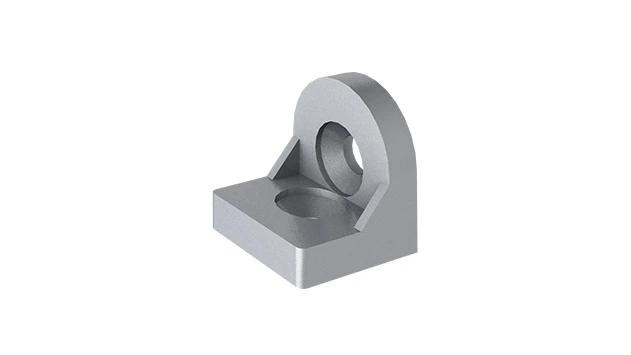
The turning angle aluminum profile connector provides a 90 degree hidden corner connection. 3030 it is means this size is used for 30 series aluminum profile.The corner code comes with set screws that allow for quick, easy connections.
Introduction: The Unsung Heroes of Lean Pipe Systems
If you've ever walked through a manufacturing plant, a warehouse, or even a small workshop, you've probably seen them: those sleek, modular structures—workbenches with neatly organized tools, material racks stacked with components, or assembly lines where products glide smoothly from one station to the next. Chances are, many of those structures are built using lean pipe systems. These systems are the backbone of modern, efficient workspaces, prized for their flexibility, cost-effectiveness, and ability to adapt to changing needs. But here's the thing: a lean pipe system is only as strong as its smallest parts. And today, we're shining a spotlight on one of those unsung heroes: the Turning Angle Code 3030.
You might be thinking, "An angle code? Really? That sounds like just another metal bracket." But in the world of lean manufacturing, details matter. The Turning Angle Code 3030 isn't just a bracket—it's a precision-engineered connector that holds everything together, ensuring your workbench doesn't wobble, your material rack doesn't sag, and your entire setup stays safe and sturdy, even under daily use. Let's dive in and unpack what makes this little component so crucial, and why it's a must-know for anyone building or maintaining a lean pipe system.
What Even Is a Turning Angle Code 3030? Let's Start with the Basics
First things first: let's break down the name. "Turning Angle Code 3030" might sound like industry jargon, but each part tells you something important. Let's start with "3030." In the world of aluminum profiles—the building blocks of most lean pipe systems—size matters, and "3030" refers to the dimensions of the profile it's designed to work with: 30 millimeters by 30 millimeters. These profiles are like the "bones" of your structure, and the angle code is the "joint" that connects them.
Then there's "Turning." Unlike some connectors that only join profiles in a straight line, this angle code is built to handle—you guessed it—turns. That means it can connect two 3030 aluminum profiles at an angle (most commonly 90 degrees, but sometimes adjustable for other angles) while keeping the connection rock-solid. And "Angle Code"? That's just the industry term for a hardware component that reinforces the angle where two profiles meet, preventing flexing or twisting.
So, to put it simply: A Turning Angle Code 3030 is a specialized, L-shaped connector designed to securely join 30mm x 30mm aluminum profiles at angles, ensuring structural stability and precision in modular lean pipe systems. It's the reason you can build a workbench with a shelf that juts out at a right angle without worrying about it collapsing under the weight of tools or materials.

Design Deep Dive: What Makes This Angle Code Stand Out?
Now that we know what it is, let's talk about how it's made. The Turning Angle Code 3030 might look simple, but its design is all about balance: strength, precision, and ease of use. Let's break down its key features.
Materials: Built to Last (Even in Tough Environments)
Most Turning Angle Code 3030 components are made from aluminum alloy—specifically, 6061-T6 aluminum. Why aluminum? For starters, it's lightweight, which is a big plus when you're building modular structures that might need to be reconfigured or moved. But don't let the lightness fool you: 6061-T6 is also incredibly strong, with high tensile strength and resistance to corrosion. That means even if your workshop gets a little damp or dusty (let's be real, most do), this angle code won't rust or degrade over time.
Some manufacturers also offer variants in stainless steel for extra durability, especially in environments where hygiene is critical (like food processing or pharmaceutical labs). But for most general manufacturing or warehouse use, aluminum is the go-to—it's cost-effective, easy to machine, and gets the job done.
Shape and Structure: More Than Just a Bracket
At first glance, a Turning Angle Code 3030 looks like a right-angled bracket with holes in it. But look closer, and you'll notice some clever design touches. Most models have a "gusseted" design—meaning there's a triangular reinforcement piece where the two legs of the angle meet. This gusset distributes weight and stress evenly across the connector, preventing it from bending or breaking under load. Think of it like how a triangle is the strongest shape in geometry; that gusset turns the angle code into a mini triangle, adding rigidity.
Then there are the holes. You'll typically find two or more holes on each leg of the angle code. These aren't random—they're precisely positioned to align with the T-slots on 3030 aluminum profiles. T-slots are the long, narrow grooves running along the length of the profile, and they're where you insert bolts or nuts to attach accessories. The angle code's holes line up perfectly with these slots, so you can secure it tightly using bolts (usually M5 or M6) and T-nuts, creating a connection that's both strong and easy to disassemble if you need to reconfigure your setup later.

Why Does It Matter? The Role of Turning Angle Code 3030 in Lean Systems
Okay, so it's a well-designed bracket. But why does that matter for your lean pipe system? Let's get practical. Imagine you're building a workbench—let's say a single-deck workbench without casters, like the "Workbench E" model you might see in supplier catalogs. The frame of that workbench is probably made from 3030 aluminum profiles. To build the frame, you need to connect vertical profiles (the legs) to horizontal profiles (the rails that hold the work surface). If you just butt the profiles together and bolt them directly, that connection might hold for a while, but over time, with tools being set down, parts being assembled, and general wear and tear, it'll start to loosen. The legs might shift, the workbench might wobble, and suddenly, you've got an unstable surface—not great for precision work.
Enter the Turning Angle Code 3030. By attaching it to the corner where the vertical and horizontal profiles meet, you add a layer of reinforcement. The angle code acts like a "bridge" between the two profiles, spreading the load across a larger area and preventing the connection from twisting. Suddenly, that workbench isn't just a frame—it's a solid, reliable workspace that can handle daily use without skipping a beat.
But it's not just workbenches. Think about material racks, like the "Material Rack B (3 row and 3 floor)" often used in warehouses. These racks need to hold heavy boxes or components, and each shelf is supported by horizontal profiles connected to vertical posts. Without a sturdy angle code, those shelves could sag or even collapse under the weight. The Turning Angle Code 3030 ensures that each shelf connection is locked in place, so you can stack materials with confidence.
Compatibility: What Works with Turning Angle Code 3030?
One of the best things about lean pipe systems is how modular they are—you mix and match components to build exactly what you need. But that only works if your components play well together. So, what does the Turning Angle Code 3030 pair with?
3030 Aluminum Profiles: The Perfect Match
Unsurprisingly, the star of the show here is the 3030 aluminum profile. These profiles are square (or sometimes rectangular) extrusions with T-slots running along their length, and they're the most common "bones" for mid-sized lean structures. Whether you're using a standard 3030 profile, a 3030 national standard profile A, or even a lightweight variant, the Turning Angle Code 3030 is designed to fit snugly against the profile's surface, with holes aligning perfectly with the T-slots. Pro tip: Always check that your profile's slot size matches the bolts you're using with the angle code—most 3030 profiles work with M5 or M6 bolts, which are standard for these angle codes.
Aluminum Profile Accessories: The Supporting Cast
The angle code doesn't work alone. To get the most out of it, you'll need a few aluminum profile accessories. T-nuts are a must—these slide into the T-slots of the profile and lock in place when you tighten the bolt, creating a secure connection. You'll also need bolts (usually hex-head or socket cap) and maybe washers to distribute pressure. Some setups might even use end caps for the profiles to prevent sharp edges, but that's more about safety than function.
What About Other Profiles? (Spoiler: Stick to 3030)
You might be tempted to use a Turning Angle Code 3030 with a 2020 or 4040 profile, but don't. The "3030" in the name isn't just a suggestion—it's a requirement. 2020 profiles are too small (20mm x 20mm), so the angle code's legs would overhang, and the holes wouldn't align. 4040 profiles are too big (40mm x 40mm), so the angle code would be too small to provide proper support. Stick to 3030, and you'll avoid headaches (and potentially dangerous loose connections).
Technical Specs at a Glance: A Quick Reference Table
To make things even clearer, here's a handy table breaking down the key specifications of a typical Turning Angle Code 3030. Keep in mind that exact specs can vary slightly by manufacturer, but this will give you a good baseline:
| Attribute | Details |
|---|---|
| Material | 6061-T6 aluminum alloy (most common); stainless steel variants available |
| Finish | Anodized (silver, black, or clear) for corrosion resistance and durability |
| Compatible Profile Size | 30mm x 30mm aluminum profiles (3030 series) |
| Standard Angle | 90 degrees (fixed); some models adjustable to 45° or 135° |
| Load Capacity | Up to 150kg per connection (varies by material thickness and bolt quality) |
| Bolt Size | M5 or M6 (depending on profile T-slot width) |
| Dimensions (Leg Length) | Typically 30mm–50mm per leg (matches profile width) |
| Common Applications | Workbenches, material racks, assembly line frames, shelving units |
Installing a Turning Angle Code 3030: It's Easier Than You Think
Okay, so you're sold on the importance of this angle code—now how do you actually use it? Don't worry; you don't need to be a professional installer. Here's a step-by-step breakdown that even a DIY newbie can follow:
- Prep your profiles: Cut your 3030 aluminum profiles to the desired length (if needed) and make sure the ends are clean and free of burrs. Slide T-nuts into the T-slots of each profile where you want to attach the angle code—usually one T-nut per hole on the angle code.
- Position the angle code: Hold the angle code against the corner where the two profiles meet, making sure the holes on the angle code line up with the T-nuts in the profiles. The legs of the angle code should sit flat against the sides of the profiles—no gaps!
- insert bolts and tighten: Thread a bolt through each hole in the angle code and into the T-nut. Use a hex key or socket wrench to tighten the bolts until they're snug. Don't over-tighten—you could strip the T-nut or warp the profile. A good rule of thumb: tighten until you feel resistance, then give it a quarter-turn more.
- Check for stability: Give the connection a gentle shake to make sure it's tight. If there's any wobble, double-check that the T-nuts are locked in place and the bolts are tight enough.
That's it! In just a few minutes, you've added a rock-solid connection to your lean pipe system. And if you ever need to reconfigure your setup—say, you want to shorten a workbench or add a shelf—just loosen the bolts, remove the angle code, and start fresh. That's the beauty of modularity.
Wrapping Up: Why Turning Angle Code 3030 Deserves a Spot in Your Toolkit
At the end of the day, the Turning Angle Code 3030 might not be the flashiest part of your lean pipe system. It won't get as much attention as a shiny new workbench or a smooth-rolling conveyor. But without it, those bigger components wouldn't work nearly as well. It's the quiet enforcer, the behind-the-scenes hero that ensures your structures are safe, stable, and built to last.
Whether you're a small business owner building a workshop from scratch, a warehouse manager upgrading material storage, or a manufacturer looking to streamline assembly lines, understanding the role of components like the Turning Angle Code 3030 is key to building a lean system that works for you. It's a small part, but it makes a big difference.
So the next time you look at a workbench or a material rack, take a second to appreciate the little angle code holding it all together. And when you're ready to build your own lean pipe system? Don't skimp on the hardware. Your future self (and your back) will thank you.