- Company Articles
- Products and Technology
- Product knowledge
- What Is Turning Angle Code 4040? A Complete Guide to Lean Tube System Connectors

What Is Turning Angle Code 4040? A Complete Guide to Lean Tube System Connectors
Related Product
Turning Angle Code 4040
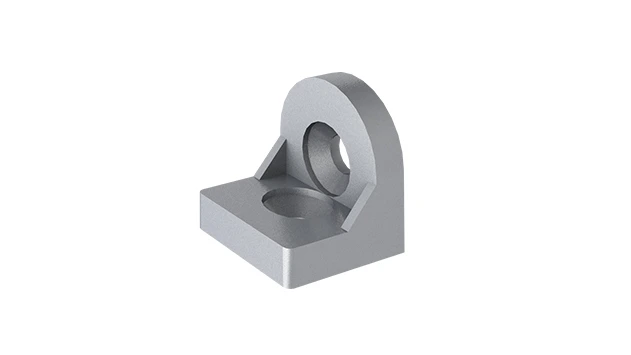
The turning angle aluminum profile connector provides a 90 degree hidden corner connection. 4040 it is means this size is used for 40 series aluminum profile.The corner code comes with set screws that allow for quick, easy connections.
Walk into any modern manufacturing facility, warehouse, or workshop, and you'll likely notice a common theme: flexibility. Gone are the days of, fixed production lines and one-size-fits-all workbenches. Today's most efficient operations thrive on adaptability—on systems that can evolve with shifting demands, new product lines, and changing workflows. At the heart of this transformation lies a humble yet powerful component: the modular connector. And among these, the Turning Angle Code 4040 stands out as a workhorse, quietly holding together the backbone of lean manufacturing setups worldwide.
If you've ever wondered how those sleek, customizable workbenches, roller tracks, and material racks are built—how they can be disassembled, reconfigured, and repurposed in hours instead of days—you're about to uncover the secret. In this guide, we'll dive deep into the world of Turning Angle Code 4040, exploring what it is, how it works, and why it's become indispensable in lean tube systems. Whether you're a small business owner looking to optimize your workshop, a production manager aiming to cut waste, or simply curious about the mechanics behind efficient spaces, this is your roadmap to understanding one of the most versatile connectors in modern manufacturing.
What Even Is a Turning Angle Code 4040?
Let's start with the basics. The Turning Angle Code 4040 is a type of connector designed to join pieces of lean tube or aluminum profile at precise angles—most commonly 90 degrees, though its design allows for flexibility in certain configurations. Think of it as the "hinge" that turns straight lengths of tubing into functional structures, whether that's the frame of a workbench, the sides of a roller track, or the supports of a material rack. Its name gives away two key details: "Turning Angle" refers to its role in changing the direction of the tubing, and "4040" denotes its size, specifically matching 40mm x 40mm aluminum profiles—a standard dimension in modular systems.
At first glance, it might look like a simple metal bracket, but don't let its unassuming appearance fool you. A closer look reveals a clever design: two perpendicular channels (or "slots") that cradle the 40mm aluminum profile, with pre-drilled holes for screws or bolts to secure the connection. Some versions feature rounded edges to prevent snags, while others have reinforced corners for extra strength. The best ones are machined with precision, ensuring a snug fit that doesn't wobble, even under heavy loads. Unlike welded joints, which are permanent and require specialized tools, the Turning Angle Code 4040 connects with basic hand tools, making assembly and disassembly a breeze.
But why does this matter? Imagine you run a small electronics assembly shop. Last month, you needed a workbench for soldering circuit boards; next month, you might need a rack to store finished products. With a fixed wooden workbench, you'd be stuck—either buying a whole new piece of furniture or wasting time (and money) modifying the old one. With Turning Angle Code 4040 connectors and 40mm aluminum profiles, though, you could disassemble the workbench, reconfigure the tubes, and build that rack in an afternoon. No welding, no sawing, no permanent changes. That's the power of modularity, and the Turning Angle Code 4040 is the linchpin that makes it possible.
Why Connectors Like the 4040 Matter in Lean Systems
To truly appreciate the Turning Angle Code 4040, we need to step back and talk about lean manufacturing. Lean is all about eliminating waste—whether that's wasted time, wasted space, or wasted resources. Traditional manufacturing setups are often rife with waste: fixed production lines that can't adapt to new products, workbenches that are too big (or too small) for the task at hand, material racks that collect dust because they're not flexible enough to store new inventory. Lean systems combat this by prioritizing "just-in-time" adaptability, and modular connectors are the unsung heroes here.
Lean tube systems—also known as "flexible pipe systems"—are built on the idea that every component should serve a purpose, and that purpose should be changeable. These systems use lightweight, durable tubes (often aluminum or steel) and a variety of connectors to build everything from workstations to conveyor belts. The Turning Angle Code 4040 is a critical part of this ecosystem because it solves a fundamental problem: how to connect tubes at angles without sacrificing strength or flexibility. Without reliable angle connectors, you'd be limited to straight lines, making it impossible to build complex, functional structures.
Consider a typical scenario: a car parts manufacturer needs to move components from the warehouse to the assembly line. A roller track is the perfect solution—it uses gravity to slide parts smoothly, reducing the need for manual lifting. But a roller track isn't just a straight line; it might need to turn a corner to avoid a walkway, or slope upward to reach a higher workstation. That's where the Turning Angle Code 4040 comes in. By joining sections of roller track at 90 degrees, it lets the track navigate the space efficiently, ensuring parts flow where they need to go without bottlenecks. And if the assembly line moves next year? No problem—disconnect the 4040s, reconfigure the track, and you're back in business.
In short, connectors like the Turning Angle Code 4040 turn static tubes into dynamic systems. They're the reason lean manufacturing works at scale—allowing businesses to do more with less, adapt quickly, and stay competitive in a fast-paced world.

Materials and Build: Why the 4040 Lasts (Even When It's Worked Hard)
Not all angle connectors are created equal. A cheaply made connector might work for a light-duty shelf in a garage, but in a factory where workbenches hold heavy tools or roller tracks carry hundreds of pounds of materials daily, quality matters. The Turning Angle Code 4040, when done right, is built to withstand the rigors of industrial use—and that starts with the materials.
Most high-quality Turning Angle Code 4040 connectors are made from aluminum alloy, specifically grades like 6063 or 6061. Why aluminum? For starters, it's lightweight—important when you need to move or reconfigure structures. But don't mistake "lightweight" for "weak." Aluminum alloys are surprisingly strong, with tensile strengths that rival some steels. They're also corrosion-resistant, which is a big plus in environments where moisture or chemicals are present (think food processing plants or auto shops). Unlike steel, aluminum doesn't rust, so your connectors will look and perform like new for years, even with regular use.
Some manufacturers also offer stainless steel versions for extra durability, especially in harsh conditions like pharmaceutical labs or marine settings. Stainless steel adds weight but brings unmatched resistance to rust and staining. For most general applications, though, aluminum is the sweet spot—balancing strength, weight, and cost.
The manufacturing process matters too. The best Turning Angle Code 4040 connectors are precision-machined, often using CNC (Computer Numerical Control) tools to ensure the slots for the aluminum profile are exactly 40mm wide. This tight tolerance means the connector grips the profile firmly, preventing the "play" that leads to wobbly structures. Cheaper connectors, on the other hand, might be cast or stamped, resulting in rough edges, inconsistent slot sizes, and weak points that can bend or break under load. When shopping for 4040 angle codes, look for ones with smooth, even surfaces and clearly defined slots—these are signs of careful machining.
Another detail to note is the finish. Most aluminum Turning Angle Code 4040 connectors come with an anodized coating—a process that electrolytically treats the surface to make it harder and more resistant to scratches. Anodized finishes come in colors like silver, black, or even blue, but beyond aesthetics, they add a layer of protection. A good anodized coating ensures the connector won't chip or fade, even with frequent handling or exposure to oils and solvents common in workshops.

Turning Angle Code 4040 vs. Other Angle Codes: When to Use Which
The Turning Angle Code 4040 is far from the only angle connector out there. If you've explored lean tube systems, you've probably come across codes like 3030, 2020, or even 4080. Each is designed for a specific profile size, and choosing the right one depends on your project's needs. To help you decide, let's break down how the 4040 stacks up against its common counterparts.
| Angle Code | Profile Size (mm) | Typical Material | Max Load Capacity (Approx.) | Best For |
|---|---|---|---|---|
| Turning Angle Code 4040 | 40mm x 40mm | Aluminum Alloy (6063/6061) | 200-300 kg (per connection) | Heavy-duty workbenches, industrial roller tracks, material racks, machine guards |
| Turning Angle Code 3030 | 30mm x 30mm | Aluminum Alloy | 100-150 kg (per connection) | Light to medium workbenches, small tool racks, shelving for lightweight items |
| Turning Angle Code 2020 | 20mm x 20mm | Aluminum Alloy or Plastic (for light use) | 30-50 kg (per connection) | Prototyping, hobby projects, small storage bins, electronics workstations (light components) |
| Angle Code 4080 | 40mm x 80mm | Heavy-Duty Aluminum Alloy | 400+ kg (per connection) | Large machinery frames, industrial conveyor systems, heavy material storage |
Starting with the 3030: This is the 4040's smaller sibling, designed for 30mm x 30mm profiles. It's lighter and more compact, making it ideal for projects where space is tight or weight is a concern—like a benchtop tool organizer or a small parts shelf. However, its smaller size means it can't handle as much weight. If you tried to build a workbench for a 50kg drill press using 3030 connectors, you'd risk instability or even collapse. The 4040, with its larger profile and beefier build, is the safer bet for heavy tools or equipment.
Then there's the 2020, the tiny cousin in the family. At 20mm x 20mm, it's often used in DIY projects, 3D printer frames, or electronics labs where precision and lightness matter more than raw strength. It's affordable and easy to work with, but it's no match for industrial use. The 4040, by contrast, is built for the rough and tumble of factories and warehouses, where daily use and heavy loads are the norm.
What about the 4080? This larger connector pairs with 40mm x 80mm profiles, offering even higher load capacities. It's great for structures like assembly line frames or heavy machinery bases. But for most small to medium businesses, the 4040 hits the sweet spot: enough strength for industrial tasks without the extra bulk (and cost) of the 4080. Unless you're building something that needs to support thousands of pounds, the 4040 will likely be more than sufficient.
The key takeaway? The Turning Angle Code 4040 is the Swiss Army knife of angle connectors—versatile enough for most industrial applications, strong enough for heavy loads, and adaptable enough to grow with your needs. It's not the only option, but it's often the best one for businesses that need a balance of strength, flexibility, and cost-effectiveness.
Real-World Uses: Where You'll Actually See the 4040 in Action
Talk is cheap—let's get concrete. Where do you actually use a Turning Angle Code 4040? The answer is: just about anywhere modular, durable structures are needed. Here are three common scenarios where the 4040 shines, along with why it's the connector of choice.
1. Heavy-Duty Workbenches
Walk into any automotive repair shop, metalworking studio, or electronics manufacturing plant, and you'll find workbenches built with 40mm aluminum profiles and Turning Angle Code 4040 connectors. Why? Because these workbenches need to withstand abuse: clamps tightened with force, tools dropped on the surface, parts weighing 50kg or more set down repeatedly. A flimsy connector would fail quickly, but the 4040's robust design ensures the frame stays rigid, even under stress.
Take a typical assembly workbench. It might have a wooden or metal top, but the frame—four legs, a shelf halfway up, and cross-braces for stability—is almost always aluminum profile and 4040 connectors. The cross-braces, in particular, rely on the 4040 to join the vertical legs to the horizontal supports at 90 degrees, preventing the bench from wobbling when someone leans on it or pushes heavy parts across the surface. And when the shop needs to add a vice or a tool rack to the bench? They just bolt it to the 40mm profile—no need to drill into solid wood or weld on metal brackets.
2. Roller Tracks for Material Handling
Material handling is all about flow—getting parts from Point A to Point B quickly, safely, and with minimal effort. Roller tracks (or "flow racks") are a staple here, using gravity to slide boxes, bins, or components along a series of rollers. But roller tracks don't just go straight; they often need to turn, split, or merge to navigate around obstacles. That's where the Turning Angle Code 4040 comes in.
Imagine a warehouse that stores small parts in plastic bins. The bins arrive at the receiving dock and need to go to either the shipping area or the assembly line, which are in opposite directions. A roller track with a 90-degree turn, built using 4040 connectors, can split the flow: straight ahead to shipping, left to assembly. The 4040s connect the track sections at the corner, ensuring the rollers align smoothly so bins don't get stuck. And if the warehouse rearranges its layout next quarter? The 4040s can be unbolted, the track reconfigured, and the whole system up and running in a day.
3. Custom Material Racks
Storing inventory is a balancing act: you need to maximize space without making items hard to reach. Fixed shelves work for static inventory, but if your stock changes size or quantity regularly, you need something adjustable. Enter material racks built with 40mm profiles and 4040 connectors.
A clothing manufacturer, for example, might use material racks to store bolts of fabric. In summer, they need racks for lightweight cotton; in winter, bulkier wool. With fixed wooden shelves, they'd need separate racks for each season. With 4040-connected aluminum racks, though, they can adjust the shelf heights in minutes—simply loosen the 4040s, slide the vertical profiles up or down, and retighten. The 4040s hold the shelves securely at the new height, even when loaded with heavy bolts of fabric. It's a simple solution that saves space, time, and money.
The Benefits: Why Bother with the 4040?
By now, you might be thinking, "Okay, the Turning Angle Code 4040 is a connector. So what?" The "so what" is in the benefits—tangible, bottom-line advantages that make it worth investing in. Let's break down the biggest ones.
Flexibility That Saves Time (and Sanity)
The biggest win with the 4040 is flexibility. Traditional fixed structures—welded steel frames, solid wood workbenches—lock you into one configuration. If your needs change, you either live with inefficiency or spend money replacing them. The 4040, paired with aluminum profiles, lets you pivot quickly. Need to add a shelf to your workbench? Grab a few extra profiles and 4040s, and you're done in 20 minutes. Moving to a smaller space? Disassemble the rack, pack it in a truck, and rebuild it at the new location. No contractors, no specialized tools, no downtime.
Durability That Lasts (Even in Rough Spaces)
Aluminum alloy is tough. It resists rust, doesn't warp in humidity, and stands up to daily wear and tear. The 4040's precision machining ensures a tight fit that doesn't loosen over time, even with vibration (like near a running machine). Compare that to plastic connectors, which can crack under stress, or cheap steel brackets that rust and weaken. A well-made 4040 connector will outlast multiple generations of fixed furniture, making it a smart long-term investment.
Cost-Effectiveness (Yes, Really)
At first glance, modular connectors might seem pricier than, say, nailing together a wooden shelf. But factor in the long run, and they're cheaper. A wooden shelf costs $50 upfront but can't be reconfigured—so when you need a new one, you spend another $50. A 4040-connected aluminum shelf might cost $100 upfront, but you can reconfigure it 10 times over, saving you $400 in replacement costs. Plus, you save on labor: no need to hire a carpenter or welder every time you need a change.
Safety (Because No One Needs Wobbly Racks)
In a workshop or factory, safety is non-negotiable. A wobbly workbench can lead to tools falling, causing injuries. A loose material rack can collapse, damaging inventory (or worse). The Turning Angle Code 4040's secure, tight fit minimizes these risks. Its rounded edges (on quality models) reduce the chance of cuts, and its corrosion resistance ensures it doesn't weaken over time. When safety is on the line, you want a connector you can trust—and the 4040 delivers.
How to Start Using Turning Angle Code 4040 in Your Space
Ready to dive in? Here's how to start incorporating Turning Angle Code 4040 connectors into your own setup, step by step.
Step 1: Assess Your Needs
First, figure out what you need to build. Is it a workbench? A roller track? A material rack? Sketch it out, noting dimensions and weight requirements. For example: "Workbench, 1200mm long x 600mm deep x 800mm high, needs to hold 150kg." This will help you determine how many 40mm profiles and 4040 connectors you need (as a rule of thumb, you'll use one 4040 for every corner—so a rectangular workbench frame has 4 corners, plus more for shelves or cross-braces).
Step 2: Source Quality Components
Not all 4040 connectors are created equal. Look for reputable suppliers that specify the material (6063 or 6061 aluminum), machining precision (slots within 0.1mm of 40mm), and load capacity. Avoid cheap, unbranded connectors—they might save you $5 now, but they'll fail when you need them most. Pair the connectors with high-quality 40mm x 40mm aluminum profiles (look for anodized finishes) and stainless steel screws (to prevent rust).
Step 3: Assemble with Care
Assembly is straightforward, but a few tips will ensure a strong, stable structure: - Clean the profiles and connectors first—dust or oil can prevent a tight fit. - Use a level to ensure corners are square (90 degrees) before tightening screws. - Tighten screws evenly—over-tightening can strip the threads; under-tightening leaves connections loose. - Add cross-braces for extra stability (diagonal profiles connected with 4040s) if your structure will hold heavy loads.
Step 4: Don't Be Afraid to Iterate
The beauty of modular systems is that they're forgiving. If your first workbench is too short, or your roller track isn't steep enough, just disassemble it and try again. The 4040 connectors make it easy to experiment until you get it right. Over time, you'll learn what works for your space—and you'll wonder how you ever lived with fixed structures.
Wrapping Up: The 4040 as Your Lean Manufacturing Sidekick
The Turning Angle Code 4040 might not be the most glamorous part of your production line, but it's one of the most essential. It's the connector that turns simple aluminum profiles into powerful, adaptable tools—tools that let your business grow, change, and thrive in an unpredictable world. From heavy-duty workbenches to roller tracks, it's the quiet force behind efficient, lean operations.
So the next time you walk into a workshop and admire how effortlessly the space adapts to its users, take a closer look at the corners. Chances are, you'll spot a Turning Angle Code 4040 holding it all together. And who knows? Maybe soon, you'll be building your own modular masterpiece—one 4040 connection at a time.