- Company Articles
- Products and Technology
- Product knowledge
- What Load Capacity Do Lean Pipe Clamps Offer? A Technical Overview

What Load Capacity Do Lean Pipe Clamps Offer? A Technical Overview
Related Product
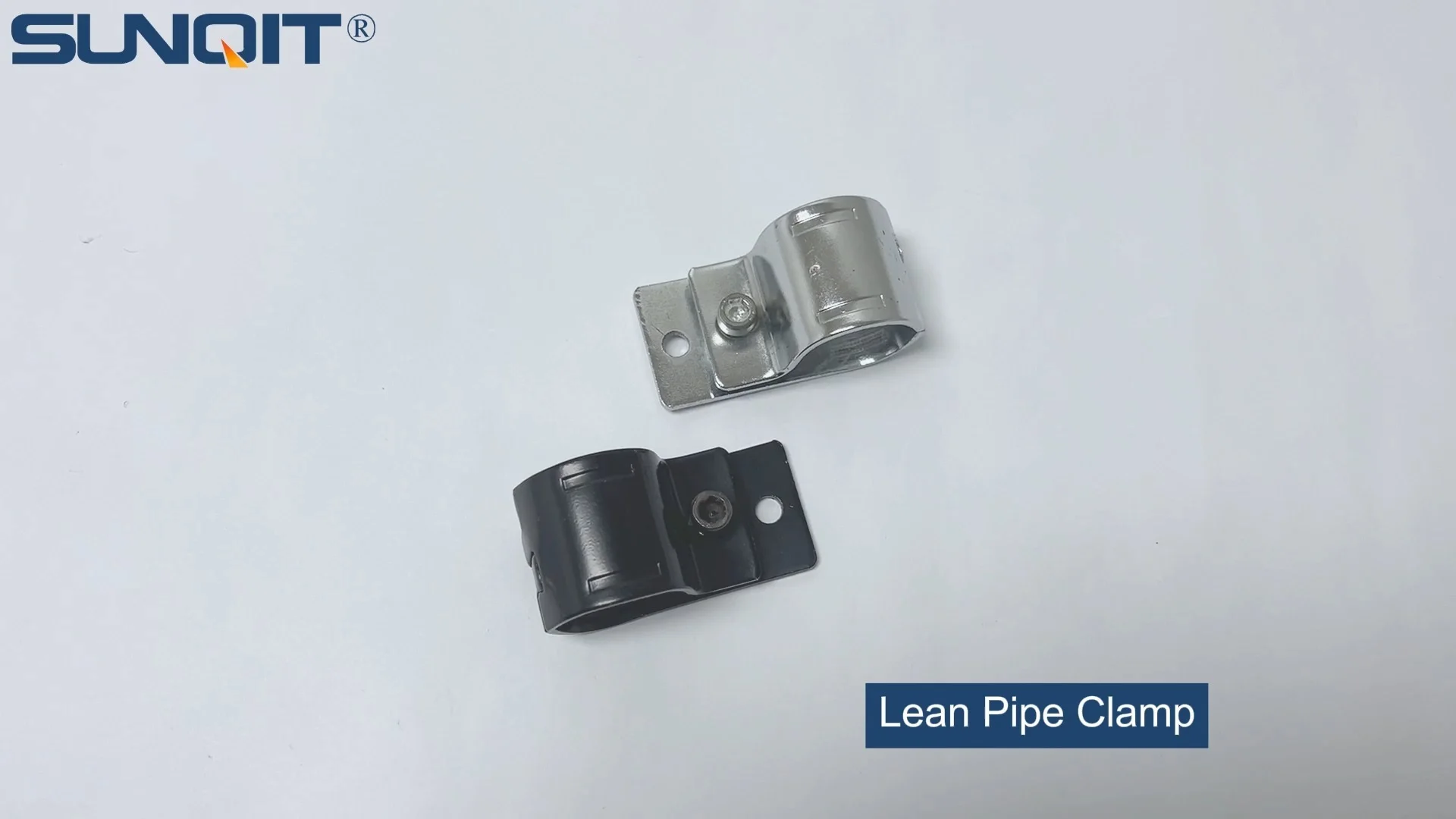
Lean Pipe Clamp
Lean pipe clamp is used for rack system hang monitor or other panel for workbenck, flowrack in production daily use.
In the bustling world of manufacturing and production, where efficiency and reliability are the backbone of daily operations, lean pipe systems have quietly become unsung heroes. These versatile structures—found in assembly lines, warehouses, and workshops—are built to streamline workflows, reduce waste, and adapt to evolving needs. But ask any production manager or facility engineer, and they'll tell you: the true strength of these systems lies not just in the pipes themselves, but in the small, unassuming components that hold everything together: lean pipe clamps. Today, we're diving deep into a question that matters more than you might think: What load capacity do these clamps really offer? And why does it matter for your operations?
Understanding Lean Pipe Clamps: The "Glue" of Lean Systems
Before we get into load capacity, let's make sure we're all on the same page about what lean pipe clamps are. Simply put, these are the connectors that join lean pipes (also called "lean tubes") together, forming structures like workbenches, material racks, flow racks, and turnover trolleys. Think of them as the joints in a human body—small but critical for stability and movement. Without reliable clamps, even the sturdiest pipes would wobble, fail, or worse, put workers at risk.
Most lean pipe clamps are made from metal (often steel or aluminum) and come in various designs: fixed, rotating, crossing, or parallel. Some are coated with plastic or rubber to prevent scratches, while others are designed for specific pipe types, like the increasingly popular aluminum lean pipe. But regardless of design, one question remains top of mind for anyone building a lean system: How much weight can this clamp actually support?
Key Factors That Determine a Lean Pipe Clamp's Load Capacity
Load capacity isn't a one-size-fits-all number. It depends on a mix of design choices, materials, and real-world conditions. Let's break down the most important factors:
1. Material Composition: Steel vs. Aluminum
The first thing to check is what the clamp is made of. Traditional lean pipe clamps are often steel-based, known for their rigidity and high load-bearing capacity. Steel clamps can typically handle heavier weights, making them ideal for static structures like fixed material racks or heavy-duty workbenches. On the flip side, aluminum lean pipe clamps are lighter, corrosion-resistant, and popular in industries where weight matters—like automotive or electronics assembly lines where mobile trolleys are common. While aluminum clamps are strong, they generally have a lower load capacity than steel ones, so it's a trade-off between weight and strength.
2. Joint Design and Geometry
Not all clamps are shaped the same, and that shape directly impacts how they distribute weight. For example, a 90° crossing lean pipe joint (used to connect pipes at right angles) has a different load capacity than a straight parallel joint (which connects pipes side by side). Clamps with broader contact surfaces or reinforced edges spread weight more evenly, reducing stress on the pipe and the clamp itself. Similarly, clamps with internal ribs or thicker walls are better at resisting bending or breaking under load.
Take the "lean pipe joint" as an example—a common type of clamp that connects two pipes at various angles. A well-designed joint will have a snug fit, with minimal play between the clamp and the pipe. Loose joints not only reduce load capacity but also create vibration, which can weaken the connection over time.
3. Installation: Torque and Tightness
Even the strongest clamp will fail if installed incorrectly. Most clamps use bolts or screws to tighten around the pipe, and the amount of torque applied during installation matters. Too little torque, and the clamp might slip under load; too much, and you could strip the threads or warp the clamp. Manufacturers usually provide torque guidelines (e.g., "tighten to 25 Nm"), and following these is critical. It's also important to check that the pipe is clean and free of debris—grease or rust can prevent the clamp from gripping properly, reducing effective load capacity.
4. Environmental Conditions
Where you use the clamp matters too. In humid or corrosive environments (like food processing or chemical plants), steel clamps might rust over time, weakening their structure. That's why stainless steel pipe series clamps are often used here—they resist corrosion but may have slightly different load characteristics than standard steel. Similarly, extreme temperatures (very hot or cold) can affect the flexibility of plastic coatings or the strength of metal, so always check if the clamp is rated for your workspace conditions.

Common Lean Pipe Clamps and Their Typical Load Capacities
To make it easier to compare, let's look at some of the most widely used lean pipe clamps and their approximate load capacities. Keep in mind that these are general ranges—always check the manufacturer's specs for your specific product.
| Clamp Type | Material | Max Static Load Capacity (kg) | Max Dynamic Load Capacity (kg) | Common Applications |
|---|---|---|---|---|
| Fixed Steel Clamp (90° joint) | Steel | 150–250 | 80–120 | Fixed workbenches, material racks |
| Rotating Steel Clamp | Steel | 100–180 | 60–100 | Adjustable workstations, tool holders |
| Aluminum Lean Pipe Clamp | Aluminum | 80–150 | 50–90 | Lightweight trolleys, aluminum profile systems |
| Stainless Steel Crossing Clamp | Stainless Steel | 120–200 | 70–110 | Corrosive environments, food processing |
| Parallel Aluminum Joint | Aluminum | 60–100 | 40–70 | Side-by-side pipe connections, hand trolleys |
Note: Static load refers to weight applied without movement (e.g., a stack of boxes on a stationary rack). Dynamic load refers to weight in motion (e.g., a trolley being pushed across the floor with materials).

How Manufacturers Test Load Capacity: Ensuring Reliability
You might wonder, "How do I know these numbers are accurate?" Reputable suppliers test their clamps rigorously to ensure they meet safety standards. Here's a peek into their testing processes:
Static Load Testing
In static testing, the clamp is mounted to pipes in a controlled setup, and a gradually increasing weight is applied until the clamp deforms or fails. The "max static load" is the highest weight the clamp can hold without permanent damage. For example, a fixed steel clamp might be tested with 300kg of weight for 24 hours—if it doesn't bend or slip, its static load capacity is at least 300kg.
Dynamic Load Testing
Dynamic testing mimics real-world movement, like a trolley rolling over a floor or materials sliding down a flow rack. The clamp is subjected to repeated or sudden loads (e.g., dropping a 50kg box onto a workbench) to see how it holds up over time. This ensures the clamp can handle not just steady weight, but the bumps and jolts of daily use.
Industry Standards
Most manufacturers follow international standards, like ISO or DIN, which outline testing procedures. For example, ISO 8044 specifies requirements for mechanical joints in modular systems, including load capacity. Choosing a clamp from a trusted lean pipe supplier who adheres to these standards reduces the risk of unexpected failures.

Why Load Capacity Matters in Real-World Use
You might be thinking, "Do I really need to worry about this? Can't I just pick the strongest clamp?" But overestimating or underestimating load capacity can lead to problems:
Workbenches: The Heart of Assembly Lines
A workbench is where operators spend most of their day, often placing heavy tools, components, or. If the clamps holding the workbench together can't support the weight, the surface might sag, making precision work harder. Worse, a collapsed workbench could damage expensive equipment or injure workers. For example, a "workbench e (single deck-without caster)" (a common fixed workbench) relies on its clamps to support the entire deck—typically 100–200kg. Choosing a clamp with a 150kg capacity here ensures safety even with extra tools or materials.
Material Racks and Flow Racks
Material racks, like "material rack b (3 row and 3 floor)," store everything from small parts to large components. Each level's weight adds up, so the clamps connecting the vertical and horizontal pipes must handle the cumulative load. A flow rack with roller tracks (used for moving materials between stations) also needs clamps that can support both the weight of the materials and the motion of the rollers. Too weak, and the rack might tilt, causing materials to spill.
Mobile Trolleys: Flexibility with Responsibility
Turnover trolleys and mobile racks are essential for moving materials around the factory. Their clamps must handle dynamic loads—weight that shifts as the trolley moves. A clamp with low dynamic load capacity might loosen over time, making the trolley unstable. For example, a hand trolley with aluminum lean pipe clamps is great for light loads (50–80kg), but for heavier parts, steel clamps with higher dynamic ratings are a must.
Aluminum Lean Pipe Clamps: A Lightweight Alternative
As manufacturing floors focus more on agility and ergonomics, aluminum lean pipe systems have grown in popularity. Aluminum pipes are lighter than steel, making mobile structures easier to push, and they resist corrosion without extra coatings. But how do their clamps stack up?
Aluminum lean pipe clamps are designed to work with aluminum profiles, which have T-slots for easy accessory attachment. They're often made from high-grade aluminum alloy, which balances strength and weight. A typical aluminum clamp might have a static load capacity of 80–150kg, which is lower than steel but sufficient for most light to medium-duty tasks—like small workbenches or trolleys carrying electronics components. They're also compatible with aluminum profile accessories, like "aluminum guide rail a" or "roller track placon mount," which enhance system flexibility without adding much weight.
The trade-off? Aluminum clamps can be more expensive than steel, and they're not ideal for extremely heavy loads. But for operations where mobility and quick reconfiguration matter, they're a game-changer.
Accessories: Boosting Clamp Performance
Lean pipe clamps don't work alone—accessories like "lean pipe and accessories" (joints, connectors, caster wheels) play a role in overall system strength. For example, a "caster wheel" with a locking brake adds stability to a mobile trolley, reducing stress on the clamps during movement. Similarly, "roller track connectors" ensure that flow racks distribute weight evenly across multiple clamps, preventing any single clamp from bearing too much load.
Even small accessories matter. A "roller track placon mount bracket" (used to attach roller tracks to profiles) reinforces the connection between the track and the pipe, supporting the clamp's load capacity. Choosing high-quality accessories from the same lean pipe supplier as your clamps ensures compatibility and optimal performance.
Conclusion: Choosing the Right Clamp for Your Needs
At the end of the day, the load capacity of a lean pipe clamp isn't just a number—it's about keeping your operations safe, efficient, and reliable. By understanding the factors that influence capacity (material, design, installation) and matching the clamp to your application (workbench, rack, trolley), you can build lean systems that stand the test of time.
Remember: Always check the manufacturer's specifications, test clamps under realistic conditions, and don't hesitate to ask your lean pipe supplier for guidance. After all, the best lean system is one that works with your team, not against them—and it all starts with a strong, reliable clamp.