- Company Articles
- Products and Technology
- Product knowledge
- What Load Capacity Does Your Castor Install Base Need for Heavy Workbenches?

What Load Capacity Does Your Castor Install Base Need for Heavy Workbenches?
Related Product
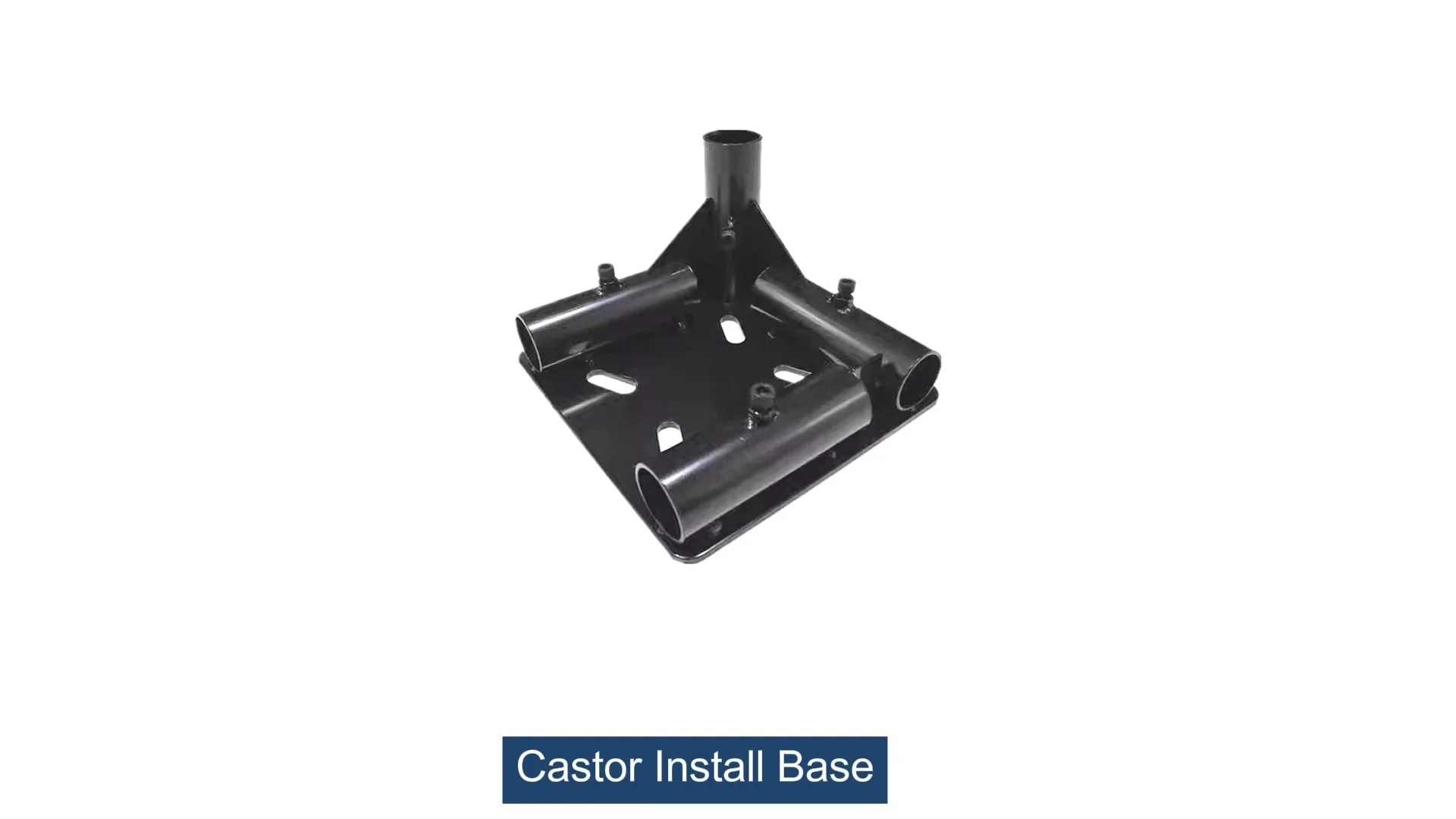
Castor Install Base
Castor install base, used for connection between pipe and castor, it can connect 4 pcs pipe by 1 pcs castor base, to make the structure strong and stable.
Walk into any busy workshop, manufacturing plant, or garage, and you'll likely find a workbench at the heart of the action. It's where tools are organized, parts are assembled, and projects come to life. But what happens when that workbench needs to move? Maybe you're rearranging the floor plan for a new production line, or you need to shift materials closer to a assembly station. That's where the unsung hero of workplace mobility comes in: the castor install base. It's the component that connects your workbench to its casters, and its load capacity isn't just a number on a spec sheet—it's the difference between smooth, safe operations and costly, dangerous failures. In this guide, we'll break down everything you need to know to choose the right castor install base for your heavy workbench, ensuring it can handle the weight, the movement, and the demands of your daily workflow.
What Even Is a Castor Install Base, Anyway?
Before we dive into load capacity, let's make sure we're all on the same page about what a castor install base actually does. Think of it as the bridge between your workbench and its casters. It's a metal (or sometimes aluminum) plate or bracket that attaches to the bottom of the workbench frame, providing a stable platform to mount the casters themselves. Without a sturdy castor install base, your casters might wobble, pull loose, or even snap off when you try to move a loaded workbench. It's not glamorous, but it's absolutely critical—especially if your workbench is heavy enough to require casters in the first place.
Now, why does load capacity matter so much here? Imagine this: You've just invested in a heavy-duty lean pipe workbench, loaded it up with power tools, spare parts, and a half-finished project, and you go to roll it across the shop. If the castor install base can't handle the weight, you might hear a sickening creak, feel the bench start to tilt, or worse—watch as the base bends or breaks, sending tools and materials crashing to the floor. Beyond the immediate risk of injury, a failed castor install base can damage your workbench, your equipment, and even your floors. It can also grind productivity to a halt while you wait for replacements. In short, getting the load capacity right isn't just about avoiding disaster—it's about keeping your workspace efficient, your team safe, and your operations running smoothly.
The Basics: What "Load Capacity" Really Means
First, let's define the term. Load capacity, in the context of a castor install base, is the maximum weight it can safely support without deforming, breaking, or losing functionality. But here's the catch: It's not just about how much weight it can hold when the workbench is sitting still. There are two key types of load to consider: static load and dynamic load.
Static load is the weight the castor install base bears when the workbench is stationary. This includes the weight of the workbench itself, plus any tools, materials, or equipment that stay on it long-term. Dynamic load , on the other hand, is the weight it must support when the workbench is moving—whether you're pushing it across the floor, rolling it over uneven surfaces, or navigating tight turns. Dynamic load is often lower than static load because movement adds stress: vibrations, sudden jolts, and uneven weight distribution can all increase the strain on the base.
Manufacturers test and rate castor install bases for both static and dynamic load, and those numbers are non-negotiable. Exceeding either can lead to catastrophic failure. For example, a base rated for 200kg dynamic load might handle 250kg when stationary, but rolling that 250kg across the shop could cause the base to crack. Always check the manufacturer's specs for both types of load, and never assume one translates to the other.

Factors That Determine Your Load Capacity Needs
So, how do you figure out exactly how much load capacity your castor install base needs? It's not a one-size-fits-all answer. Several factors come into play, and overlooking even one can leave you with a base that's too weak for the job. Let's break them down:
1. The Workbench Itself
Start with the basics: How much does the workbench weigh on its own? A simple wooden workbench might weigh 50-100kg, but a heavy-duty model—like a lean pipe workbench with a steel frame or an aluminum profile top—could tip the scales at 150kg or more. If you're using a custom-built bench with thick countertops or built-in storage, that weight can climb even higher. Always check the manufacturer's specs for the workbench's empty weight, or weigh it yourself if it's homemade.
2. Tools and Equipment
Next, think about what lives on the workbench day in and day out. A mechanic's bench might have a vice (10-20kg), a drill press (30-50kg), and a tool chest (40-80kg). An electronics assembly station could have a soldering iron, oscilloscope, and ESD workstation components, which might add 20-40kg. Even smaller tools add up: screwdrivers, wrenches, and power tools can easily contribute another 10-15kg. Make a list of everything that stays on the bench regularly, and add up their weights—you might be surprised how quickly it adds up.
3. Materials and Inventory
Now, factor in the materials you work with. If you're assembling products, you might have bins of parts, boxes of raw materials, or finished goods waiting to be shipped. For example, a workbench in a warehouse might hold 50kg of inventory on any given day. If you're in a workshop, you might temporarily place heavy materials like metal sheets or lumber on the bench, which could add 30-100kg or more. Don't just think about "average" days—consider the maximum load you might place on the bench during peak operations.
4. The Number of Casters (and Load Distribution)
Your castor install base doesn't bear the entire load alone—it's distributed across all the casters on the workbench. Most workbenches have 4 casters (one at each corner), but some larger models might have 6 or 8 for better stability. The more casters you have, the less weight each individual castor install base needs to support. For example, a total load of 400kg on 4 casters means each base handles 100kg. On 6 casters, that drops to ~67kg per base. But here's a word of caution: load distribution isn't always perfect. If you often load materials to one side of the bench, the casters on that side will bear more weight. To account for this, many experts recommend assuming that 70% of the total load will rest on the two casters closest to the heaviest side. That means if your total load is 400kg, those two casters might each need to handle 140kg (70% of 400kg divided by 2), so your base should be rated for at least that.
5. Floor Conditions and Movement Frequency
Even if you calculate the total weight perfectly, the environment matters. If your shop has uneven concrete floors, cracked tiles, or thresholds, moving the workbench will put extra stress on the castor install base. Every bump or jolt increases the dynamic load, so you'll need a base with a higher capacity to compensate. Similarly, if you move the workbench multiple times a day (instead of just occasionally), the repeated stress can wear down a base that's only barely meeting the load requirements. In high-traffic areas, opt for a base with a dynamic load rating 20-30% higher than your calculated needs.
6. Adjustable Leveling Feet: A Side Note
You might be thinking, "But my workbench has adjustable leveling feet—can't those help support the load?" While adjustable leveling feet are great for stabilizing the bench when it's stationary (especially on uneven floors), they're not designed to bear weight during movement. When you want to roll the bench, you'll lift the leveling feet (either manually or via a foot pedal), and the entire load shifts to the casters and their install bases. So, while leveling feet are useful for stability, they don't reduce the load capacity needed for your castor install base.

Calculating Your Total Load: A Step-by-Step Guide
Now that you know the factors, let's put them into practice with a step-by-step calculation. Grab a pen and paper (or a calculator) and follow along:
Step 1: Weigh the empty workbench. Let's say you have a lean pipe workbench with a steel frame and wooden top, weighing 120kg.
Step 2: Add tools and permanent equipment. Your bench has a vice (15kg), a power drill (3kg), a tool organizer with hand tools (8kg), and an ESD workstation mat (2kg). Total: 15 + 3 + 8 + 2 = 28kg. So far, we're at 120 + 28 = 148kg.
Step 3: Add materials and inventory. On a typical day, you keep 3 bins of parts on the bench, each weighing 10kg, plus a box of finished products (25kg). Total materials: 3*10 + 25 = 55kg. Now we're at 148 + 55 = 203kg.
Step 4: Account for temporary loads. Maybe once a week, you place a 40kg metal sheet on the bench to cut. Add that to the total: 203 + 40 = 243kg.
Step 5: Include user weight (if applicable). Do you or your team ever stand on the bench to reach high shelves, or sit on it during breaks? A average adult weighs ~70kg, so add that: 243 + 70 = 313kg.
Step 6: Divide by the number of casters and add a safety margin. Your bench has 4 casters. If we assume even distribution, that's 313kg / 4 = ~78kg per caster. But remember the uneven load scenario? Let's assume 70% of the total load (313kg) rests on two casters: (0.7 * 313) / 2 = ~110kg per caster. Now, add a 30% safety margin to account for dynamic movement and floor conditions: 110kg * 1.3 = 143kg. So, your castor install base should have a dynamic load rating of at least 143kg. Look for a base rated for 150kg to be safe.

Common Mistakes to Avoid
Even with careful calculations, it's easy to make missteps that leave your castor install base underprepared. Here are the most common pitfalls to watch out for:
Underestimating "temporary" loads. Many people forget to include occasional heavy items, like that 40kg metal sheet we mentioned earlier. But even rare overloads can weaken the base over time, leading to failure when you least expect it.
Ignoring dynamic load. It's tempting to focus on static load (since the bench is stationary most of the time), but dynamic load is where most failures happen. A base that handles 200kg statically might only manage 150kg dynamically—don't mix up the two.
Skimping on the safety margin. That 20-30% buffer isn't optional. It's there to protect against unexpected stress, like hitting a hidden floor crack or suddenly stopping a moving bench. Cutting corners here is a recipe for accidents.
Mismatching casters and bases. Your castor install base is only as strong as its weakest link. If you pair a heavy-duty base with cheap, low-capacity casters, the casters will fail first. Always ensure both the base and casters have compatible load ratings.
Overlooking corrosion resistance. If your workshop is humid, messy, or uses chemicals, a steel base without proper coating can rust, weakening its load capacity over time. In these environments, opt for a stainless steel or powder-coated base to maintain strength.
Choosing the Right Castor Install Base: Key Features to Look For
Now that you know your required load capacity, how do you pick the right base? Here are the features to prioritize:
Material: Steel is the go-to for heavy loads—it's strong, durable, and affordable. Aluminum is lighter and resistant to corrosion, but it's not as strong as steel, so it's better for medium loads. For extreme environments (like food processing or marine workshops), stainless steel offers the best rust resistance.
Thickness: A thicker base plate (3-6mm for steel) will handle more weight than a thin one (1-2mm). Check the manufacturer's specs for plate thickness—don't just go by eye.
Bolt holes and mounting: The base should have pre-drilled holes that match your workbench's frame. If you're using a lean pipe workbench, look for bases designed to attach to pipe frames with clamps or brackets, rather than just bolts.
Reinforcements: Look for bases with gussets (triangular metal supports) at the corners, or folded edges—these add rigidity and prevent bending under load.
Compatibility with casters: The base should have a mounting pattern that fits standard caster stems or plates. Most casters use a 4-bolt square pattern, but double-check the hole spacing to avoid drilling new holes.
A Quick Reference Table: Castor Install Base Types and Load Capacities
| Base Type | Material | Plate Thickness | Dynamic Load Capacity (Per Caster) | Best For |
|---|---|---|---|---|
| Light-Duty | Aluminum | 2-3mm | 50-100kg | Small wooden workbenches, hobby shops |
| Medium-Duty | Steel (powder-coated) | 3-4mm | 100-200kg | Lean pipe workbenches, garage workshops, ESD workstations |
| Heavy-Duty | Steel (hot-rolled) | 5-6mm | 200-400kg | Industrial workbenches, manufacturing plants, warehouses |
| Extra-Heavy-Duty | Stainless Steel | 6mm+ | 400kg+ | Foundries, construction sites, corrosive environments |
Final Thoughts: Invest in Safety and Efficiency
At the end of the day, choosing the right castor install base for your heavy workbench isn't just about avoiding broken equipment—it's about protecting your team, your productivity, and your bottom line. A base with insufficient load capacity can lead to downtime, injuries, and costly replacements, while a well-chosen base will keep your workbench moving smoothly for years. By calculating your total load, considering all the factors that affect capacity, and prioritizing quality materials and design, you'll ensure that your workbench is not just a stationary tool, but a flexible, mobile asset that adapts to your changing needs.
So, the next time you're setting up a new workbench or upgrading an old one, take a moment to appreciate the castor install base. It might not get the same attention as a shiny new tool, but it's the foundation of a workspace that works as hard as you do.