- Company Articles
- Products and Technology
- Product knowledge
- What Makes Aluminum Workbench B Unique? Material Properties and Construction

What Makes Aluminum Workbench B Unique? Material Properties and Construction
Related Product
Aluminum Workbench B
Aluminum tube workbench is more flexible and durable, compared with traditional PE/ABS coated steel tube. It is easy to assemble, anti corrosion, rust protection, and recycle use after disassemble.
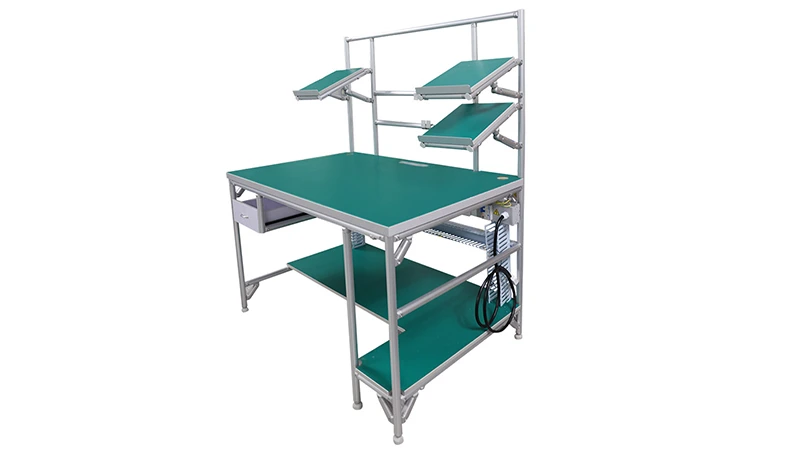
In the bustling world of manufacturing, assembly lines, and workshops, there's one piece of equipment that quietly holds everything together: the workbench. It's where ideas take shape, parts come together, and products are born. For decades, workbenches were often heavy, clunky, and one-size-fits-all—think thick wooden tops bolted to steel frames, or rigid metal structures that stayed put once installed. But as industries evolved, so did the need for workbenches that could keep up with lean manufacturing, rapid prototyping, and ever-changing production demands. Enter the era of aluminum workbenches, and among them, Aluminum Workbench B stands out as a game-changer. What makes it so special? Let's dive into its material DNA, construction magic, and the little details that turn a simple table into a productivity powerhouse.
First Things First: What Exactly Is Aluminum Workbench B?
If you've walked through a modern factory or a tech-savvy workshop, you've probably seen it without realizing it. Aluminum Workbench B is the unsung hero of assembly stations, lab benches, and packaging lines—designed to be sturdy yet flexible, durable yet lightweight. Unlike older workbenches that lock you into a fixed setup, this one is built around the idea of adaptability. It's part of a larger family of lean tools, often paired with aluminum profile accessories and other modular components to create custom workspaces. But what really sets it apart isn't just what it does—it's how it's made.
Let's start with the basics: Aluminum Workbench B typically features a single or double deck (depending on the model), a frame built from high-grade aluminum, and a worktop that can range from solid aluminum to composite materials. It's designed to handle daily wear and tear—scratches from tools, spills from cleaning solutions, the weight of heavy components—without showing its age. And unlike some workbenches that require a team of people to move, this one is light enough to reposition with a little help, thanks to its aluminum core. But to truly understand its uniqueness, we need to zoom in on the materials that make it tick.
The Material Behind the Magic: Aluminum Profile and Extrusion
At the heart of Aluminum Workbench B is aluminum extrusion profile —a material that's revolutionized how we build everything from furniture to industrial equipment. So, what's aluminum extrusion, and why does it matter here? Imagine heating aluminum until it's soft (but not molten), then forcing it through a custom die to create a specific shape. That's extrusion. The result? Profiles with consistent dimensions, intricate designs (like T-slots, grooves, and channels), and a strength-to-weight ratio that's hard to beat.
For Aluminum Workbench B, the extrusion process isn't just about making a frame—it's about creating a foundation for flexibility. The T-slots running along the length of the aluminum profile are like built-in connection points. Need to add a shelf? Slide a bracket into the T-slot and tighten a screw. Want to attach a tool holder? Use a T-nut and bolt to secure it in place. No welding, no drilling, no permanent modifications. This is where aluminum profile accessories come into play—components like internal rotatary aluminum joints, angle brackets, and end caps that turn a basic frame into a customized workspace.
But why aluminum? Let's compare it to traditional materials. Steel is strong, but it's heavy—move a steel workbench once, and you'll feel it in your back. Wood is lightweight, but it warps with moisture, stains easily, and can't handle heavy loads without sagging. Aluminum? It's about 1/3 the weight of steel, so even a full-sized workbench is manageable. It's naturally resistant to rust and corrosion, which is a big deal in environments like food processing plants or outdoor workshops. And unlike wood, it's easy to clean—wipe it down with a damp cloth, and it looks as good as new. Plus, aluminum is recyclable, making Aluminum Workbench B a sustainable choice for eco-conscious businesses.
The specific grade of aluminum used in Aluminum Workbench B matters too. Most manufacturers opt for 6063-T5 aluminum, a common alloy known for its excellent extrudability and mechanical properties. It's strong enough to support heavy tools and components (we're talking hundreds of pounds) but still malleable enough to be extruded into complex profiles. This balance is key—too soft, and the workbench would flex under load; too brittle, and it would crack with impact. 6063-T5 hits that sweet spot, making it ideal for a workbench that needs to be both tough and adaptable.

From Extrusion to Assembly: How Aluminum Workbench B Comes Together
Great materials mean nothing without smart construction. Aluminum Workbench B's assembly process is a masterclass in modular design, and it starts with the aluminum extrusion profiles. Each profile is cut to precise lengths using CNC machines, ensuring that every piece fits together like a puzzle. The T-slots are cleaned and deburred to remove any sharp edges, making assembly safer and smoother.
Next comes the frame. The vertical legs of the workbench are typically made from thicker-walled aluminum profiles to support the weight of the worktop and whatever's placed on it. These legs are connected to horizontal rails using aluminum profile accessories like 90-degree angle brackets or internal rotatary joints. The beauty of these joints? They allow for (fine adjustments) during assembly, so the frame stays level even if the floor isn't perfectly flat. Once the frame is squared up, cross-braces are added for stability—think of them as the workbench's backbone, preventing wobbling during heavy use.
Then there's the worktop. Aluminum Workbench B often uses a solid aluminum sheet or an aluminum honeycomb panel for the top surface. Honeycomb panels are a clever choice—they're lightweight (thanks to the hollow honeycomb core) but incredibly strong, able to support heavy loads without bending. The top is then attached to the frame using T-slot bolts or specialized brackets, which means it can be removed or replaced if needed. Scratched the surface beyond repair? Swap out the top instead of buying a whole new workbench.
Mobility is another consideration. While some workbenches (like Workbench E , a single-deck model without casters) are fixed in place, Aluminum Workbench B often comes with optional caster wheels. These aren't just any casters—they're heavy-duty, lockable, and designed to roll smoothly over concrete floors. The casters attach to the legs using caster accessories like mounting plates, which slide into the T-slots and lock in place. Need to move the workbench to a new station? Unlock the casters, roll it over, and lock them again. It's that simple.
What about customization? That's where aluminum profile accessories really shine. Let's say you need a shelf above the worktop to store parts. Grab a few short aluminum profiles, some angle brackets, and slide them into the T-slots on the vertical legs. Want a tool rail along the back? Use a T-nut and bolt to attach it. Even something as specific as a cable management tray can be added by clamping it to the frame. This modularity means Aluminum Workbench B can grow with your needs—no need to buy a new workbench when your workflow changes.

How Does Aluminum Workbench B Stack Up? A Quick Comparison
To really see what makes Aluminum Workbench B unique, let's compare it to a similar model: Workbench E (single deck-without caster), a common fixed workbench often found in older workshops. Here's how they measure up:
| Feature | Aluminum Workbench B | Workbench E (Single Deck-Without Caster) |
|---|---|---|
| Material | Aluminum extrusion profile (6063-T5) | Steel frame, wooden or particleboard top |
| Weight (empty) | ~50-70 lbs (easily movable with 2 people) | ~100-150 lbs (requires a team to move) |
| Mobility | Optional lockable casters | Fixed (no casters) |
| Customization | High (T-slots + aluminum profile accessories) | Low (fixed shelves, no easy modifications) |
| Durability | Corrosion-resistant, scratch-resistant | Prone to rust (steel), warping (wood top) |
| Best For | Dynamic workspaces, lean manufacturing, frequent reconfigurations | Static workstations, light use, fixed workflows |
The table tells the story: Aluminum Workbench B is built for flexibility and durability, while Workbench E is more of a basic, no-frills option. For businesses that value adaptability—like startups scaling their production or workshops that handle multiple projects—Aluminum Workbench B is the clear winner.
Key Features That Make Aluminum Workbench B Stand Out
We've touched on some of its perks, but let's dive deeper into the features that make Aluminum Workbench B a favorite among manufacturers and workshop owners:
1. Strength Without the Bulk
Don't let its lightweight fool you—Aluminum Workbench B can handle serious weight. Most models have a weight capacity of 500-1000 lbs on the worktop, which is more than enough for tools, machinery, or heavy components. The secret is in the aluminum extrusion profile's design: the T-slots and internal structure distribute weight evenly, preventing stress points that could lead to bending or breaking.
2. Corrosion Resistance for Harsh Environments
Aluminum naturally forms a thin oxide layer when exposed to air, which protects it from rust and corrosion. This makes Aluminum Workbench B ideal for environments with moisture, chemicals, or humidity—like automotive shops (where oil and coolant spills happen), food processing plants (where frequent cleaning is a must), or outdoor workshops. Unlike steel, you won't have to worry about painting or treating it to prevent rust.
3. Tool-Free Assembly (Mostly)
Gone are the days of wrestling with nuts, bolts, and wrenches for hours. Aluminum Workbench B's modular design means most of the assembly can be done with just a hex key or a screwdriver. The aluminum profile accessories (like T-nuts and brackets) slide into the T-slots and tighten easily, so you can have the workbench up and running in under an hour. This is a huge plus for businesses that need to set up or reconfigure workspaces quickly.
4. ESD Compatibility (For Sensitive Work)
For electronics manufacturing or labs working with sensitive components, static electricity is a real threat. Many Aluminum Workbench B models can be upgraded with ESD (electrostatic discharge) features, like an ESD-safe worktop or grounding kits. The aluminum frame itself is conductive, which helps dissipate static charges, protecting delicate parts from damage.
5. Longevity That Saves Money
Aluminum Workbench B isn't cheap, but it's an investment that pays off. Unlike wooden workbenches that need replacing every few years or steel ones that rust and degrade, this workbench can last decades with minimal maintenance. The aluminum extrusion profile is resistant to dents and scratches, and if a part does wear out (like a caster wheel), it's easy to replace with a new aluminum profile accessory. Over time, this durability translates to lower costs than buying cheap, disposable workbenches.
Where Does Aluminum Workbench B Shine? Real-World Applications
Aluminum Workbench B isn't a one-trick pony—it thrives in a variety of industries and settings. Here are just a few examples of where it's making a difference:
Automotive Assembly Lines
Car manufacturers love Aluminum Workbench B for its durability and flexibility. Assembly stations need to handle heavy parts (like engines or transmissions) and adapt as models change. With its high weight capacity and modular accessories, the workbench can be reconfigured to fit new components or workflows in minutes.
Electronics Manufacturing
From circuit board assembly to device testing, electronics workshops need clean, static-safe workspaces. Aluminum Workbench B's ESD options and easy-to-clean surface make it perfect for this. Plus, the T-slots let workers add tool holders, magnifying lamps, or anti-fatigue mats—all designed to boost productivity.
Laboratories and R&D Facilities
Labs often have unique needs—specialized equipment, strict cleanliness standards, and frequent workflow changes. Aluminum Workbench B's corrosion resistance and modular design make it a great fit. Researchers can add shelves for reagents, clamp down equipment, or even attach fume hoods, all without modifying the workbench permanently.
Small Workshops and Makerspaces
Hobbyists and small businesses love Aluminum Workbench B for its versatility. Whether you're woodworking, 3D printing, or repairing bikes, the workbench can adapt to your projects. Add a vice for metalworking, a shelf for 3D printer filaments, or a pegboard for tools—the possibilities are endless.
Caring for Your Aluminum Workbench B: Maintenance Tips
Aluminum Workbench B is low-maintenance, but a little care goes a long way. Here's how to keep it in top shape:
- Clean regularly: Wipe the worktop and frame with a damp cloth to remove dust, oil, or spills. For tough stains, use mild soap and water—avoid abrasive cleaners, which can scratch the aluminum.
- Lubricate moving parts: If your workbench has casters or adjustable joints, lubricate them with a light oil (like WD-40) every few months to keep them moving smoothly.
- Tighten loose accessories: Over time, brackets or shelves might loosen. Check the T-slot bolts and tighten them with a hex key if needed.
- Protect from extreme heat: Aluminum can warp at high temperatures, so avoid placing the workbench near ovens, furnaces, or other heat sources.
- replace worn parts: If a caster wheel breaks or a bracket bends, replace it with a new aluminum profile accessory. Most suppliers carry replacement parts, so you won't have to buy a whole new workbench.
Why Aluminum Workbench B Is More Than Just a Workbench
At the end of the day, Aluminum Workbench B isn't just a table to work on—it's a tool that empowers businesses to be more efficient, adaptable, and sustainable. Its secret lies in the combination of high-quality aluminum extrusion profile, modular design, and thoughtful construction. Whether you're running a large factory or a small workshop, this workbench grows with you, adapts to your needs, and stands up to the daily grind.
So, what makes Aluminum Workbench B unique? It's the way it balances strength and flexibility, the precision of its aluminum profile and accessories, and the fact that it's designed with real people in mind—people who need a workbench that works as hard as they do. In a world where change is constant, Aluminum Workbench B is a steady, reliable partner that helps you build better, faster, and smarter.