- Company Articles
- Products and Technology
- Product knowledge
- What Makes Aluminum Workbench D Ideal for 3C Assembly Lines?

What Makes Aluminum Workbench D Ideal for 3C Assembly Lines?
Related Product
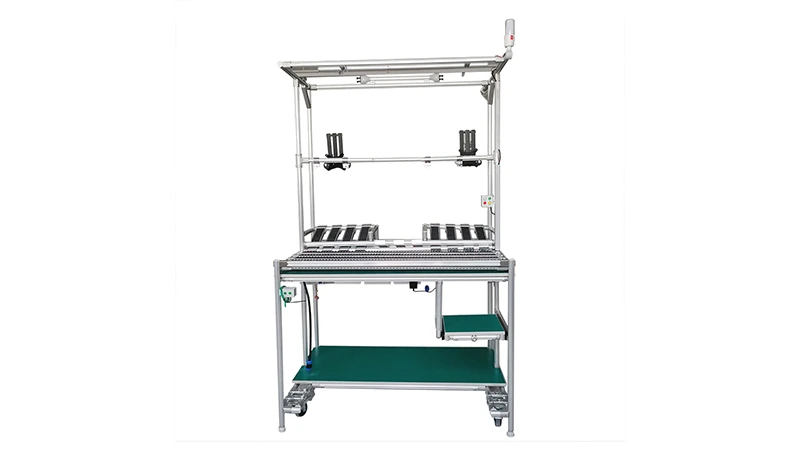
Aluminum Workbench D
Aluminum tube workbench is more flexible and durable, compared with traditional PE/ABS coated steel tube. It is easy to assemble, anti corrosion, rust protection, and recycle use after disassemble.
The Unsung Hero of 3C Manufacturing: Why Workbenches Matter More Than You Think
In the fast-paced world of 3C manufacturing—where "computers, communication, and consumer electronics" come to life—every detail counts. From the tiniest microchip in a smartphone to the sleek casing of a laptop, precision isn't just a goal; it's the backbone of the industry. But here's a question that often gets overlooked: What's the foundation that holds all this precision together? The answer, surprisingly, is the workbench.
Walk into any 3C assembly line, and you'll see them: rows of workbenches where technicians huddle over delicate components, tools organized within arm's reach, and parts flowing seamlessly from one station to the next. These aren't just tables—they're the command centers of production. A poorly designed workbench can slow down workflows, increase errors, and even demotivate teams. A great one? It becomes an invisible partner, making every task smoother, faster, and more reliable.
That's where Aluminum Workbench D comes in. In a sector where change is constant—new product models, shifting production demands, and the relentless pressure to cut waste—this workbench isn't just keeping up; it's setting the standard. Let's dive into why it's become the go-to choice for 3C manufacturers who refuse to compromise on efficiency, flexibility, or durability.
Meet Aluminum Workbench D: More Than Just a "Table"
First things first: What exactly is Aluminum Workbench D ? At first glance, it might look like a simple, sturdy work surface. But peel back the layers, and you'll find a thoughtfully engineered tool designed with the unique challenges of 3C assembly in mind. Let's start with the basics: it's a single-deck workbench (no casters, which we'll get to later) built around high-quality aluminum profile —a material that's revolutionizing how workbenches are designed and used.
Unlike generic workbenches that come in one-size-fits-all designs, Aluminum Workbench D is a blank canvas for customization. Its frame is constructed from lightweight yet rigid aluminum profiles, which are connected using precision-engineered joints. This isn't just about aesthetics; it's about functionality. The aluminum profile's T-slot design means you can easily attach accessories—tool holders, part bins, cable management clips, or even lighting—without drilling holes or welding. Need to add a shelf for extra storage? Snap on a bracket. Want to mount a small monitor for work instructions? Slide in a compatible arm. It's like building with modular blocks, but for grown-ups who need their tools to keep up with their ambitions.
And let's talk about that "no caster" design. While some workbenches prioritize mobility, 3C assembly lines often require stability above all else. When you're placing a 0.5mm-thick circuit board or aligning a tiny camera lens, the last thing you need is a workbench that shifts under pressure. Aluminum Workbench D stays firmly planted, giving technicians the confidence to work with microscale precision.

Aluminum Profile: The Secret Sauce Behind Its Superpowers
To truly appreciate Aluminum Workbench D, you need to understand the star of the show: aluminum profile . Why aluminum? Why not steel, wood, or plastic? Let's break it down.
Aluminum is lightweight—about a third the weight of steel—but don't let that fool you. Modern aluminum alloys are surprisingly strong, able to support heavy tooling, stacks of components, and the daily wear and tear of a busy assembly line. This combination of strength and lightness is a game-changer. When your team needs to reconfigure the assembly line (a common occurrence in 3C, where product cycles are measured in months, not years), moving or adjusting Aluminum Workbench D doesn't require a forklift or a team of. Two people can lift and reposition it, saving time and reducing the risk of workplace injuries.
Then there's durability. 3C assembly lines are messy places: oils, cleaning solvents, and occasional spills are part of the routine. Wood workbenches absorb moisture and warp; steel ones rust if not constantly maintained. Aluminum? It's naturally corrosion-resistant. A quick wipe with a damp cloth is all it takes to keep it looking (and functioning) like new. Over time, this translates to lower maintenance costs and a longer lifespan—important for manufacturers watching their bottom line.
But perhaps the biggest advantage is the aluminum profile accessories ecosystem. From simple brackets to complex modular systems, there's an accessory for nearly every need. Need to organize screwdrivers and tweezers? Use T-slot tool hooks. Want to create a partition between workstations? Attach a panel using profile connectors. Even better, these accessories are standardized, so you can mix and match from different suppliers without compatibility issues. It's like having a hardware store's worth of customization options built right into the workbench's DNA.

Lean System Integration: Because Waste Has No Place in 3C
In 3C manufacturing, "lean" isn't just a buzzword—it's a survival strategy. Lean system principles—eliminating waste, optimizing workflows, and continuous improvement—are baked into every successful production line. Aluminum Workbench D isn't just a workbench; it's a lean system in action. Here's how:
Waste Reduction: Traditional workbenches often come with fixed features—built-in drawers that are too deep, shelves that are too high, or surfaces that are cluttered with tools that aren't needed for the current task. Aluminum Workbench D, with its modular design, lets you strip things back to the essentials. If a station only needs a few tools, you only attach those tools. No more wasted space, no more time spent digging through irrelevant items.
Workflow Optimization: In 3C assembly, the flow of materials is critical. Parts need to move from storage to the workbench, then to the next station, with zero bottlenecks. Aluminum Workbench D can be paired with roller tracks (yes, another aluminum profile accessory ) to create gravity-fed lanes for parts bins. Imagine a technician finishing a task, sliding the bin down the roller track to the next station, and having a new bin glide into place—all without leaving their seat. That's efficiency in motion.
Continuous Improvement: Lean isn't static; it's about constantly finding better ways to work. Aluminum Workbench D adapts to these changes. If a new product requires a taller shelf, swap out the brackets. If a task needs more lighting, add an LED strip. If the team suggests rearranging the workbench layout to reduce hand movement, take it apart and rebuild it in an hour. This flexibility turns "we can't do that" into "we can try this tomorrow."
One electronics manufacturer in Shenzhen put this to the test. They were struggling with a bottleneck in their smartwatch assembly line; technicians were spending too much time reaching for tools and parts. After switching to Aluminum Workbench D, they reconfigured each station with custom tool holders and a mini roller track for parts. The result? A 22% reduction in cycle time per unit and a 15% drop in errors. "It's like the workbench was designed to read our minds," one supervisor joked. But it wasn't magic—it was lean thinking, enabled by the right tools.
How It Stacks Up: Aluminum Workbench D vs. the Rest
Curious how Aluminum Workbench D compares to traditional workbenches? Let's put it head-to-head with two common alternatives: steel workbenches and wooden workbenches.
| Feature | Aluminum Workbench D | Traditional Steel Workbench | Wooden Workbench |
|---|---|---|---|
| Material | Aluminum profile (lightweight, corrosion-resistant) | Steel (heavy, prone to rust without coating) | Wood (absorbs moisture, warps over time) |
| Customization | High (T-slot design accepts unlimited aluminum profile accessories) | Low (fixed features; modifications require drilling/welding) | Very low (permanent; hard to add/remove components) |
| Weight | Light (easy to reposition with 2 people) | Heavy (often requires machinery to move) | Medium (but bulky and awkward to maneuver) |
| Maintenance | Minimal (wipe clean; no rust or warping) | High (needs regular painting/coating to prevent rust) | High (sealing required; stains and scratches easily) |
| Lean System Compatibility | Excellent (modular, adaptable, supports waste reduction) | Poor (rigid design resists workflow changes) | Very poor (fixed structure; no integration with lean tools) |
The verdict? While steel and wood have their place in some industries, they fall short in the dynamic world of 3C manufacturing. Aluminum Workbench D isn't just better—it's built for a different era, where agility and precision are non-negotiable.
Real-World Impact: Stories from the Assembly Line
Numbers and specs tell part of the story, but let's hear from the people who use Aluminum Workbench D every day.
Take Lisa, a technician at a major smartphone manufacturer in Guangzhou. She's been assembling camera modules for over five years, a task that requires steady hands and a clutter-free workspace. "Before we switched to Aluminum Workbench D, our old steel bench had a fixed shelf that was always too high," she says. "I'd have to stretch to reach my tools, and by the end of the day, my shoulders ached. Now? I adjusted the shelf height using the aluminum brackets, and I added a tool rail right in front of me. It sounds small, but it's changed everything. I'm faster, and I don't go home sore anymore."
Then there's Mark, a production manager at a consumer electronics plant in Shanghai. His team was struggling to keep up with a sudden surge in demand for wireless earbuds. "We needed to add three new assembly stations in a week," he recalls. "With our old wooden workbenches, that would have meant ordering custom tables and waiting for delivery. With Aluminum Workbench D? We had the frames and profiles in stock. My team built the new stations themselves in a day. No delays, no extra costs—just problem-solving, fast."
These stories aren't anomalies. They're a testament to how the right tools can transform not just production lines, but the people who work on them. When a workbench adapts to your needs—instead of the other way around—everyone wins.
Why It's the Future of 3C Assembly
3C manufacturing isn't slowing down. If anything, it's accelerating. New technologies like foldable screens, 5G connectivity, and AI-powered devices are pushing the boundaries of what's possible—and demanding more from production lines than ever before. In this environment, flexibility, precision, and efficiency aren't just nice-to-haves; they're survival skills.
Aluminum Workbench D checks all these boxes. Its aluminum profile construction ensures it's lightweight yet tough enough for the daily grind. Its modular design means it can grow and change with your production needs, supporting new products and processes without requiring a complete overhaul. And its integration with lean principles helps cut waste, reduce errors, and keep costs in check.
But perhaps the biggest reason it's becoming indispensable? It puts people first. At the end of the day, assembly lines are run by technicians, engineers, and managers who want to do their best work. When you give them a workbench that's designed to make their jobs easier, safer, and more efficient, you're not just investing in equipment—you're investing in their success. And in 3C manufacturing, success isn't just measured in units produced; it's measured in the pride of building products that connect the world.
So, the next time you pick up your smartphone or power on your laptop, take a moment to appreciate the unseen heroes behind it. The microchips, the engineers, and yes—the workbenches. And if you're in the business of building these innovations? It might be time to ask: Is your workbench holding you back, or helping you lead the way? With Aluminum Workbench D, the answer is clear.