- Company Articles
- Products and Technology
- Product knowledge
- What Makes External Straight Aluminum Joints Reusable? Sustainability Features

What Makes External Straight Aluminum Joints Reusable? Sustainability Features
Related Product
External Straight Aluminum Joint
Aluminum pipe joint outside connection used for two pcs 28pcs aluminum pipe connection in straight angle,it connects two pcs pipe from outside.
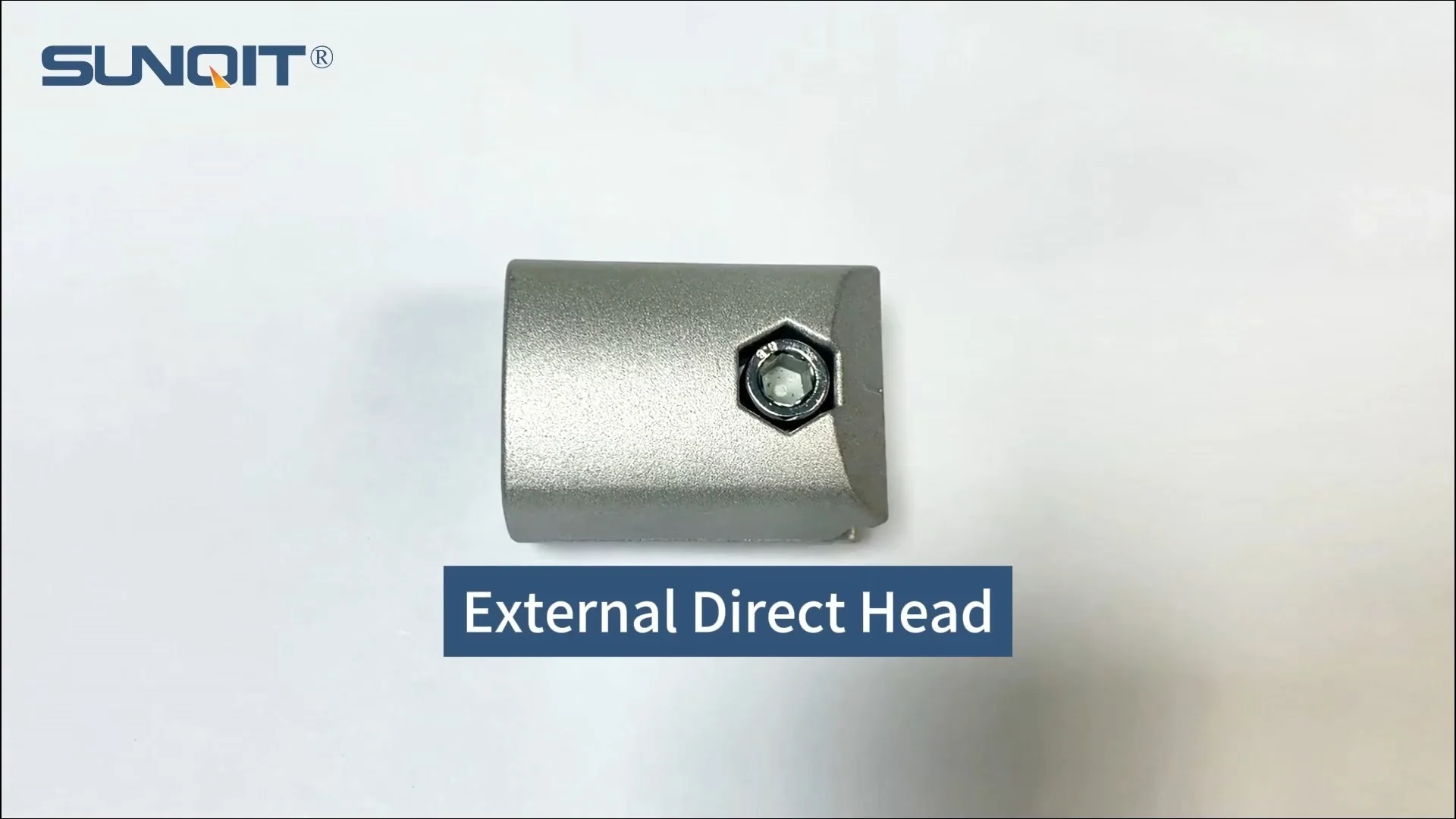
In today's manufacturing landscape, where efficiency and environmental responsibility walk hand in hand, the quest for reusable components has become more than a trend—it's a necessity. Among the unsung heroes of this movement are external straight aluminum joints, small yet mighty components that play a pivotal role in building flexible, long-lasting structures. But what exactly makes these joints stand out in terms of reusability? And how do they contribute to sustainability goals? Let's dive in, exploring their design, materials, and real-world impact to uncover why they've become a cornerstone for forward-thinking factories and workshops.
The Shift Toward Reusability in Modern Manufacturing
Gone are the days when manufacturing setups were built to last "forever"—or at least until the next production line overhaul. Today, agility is key. Factories reconfigure assembly lines, warehouses adjust storage layouts, and workshops adapt to new projects faster than ever. This constant change, however, often came with a hidden cost: waste. Traditional fixed joints, whether welded steel, glued plastic, or one-time snap-fit connectors, would end up in landfills when layouts changed, contributing to both material loss and environmental harm.
Enter the era of modular manufacturing. Here, components are designed to be taken apart, reused, and repurposed—turning "disposal" into "reassembly." At the heart of this shift lie components like external straight aluminum joints. They're not just connectors; they're enablers of a circular economy, where the lifecycle of a product extends far beyond its initial use. But to understand their magic, we first need to get up close with what these joints actually are.
Understanding External Straight Aluminum Joints: More Than Just a "Connector"
At first glance, an external straight aluminum joint might look like a simple piece of metal with holes and grooves. But its design is a masterclass in functional simplicity. These joints are engineered to connect aluminum profiles—long, hollow beams with T-slots running along their length—into straight, rigid structures. Think of them as the "linchpins" that hold together workbenches, flow racks, conveyor systems, and even turnover trolleys in lean manufacturing setups.
What sets external straight aluminum joints apart is their namesake: "external" means they clamp onto the outside of the aluminum profile (rather than fitting inside), and "straight" indicates their primary role in creating linear connections. Unlike some joints that pivot or angle, these are all about stability in straight-line assemblies. But don't let their specialization fool you—this focus is exactly what makes them so reusable. By excelling at one job and doing it simply, they avoid the complexity that often leads to wear and tear in multi-functional components.
To visualize, imagine building a workbench: you take two aluminum profiles, align them end-to-end, slide an external straight aluminum joint over the seam, tighten a few bolts, and voilà—you've got a sturdy, straight beam. When you need to reconfigure the workbench later, you loosen the bolts, remove the joint, and reuse it elsewhere. No welding torches, no broken plastic tabs, no irreversible damage. That's the beauty of it.

Key Design Features: Why These Joints Are Built to Be Reused
Reusability doesn't happen by accident—it's baked into the design. Let's break down the features that make external straight aluminum joints so good at being "secondhand stars."
1. No Permanent Modifications: The "Non-Destructive" Connection
Traditional joints often require altering the materials they connect. Welded steel joints melt and fuse metal; glued plastic joints bond surfaces irreversibly; even some bolted joints drill holes that weaken the profile over time. External straight aluminum joints? They avoid all that. By clamping onto the exterior of aluminum profiles (thanks to their precision-machined grooves), they create a tight grip without drilling, welding, or gluing. When you remove them, the aluminum profile remains unmarked and ready for another joint—no scrap, no waste.
2. Standardized Sizing: A "One Joint Fits Many" Philosophy
Walk into any hardware store, and you'll notice that screws come in standard sizes—1/4 inch, 5/16 inch, etc. This standardization makes them universally useful. External straight aluminum joints follow the same logic. They're designed to fit common aluminum profile sizes (like 2020, 3030, or 4040 series, named for their width and height in millimeters). A joint made for a 3030 aluminum profile will work with any 3030 profile, regardless of the project—whether it's a material rack today or a conveyor guard tomorrow. This interchangeability is a cornerstone of reusability: you don't need a new joint for every new job.
3. Durable Materials: Built to Withstand "Take Apart and Rebuild" Cycles
If a joint bends, cracks, or wears out after one use, reusability is moot. That's why external straight aluminum joints are typically made from high-grade aluminum alloys, like 6061-T6. This alloy is heat-treated for strength, yet lightweight enough to avoid adding unnecessary bulk. It's also corrosion-resistant, meaning even in dusty factory environments or humid warehouses, the joint won't rust or degrade. The result? A component that can be tightened, loosened, and retightened dozens of times without losing its grip or structural integrity.
4. Simple Assembly: No Special Tools, No Special Skills
Reusability is only practical if disassembly and reassembly are easy. External straight aluminum joints excel here. Most use basic hex bolts or thumb screws that can be tightened with a standard Allen wrench—no need for power tools or specialized training. This simplicity reduces the risk of damage during disassembly (no over-tightening with a wrench, no stripped threads from improper tools) and makes it feasible for workers to reuse joints on the fly, even in fast-paced environments.

Material Science: Aluminum's Role in Sustainability
Aluminum isn't just chosen for its strength or lightness—it's a sustainability powerhouse, and that's a big reason external straight aluminum joints are eco-friendly. Let's unpack why this metal is a green choice.
1. Recyclability: Aluminum's "Endless Loop"
Aluminum is 100% recyclable, and here's the kicker: recycling it uses just 5% of the energy required to produce new aluminum from raw ore. That's a staggering 95% energy savings! When an external straight aluminum joint finally reaches the end of its long life (after being reused dozens of times), it can be melted down and turned into a new joint, a new aluminum profile, or even a bicycle frame—no loss in quality. Compare that to plastic joints, which often degrade during recycling, or welded steel, which loses structural integrity when melted and recast. Aluminum's recyclability ensures that even when a joint is "done," it's not "gone."
2. Longevity: Less Waste, Fewer Replacements
Sustainability isn't just about recycling—it's about reducing the need for new products in the first place. Aluminum's natural corrosion resistance (thanks to a thin oxide layer that forms on its surface) means external straight aluminum joints last longer than many alternatives. In a factory setting, where exposure to oils, coolants, or humidity is common, a steel joint might rust and fail in a few years, while an aluminum one keeps going. Fewer replacements mean less material extracted, less energy used in manufacturing, and less waste sent to landfills.
3. Lightweight: Lower Transportation and Installation Footprints
Aluminum is about one-third the weight of steel. While this might not seem directly related to reusability, it has a ripple effect on sustainability. Lighter joints are easier to transport (reducing fuel use), easier to install (lowering labor energy), and less likely to cause strain or damage during handling (further extending their lifespan). Even small weight savings add up when you're shipping hundreds or thousands of joints—making aluminum a greener choice from mine to factory floor.

Real-World Impact: How Reusable Joints Transform Lean Systems
Lean manufacturing is all about eliminating waste—time, materials, space—and external straight aluminum joints align perfectly with this philosophy. Let's look at a hypothetical (but realistic) example to see their impact in action.
Imagine a small electronics manufacturer, "TechFlow," that assembles smartphones. Initially, they use fixed steel workbenches with welded joints. When a new phone model launches, requiring a reconfigured assembly line, they have two options: hire welders to cut and re-weld the steel benches (costly and time-consuming) or buy entirely new benches (expensive and wasteful). Over a year, this leads to piles of scrap steel and thousands of dollars spent on replacements.
Then, TechFlow switches to aluminum profile workbenches connected by external straight aluminum joints. When the next model launches, their team spends a morning loosening bolts, disassembling the old benches, and reassembling them into the new layout. The joints are reused, the aluminum profiles are undamaged, and no new materials are needed. The result? They save $15,000 on new workbenches, reduce scrap metal by 80%, and cut reconfiguration time from 3 days to 4 hours. That's lean manufacturing in action—and it's all thanks to reusable joints.
This isn't an isolated case. From automotive plants retooling for electric vehicles to warehouses adapting to e-commerce spikes, external straight aluminum joints are enabling businesses to do more with less. They're not just tools; they're partners in reducing waste and boosting bottom lines.
How Do They Compare? A Look at Joint Alternatives
To truly appreciate external straight aluminum joints, it helps to see how they stack up against common alternatives. Let's compare them to three popular options: welded steel joints, plastic snap-fit joints, and glued wooden joints.
| Feature | External Straight Aluminum Joint | Welded Steel Joint | Plastic Snap-Fit Joint | Glued Wooden Joint |
|---|---|---|---|---|
| Reusability | High (can be disassembled/reused indefinitely) | None (welds are permanent; cutting damages materials) | Low (snaps weaken after 1-2 uses) | None (glue bonds are irreversible) |
| Installation Time | Fast (5-10 minutes with basic tools) | Slow (requires welding equipment and expertise) | Fast (1-2 minutes, no tools) | Slow (requires clamping and drying time) |
| Environmental Impact | Low (reusable, 100% recyclable, low energy to recycle) | High (permanent, high energy to produce/recycle) | High (non-reusable, often non-recyclable plastic) | Medium (wood is renewable, but glue is toxic and non-recyclable) |
| Durability | High (corrosion-resistant, withstands repeated use) | High (strong, but prone to rust if uncoated) | Low (prone to cracking, warping in heat/cold) | Medium (wood rots in moisture, glue weakens over time) |
| Cost Over Time | Low (one-time purchase, reused for years) | High (frequent replacements needed) | High (needs replacement after few uses) | Medium (low upfront cost, but short lifespan) |
The table tells a clear story: external straight aluminum joints outshine alternatives in reusability, environmental impact, and long-term cost. They're not the cheapest upfront, but their ability to be reused and recycled makes them the most economical and eco-friendly choice for dynamic manufacturing environments.
The Future of Reusable Joints: Innovations on the Horizon
As sustainability becomes a core business value, external straight aluminum joints are evolving too. Manufacturers are experimenting with even more eco-friendly designs, like joints made from recycled aluminum (to cut down on raw material use) or joints with built-in sensors that alert workers when they're loose (preventing damage and extending lifespan). There's also a push for "smart" joints that can be tracked via RFID tags, making it easier to manage inventory and reuse components across large factories.
Another trend is miniaturization. As electronics and medical devices shrink, so do their manufacturing setups. Companies are developing smaller external straight aluminum joints for delicate aluminum profiles, enabling precision assembly lines for tiny components like microchips or surgical tools. These mini-joints maintain the same reusability and sustainability features but in a compact form.
Perhaps most exciting is the rise of "closed-loop" supply chains for aluminum components. Some suppliers now offer take-back programs: when a joint is no longer usable, they'll recycle it and give customers a discount on new joints made from the recycled material. It's a win-win: businesses reduce waste, and suppliers secure a steady stream of recycled aluminum.
Conclusion: Small Joints, Big Impact
External straight aluminum joints might not grab headlines, but they're quietly revolutionizing how we build, adapt, and sustain manufacturing systems. Their reusability stems from smart design—non-destructive connections, standardized sizing, durable materials—and their sustainability comes from aluminum's recyclability and longevity. Together, these features make them more than just connectors; they're tools for building a greener, more efficient future.
As businesses and consumers alike demand more sustainable practices, the role of reusable components like these joints will only grow. They prove that sustainability doesn't have to mean sacrificing performance—in fact, it often enhances it. So the next time you walk through a factory, a warehouse, or even a workshop, take a closer look at the structures around you. Chances are, there's an external straight aluminum joint holding them together, working hard to reduce waste, save time, and keep our planet a little healthier.
In the end, it's the small choices—the reusable joints, the modular designs, the commitment to "reduce, reuse, recycle"—that add up to big change. And external straight aluminum joints? They're leading the way.