- Company Articles
- Products and Technology
- Product knowledge
- What Makes Two Way Aluminum Pipe Joints Ideal for Automotive Manufacturing?

What Makes Two Way Aluminum Pipe Joints Ideal for Automotive Manufacturing?
Related Product
Two Way Aluminum Pipe Joint
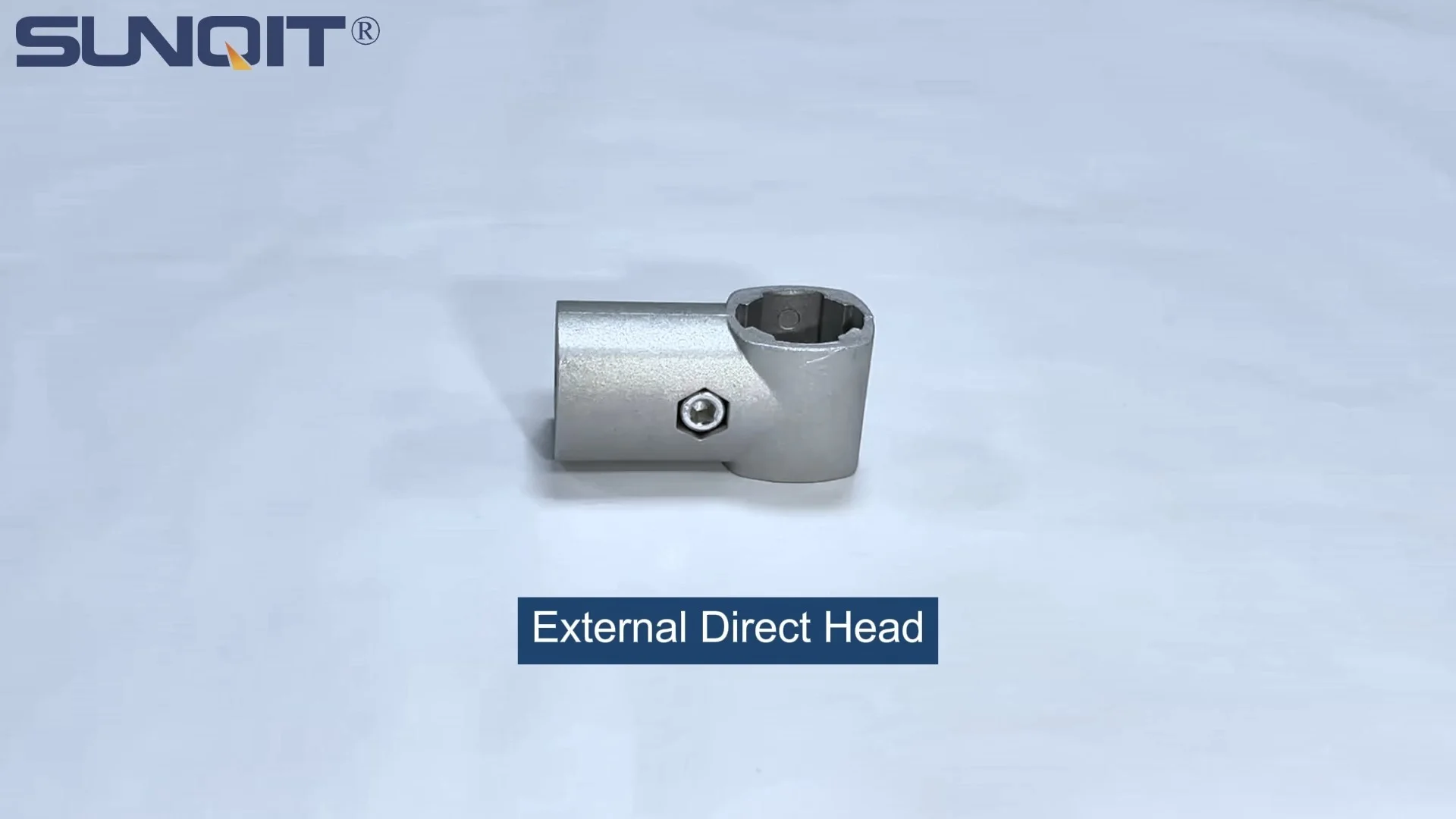
Aluminum 2 way pipe joint for 28mm aluminum pipe connection in 2 direction.
The automotive industry is a world of precision, speed, and constant evolution. Every day, factories churn out thousands of vehicles, each requiring hundreds of parts to come together seamlessly. Behind this orchestration of machinery and manpower lies a silent hero: the infrastructure that holds it all together. From assembly lines to workbenches, from material transport systems to storage racks, the right components can make or break efficiency. Among these, two way aluminum pipe joints stand out as unsung champions, quietly enabling the flexibility, durability, and adaptability that modern automotive manufacturing demands. But what exactly makes them so indispensable? Let's dive in.
The Basics: What Are Two Way Aluminum Pipe Joints?
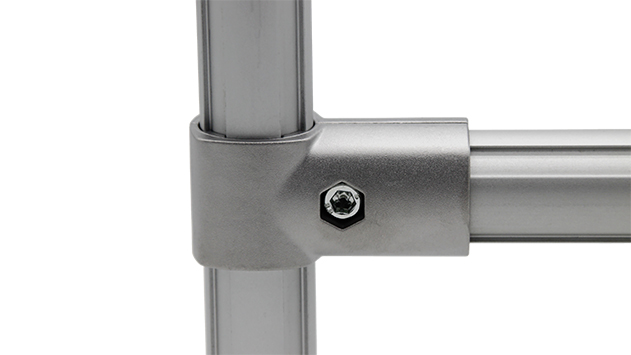
At their core, two way aluminum pipe joints are simple yet ingenious connectors. Designed to link aluminum pipes (or aluminum profile as they're often called in industry jargon), these joints create sturdy, modular structures that can be reconfigured in minutes. Unlike rigid welding or permanent fasteners, they allow for quick assembly and disassembly, making them a cornerstone of agile production setups. Think of them as the building blocks of a factory's skeleton—lightweight, strong, and infinitely adaptable.
Made from high-grade aluminum alloy, these joints are engineered to balance strength and weight. They come in various designs, but the "two way" variant is particularly popular for its ability to connect two pipes at a fixed angle (often 90 degrees or 180 degrees), forming the basic framework for everything from workbenches to roller tracks. Their smooth, corrosion-resistant surface ensures they hold up in the harsh conditions of a manufacturing floor—resisting oils, coolants, and daily wear and tear without rusting or weakening over time.
Flexibility: The Key to Keeping Up with Automotive's Pace
Automotive manufacturing isn't static. New models roll out yearly, design changes happen overnight, and production lines must pivot to meet shifting demand. A rigid infrastructure—one built with steel welding or fixed bolts—simply can't keep up. This is where two way aluminum pipe joints shine: they're the ultimate enablers of lean system principles, which prioritize eliminating waste and maximizing adaptability.
Consider this scenario: A car manufacturer decides to add a new hybrid model to its lineup. The assembly line for traditional gasoline engines needs to be modified to accommodate battery packs and electric motors. With traditional steel workbenches and racks, this would mean days (or even weeks) of cutting, welding, and rebuilding. But with aluminum pipe joints? Workers can disassemble the existing framework, reposition the aluminum profiles, and reassemble a new layout in hours. No specialized tools, no downtime, no wasted materials—just pure efficiency.
This flexibility extends beyond major overhauls. Even small adjustments—like raising a workbench height to accommodate taller workers, or reconfiguring a roller track to route parts around a temporary obstacle—become trivial. In a industry where every minute of downtime costs thousands of dollars, this adaptability isn't just a luxury; it's a competitive advantage.
Durability Without the Heaviness: A Game-Changer for Factory Floors
Automotive factories are tough environments. Heavy parts are moved constantly, machinery vibrates, and spills (of oil, grease, or cleaning fluids) are inevitable. Any component used here must be tough enough to withstand daily punishment. Two way aluminum pipe joints deliver on this front, thanks to aluminum's inherent properties.
Aluminum is naturally corrosion-resistant, meaning it won't rust when exposed to moisture or chemicals—a common issue with steel joints that can weaken structures over time. This resistance ensures that the joints maintain their grip and stability even in damp or oily conditions, critical for safety and reliability. Additionally, aluminum's high strength-to-weight ratio means the joints are strong enough to support heavy loads (like engine blocks or transmission assemblies) without adding unnecessary bulk.
Compare this to plastic joints, which might be lightweight but can crack under heavy use, or stainless steel joints, which are durable but so heavy that they make structures harder to move and reconfigure. Aluminum strikes the perfect balance: tough enough to last for years, light enough to make adjustments feasible. For example, a workbench built with aluminum pipe joints can support a 500kg load while still being movable with a few workers—something that would be nearly impossible with a steel-framed equivalent.

Seamless Integration: Working in Harmony with Other Components
In automotive manufacturing, no component works in isolation. A workbench needs to connect to a roller track, which feeds into a conveyor system, which links to a storage rack. Two way aluminum pipe joints excel at playing well with others, making them the glue that holds these systems together.
Take roller tracks, for instance. These systems use a series of wheels to slide parts smoothly from one workstation to the next. To function properly, the tracks must be perfectly aligned and securely mounted. Aluminum pipe joints make this easy: they can be attached to the aluminum profiles of the track frame, ensuring a tight, wobble-free connection. If the track needs to be extended or rerouted, the joints can be loosened, the pipes repositioned, and everything tightened back up—no cutting or drilling required.
Similarly, conveyors rely on stable frameworks to keep belts or rollers moving consistently. Aluminum joints attach to the conveyor's support legs, allowing for height adjustments to match the elevation of adjacent workbenches. This integration isn't just about functionality; it's about reducing friction in the production process. When every component works together seamlessly, workers spend less time troubleshooting and more time assembling vehicles—exactly what the automotive industry needs to meet tight deadlines.
| Component | Benefits of Aluminum Pipe Joint Integration | Traditional Steel Joints (for Comparison) |
|---|---|---|
| Workbench | Quick height/width adjustments; easy addition of shelves or tool holders | Fixed dimensions; requires welding to modify |
| Roller Track | Simple alignment; easy extension or rerouting | Rigid; requires cutting/welding to adjust |
| Conveyor | Stable, adjustable support; lightweight frame reduces conveyor strain | Heavy frame increases wear on conveyor motors |

Cost-Effectiveness: Saving Money in the Long Run
Let's talk numbers—because in manufacturing, every decision comes down to the bottom line. At first glance, two way aluminum pipe joints might seem pricier than basic steel or plastic alternatives. But when you factor in their lifespan, flexibility, and low maintenance, they quickly become the more economical choice.
Consider the cost of downtime. When a production line needs to be reconfigured for a new model, every hour of halted production can cost tens of thousands of dollars. With aluminum joints, reconfiguration takes hours instead of days, slashing downtime costs. Then there's maintenance: aluminum joints don't rust, so they rarely need replacement due to corrosion. Steel joints, on the other hand, may require regular painting or replacement to prevent rust-related failures.
There's also the issue of scalability. As a factory grows, it needs to add new workbenches, racks, or conveyor sections. With aluminum pipe joints, existing structures can be expanded by simply adding more pipes and joints—no need to buy entirely new systems. This modularity reduces waste and keeps capital expenses in check. For example, a small auto parts supplier might start with a single workbench and a short roller track, then expand to three workbenches and a full conveyor line using the same basic joints and pipes.
Real-World Impact: A Case Study
To put this into perspective, let's look at a real example. A mid-sized automotive parts manufacturer in Michigan was struggling with its assembly line for door panels. The line used steel-framed workbenches and fixed roller tracks, which made it difficult to adapt when the company won a contract to produce panels for a new SUV model (larger than their previous sedan panels).
The solution? They replaced the steel frames with aluminum profiles and two way aluminum pipe joints. Overnight, the workbenches could be widened by 12 inches by adding a few extra pipes and joints. The roller tracks, which had been too narrow for the new panels, were extended and realigned in just four hours. The result? The company avoided a week of downtime (saving an estimated $250,000) and was able to start production on time, securing the contract renewal. Today, they use aluminum pipe joints across all their lines, citing flexibility and durability as the key reasons.
Why Not Other Joints? The Case Against Alternatives
It's fair to ask: Are there other joints that could do the job? The short answer is yes, but none offer the same combination of benefits. Let's break down the alternatives:
Steel Welded Joints: These are strong but permanent. Once welded, they can't be adjusted without cutting the steel—making them useless for lean, adaptable production lines. They're also heavy, increasing transportation and installation costs.
Plastic Joints: Lightweight and cheap, but they lack the strength to support heavy automotive parts. They can also degrade over time when exposed to chemicals or extreme temperatures, leading to frequent replacements.
Stainless Steel Joints: Durable and corrosion-resistant, but extremely heavy and expensive. They're overkill for most automotive applications, where aluminum provides sufficient strength at a fraction of the cost and weight.
Two way aluminum pipe joints, in contrast, hit the sweet spot: strong enough for heavy loads, light enough for easy reconfiguration, corrosion-resistant for longevity, and affordable enough for large-scale use.
Looking Ahead: Supporting the Future of Automotive Manufacturing
The automotive industry is evolving faster than ever. Electric vehicles, autonomous driving, and customization (where customers can choose unique features) are reshaping production needs. Factories are moving toward "smart manufacturing," where data and automation drive efficiency. In this future, flexibility and adaptability will be more critical than ever—and two way aluminum pipe joints are poised to play a starring role.
For example, as factories adopt more collaborative robots (cobots) that work alongside humans, workbenches will need to be reconfigured to accommodate these new tools. Aluminum pipe joints make it easy to add robot mounts, sensor brackets, or additional storage as needed. Similarly, as production runs become shorter (to meet demand for customized vehicles), lines will need to switch between models faster—something aluminum joints enable with their quick-change capabilities.
Even as technology advances, the basics of manufacturing remain the same: you need structures that can keep up. Two way aluminum pipe joints aren't just a component; they're a foundation for innovation.
Conclusion: More Than Just Joints—Enablers of Excellence
In the fast-paced world of automotive manufacturing, success hinges on the ability to adapt, endure, and integrate. Two way aluminum pipe joints deliver on all three fronts. They're flexible enough to keep up with changing production needs, durable enough to withstand the toughest factory conditions, and versatile enough to work with roller tracks, conveyors, workbenches, and more. They're not the flashiest technology on the plant floor, but they're one of the most essential.
So the next time you see a car rolling off the assembly line, take a moment to appreciate the quiet infrastructure that made it possible. Behind every weld, every bolt, and every worker is a framework built on innovation—and two way aluminum pipe joints are at the heart of it all.