- Company Articles
- Products and Technology
- Product knowledge
- What Size 4080 Aluminum Profile End Cap Do You Need? Sizing Chart

What Size 4080 Aluminum Profile End Cap Do You Need? Sizing Chart
Related Product
4080 Aluminum Profile End Cap
The aluminum profile end cap adds a finishing touch to your project and closes off profile ends to limit dust and debris buildup, also it can avaid some scratch for material and labor during the assemble work.
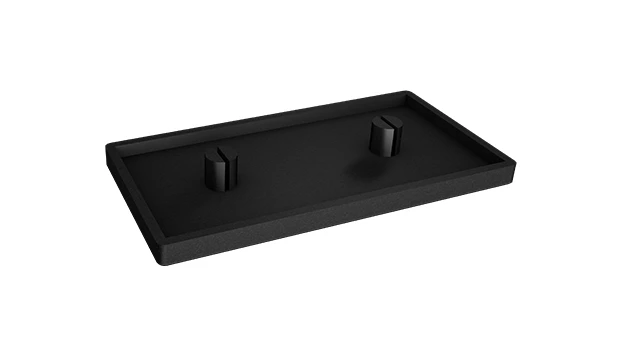
If you've ever rolled up your sleeves to build something with aluminum extrusion profiles—whether it's a sturdy workbench for your garage, a sleek material rack for your workshop, or even a custom conveyor frame for a small production line—you know the satisfaction of seeing raw components come together into something functional. But there's one small detail that often gets overlooked until the final stages: the end caps. Those unassuming little pieces that snap or press into the open ends of your aluminum profiles might seem trivial, but they're the unsung heroes that turn a "good" project into a "polished, professional" one. And when it comes to the popular 4080 aluminum profile, getting the right end cap size isn't just about aesthetics—it's about safety, durability, and making sure your hard work stands the test of time.
In this guide, we're diving deep into everything you need to know about 4080 aluminum profile end caps. We'll break down why they matter, how to measure your profile correctly (spoiler: it's not just about the outer dimensions), walk through common sizes, and even include a handy sizing chart to take the guesswork out of your next project. Whether you're a seasoned maker or just starting with T-slot aluminum pipe, by the end, you'll feel confident picking the perfect end cap for your 4080 profiles.
Why End Caps Matter: More Than Just a "Finishing Touch"
Let's start with the basics: why bother with end caps at all? After all, the profile is already structural—can't you just leave the ends open? Sure, you could , but you'd be missing out on a few key benefits that make the extra step well worth it.
First, safety. Aluminum extrusion profiles, especially the 4080 series, have sharp, raw edges at the cut ends. Even if you've sanded them down, those edges can still catch on clothing, scratch skin, or damage tools and materials that brush against them. If you're building something that will be used regularly—like a workbench where you'll be sliding parts or tools across the surface—exposed ends become a hazard. End caps smooth those edges, turning potential scrapes into a smooth, safe finish.
Then there's protection. Open profile ends are magnets for dust, dirt, and debris. Over time, that gunk can build up inside the T-slots (the grooves that run along the profile length, used for attaching brackets, shelves, or other aluminum profile accessories), making it harder to slide in bolts or connectors later. In humid or outdoor environments, moisture can seep in too, leading to corrosion or discoloration of the inner surfaces. End caps act like tiny lids, keeping the inside of your profiles clean and dry.
And let's not forget aesthetics. A project with exposed profile ends looks unfinished, like you ran out of time or forgot a step. End caps give your work a clean, intentional look—whether you opt for a subtle plastic cap that blends in or a bold aluminum one that adds a pop of contrast. When clients, colleagues, or even just friends see your work, those little details signal that you care about quality.
Understanding the 4080 Aluminum Profile: What Makes It So Popular?
Before we talk about end caps, let's make sure we're all on the same page about the star of the show: the 4080 aluminum extrusion profile. If you're new to the world of aluminum profiles, the numbers "4080" might seem arbitrary, but they're actually a key clue to the profile's dimensions. In most cases, "4080" refers to the outer width and height of the profile, measured in millimeters. So, a standard 4080 profile is roughly 40mm wide (about 1.57 inches) and 80mm tall (about 3.15 inches). But here's the catch: that's the outer size. The inner dimensions—the part that matters for end caps—can vary depending on the profile's design, wall thickness, and whether it's a standard, heavy-duty, or specialty variant (like those with extra T-slots or reinforced edges).
4080 profiles are a workhorse in the aluminum extrusion world because they strike a perfect balance between strength and versatility. They're sturdy enough to support heavy loads (think workbenches, material racks, or even small machine frames) but not so bulky that they're hard to maneuver or overkill for lighter projects. You'll find them in factories, workshops, maker spaces, and even home garages, paired with everything from caster wheels for mobile carts to conveyor systems for small-scale production. And because they're part of the T-slot system, they're infinitely customizable—you can attach shelves, panels, lights, or tools using T-slot nuts and bolts, making them a favorite for DIYers and professionals alike.
Pro Tip: Not all 4080 profiles are created equal! Some are labeled as "EU standard" (like the 4080B EU standard aluminum profile), while others follow national standards. These variations can affect the inner dimensions, so always check the manufacturer's specs if you're unsure. We'll cover this more in the sizing chart later!

Measuring for End Caps: It's All About the Inner Dimensions
Okay, so you've got your 4080 profile in hand, and you're ready to buy end caps. The first instinct might be to grab a ruler, measure the outer width (40mm) and height (80mm), and search for "40x80 end caps." But if you do that, you might end up with caps that are too loose, too tight, or just plain incompatible. Why? Because end caps fit inside the profile, not over the outside. That means you need to measure the inner width and height of the profile's open end.
Step 1: Gather Your Tools
You don't need anything fancy—just a measuring tape or a digital caliper (preferred for precision) and a pencil and paper to jot down numbers. If you're using a tape measure, make sure it's a flexible one that can fit inside the profile without bending awkwardly. A caliper, though, will give you exact millimeters, which is crucial for tight-fitting end caps.
Step 2: Measure the Inner Width
Flip your 4080 profile so the open end is facing you. Look straight into the end—you'll see the inner walls, the T-slots (those grooves running along the length), and the hollow center. The "inner width" is the distance between the two inner side walls (the shorter sides, since the profile is 40mm wide outer). Place your caliper or tape measure across the opening, from the inside of one short wall to the inside of the opposite short wall. Write this number down (it will likely be between 34mm and 38mm, depending on wall thickness).
Step 3: Measure the Inner Height
Next, measure the inner height. This is the distance between the two inner long walls (the taller sides, corresponding to the 80mm outer height). Again, place your tool inside the profile, from the inside of the top long wall to the inside of the bottom long wall. This number will typically be between 74mm and 78mm for most 4080 profiles.
Step 4: Check for T-Slot Interference
Some 4080 profiles have T-slots that extend into the end of the profile (especially those with T-slots on all four sides). These slots can create small "notches" in the inner walls, which might affect how the end cap sits. For example, if there's a T-slot on the top inner wall, the end cap might need a cutout or a thinner section to fit around it. Most standard end caps are designed to work with common T-slot configurations, but it's worth noting if your profile has unusual slot placements.
Once you have your inner width and height, you're ready to find the right end cap. Let's look at the most common sizes for 4080 profiles.

Common 4080 Aluminum Profile End Cap Sizes: A Breakdown
End caps for 4080 profiles come in a range of sizes, but there are a few standard options that cover most use cases. These are usually labeled by their inner dimensions (e.g., "36x76mm") or by a model number from the manufacturer. Below are the most common sizes you'll encounter:
Standard 4080 End Caps (36x76mm)
This is the most popular size for general-purpose 4080 profiles with standard wall thickness (around 2mm). The inner width is ~36mm, and the inner height is ~76mm. These caps are usually made of rigid plastic (like polypropylene) or rubber, and they press-fit into the end with a snug, secure hold. They're ideal for indoor projects where aesthetics and basic protection are key—think workbenches, shelving, or display racks.
Heavy-Duty 4080 End Caps (34x74mm)
Heavy-duty 4080 profiles have thicker walls (sometimes up to 3mm) for extra strength, which reduces the inner dimensions. These profiles often require end caps with inner dimensions of ~34mm (width) x ~74mm (height). These caps are sturdier, sometimes made of thicker plastic or even aluminum, and they're designed to handle more wear and tear—perfect for industrial settings, material racks that get loaded/unloaded frequently, or outdoor projects where durability matters.
EU Standard 4080 End Caps (35x75mm)
If you're using a 4080B EU standard aluminum profile, you might need a slightly different size. EU standard profiles often have more consistent inner dimensions due to stricter manufacturing tolerances, and many manufacturers produce end caps specifically for these. A common size here is ~35mm (width) x ~75mm (height). These caps are designed to fit the precise T-slot spacing and wall thickness of EU profiles, ensuring a seamless fit.
Custom End Caps
For specialty 4080 profiles—like those with unique T-slot configurations, curved edges, or reinforced corners—you might need custom end caps. These are less common but can be ordered from aluminum profile accessories suppliers who offer made-to-measure options. Custom caps are pricier, but they're worth it if you need a perfect fit for a one-of-a-kind project.
4080 Aluminum Profile End Cap Sizing Chart
To make things easier, we've compiled a sizing chart with the most common 4080 profile types and their corresponding end cap sizes. Use this as a starting point, but always double-check your measurements before ordering—remember, variations between manufacturers are possible!
| Profile Type | End Cap Model (Example) | Inner Width (mm) | Inner Height (mm) | Material | Best For |
|---|---|---|---|---|---|
| Standard 4080 (2mm wall) | EC-4080-STD | 36 | 76 | Plastic (PP) | Workbenches, indoor shelving, DIY projects |
| Heavy-Duty 4080 (3mm wall) | EC-4080-HD | 34 | 74 | Thick plastic / Aluminum | Material racks, industrial workstations, outdoor use |
| 4080B EU Standard Aluminum Profile | EC-4080-EU | 35 | 75 | Plastic / Rubber | EU-manufactured projects, precision builds |
| 4080 with Extra T-Slots | EC-4080-T | 36 | 76 | Flexible plastic | Profiles with T-slots on all four sides |
| Custom 4080 (Unique dimensions) | EC-4080-Custom | Varies (33-37mm) | Varies (73-77mm) | Depends on specs | Specialty profiles, one-off projects |
Types of End Caps: Material and Style Options
Now that you know the size, let's talk about types of end caps. They come in different materials and styles, each with its own pros and cons. Here's how to choose:
Plastic End Caps
Plastic is the most common material for end caps, and for good reason. It's affordable, lightweight, and comes in a range of colors (black, white, gray, or even custom hues to match your project). Most plastic caps are press-fit, meaning you simply push them into the profile until they click into place—no tools required. They're great for indoor use and projects where cost is a factor. Look for high-quality polypropylene or ABS plastic if you want them to resist cracking or fading over time.
Rubber End Caps
Rubber end caps offer a softer, more flexible fit. They're ideal if you need a snug seal to keep out dust or moisture (like in garages or workshops where sawdust or debris is common). They also provide a bit of shock absorption, which can be useful if the profile ends might bump into other surfaces. The downside? They're slightly more expensive than plastic and can degrade faster in direct sunlight, so they're best for indoor or shaded areas.
Aluminum End Caps
For a sleek, industrial look, aluminum end caps are the way to go. They're durable, corrosion-resistant, and match the metal finish of your profile for a cohesive appearance. Aluminum caps often use a screw-on design (with small screws that thread into the profile's T-slots) for a permanent, rock-solid hold. They're perfect for high-visibility projects, heavy-duty applications, or when you want to make a statement with your build. Just be prepared to pay a bit more—aluminum caps are pricier than plastic or rubber.
Tips for Choosing the Right End Cap
With all these options, how do you narrow it down? Here are a few tips to help you pick the perfect end cap for your 4080 aluminum profile:
- Consider the environment: Indoor projects can get away with basic plastic caps, while outdoor or industrial settings might need heavy-duty or aluminum options.
- Think about usage: If the profile ends will be handled often (like on a mobile cart with caster wheels), rubber or aluminum caps will hold up better than plastic.
- Aesthetics matter: Want your project to look seamless? Match the end cap color to your profile (most suppliers offer black or silver to coordinate with aluminum). For a pop of color, go with red, blue, or yellow caps—just make sure they fit!
- Don't forget quantity: It's easy to miscount how many end caps you need. A single 4080 profile has two ends, so multiply the number of profiles by 2. It's also smart to order a few extras—they're small, cheap insurance in case one gets lost or damaged during installation.
Common Mistake to Avoid: Assuming all 4080 profiles have the same inner dimensions. Even from the same manufacturer, a "standard" 4080 and a "heavy-duty" 4080 can have inner sizes that differ by 2-3mm—enough to make a cap too loose or too tight. Always measure first!
Where to Buy 4080 Aluminum Profile End Caps
Now that you're armed with measurements and knowledge, where do you actually buy these end caps? Your best bet is to source them from the same supplier where you purchased your aluminum extrusion profiles—they'll likely stock end caps specifically designed to fit their profiles. If you bought your 4080 profile from a specialty aluminum profile accessories supplier, they'll have a range of sizes and materials to choose from.
Online marketplaces like Amazon or eBay also carry generic end caps, but be sure to read the product descriptions carefully—look for listings that specify inner dimensions (not just "fits 4080 profiles"). And if you're unsure, reach out to the seller with your measurements—most are happy to help you find the right fit.
Final Thoughts: The Little Detail That Makes a Big Difference
At the end of the day, 4080 aluminum profile end caps might seem like a small part of your project, but they're a reminder that the best builds are made with care for both the big picture and the tiny details. They protect your profile, keep you safe, and give your work that polished, professional look that makes you proud to say, "I built that."
So, the next time you're planning a project with 4080 profiles, take a minute to measure those inner dimensions, refer back to our sizing chart, and pick the end cap that fits perfectly . Your hands (and your project) will thank you.
Happy building!