- Company Articles
- Products and Technology
- Product knowledge
- What Size Four Way Straight Lean Pipe Joint Chrome Do You Need? Sizing Chart

What Size Four Way Straight Lean Pipe Joint Chrome Do You Need? Sizing Chart
Related Product
Four Way Straight Lean Pipe Joint Chrome
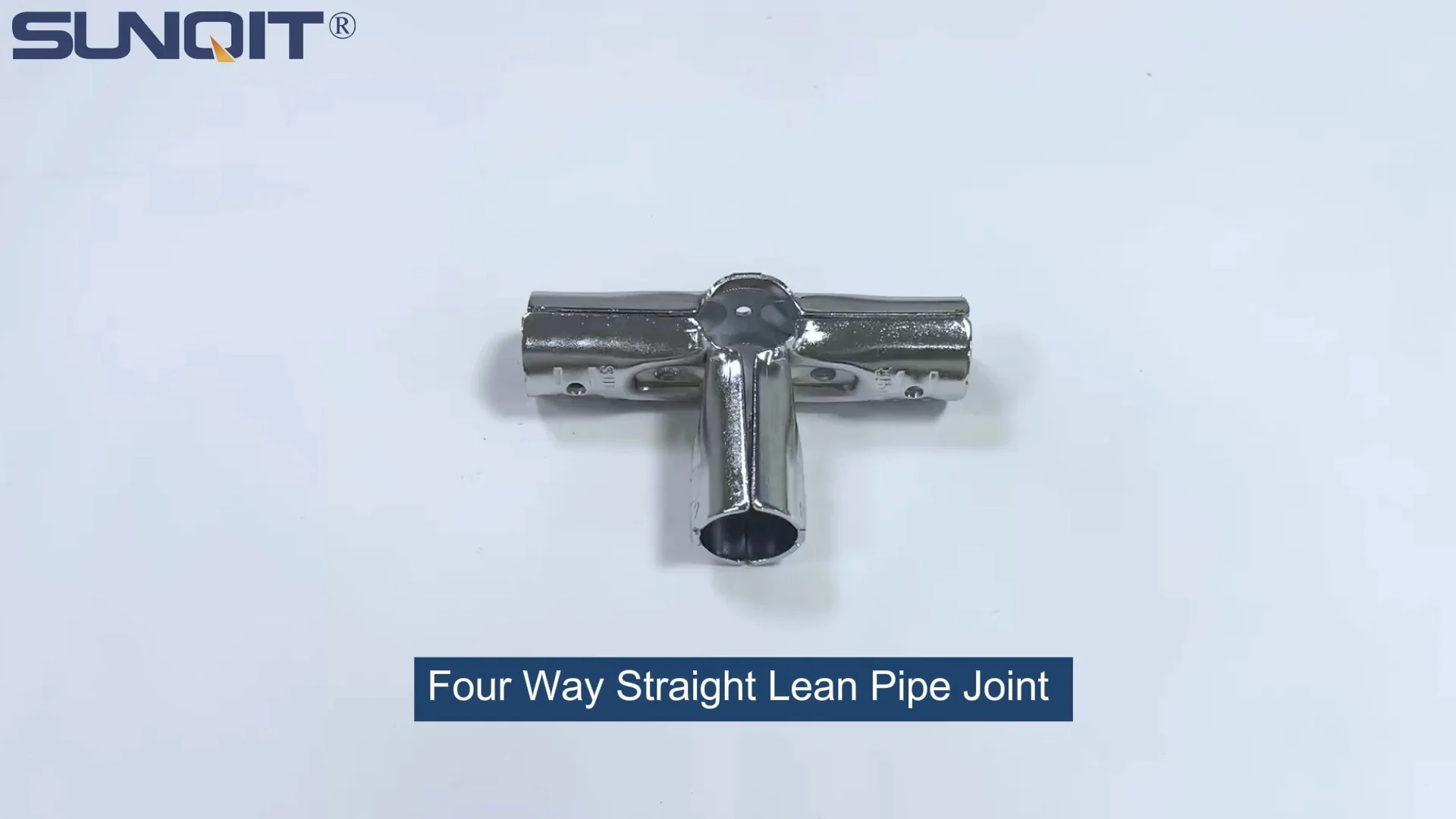
Four way lean pipe joint for 4 pcs 28MM lean pipe connection in straight angle, which used widely in workbench, flow rack, hand trolley frame connection.
If you've ever stood in the middle of a workshop, staring at a pile of lean pipes, joints, and aluminum profiles, wondering how to piece them together into a functional workstation or material rack, you're not alone. For anyone building or upgrading a lean system—whether it's a small garage workshop or a sprawling manufacturing plant—the four way straight lean pipe joint chrome is a yet critical component. Get its size wrong, and you could end up with wobbly workbenches, inefficient material flow, or even safety hazards. But get it right? You'll unlock a seamless, adaptable setup that grows with your needs and keeps your operations running like clockwork.
In this guide, we're diving deep into the world of four way straight lean pipe joint chrome sizing. We'll break down why size matters, how to measure correctly, and which factors to consider when choosing the right fit for your lean system. Whether you're a seasoned plant manager or a small business owner setting up your first assembly line, this article will help you avoid common pitfalls and make confident decisions—because the best lean systems start with the smallest, most precise parts.
What Is a Four Way Straight Lean Pipe Joint Chrome?
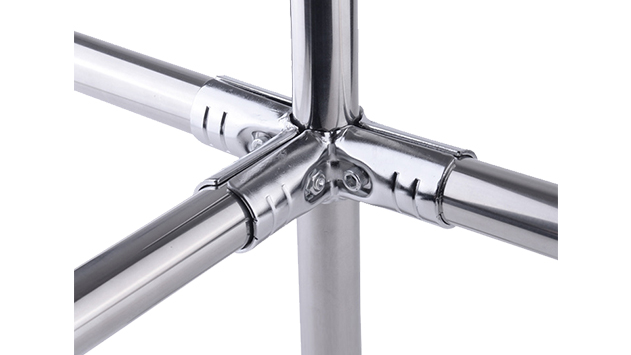
Before we talk sizing, let's get clear on what this component actually is. A four way straight lean pipe joint chrome is a specialized connector designed to join lean pipes (or aluminum profiles) at 90-degree angles in four directions—up, down, left, right. Think of it as the "crossroads" of your lean system, allowing you to build multi-directional structures like workbenches, material racks, or roller track assemblies.
The "chrome" in its name refers to the chrome plating, which adds a layer of durability and corrosion resistance—perfect for busy factories where moisture, oils, or chemicals might be present. Unlike basic plastic or uncoated steel joints, chrome-plated ones stand up to heavy use, reducing the need for frequent replacements. And because it's a "four way" joint, it eliminates the need for multiple single-direction joints, simplifying assembly and reducing clutter in your setup.
Why Sizing Matters: The Hidden Costs of a Mismatched Joint
You might be thinking, "How much difference can a few millimeters make?" A lot, as it turns out. A joint that's too small for your pipe will slip or crack under pressure, while one that's too large will create loose connections, leading to wobbly structures. Both scenarios can grind your workflow to a halt—costing you time, money, and even safety incidents.
For example, imagine a material rack B (3 row and 3 floor) loaded with heavy components. If the four way joints holding it together are undersized, the weight could cause the pipes to bend or the joints to snap, sending materials crashing to the floor. On the flip side, using an oversized joint with a thin-walled lean pipe might result in the pipe being crushed when tightened, weakening the entire structure.
Sizing also impacts compatibility with other components. If your joint doesn't fit your roller track or aluminum profile, you'll end up buying adapters or replacing entire sections—unnecessary expenses that eat into your lean system's efficiency.
Four Way Straight Lean Pipe Joint Chrome Sizing Chart
To take the guesswork out of sizing, we've compiled a chart of the most common four way straight lean pipe joint chrome sizes, along with their compatible pipe diameters, load capacities, and typical applications. Note: Sizes can vary slightly by manufacturer, so always cross-check with your lean pipe supplier for exact specs.
| Joint Size (Inner Diameter, mm) | Compatible Pipe Diameter (mm) | Max Load Capacity (kg per Joint) | Material Thickness (mm) | Recommended Application |
|---|---|---|---|---|
| 19 | 18-19 (Standard Lean Pipe) | 150-200 | 2.0 | Light-duty workbenches, small turnover trolleys |
| 25 | 24-25 (Aluminum Lean Pipe, Basic Aluminum Tube) | 250-350 | 2.5 | Medium-duty assembly lines, roller track systems |
| 30 | 28-30 (Stainless Steel Pipe Series, Heavy Aluminum Profile) | 400-500 | 3.0 | Heavy-duty material racks, industrial workstations |
| 40 | 38-40 (Large Aluminum Extrusion Profile) | 600-800 | 4.0 | High-capacity storage racks, automated conveyor systems |
*Note: Load capacities are approximate and based on vertical loads. Horizontal or dynamic loads (e.g., moving trolleys) may reduce these values by 20-30%.

5 Key Factors to Choose the Right Size
Now that you have a sizing chart, let's walk through the factors that will guide your decision. These aren't just technical details—they're the difference between a system that works for you and one that fights against you.
1. Pipe Type & Diameter: Lean Pipe vs. Aluminum Profile
The first step is knowing what kind of pipe you're using. Most lean systems rely on either traditional lean pipe (often PE-coated steel) or aluminum profile (like aluminum lean pipe or aluminum extrusion profile). These pipes come in standard diameters, and your joint must match.
For example, standard lean pipe typically measures 19mm in outer diameter, so a 19mm inner diameter joint is a perfect fit. Aluminum lean pipe, on the other hand, is often 25mm, requiring a 25mm joint. If you're mixing materials—say, using aluminum profile for a workbench frame and lean pipe for shelving—you'll need to check diameters for both and possibly use reducers (but that's a topic for another day).
2. Load Requirements: How Much Weight Will It Bear?
Ask yourself: What will this joint actually hold? A workbench holding small electronic components has very different needs than a material rack B (3 row and 3 floor) stacked with metal parts. The chart above lists max load capacities, but remember: these are per joint. If your structure uses multiple joints, the total load is distributed—but you still need to ensure no single joint is overloaded.
Pro tip: Always overestimate. If you think you'll need 200kg, go for a joint rated for 250kg. Unexpected loads happen—better to be safe than sorry.
3. Environmental Conditions: Chrome's Secret Superpower
Chrome plating isn't just for looks—it's a defense against corrosion. If your workspace is humid, exposed to oils, or near cleaning chemicals, a chrome joint is a must. But even in dry environments, chrome adds longevity, so it's rarely a bad choice. Just ensure the joint's material thickness matches the environment: thinner joints (2.0mm) might corrode faster in harsh conditions than thicker ones (3.0mm).
4. System Compatibility: Playing Well With Others
Your four way joint won't work alone. It needs to connect with other components like roller track, caster wheels, or aluminum guide rails. For example, if you're building a roller track system using plastic roller track guide rail yellow, the joint must align with the track's mounting points. Mismatched sizes can lead to gaps, jams, or uneven material flow.
Don't forget about future additions, either. If you plan to expand your system later, choosing a common size (like 25mm) makes it easier to find compatible parts from your lean pipe supplier down the line.
5. Assembly & Adjustability: Time Is Money
A joint that's too tight will require excessive force to assemble, slowing down setup. One that's too loose will need constant readjustment. The best joints have a snug fit—tight enough to hold securely, but loose enough to allow for minor adjustments during assembly. Chrome-plated joints often have smoother inner surfaces, making them easier to slide onto pipes compared to rough, uncoated alternatives.
Common Sizing Mistakes (and How to Avoid Them)
Even with the best intentions, it's easy to slip up when sizing joints. Here are the errors we see most often—and how to steer clear.
Mistake #1: "One Size Fits All" Mentality
We once worked with a client who bought 500 19mm joints for their entire facility, assuming they'd work for everything from workbenches to heavy material racks. Spoiler: The racks collapsed within a month. Lean systems are modular—different areas have different needs. Invest the time to assess each application individually.
Mistake #2: Ignoring Pipe Wall Thickness
A pipe's outer diameter might match the joint, but if the pipe has a thin wall (e.g., 1.0mm pe coated lean pipe), it can deform under pressure, even with the right joint size. Always check both outer diameter and wall thickness—your supplier should have this data.
Mistake #3: Skipping the Test Fit
Ordering in bulk without testing a sample is risky. Pipes and joints can have slight variations due to manufacturing tolerances. Ask your lean pipe supplier for a few sample joints and test them with your pipes before placing a large order. It's a small step that saves huge headaches later.
How to Measure Like a Pro: Tools & Tips
You don't need to be an engineer to measure correctly—just the right tools and a little patience. Here's how:
- Use a digital caliper: This tool gives precise outer diameter measurements (down to 0.01mm). Wrap the jaws around the pipe, and note the reading. Avoid using a ruler—it's too imprecise for small diameters.
- Check pipe specs: If your pipes are new, they should come with specs (diameter, wall thickness) from the manufacturer. If not, ask your lean pipe supplier for a data sheet.
- Measure multiple points: Pipes can sometimes be slightly oval-shaped, especially if they've been bent or stored improperly. Measure at three different points along the pipe and take the average.
- Account for coatings: PE-coated lean pipe has a thicker outer diameter than uncoated steel. For example, a 1.5mm pe coated lean pipe might have an outer diameter of 19mm, while the steel core is only 16mm. Always measure the coated (outer) diameter.
Real-World Examples: Sizing in Action
Let's put this all together with two scenarios you might encounter. These aren't hypothetical—they're based on real clients we've helped.
Scenario 1: Small Electronics Workshop
A workshop building circuit boards needs a workbench E (single deck-without caster) and a small material rack for components. Their pipes are standard 19mm PE-coated lean pipe, and the max load per shelf is 100kg. Solution: 19mm four way straight lean pipe joint chrome. It's lightweight, easy to assemble, and meets their load needs without overcomplicating things.
Scenario 2: Automotive Manufacturing Plant
A plant needs a heavy-duty assembly line with roller track (using 40 steel roller track yellow wheel) and material racks holding engine parts (each shelf loaded with 350kg). They're using 30mm stainless steel pipe series for durability. Solution: 30mm four way joints with 3.0mm material thickness. The chrome plating resists oil and coolant, and the larger size handles the heavy loads without flexing.
When to Call in the Experts: The Role of Your Lean Pipe Supplier
Even with this guide, there will be times when you're unsure. Maybe you're mixing pipe types, or your load requirements are unusual. That's when your lean pipe supplier becomes your best resource. A good supplier won't just sell you parts—they'll help you analyze your needs, recommend sizes, and even provide CAD drawings for complex setups. Don't hesitate to ask questions: "Will this joint work with my aluminum guide rail B?" or "What size do I need for a 24-hour production line?" Their expertise can save you time, money, and stress.
Final Thoughts: Your Joint, Your System, Your Success
Choosing the right size four way straight lean pipe joint chrome might seem like a small detail, but it's the foundation of a lean system that works for you. It's about more than just connecting pipes—it's about creating a workflow that's efficient, safe, and adaptable. By considering pipe type, load, environment, and compatibility, you'll avoid the pitfalls that trip up so many others.
Remember: The best lean systems are built on precision. Take the time to measure, test, and consult your supplier. Your future self—facing fewer breakdowns, smoother workflows, and a more productive team—will thank you.