- Company Articles
- Products and Technology
- Product knowledge
- What Size Options Are Available for Aluminum Workbench D? A Customization Overview

What Size Options Are Available for Aluminum Workbench D? A Customization Overview
Related Product
Aluminum Workbench D
Aluminum tube workbench is more flexible and durable, compared with traditional PE/ABS coated steel tube. It is easy to assemble, anti corrosion, rust protection, and recycle use after disassemble.
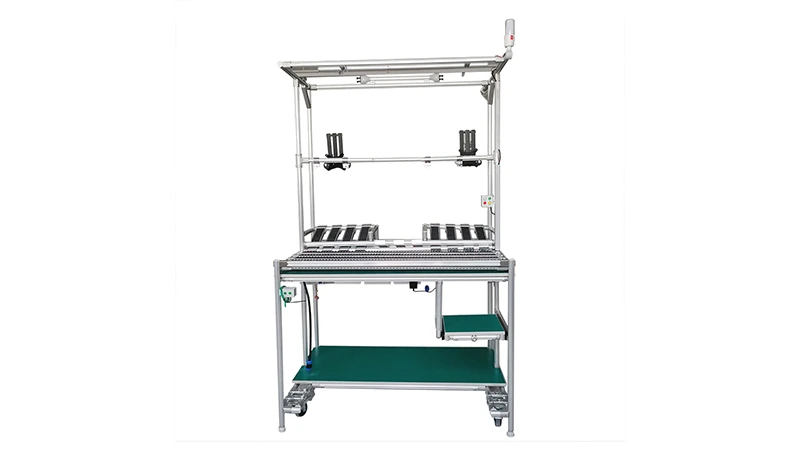
Exploring dimensions, flexibility, and how to tailor this essential workspace tool to your needs
Introduction: Why Aluminum Workbench D Matters in Modern Workspaces
Walk into any well-run workshop, manufacturing plant, or electronics assembly line today, and you'll likely spot a common workhorse: the aluminum workbench. Sleek, sturdy, and surprisingly adaptable, these benches have become the backbone of efficient operations. Among them, Aluminum Workbench D stands out—not just for its durability, but for its near-limitless customization potential. Whether you're setting up a small garage workshop or outfitting a large-scale production floor, getting the size right is critical. The wrong dimensions can cramp workflows, slow down tasks, or even lead to ergonomic strain. So, let's dive into the size options for Aluminum Workbench D, how they're determined, and how you can tweak them to fit your unique needs.
First, though, let's clarify what makes Aluminum Workbench D different. Unlike generic workbenches, it's built using aluminum extrusion profiles —those interlocking, T-slot frames that allow for easy adjustments and accessory additions. This isn't just about looks; the material and design mean it's lightweight enough to reposition (when needed) but tough enough to handle heavy tools, parts, and daily wear. And because it's aluminum, it resists rust and corrosion, making it ideal for both dry workshops and environments where spills or humidity are common.
But here's the real kicker: size isn't a one-size-fits-all deal. A bench that works for a jewelry maker won't cut it for someone assembling car parts. That's why understanding the available size options—and how to customize them—is key to unlocking this workbench's full potential. Let's start by breaking down the basics.
Understanding Aluminum Workbench D: Core Features and Design
Before we jump into sizes, let's get familiar with what Aluminum Workbench D actually is. At its core, it's a modular workspace solution designed for versatility. Most standard models come as a single-deck unit (meaning one flat work surface) without casters, though casters can be added later as an accessory. The frame is constructed from aluminum extrusion profiles—hollow, rectangular tubes with T-shaped slots along their length. These slots let you attach shelves, tool holders, lights, or even roller track for material flow, using aluminum profile accessories like brackets, connectors, and clamps.
Why does this matter for size? Because the modular design means the bench can be extended, shortened, or adjusted in height without needing to replace the entire unit. Think of it like building with high-quality Lego blocks: the basic structure is solid, but you can add or remove pieces to fit your space. This flexibility is a big part of why it's a favorite in lean system setups, where minimizing waste and maximizing efficiency are top priorities. A lean system thrives on adaptability, and Aluminum Workbench D delivers that in spades.
Now, let's talk about the starting point: standard size options. These are the pre-designed configurations that manufacturers offer, based on common industry needs. They're a great baseline, but as we'll see, they're just the beginning.

Standard Size Options: The Building Blocks
Most suppliers offer a range of standard Aluminum Workbench D models, each with fixed length, width, and height. These sizes are based on decades of industry feedback—what works for most small to medium operations. Let's break them down:
| Standard Model | Length (mm) | Width (mm) | Height (mm) | Load Capacity (kg) | Ideal Use Case |
|---|---|---|---|---|---|
| D-1000 | 1000 | 600 | 800 | 300 | Small parts assembly, jewelry making, hobby workshops |
| D-1200 | 1200 | 800 | 850 | 500 | Electronics testing, light mechanical work, lab stations |
| D-1500 | 1500 | 800 | 900 | 600 | Medium-scale assembly lines, tool storage with workspace |
| D-2000 | 2000 | 1000 | 900 | 800 | Large component assembly, team workstations, warehouse packing |
Let's unpack these numbers. Length is the horizontal span of the work surface—how much linear space you have for tools, parts, or projects. Width is the depth of the bench (from front to back), which determines how much you can fit without reaching too far. Height is critical for ergonomics: most standard models sit between 800mm and 900mm, which aligns with the average elbow height for standing workers (reducing strain on shoulders and back).
Take the D-1200 model, for example: 1200mm long (about 4 feet) and 800mm wide (just over 2.5 feet). That's enough space for a laptop, a small tool organizer, and a batch of circuit boards—perfect for an electronics technician. The D-2000, on the other hand, is nearly 7 feet long, making it ideal for a team of two working on larger items like appliance parts or automotive components.
But what if your needs don't fit these boxes? That's where custom sizing comes in.

Custom Size Solutions: Tailoring to Your Space
Here's where Aluminum Workbench D really shines: its modular design means you're not stuck with standard dimensions. Whether you need a bench that's extra long to span a specific corner, extra narrow to fit in a tight aisle, or extra tall for a worker in a wheelchair, customization is possible. Let's look at the three main dimensions you can adjust and why you might want to:
1. Length: Going Longer or Shorter
Length is often the first dimension people customize. Maybe your workshop has a wall that's exactly 1800mm wide—too long for the D-1500, too short for the D-2000. A good aluminum profile supplier can cut the extrusion profiles to 1800mm, ensuring the bench fits perfectly without wasting space. Conversely, if you're working in a tiny garage, you might need a 800mm length to leave room for a tool cabinet.
Case in point: A local electronics repair shop recently approached us needing benches for their new mobile service van. Standard models were too long, so we customized 600mm-length benches that fit neatly between the van's wheel wells. Now, their technicians can work comfortably on-site without sacrificing workspace.
2. Width: Balancing Space and Reach
Width customization is all about practicality. A bench that's too wide (say, 1200mm) might mean stretching across to grab tools, leading to fatigue. Too narrow (400mm) and you'll constantly be shuffling parts to make space. Common custom widths range from 500mm (for focused tasks like soldering) up to 1500mm (for laying out large blueprints or assembly jigs).
One manufacturer we work with specializes in aerospace components—their parts are long but thin. They opted for 1000mm-length benches with a custom 500mm width, allowing two workers to stand on opposite sides without bumping elbows, each with easy access to their tools.
3. Height: Ergonomics First
Height is often overlooked, but it's crucial for comfort. Standard heights (800-900mm) work for most standing adults, but what if your team includes shorter or taller members? Or if you need a bench for seated work (like drafting or precision machining)? Custom height options typically range from 700mm (seated) up to 1100mm (for tall workers or tasks requiring extra clearance underneath).
A medical device manufacturer we partnered with needed benches for assembling small, delicate parts. They chose a custom height of 750mm, paired with anti-fatigue mats, to let workers alternate between sitting and standing. The result? A 20% reduction in reported back strain, according to their quarterly feedback.
Key Factors Influencing Size Choices
Deciding on size isn't just about measurements—it's about how the bench fits into your entire workflow. Here are the top factors to consider:
1. Workspace Constraints
Start by mapping your space. Measure the area where the bench will go, including doorways, walkways, and nearby equipment. A bench that's 2000mm long might sound great on paper, but if it blocks the fire exit or makes it hard to move a turnover trolley past, it's more of a hindrance than a help. Don't forget to account for overhead space too—if you plan to add shelves or hanging tool racks, ensure there's enough clearance above.
2. Load Capacity Needs
Bigger isn't always better, especially when it comes to load capacity. A longer or wider bench might sag under heavy tools if the frame isn't reinforced. Aluminum extrusion profiles come in different thicknesses (measured by wall thickness, like 1.5mm or 2.0mm), so if you need to support 1000kg (e.g., for automotive engine parts), your supplier will use thicker profiles and stronger joints. This might slightly increase the bench's weight, but it's a small price for safety.
3. Workflow and Lean Principles
In a lean system , every inch of space should add value. A bench that's sized to match your production flow reduces unnecessary movement. For example, if parts arrive via a conveyor on the left and are shipped out on the right, a bench that spans the distance between them minimizes walking. We worked with a furniture manufacturer that arranged custom 3000mm-length benches in a U-shape around their assembly line, cutting down on worker travel time by 35%.
4. Ergonomics and Team Comfort
Ergonomics isn't a buzzword—it's about keeping your team healthy and productive. A bench that's too high forces workers to hunch; too low leads to stooping. Consider adjustable height options if your team has varying heights, or add footrests for seated work. Remember: a comfortable worker is a faster, more accurate worker.
Beyond Size: Enhancing Functionality with Accessories
Size is just the starting line. Once you've nailed the dimensions, aluminum profile accessories let you turn a basic bench into a specialized workstation. Here are some popular add-ons that work hand-in-hand with your custom size:
Roller Track for Material Flow
Adding roller track to the edge of your bench (especially useful for longer lengths) lets parts glide smoothly from one station to the next. For example, a 2000mm bench in an assembly line might have a roller track along its length, so finished components slide directly to the packaging area without being carried.
Adjustable Shelves and Drawers
Using T-slot connectors, you can add shelves above or below the work surface. A narrow bench (500mm width) might benefit from overhead shelves to store tools, while a wide bench (1200mm) could have under-bench drawers for parts. One auto shop we worked with added three-tier shelves to their 1800mm-length benches, doubling their storage without increasing the bench's footprint.
ESD Protection for Sensitive Electronics
If you're working with circuit boards or microchips, you'll need an ESD workstation to prevent static damage. Aluminum Workbench D can be customized with ESD-safe surfaces and grounding kits, turning it into a static-free zone. A semiconductor manufacturer recently ordered 15 custom-sized ESD workbenches for their cleanroom—each with anti-static mats and grounded tool hooks.
Casters for Mobility
Even if you start with a stationary bench (no casters), you can add them later using caster mounts that fit into the extrusion profiles. This is great for flexible workspaces—imagine moving a 1500mm bench from one corner to another for a temporary project, then locking the casters in place.
Choosing the Right Supplier: Why Experience Matters
Customizing Aluminum Workbench D isn't as simple as picking dimensions from a menu. It requires a supplier who understands both the technical side (how extrusion profiles connect, load capacities of different accessories) and your specific industry needs. Here's what to look for:
1. Expertise in Aluminum Extrusion Profiles
A good aluminum profile supplier will guide you on profile thickness, joint strength, and accessory compatibility. For example, if you're customizing a 3000mm-length bench, they'll recommend reinforcing the middle with extra brackets to prevent sagging. Avoid suppliers who push standard sizes without discussing your workflow—they're not invested in your long-term success.
2. Range of Accessories
Your supplier should offer a full line of aluminum profile accessories (connectors, brackets, roller track, etc.) to ensure your custom bench integrates seamlessly. Nothing's more frustrating than designing a 1200mm-width bench, only to find the supplier doesn't carry wide enough shelves.
3. Prototyping and Testing
For complex custom sizes, ask if the supplier offers prototyping. A quick test bench (even a small section) can help you spot issues—like a width that's too narrow or a height that's uncomfortable—before committing to a full order. One aerospace client we worked with requested a prototype of their 2500mm-length bench; during testing, they realized the standard joints weren't strong enough for their load, so we upgraded to heavy-duty connectors.
Conclusion: Size is Just the Start of Your Workspace Journey
Aluminum Workbench D isn't just a piece of furniture—it's a foundation for efficiency, ergonomics, and growth. Whether you opt for a standard size (D-1200, D-1500) or customize length, width, and height to fit your space, the key is to start with your workflow in mind. Measure twice, consider your team's needs, and don't be afraid to ask for prototypes. And remember: size is just the beginning. With aluminum profile accessories and a reliable supplier, you can evolve your bench as your business grows—adding shelves, roller track, or ESD features down the line.
So, what's next? Grab a tape measure, sketch your workspace, and list your must-haves (load capacity, height, special features like ESD protection). Then, reach out to a supplier who specializes in custom aluminum solutions. With the right size and setup, Aluminum Workbench D won't just fit your space—it'll transform how you work.