- Company Articles
- Products and Technology
- Procurement Guidelines
- What to Look for When Buying an Aluminum Pipe with Board Holder

What to Look for When Buying an Aluminum Pipe with Board Holder
Related Product
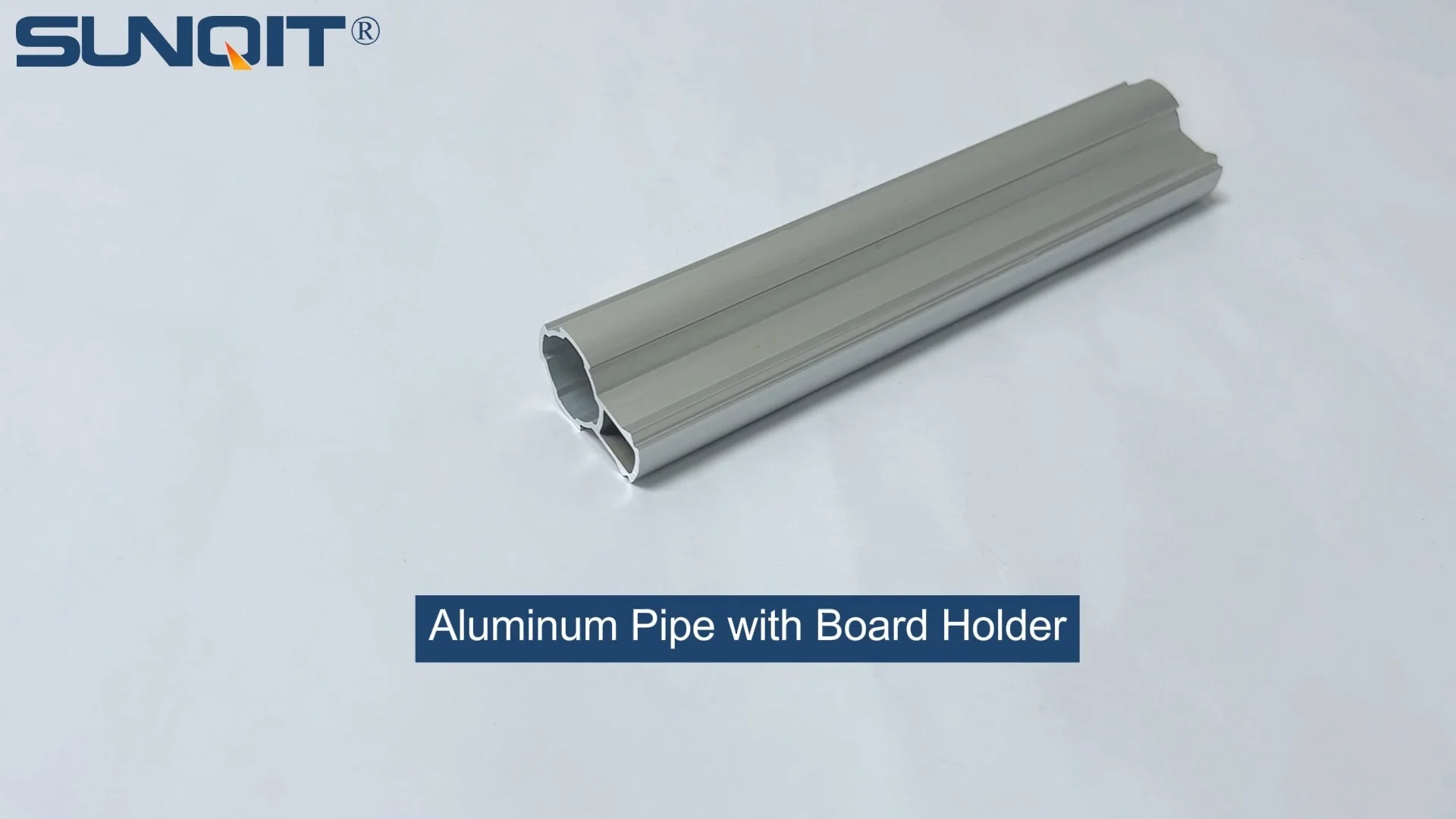
Aluminum Pipe with Board Holder
The linear rolling assembly can be arbitrarily connected in the protruding part of the card slot to increase the rigidity of the track.
In the fast-paced world of modern manufacturing, warehousing, and workshop management, efficiency isn't just a buzzword—it's the backbone of productivity. Every tool, every piece of equipment, and every inch of space matters. That's where aluminum pipes with board holders come into play. These unassuming yet versatile components are the unsung heroes of organized workspaces, seamlessly integrating into lean systems to keep tools, materials, and information at your team's fingertips. Whether you're setting up a new workbench, revamping a production line, or building a mobile material rack, choosing the right aluminum pipe with a board holder can mean the difference between a clunky, disorganized space and a streamlined, efficient workflow.
But with so many options flooding the market—each claiming to be "the best" or "industry-leading"—how do you separate the quality products from the ones that'll leave you frustrated (and out of pocket) six months down the line? This guide is designed to walk you through the critical factors to consider, from material quality and design nuances to compatibility with accessories and supplier reliability. By the end, you'll have a clear roadmap to making an informed decision that aligns with your needs, budget, and long-term goals.
Understanding the Basics: Why Aluminum Pipes with Board Holders Matter
Before diving into the nitty-gritty of what to look for, let's take a step back and appreciate why these components are so essential. Aluminum pipes, by nature, offer a unique blend of strength, lightweight portability, and corrosion resistance—traits that make them ideal for industrial and commercial settings. When paired with a board holder, they transform from simple tubes into functional hubs: think of them as the "backbone" of a workbench where a whiteboard, checklist, or material label can be mounted, or as part of a lean system where visual cues (like production schedules or safety guidelines) keep operations running smoothly.
In a lean manufacturing environment, for example, an aluminum pipe with a board holder might hold a Kanban board, tracking inventory levels and ensuring just-in-time production. In a workshop, it could support a tool board, keeping frequently used items within arm's reach and reducing time wasted searching for equipment. Even in smaller settings, like a garage or home workshop, these setups add a level of organization that turns chaos into order. Simply put, they're not just "pipes with a clip"—they're foundational elements of a productive workspace.
Key Insight:
The best aluminum pipes with board holders aren't just durable—they're adaptable. They should grow with your needs, allowing you to add accessories, reconfigure layouts, or repurpose them as your workspace evolves.
1. Material Quality: Not All Aluminum Is Created Equal
The first thing to scrutinize when shopping for an aluminum pipe with a board holder is the material itself. Aluminum is prized for its balance of strength and weight, but its quality can vary dramatically based on the alloy used, wall thickness, and manufacturing process. Cutting corners here can lead to bent pipes, corroded surfaces, or premature failure—none of which you want in a setup that's supposed to enhance efficiency.
Aluminum Alloys: 6061 vs. 6063
Most industrial aluminum pipes are made from either 6061 or 6063 alloys, each with distinct properties:
- 6061 Aluminum: Often called the "workhorse" alloy, 6061 is known for its high tensile strength (around 310 MPa) and excellent machinability. It contains magnesium and silicon, which form heat-treatable precipitates, making it stronger than 6063. This alloy is ideal for heavy-duty applications, like supporting large workbenches or holding heavy tools. If your setup will bear significant weight—say, a board loaded with power tools or metal parts—6061 is the way to go.
- 6063 Aluminum: Sometimes referred to as "architectural aluminum," 6063 has a lower tensile strength (around 215 MPa) but offers superior surface finish and extrudability. It's more malleable, making it perfect for intricate shapes (like T-slot profiles) and applications where aesthetics matter. While it's not as strong as 6061, it's lighter and more cost-effective for light to medium-duty use—think mounting a small whiteboard or a lightweight material list in an office-like setting.
The key here is matching the alloy to your needs. A 6063 pipe might save you money upfront, but if you overload it with heavy materials, you'll end up with a bent or broken setup. Conversely, a 6061 pipe for a lightweight task is overkill and will add unnecessary cost and weight.
Wall Thickness: The Hidden Determinant of Durability
Even within the same alloy, wall thickness plays a massive role in how much weight an aluminum pipe can support. Thicker walls mean greater rigidity and load capacity, but they also increase weight and cost. Here's a breakdown of common thicknesses and their typical applications:
| Wall Thickness (mm) | Alloy Most Common | Typical Application | Estimated Max Load (kg)* |
|---|---|---|---|
| 1.0 - 1.2 | 6063 | Light-duty shelving, small sign holders, office use | 10 - 25 |
| 1.5 - 2.0 | 6063 or 6061 | Medium-duty workbenches, tool boards, material racks | 25 - 75 |
| 2.5+ | 6061 | Heavy-duty industrial setups, machinery supports, mobile workstations | 75 - 150+ |
*Note: Load capacity is approximate and depends on pipe diameter, length, and how evenly weight is distributed. Always check the manufacturer's specifications.
Surface Treatment: Anodization vs. Raw Aluminum
Aluminum naturally forms a thin oxide layer when exposed to air, which protects it from corrosion. But in harsh environments—like factories with high humidity, chemical exposure, or frequent cleaning—this layer isn't enough. That's where anodization comes in. Anodizing is an electrolytic process that thickens the oxide layer, making the surface more resistant to scratches, corrosion, and fading.
Look for pipes labeled "anodized" (clear, black, or silver finishes are common). Avoid raw or "mill-finish" aluminum unless you're using it in a dry, low-traffic area—over time, it will develop a dull, oxidized patina and may even pit in humid conditions. A quick test: run your finger along the surface. Anodized aluminum feels smooth and consistent, while raw aluminum may have a slightly rough or chalky texture.

2. Board Holder Design: Ergonomics and Functionality
The aluminum pipe is the foundation, but the board holder is the "face" of the setup—it's what actually holds your board in place, and its design can make or break usability. A poorly designed holder might slip, scratch your board, or force you into awkward positions to read or update the content. Here's what to focus on:
Adjustability: Tilt, Height, and Rotation
One size rarely fits all when it comes to board placement. A holder that only allows fixed positioning might work for a static sign but will frustrate users if they need to adjust the board's angle (e.g., to avoid glare) or height (e.g., for workers of different statures). Look for holders with:
- Tilt Adjustment: The ability to angle the board upward or downward (typically 0-45 degrees) ensures readability from different viewpoints. This is especially important in busy areas where multiple people might reference the board.
- Height Adjustment: If the pipe is part of a larger structure (like a workbench), the holder should slide up and down the pipe to accommodate different board sizes or user preferences. Locking mechanisms (like thumb screws or levers) keep it securely in place once adjusted.
- Rotation: For boards that need to be visible from multiple directions (e.g., a production schedule in a warehouse), a rotating holder (360 degrees) adds flexibility. Just ensure the rotation is smooth but not loose—you don't want the board spinning unintentionally.
Holder Material: Plastic vs. Metal
The holder itself can be made from plastic, aluminum, or steel. Each has pros and cons:
- Plastic: Lightweight, inexpensive, and available in various colors. Best for light-duty use with small, lightweight boards (e.g., a 12x18-inch paper checklist). However, plastic can crack under stress, warp in high temperatures, or degrade from UV exposure (if used outdoors).
- Aluminum: Matches the pipe's material for a cohesive look, resists corrosion, and offers moderate strength. It's a good middle ground for medium-duty applications, like holding a melamine whiteboard or a tool board with hand tools.
- Steel: The strongest option, ideal for heavy boards (e.g., a metal pegboard loaded with power tools). Look for powder-coated steel to prevent rust, as bare steel will corrode over time.
Pro tip: Check the holder's grip. Rubberized or padded jaws will protect your board from scratches and prevent slipping, even if the board is slightly warped or uneven.

3. Compatibility with Accessories: Building a System, Not Just a Pipe
A standalone aluminum pipe with a board holder is useful, but its true value lies in how well it integrates with other components. In today's dynamic workspaces, you might start with a simple setup but later want to add shelves, wheels, additional pipes, or even lighting. If your pipe isn't compatible with standard aluminum pipe accessories or aluminum profile accessories, you'll be stuck with a one-trick pony.
T-Slot Profiles: The Gold Standard for Compatibility
Look for aluminum pipes with T-slot profiles—longitudinal grooves along the pipe's length that allow accessories to be attached without drilling or welding. T-slots are the industry standard for modular systems, enabling you to add brackets, clamps, shelves, and more with minimal effort. For example:
- Joints and Connectors: T-slot pipes work with 90-degree, 45-degree, or swivel joints, letting you build multi-pipe structures (like a frame for a workbench or a corner-mounted board holder).
- Caster Wheels: Add casters to the bottom of the pipe setup to create a mobile board holder, perfect for moving between workstations or storage when not in use.
- Shelves and Trays: Mount small shelves below the board to hold markers, erasers, or tools, keeping everything you need in one place.
- Lighting: Attach LED light strips to the T-slot to illuminate the board, making it readable in dimly lit areas (e.g., a warehouse).
Avoid "proprietary" systems that only work with the manufacturer's brand of accessories—these limit your options and often come with inflated prices for replacement parts. Instead, opt for pipes compatible with industry-standard aluminum profile accessories, which are widely available and affordable.
Board Holder Attachment: Clamp-On vs. Bolt-On
How the board holder attaches to the pipe also affects compatibility. Most holders use one of two methods:
- Clamp-On: These holders wrap around the pipe and tighten with a screw or lever. They're quick to install and don't require drilling, making them ideal for temporary setups or pipes that need to be reconfigured often. However, they rely on friction to stay in place, so they may loosen over time—especially with heavy boards.
- Bolt-On: These holders attach via bolts that thread into pre-drilled holes in the pipe. They offer a more secure connection, making them better for heavy-duty or permanent setups. The downside? You'll need to ensure the pipe has pre-drilled holes (or be willing to drill your own), and repositioning the holder requires unbolting and re-bolting.
For most users, a clamp-on holder with a locking mechanism (like a cam lever or a hex bolt) strikes the best balance between security and flexibility. Just ensure the clamp is wide enough to fit your pipe's diameter—common sizes are 20mm, 25mm, and 30mm.
4. Load Capacity: Don't Underestimate the Weight
It's easy to assume, "It's just a board—how heavy can it be?" But when you factor in the board itself (wood, metal, melamine), plus any items attached to it (tools, magnets, markers), the weight adds up quickly. A pipe that can't handle the load will bend, sag, or even snap, putting workers at risk and disrupting operations.
Calculating Load: Pipe Diameter + Thickness + Length
Load capacity isn't just about the pipe's material—it's a function of its diameter, wall thickness, and unsupported length (the distance between where the pipe is mounted). Here's a rough guide:
- Diameter: Larger diameters (e.g., 30mm) resist bending better than smaller ones (e.g., 20mm). For example, a 30mm pipe with a 2.0mm wall can support nearly twice the weight of a 20mm pipe with the same thickness.
- Unsupported Length: The longer the pipe extends from its mount, the more it will sag under weight. A pipe mounted at both ends (like a shelf) can support more than one mounted at a single point (like a cantilever). If your setup requires a long, overhanging section, consider adding a support bracket in the middle.
Manufacturers typically provide load ratings for their pipes, often in kilograms per linear meter. For example, a 25mm 6061 aluminum pipe with 2.0mm wall thickness might be rated for 50kg/m. If your board and its contents weigh 30kg, and the pipe extends 1.5 meters from the wall, you're well within the limit (50kg/m x 1.5m = 75kg capacity). Always err on the side of caution—overloading a pipe is a safety hazard.
Dynamic vs. Static Loads
Don't forget to consider whether the load is static (stationary) or dynamic (moving). A pipe holding a fixed sign is a static load; a pipe on a mobile cart (with casters) that's pushed around a warehouse is a dynamic load. Dynamic loads exert additional stress (from vibrations, bumps, and sudden stops), so you'll need a higher load capacity—typically 20-30% more than the static rating.
Safety First:
If you're unsure about load capacity, contact the manufacturer with details about your setup (pipe length, diameter, wall thickness, board weight, and mounting style). Reputable suppliers will help you calculate the right specifications.
5. Ease of Assembly: Time Is Money
No one wants to spend hours deciphering cryptic instructions or hunting for specialized tools just to set up a pipe and board holder. The best systems are designed for quick, frustration-free assembly—so you can get back to what matters: running your workspace.
Tools Required: Keep It Simple
Look for setups that require minimal tools—ideally just a Phillips-head screwdriver or an Allen wrench (which often comes included). Avoid systems that demand power tools (drills, saws) or specialized equipment (pipe cutters), unless you're comfortable with DIY projects. Quick-connect joints (like push-fit or twist-lock) are a game-changer here, eliminating the need for nuts and bolts entirely.
Instructions and Support
Clear, step-by-step instructions are non-negotiable. Look for manuals with diagrams (not just text), and check if the supplier offers online resources like video tutorials or FAQs. If you're buying from a physical store, ask a sales rep to demonstrate assembly—if they can't, that's a red flag. For online purchases, read customer reviews mentioning assembly ease; if multiple reviewers complain about "impossible instructions," steer clear.
Also, consider post-purchase support. If you hit a snag during setup, will the supplier's customer service team answer the phone or reply to emails promptly? A warranty that covers defects in materials or workmanship (at least 1 year) adds peace of mind—if the pipe bends during assembly because of a manufacturing flaw, you shouldn't have to pay for a replacement.
6. Supplier Reliability: Trust the Experts
Even the best product can be let down by a shoddy supplier. A company with poor quality control might send you a pipe with inconsistent wall thickness, or a holder with missing parts. To avoid headaches, vet your supplier thoroughly before buying.
Signs of a Reputable Supplier
- Industry Experience: Look for suppliers with 5+ years in the business—they've likely refined their products and customer service. A quick check of their website's "About Us" page or LinkedIn profile can reveal their tenure.
- Range of Products: A supplier that offers a full line of aluminum pipe accessories, aluminum profile accessories, and related components (like workbenches or material racks) is more likely to understand your needs and offer compatible products.
- Customer Reviews: Platforms like Google, Amazon, or industry forums (e.g., Reddit's r/manufacturing) are goldmines for honest feedback. Look for patterns: Do reviewers praise durability and customer service, or complain about delays and defective parts?
- Certifications: ISO 9001 certification (for quality management) or RoHS compliance (for environmental safety) indicates a commitment to standards. While not mandatory, these certifications are a good indicator of reliability.
If you're buying in bulk (e.g., for a factory or warehouse renovation), ask for a sample first. A reputable supplier will happily send a small batch so you can test the pipe's quality, assembly ease, and compatibility with your board holder before placing a large order.
7. Cost vs. Value: Investing in Long-Term Efficiency
It's tempting to opt for the cheapest aluminum pipe with board holder you can find—after all, budgets are tight. But as the old saying goes, "Buy cheap, buy twice." A $15 pipe might save you money today, but if it bends in six months, requiring replacement and downtime, it'll cost you more in the long run.
Instead, focus on value: the balance of quality, features, and price. A $40 pipe with 6061 aluminum, anodized finish, and T-slot compatibility might cost more upfront, but it will last years, support more weight, and adapt to your changing needs. Factor in the cost of accessories, too—if a cheaper pipe requires expensive proprietary parts, the "deal" quickly disappears.
For example, let's say Company A buys 10 budget pipes ($15 each) for $150. They fail after a year, so Company A spends another $150 on replacements. Company B buys 10 premium pipes ($40 each) for $400, which last 5 years. Over 5 years, Company A spends $750 (5 replacements), while Company B spends $400—saving $350 and avoiding the hassle of frequent replacements.
Final Thought:
Your workspace deserves equipment that works as hard as you do. An aluminum pipe with a board holder might seem like a small purchase, but it's a critical one. By prioritizing material quality, design, compatibility, load capacity, and supplier reliability, you'll invest in a setup that enhances efficiency, reduces frustration, and stands the test of time.
Conclusion: Your Roadmap to the Perfect Aluminum Pipe with Board Holder
Buying an aluminum pipe with a board holder isn't just about picking a product off a shelf—it's about understanding your needs, evaluating quality, and choosing a solution that grows with your workspace. From the alloy and wall thickness to the holder's adjustability and the supplier's reputation, every detail matters. By following this guide, you'll avoid common pitfalls and select a setup that turns your workspace into a hub of productivity.
Remember: The best aluminum pipe with board holder is the one that you barely notice—because it works flawlessly, day in and day out, keeping your tools organized, your team informed, and your operations running smoothly. Now go out there and build something great.