- Company Articles
- Products and Technology
- Procurement Guidelines
- What to Look for When Choosing a Free Flow Chain Conveyor Supplier

What to Look for When Choosing a Free Flow Chain Conveyor Supplier
Related Product
Free Flow Chain Conveyor
The free flow conveyor system uses a free flow chain that can increase the speed of the tooling board that supports the products. This can improve the efficiency and quality of the production process, as well as reduce the wear and tear of the system.
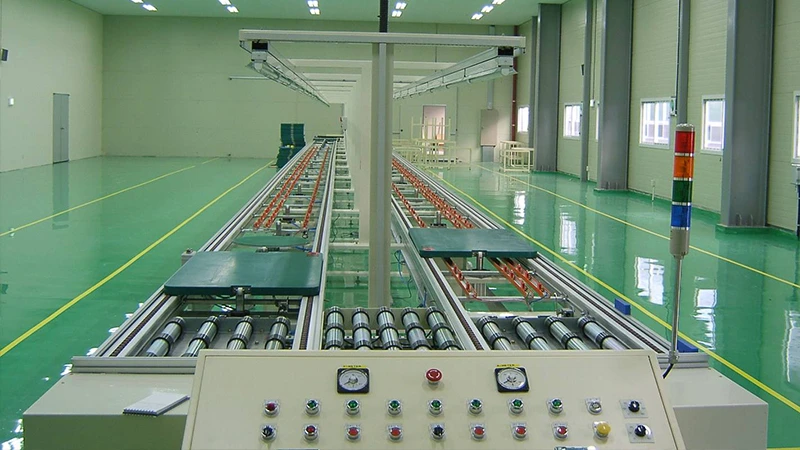
Every manufacturing or logistics operation knows that the backbone of efficient workflow lies in the tools and systems that keep things moving—literally. When it comes to material handling, few components are as critical as the free flow chain conveyor. These systems quietly power assembly lines, distribution centers, and warehouses, ensuring that parts, products, and packages glide from one stage to the next without unnecessary delays. But here's the thing: not all free flow chain conveyors are created equal, and neither are the suppliers behind them. Choosing the right supplier isn't just a purchase decision; it's an investment in your operation's productivity, reliability, and long-term success. So, how do you separate the standout suppliers from the rest? Let's dive in.
1. Start by Understanding Your "Why": Aligning Needs with Solutions
Before you even start scrolling through supplier directories, take a step back and ask: What problem are we really trying to solve? A free flow chain conveyor isn't a one-size-fits-all tool. Its design, capacity, and features depend entirely on your unique workflow. Are you moving small electronic components that require gentle handling, or heavy automotive parts that demand robust construction? Is space at a premium, requiring a compact, vertical system, or do you have room for a sprawling horizontal layout? Answering these questions upfront will not only narrow down your options but also help you communicate clearly with potential suppliers—ensuring they don't try to sell you a generic solution that misses the mark.
For example, consider a mid-sized electronics manufacturer I worked with a few years back. They initially reached out looking for a "standard" free flow chain conveyor, but after digging deeper, we realized their production line included frequent stops for quality checks. A basic conveyor would have caused bottlenecks as products piled up during inspections. Instead, they needed a system with adjustable speed controls and built-in accumulation zones—features a less attentive supplier might have overlooked. Moral of the story: Know your needs, and make sure your supplier takes the time to understand them too.
Key Questions to Ask Yourself:
- What is the maximum weight per unit we'll be conveying?
- What's our average daily throughput (units per hour)?
- Do we need the conveyor to integrate with other systems (e.g., workbenches, robotic arms)?
- Are there industry-specific requirements (e.g., ESD protection for electronics, food-grade materials for packaging)?
This self-assessment isn't just about specs—it's about aligning with a supplier who sees you as a partner, not just a customer. A great supplier will ask you these questions, too. If they jump straight into pitching their "best-selling" conveyor without understanding your operation, that's a red flag. You need someone who listens first, then tailors a solution.
2. Material Matters: The Building Blocks of Durability
Once you're clear on your needs, it's time to scrutinize the how behind the conveyor: the materials. A free flow chain conveyor's performance and lifespan hinge on the quality of its components—from the frame to the rollers to the smallest connectors. And here's where terms like "aluminum profile" and "roller track" move from buzzwords to critical considerations.
Let's start with the frame. Many modern conveyors use aluminum profile for their structure, and for good reason. Aluminum is lightweight yet surprisingly strong, resistant to corrosion, and easy to customize—thanks to its modular, T-slot design that allows for quick adjustments or add-ons. But not all aluminum profiles are the same. A high-quality aluminum profile will have consistent wall thickness, precise machining (so joints fit snugly), and a smooth finish that resists scratches and wear. On the flip side, suppliers cutting corners might use thin-walled or low-grade aluminum, leading to frames that bend under load or degrade quickly in humid or industrial environments. Imagine investing in a conveyor only to have the frame warp after six months of moderate use—that's a costly mistake that could have been avoided by prioritizing material quality.
Then there's the roller track—the heart of the free flow system. The roller track is what actually makes the "free flow" possible, with rollers spaced along a rail to reduce friction as products move. Here, material choice matters too. Steel rollers are durable and ideal for heavy loads, but they can be noisy and prone to rust if not treated. Plastic rollers, often made from high-density polyethylene (HDPE), are quieter and resistant to chemicals, making them great for food processing or cleanroom environments. Some suppliers even offer hybrid options, like aluminum rollers with plastic coatings, to balance strength and gentleness.
But it's not just the roller material—it's the details. How are the rollers mounted? Are they secured with robust bearings that minimize wobble? Is the roller spacing optimized for your product size (too far apart, and small items might get stuck; too close, and you're wasting money on unnecessary components)? A supplier who can walk you through these nuances—explaining why they chose a specific aluminum profile or roller track design for your application—is one who prioritizes performance over profit.
Real-World Impact: A automotive parts distributor once shared their experience with two different roller track suppliers. The first used generic steel rollers with loose bearings; within a year, 15% of the rollers had seized, causing jams and downtime. The second supplier used precision-machined aluminum rollers with sealed bearings and a corrosion-resistant coating. Five years later, that system still runs smoothly, with less than 2% roller replacement needed. The upfront cost was higher, but the total cost of ownership (maintenance, downtime, replacements) was drastically lower.
3. Lean Into Expertise: Why "Lean System Supplier" Isn't Just a Label
In the world of manufacturing and material handling, "lean" isn't just a buzzword—it's a philosophy centered on minimizing waste, maximizing value, and continuous improvement. A supplier who identifies as a "lean system supplier" should bring more to the table than just equipment; they should bring a deep understanding of how your conveyor fits into your broader lean goals. This expertise can transform a basic conveyor into a strategic tool that streamlines workflow, reduces bottlenecks, and eliminates unnecessary steps.
So, what does lean expertise look like in action? It starts with design. A lean system supplier won't just sell you a conveyor—they'll collaborate with you to map your current workflow, identify inefficiencies, and design a system that addresses them. Maybe that means integrating the conveyor with workbenches to create a seamless assembly cell, or adding accumulation zones to prevent backlogs when downstream processes slow down. They might suggest adjustable heights to reduce operator bending (cutting down on fatigue and injury), or modular components that can be reconfigured as your needs change (avoiding the waste of buying entirely new systems).
But lean expertise also extends to the supplier's own operations. How efficient are their manufacturing processes? Do they practice what they preach by minimizing waste in their own production, which in turn keeps costs reasonable for you? A supplier who struggles with inefficiencies internally is more likely to pass those problems along to you—missed deadlines, inconsistent quality, or bloated prices. On the other hand, a lean system supplier will have streamlined production, clear communication channels, and a culture of problem-solving—traits that translate to reliable service and innovative solutions for your business.
Don't be afraid to ask for examples. A reputable lean system supplier will have case studies or client testimonials that demonstrate how they've helped other businesses optimize their workflows. Maybe they helped a client reduce changeover time by 40% with a modular conveyor design, or cut down on material handling errors by integrating sensors into the system. These stories aren't just marketing—they're proof that the supplier understands how to align equipment with outcomes.
4. Reliability: Can You Count on Them When It Matters Most?
Imagine this: It's a busy Monday morning, and your production line is running at full tilt. Suddenly, the free flow chain conveyor grinds to a halt. A roller has jammed, and you need a replacement part—fast. You call your supplier, but they don't answer. You leave a message, but hours pass with no response. By the time the part arrives (two days later), you've lost thousands in downtime, and your team is scrambling to catch up. Sound like a nightmare? It doesn't have to be—if you choose a supplier with a track record of reliability.
Reliability in a supplier boils down to a few key factors: consistency, communication, and preparedness. Let's start with consistency. Can they deliver on their promises? Do they meet lead times, or do they frequently push deadlines back? A supplier with a reputation for consistency will have clear processes in place—from order confirmation to manufacturing to shipping—and will proactively communicate if delays arise (not wait for you to chase them down). You can gauge this by checking references: Ask current clients, "Did they deliver on time? How did they handle unexpected issues?"
Then there's parts availability. Even the best conveyors need maintenance, and when a component (like a roller track connector or bearing) fails, you need access to replacement parts quickly. A reliable supplier will maintain inventory of critical parts, so you're not waiting weeks for a shipment from overseas. Some even offer vending machines or local stockists for emergency parts—ensuring you can get back up and running in hours, not days. This level of preparedness shows that the supplier values your uptime as much as you do.
Financial stability is another underrated aspect of reliability. A supplier on shaky financial ground might cut corners on materials, delay investments in quality control, or even go out of business—leaving you without support for your conveyor system. While you don't need to dig into their balance sheet, you can look for signs of stability: How long have they been in business? Do they work with reputable clients (e.g., Fortune 500 companies, industry leaders)? Are they investing in new technologies or expanding their facilities? These are all indicators that they're in it for the long haul.
5. Beyond the Sale: The Importance of After-Sales Support
Buying a free flow chain conveyor is just the beginning of your relationship with a supplier. The real test comes after the system is installed and running: What happens when you need help? After-sales support can make or break your experience, turning a frustrating problem into a minor hiccup—or vice versa.
Start with installation. Does the supplier offer on-site installation support, or do they just drop the conveyor off and wish you luck? A complex system like a free flow chain conveyor often requires precise alignment to ensure smooth operation; a supplier who sends a team of experienced technicians to install and calibrate it can save you hours of trial and error (and potential damage to the equipment). Some suppliers even offer training for your maintenance team, teaching them how to inspect the system, perform basic repairs, and troubleshoot common issues—empowering your team to handle small problems before they become big ones.
Warranty is another critical piece. A strong warranty (think 5+ years for structural components like aluminum profile, 2-3 years for moving parts like rollers) shows confidence in the product. But read the fine print: Does the warranty cover parts only, or labor too? Are there exclusions for "normal wear and tear," and if so, how are those defined? A supplier who stands behind their product will offer a clear, comprehensive warranty without hidden loopholes.
Finally, consider ongoing support. Do they offer a dedicated account manager or support hotline? Are they available 24/7 for emergencies, or only during business hours? A supplier who treats after-sales support as an afterthought will make you feel like a burden when you reach out. A great supplier will make you feel like a priority, with responsive, knowledgeable staff who guide you through solutions—whether it's a quick fix over the phone or a technician dispatch.
6. Cost vs. Value: Why the Cheapest Quote Rarely Wins
Let's talk about money. It's tempting to gravitate toward the supplier with the lowest quote—after all, who doesn't want to save money? But here's the hard truth: In the world of free flow chain conveyors, you almost always get what you pay for. A $10,000 conveyor might seem like a steal compared to a $15,000 option, but if the cheaper system requires frequent repairs, causes downtime, or needs to be replaced in 3 years (vs. 10+ years for the pricier one), the "steal" quickly becomes a costly mistake.
Instead of focusing solely on upfront cost, calculate the total cost of ownership (TCO). TCO includes: upfront purchase price, installation costs, maintenance and repair expenses, downtime costs (lost productivity), energy usage, and replacement costs. A higher-quality conveyor—built with durable aluminum profile, precision roller track, and reliable components—will have a higher upfront cost but lower TCO over time. For example, a conveyor with a 10-year lifespan and $500/year maintenance costs has a TCO of $15,000 + ($500 x 10) = $20,000. A cheaper conveyor with a 3-year lifespan and $1,500/year maintenance costs? $10,000 + ($1,500 x 3) = $14,500 for 3 years, or $48,333 over 10 years—more than double the TCO of the quality option.
That said, "expensive" doesn't always mean "better." Some suppliers inflate prices based on brand name alone, without delivering superior quality or service. To avoid this, compare apples to apples: Look at material specs (e.g., aluminum profile thickness, roller material), warranty terms, lead times, and after-sales support side by side. A supplier who can justify their higher price with tangible benefits (longer lifespan, lower maintenance, better support) is worth the investment. Those who can't? They're just overpriced.
Pro Tip: Ask suppliers for a TCO analysis. A transparent supplier will be happy to walk you through the numbers, showing how their system's durability, efficiency, and support translate to lower long-term costs. If a supplier refuses or can't provide this, it's a sign they either don't understand their product's value or have something to hide.
7. The Final Check: What to Ask Before Signing on the Dotted Line
You've done your homework: You understand your needs, evaluated materials, checked for lean expertise, assessed reliability, and crunched the numbers. Now it's time to narrow down your top candidates and ask the tough questions. Here's a checklist to guide your final conversations:
- Material Specifics: "What grade of aluminum profile do you use for the frame? Can you provide material certifications?"
- Customization: "We have a unique layout with tight corners—can you design a conveyor that fits, and what's your process for custom projects?"
- Lean Experience: "Can you share an example of how you helped a client optimize their workflow using a free flow chain conveyor?"
- Lead Times: "What's your typical lead time for a system like ours? How do you handle rush orders?"
- Parts Support: "How quickly can we get replacement roller track components or aluminum profile accessories if something breaks?"
- Warranty: "What does your warranty cover, and for how long? Are there any exclusions I should know about?"
- References: "Can you provide 2-3 references from clients in our industry? I'd like to ask about their experience with your support and system reliability."
The answers to these questions will reveal more than any sales pitch. A supplier who hesitates, gives vague answers, or gets defensive is likely hiding gaps in their expertise, quality, or service. A confident, transparent supplier will answer openly, provide documentation (certifications, case studies), and encourage you to verify their claims with references.
Comparing Key Supplier Criteria: A Quick Reference
To help you organize your thoughts, here's a breakdown of the most important criteria to evaluate when comparing suppliers:
| Criteria | Why It Matters | What to Look For |
|---|---|---|
| Material Quality | Impacts durability, lifespan, and maintenance needs | High-grade aluminum profile, precision-machined roller track, corrosion-resistant components |
| Lean Expertise | Ensures the conveyor aligns with workflow optimization goals | Experience designing systems for lean environments, client stories of waste reduction |
| Reliability | Minimizes downtime and ensures consistent performance | On-time delivery, strong parts inventory, financial stability, positive client references |
| After-Sales Support | Crucial for resolving issues and maintaining uptime | Comprehensive warranty, installation support, training, 24/7 emergency service |
| Total Cost of Ownership | Reflects long-term value, not just upfront cost | Transparent TCO analysis, low maintenance requirements, long lifespan |
Final Thoughts: Your Supplier, Your Partner
Choosing a free flow chain conveyor supplier is about more than buying equipment—it's about choosing a partner who will support your operation's success for years to come. The right supplier will bring expertise, quality, and reliability to the table, helping you design a system that not only meets your current needs but adapts to future growth. They'll stand by their product when things go wrong and celebrate with you when efficiency soars. So, take your time, ask tough questions, and prioritize value over price. Your team, your bottom line, and your peace of mind will thank you.
After all, in the fast-paced world of manufacturing and logistics, the difference between a good day and a great day often comes down to the tools you trust—and the suppliers who build them.