- Company Articles
- Products and Technology
- Installation And Maintenance
- Wheel Flange Maintenance: 38 Aluminum Roller Track Yellow with Wheel Flange Care

Wheel Flange Maintenance: 38 Aluminum Roller Track Yellow with Wheel Flange Care
Related Product
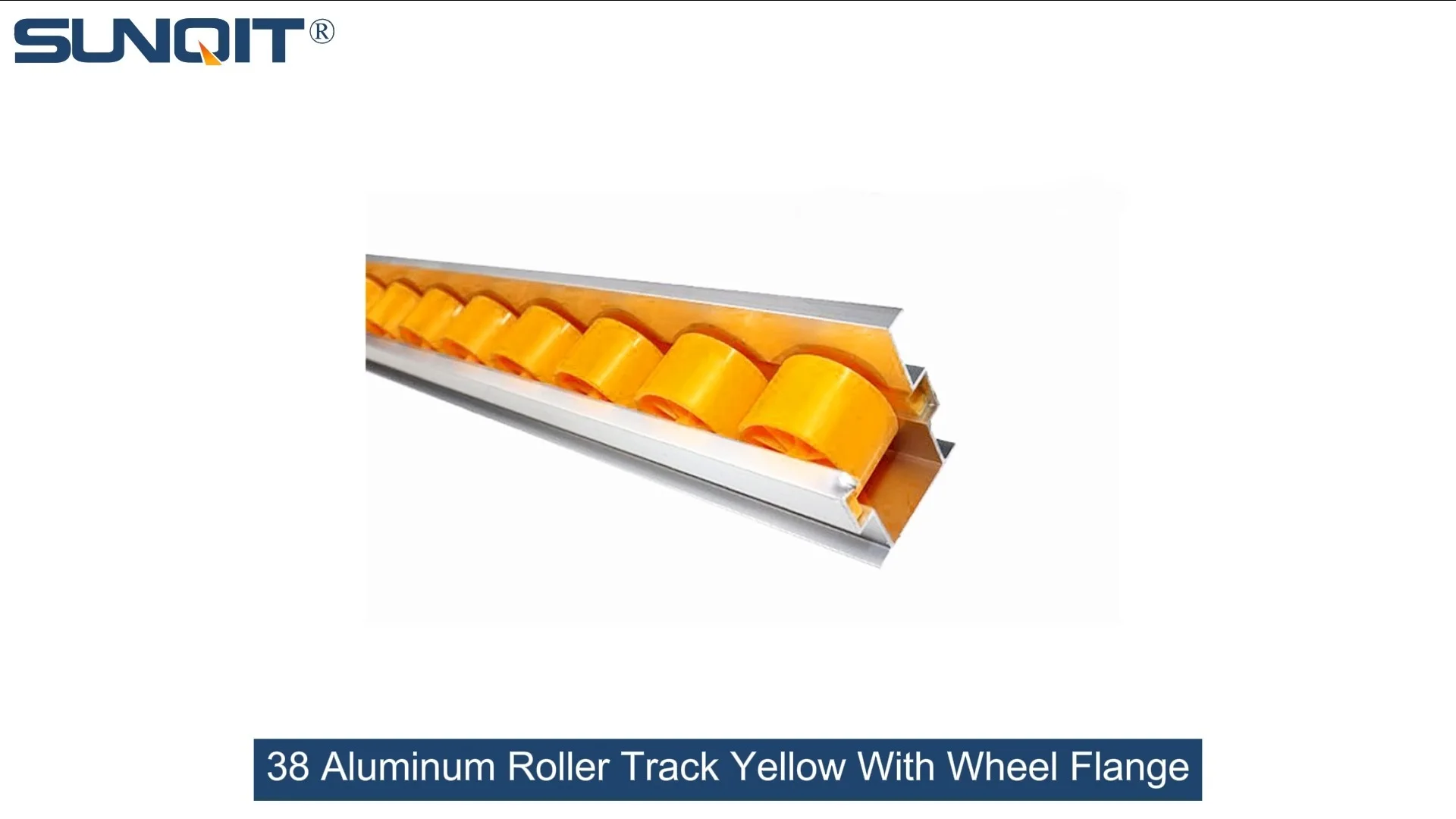
38 Aluminum Roller Track Yellow with Wheel Flange
Heavy duty roller tracks, aluminum frame with plastic wheel, one side with guide keeps goods and materials on the track to prevent bin move to other direction.Aluminum frame makes the rail ani-corrision when the environment are humid.
Walk through any bustling production floor—whether it's a 3C assembly line churning out smartphones, an automotive parts plant assembling engines, or a warehouse logistics hub sorting packages—and you'll spot them: bright yellow roller tracks that keep materials moving like clockwork. The 38 Aluminum Roller Track Yellow with Wheel Flange is one of those quiet workhorses, the backbone of flow racks and conveyors that power lean system operations. It's easy to take these tracks for granted until a worn flange causes a bin to jam, halting an entire line for hours. Proper maintenance isn't just a chore—it's the secret to keeping your production flow smooth, reducing downtime, and extending the life of your equipment.
This guide dives deep into everything you need to know about caring for your 38 Aluminum Roller Track Yellow with Wheel Flange. From understanding its role in your lean system to step-by-step maintenance tips, we'll cover it all. Whether you're a maintenance technician, a production manager, or someone new to lean manufacturing, this article will help you keep your tracks in top shape.
What Is the 38 Aluminum Roller Track Yellow with Wheel Flange?
Let's start with the basics. The 38 Aluminum Roller Track Yellow with Wheel Flange is a key component of modern material handling systems. It's made from high-quality aluminum—lightweight yet durable—with a vibrant yellow coating that serves two purposes: it makes the track easy to identify in busy environments and provides a protective layer against scratches and minor corrosion. The 38mm diameter (about 1.5 inches) is a standard size, compatible with most flow racks and conveyors used in manufacturing and logistics.
The wheel flange is the unsung hero here. Those small, raised edges on each roller keep bins, trays, and parts from slipping off the track as they move. Without them, materials would slide sideways, causing jams or even falling off to damage products or injure workers. This track is a staple in flow racks, where it enables first-in-first-out (FIFO) inventory management—critical for reducing waste in lean systems. It's also used in conveyors that connect different stations in a production line, like moving parts from assembly to packaging.
You'll find this track in a wide range of industries. For example, in 3C assembly plants, it's used to move small components like circuit boards along the line. In medical device manufacturing, it's used to transport sterile parts without contamination. In warehouse logistics, it's part of flow racks that hold boxes of products ready for shipping. No matter the industry, this track plays a vital role in keeping operations efficient.
Common Issues That Plague Wheel Flanges
Even the most robust equipment faces wear and tear over time. The 38 Aluminum Roller Track Yellow with Wheel Flange is no exception. Here are the most frequent problems you'll encounter, along with why they happen:
- Wear and Tear: Every time a bin slides over the rollers, the flange rubs against the edge of the bin. Over months of heavy use, this friction erodes the flange's edge, making it less effective at keeping items on track. For example, in a 24/7 production line, the flanges might wear down in as little as six months if not maintained.
- Debris Buildup: Dust, grease, small parts, and even spilled liquids can get stuck between the rollers and flanges. This debris prevents rollers from spinning freely, causing bins to jam or move unevenly. A common scenario: a worker drops a tiny screw on the track, and it gets stuck between two rollers, halting the entire flow of materials.
- Misalignment: Tracks can shift over time due to vibration from heavy machinery or improper installation. Misalignment means the flanges don't line up correctly with adjacent track sections, leading to bins getting caught or falling off. For instance, if a track section is tilted by just 1 degree, a bin might slide off the edge as it moves along.
- Corrosion: While the yellow coating protects the aluminum, exposure to moisture or harsh chemicals can cause corrosion. In medical device plants, for example, frequent cleaning with disinfectants might strip the coating, leading to rust on the flange's metal parts. Corrosion weakens the flange, making it more prone to breaking.
- Overloading: Every track has a rated load capacity—usually between 50 and 100 kg per meter. Putting heavier items on the track (like a bin filled with metal parts that weighs 150 kg) can bend the flanges or damage the rollers. This is a common issue in warehouses where workers might not know the track's limits.
Ignoring these issues can lead to costly consequences. A single jam in a 3C assembly line can stop production for 30 minutes, costing thousands of dollars in lost output. That's why catching and fixing these problems early is so important.

Step-by-Step Maintenance Guide for 38 Aluminum Roller Track Yellow with Wheel Flange
Pre-Maintenance Preparation
Before you start any maintenance work, gather the right tools to ensure safety and efficiency. Here's what you'll need:
- Soft-Bristled Brush: Use a brush with nylon bristles—avoid metal brushes, as they can scratch the yellow coating on the track.
- Mild Cleaner: Choose a non-abrasive, pH-neutral cleaner like dish soap diluted with warm water. Avoid harsh chemicals like bleach or ammonia, which can damage the coating.
- Lubricant: For most environments, food-grade lubricant is ideal—it's safe for contact with products and won't leave harmful residues. If you're in an ESD-sensitive area (like 3C assembly), use an ESD-safe lubricant to prevent static buildup.
- Wrench/Screwdriver: Use a socket wrench or Phillips-head screwdriver to adjust the bolts holding the track to the frame. Make sure the tools are the right size to avoid stripping the bolts.
- Level: A digital level is more accurate than a manual one, but either works. It helps you check if the track is straight and level.
- Gloves: Wear nitrile gloves to protect your hands from grease, debris, and sharp edges on the flanges.
Also, remember to turn off any power to automated conveyors before starting maintenance. This prevents accidental movement that could cause injury.
Regular Inspection Checklist
Consistent inspections are the first line of defense against track issues. Use this detailed checklist to make sure you don't miss anything:
| Inspection Item | Frequency | Inspection Method | Acceptable Standard | Action If Issue Found |
|---|---|---|---|---|
| Wheel Flange Wear | Weekly | Run your gloved finger along the flange edge. Measure any gaps with a caliper. | Flange edges are smooth, no chips/dents, wear ≤1mm. | replace the roller section if wear exceeds 1mm. |
| Debris Buildup | Daily (quick check) / Weekly (deep clean) | Look between rollers/flanges; spin rollers to check for resistance. | No visible debris; rollers spin freely without resistance. | Clean immediately with brush + cleaner. |
| Track Alignment | Monthly | Place level on track; check for gaps between sections. | Track level ≤0.5 degrees; no gaps between sections. | Adjust bolts/shims to realign. |
| Corrosion | Monthly | Inspect flanges for rust spots/discoloration; check coating integrity. | No rust; coating intact with no peeling. | Sand small spots + reapply coating; replace if severe. |
| Load Capacity Compliance | Quarterly | Weigh random bins on the track; verify against rated capacity. | Loads ≤ rated capacity (50-100kg/m). | Train workers on load limits; add signs to track. |
| Roller Spin | Weekly | Spin each roller with your finger; listen for grinding noises. | Rollers spin smoothly with no grinding. | Lubricate or replace rollers as needed. |
Deep Cleaning Procedures
Cleaning is more than just wiping down the track—it's about removing hidden debris that can cause damage. Follow these steps for a thorough clean:
- Start by removing all bins or materials from the track. This gives you full access to the rollers and flanges.
- Use the soft-bristled brush to sweep away loose debris from between the rollers and flanges. Pay special attention to the gaps where debris tends to accumulate.
- Mix the mild cleaner with warm water (1 part soap to 10 parts water). Dip a clean cloth into the solution and wring it out—you don't want excess water dripping onto the track.
- Wipe down the entire track surface, including the flanges and rollers. For stubborn grease spots, let the cleaner sit for 2-3 minutes before wiping.
- Rinse the cloth with clean water and wipe the track again to remove any soap residue. Residue can attract dust and cause rollers to stick.
- Let the track air dry completely. Avoid using a hairdryer or heat gun—high heat can melt the yellow coating.
- After drying, spin each roller to make sure they move freely. If any rollers are still stuck, repeat the cleaning process.
Lubrication Best Practices
Lubrication reduces friction between the rollers and flanges, extending their lifespan. Here's how to do it right:
- Choose the Right Lubricant: Food-grade lubricants are safe for industries like food processing and medical devices. ESD-safe lubricants are essential for 3C assembly to prevent static damage to components. Avoid oil-based lubricants in dusty environments—they attract dust like a magnet.
- Apply Sparingly: Too much lubricant is worse than none. Put a single drop of lubricant on the axle of each roller (where it connects to the flange). Spin the roller to distribute the lubricant evenly across the axle.
- Schedule Lubrication: For light use (8 hours/day), lubricate every 3 months. For heavy use (24/7), lubricate every 1-2 months. Keep a log of lubrication dates to stay on track.
- Avoid Over-Lubrication: If you see excess lubricant dripping from the rollers, wipe it off with a clean cloth. Excess lubricant can get on products or cause slips for workers.
Alignment Adjustment Steps
Misaligned tracks are a common cause of flange damage. Follow these steps to realign your track:
- Use the level to identify the problem area. Is the track tilted, or is it not straight?
- Loosen the bolts that hold the track section to the frame. Don't remove them—just loosen enough to adjust the track.
- If the track is tilted: Place small shims (made of plastic or metal) under the low side of the track. Add one shim at a time, checking the level after each addition until it's straight.
- If the track is not straight: Gently push or pull the track section until it lines up with the adjacent section. Use a straight edge to make sure the sections are aligned.
- Tighten the bolts back up. Use a torque wrench to apply the correct amount of torque (usually 10-15 Nm) to avoid over-tightening, which can bend the track.
- Test the track by rolling a bin along it. If the bin moves smoothly without getting stuck, you're done. If not, repeat the adjustment process.
Replacement Guidelines
Sometimes, maintenance isn't enough—you need to replace parts. Here are clear signs it's time to replace your 38 Aluminum Roller Track Yellow with Wheel Flange:
- Flange wear exceeds 1mm—this means the flange can no longer keep items on track.
- Rollers are bent or cracked—they won't spin freely, causing jams.
- Corrosion covers more than 20% of the flange—this weakens the metal and makes it prone to breaking.
- The track is cracked or warped—this can't be fixed with alignment adjustments.
- Bins are consistently falling off the track—even after cleaning and alignment.
When replacing, make sure to use the same model track to ensure compatibility with your existing system. If you're unsure where to get replacement parts, look for a supplier that specializes in lean system components—they'll have the right parts and can help you install them correctly.

Integrating Maintenance into Your Lean System
Maintenance isn't just a task—it's an integral part of a lean system. Lean manufacturing focuses on reducing waste and improving efficiency, and regular track maintenance directly supports these goals. Here's how:
- Reduce Downtime: Unexpected track failures can stop an entire production line. A study by the Lean Manufacturing Institute found that regular maintenance reduces unplanned downtime by up to 40%. For example, a 3C assembly plant that maintains its tracks weekly reduced emergency stops from 5 per month to 1.
- Improve Flow: A well-maintained track keeps materials moving smoothly, which is critical for flow racks and conveyors. This means less waiting time for workers and faster production cycles. A warehouse using flow racks with maintained tracks saw order fulfillment speed increase by 25%.
- Extend Lifespan: Proper care can double the lifespan of your track. A neglected track might last 2-3 years, but a maintained one can last 5-7 years. This reduces replacement costs and aligns with the lean principle of sustainable improvement.
- Enhance Safety: Worn flanges can cause items to fall off, leading to injuries or product damage. A manufacturing plant that implemented regular track maintenance reduced workplace accidents related to falling items by 60%.
- Reduce Waste: Lean systems aim to eliminate waste, and replacing parts prematurely is a form of waste. Maintenance helps you get the most out of your track, reducing the need for frequent replacements.
Many companies integrate track maintenance into their daily 5S routine. For example, a medical device plant has workers spend 5 minutes each day checking their assigned tracks for debris. A dedicated maintenance team does a deep clean and inspection once a week. This small investment of time leads to fewer breakdowns and a more efficient production line.
Another example: A warehouse using a custom lean solution has a digital maintenance log. Workers scan a QR code on the track to log inspections and issues. The system sends alerts when maintenance is due, ensuring no track is overlooked. This digital approach makes maintenance more efficient and easier to track.

Troubleshooting Common Problems
Even with regular maintenance, you might run into issues. Here are quick fixes for some of the most common problems:
Problem: Bins are sticking to the track
Possible causes: Debris buildup, dry rollers, or misalignment. Fix: First, clean the track with a brush and cleaner. If the bins still stick, lubricate the rollers. If that doesn't work, check the track alignment with a level.
Problem: Bins are falling off the track
Possible causes: Worn flanges, misalignment, or overloading. Fix: Inspect the flanges for wear—replace if needed. Check the track alignment. Verify that the bins are within the track's load capacity.
Problem: Track is making loud grinding noises
Possible causes: Dry rollers, debris in the axle, or bent rollers. Fix: Lubricate the rollers. If the noise persists, clean the axle with a brush. If that doesn't work, replace the bent rollers.
Problem: Corrosion spots on flanges
Possible causes: Exposure to moisture or harsh chemicals. Fix: For small spots, sand the area with fine-grit sandpaper (2000 grit) to remove rust. Apply a touch-up coat of yellow paint that matches the original coating. For large spots, replace the track section.
Problem: Rollers are not spinning
Possible causes: Debris in the axle, dry lubricant, or damaged rollers. Fix: Clean the axle with a brush and cleaner. Lubricate the roller. If it still doesn't spin, replace the roller.
Long-Term Benefits of Proper Maintenance
Investing time in maintaining your 38 Aluminum Roller Track Yellow with Wheel Flange pays off in many ways. Here are some of the long-term benefits:
- Cost Savings: Regular maintenance reduces replacement costs and emergency repair fees. A manufacturing plant saved $15,000 per year by maintaining its tracks instead of replacing them.
- Higher Productivity: Fewer breakdowns mean more time spent producing. A 3C assembly plant increased its daily output by 10% after implementing regular track maintenance.
- Better Product Quality: Smoothly moving materials reduce the risk of damage to parts. A medical device plant saw product defect rates drop by 15% after maintaining its tracks.
- Customer Satisfaction: Faster production cycles and higher-quality products mean you can deliver orders on time. A warehouse using maintained tracks improved its on-time delivery rate from 85% to 98%.
- Employee Morale: Workers are happier when they don't have to deal with frequent breakdowns. A survey of workers at a manufacturing plant found that 80% felt more satisfied with their jobs after the company implemented regular track maintenance.
These benefits show that maintenance isn't just a cost—it's an investment in your company's success. By taking care of your 38 Aluminum Roller Track Yellow with Wheel Flange, you're investing in efficiency, safety, and profitability.
Conclusion
The 38 Aluminum Roller Track Yellow with Wheel Flange is a small but critical component of your production line. It keeps materials moving, reduces waste, and supports your lean system goals. Proper maintenance isn't just about fixing problems—it's about preventing them, improving efficiency, and extending the life of your equipment.
By following the steps outlined in this guide—regular inspections, deep cleaning, proper lubrication, alignment adjustments, and timely replacements—you can keep your tracks in top shape. This will reduce downtime, improve productivity, and save your company money.
Remember: Maintenance is an ongoing process, not a one-time task. Make it part of your daily routine, and you'll reap the benefits for years to come. Whether you're in 3C assembly, medical device manufacturing, or warehouse logistics, a well-maintained track is key to a successful lean operation.