- Company Articles
- Products and Technology
- Procurement Guidelines
- Where to Buy High-Quality Four Way Straight Lean Pipe Joint: Top Global Suppliers

Where to Buy High-Quality Four Way Straight Lean Pipe Joint: Top Global Suppliers
Related Product
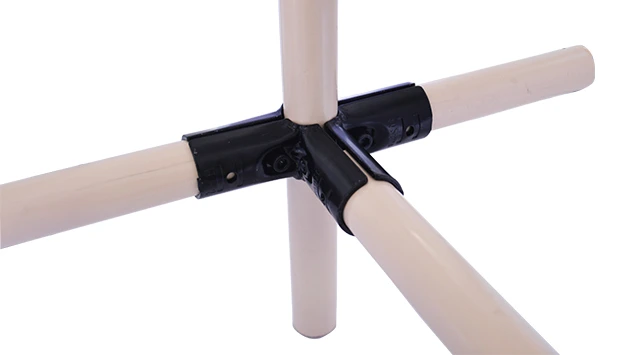
Four Way Straight Lean Pipe Joint
Four way lean pipe joint for 4 pcs 28MM lean pipe connection in straight angle, which used widely in workbench, flow rack, hand trolley frame connection.
In the dynamic landscape of modern manufacturing, where efficiency is the lifeblood of operations and downtime can translate to significant losses, the role of small but critical components often goes unnoticed—until they fail. One such unsung hero is the four way straight lean pipe joint. These unassuming connectors are the backbone of lean systems, holding together everything from workbenches and flow racks to conveyor lines and material handling setups. A well-made four way straight lean pipe joint ensures stability, flexibility, and adaptability in production environments, while a subpar one can compromise safety, disrupt workflows, and erode the very efficiency lean manufacturing aims to achieve.
Whether you're a factory manager upgrading your production line, a lean consultant designing a new workflow, or a procurement specialist tasked with sourcing reliable components, finding the right supplier for four way straight lean pipe joints is more than just a purchasing decision—it's a strategic investment in your operation's long-term success. With a flood of options available globally, from budget-friendly suppliers in Asia to premium manufacturers in Europe and North America, navigating the market can feel overwhelming. This article aims to simplify that journey: we'll break down what makes a high-quality four way straight lean pipe joint, key factors to consider when choosing a supplier, and highlight the top global players that stand out for their quality, reliability, and customer-centric approach. Along the way, we'll also touch on related components like aluminum profiles and flow racks, ensuring you have a holistic view of building a robust lean system.
What Makes a High-Quality Four Way Straight Lean Pipe Joint? Key Considerations
Before diving into supplier options, it's crucial to understand what defines a superior four way straight lean pipe joint. Not all joints are created equal, and cutting corners here can lead to costly consequences down the line. Here are the critical factors to prioritize:
Material Quality: The Foundation of Durability
The material of the joint directly impacts its strength, corrosion resistance, and lifespan. Most high-quality joints are made from either stainless steel, aluminum, or coated steel. Stainless steel joints excel in environments where hygiene is critical (e.g., food processing or pharmaceuticals) due to their rust-resistant properties. Aluminum joints, often paired with aluminum profiles, are lightweight yet strong, making them ideal for applications where mobility or weight reduction is key. Coated steel joints, typically with a polyethylene (PE) coating, offer a balance of durability and cost-effectiveness for general manufacturing settings. Avoid joints made from low-grade metals or flimsy plastics—they may save money upfront but will bend, crack, or corrode quickly under regular use.
Precision Engineering: Ensuring a Tight, Secure Fit
A four way straight lean pipe joint's purpose is to connect pipes at 90-degree angles in four directions, so precision is non-negotiable. Look for joints with uniform threading, consistent dimensions, and smooth edges. A well-engineered joint should slide onto pipes easily but create a tight, wobble-free connection once secured. Poorly machined joints may have misaligned threads, uneven surfaces, or loose fits, leading to unstable structures that pose safety risks or require constant readjustment.
Certifications and Compliance: A Mark of Reliability
Reputable suppliers will adhere to international standards, such as ISO 9001 for quality management or RoHS for environmental safety. Certifications aren't just paperwork—they indicate that the supplier follows strict quality control processes, from raw material sourcing to production and testing. For example, a joint certified for ESD (Electrostatic Discharge) protection is essential in electronics manufacturing, where static electricity can damage sensitive components. Always ask suppliers for certification documents to verify their claims.
Customization Capabilities: Adapting to Your Unique Needs
Every manufacturing setup is different, and off-the-shelf joints may not always fit your specific requirements. Maybe you need a joint with a coating for chemical resistance, or a modified design to accommodate thicker pipes. The best suppliers offer customization options, working with you to design joints that align with your workflow, space constraints, or industry regulations. This flexibility is especially valuable for lean system integrators who need tailored solutions to optimize unique production lines.
Supplier Reliability: Beyond the Product
Even the highest-quality joint is useless if it arrives late or is backed by poor customer service. Evaluate suppliers based on their production capacity (can they meet your volume needs?), lead times (how quickly can they deliver?), and after-sales support (do they offer technical assistance or warranties?). A lean pipe supplier with a global distribution network, for instance, can ensure faster delivery to multiple manufacturing sites, while one with a dedicated support team can help troubleshoot installation issues or replace defective parts promptly.
Top Global Suppliers for Four Way Straight Lean Pipe Joints
Now that we know what to look for, let's explore the leading suppliers that excel in producing high-quality four way straight lean pipe joints, along with their strengths, product ranges, and unique selling points. These suppliers are trusted by manufacturers, lean consultants, and system integrators worldwide for their commitment to quality, innovation, and customer satisfaction.
Efficient Flow Solutions (China)
Location: Shanghai, China
Focus: High-volume production, cost-effective yet durable lean components
Efficient Flow Solutions has established itself as a go-to lean pipe supplier for businesses seeking a balance of quality and affordability. With over 15 years of experience, the company specializes in manufacturing a wide range of lean components, including four way straight lean pipe joints, aluminum profiles, flow racks, and conveyor systems. Their four way joints are available in stainless steel (304 and 316 grades), aluminum, and PE-coated steel, catering to diverse industry needs—from automotive assembly lines to cleanrooms.
What sets Efficient Flow apart is its vertically integrated production process: they control every step from raw material sourcing to forging, machining, and testing, ensuring consistent quality. The company holds ISO 9001 and ISO 14001 certifications, and their joints undergo rigorous load testing (up to 500kg per joint) and corrosion resistance checks. For customers with unique requirements, they offer custom machining, color coating, and branding options, with a minimum order quantity (MOQ) as low as 100 units for standard designs. Their global distribution centers in Europe and North America allow for fast delivery (typically 5–7 days for regional orders), making them a favorite among mid-sized manufacturers looking to scale efficiently.
EuroLean Tech (Germany)
Location: Munich, Germany
Focus: Precision engineering, premium materials, and industry-specific solutions
When it comes to precision and durability, EuroLean Tech is a name that resonates in European manufacturing circles. This German-based lean system supplier prides itself on "engineering for excellence," with a product line that includes high-precision four way straight lean pipe joints, aluminum extrusion profiles, and ESD-compliant workbenches. Their joints are machined from solid blocks of aluminum or stainless steel, resulting in a seamless, burr-free finish that ensures a perfect fit with pipes every time.
EuroLean's four way joints are particularly popular in industries where safety and reliability are non-negotiable, such as aerospace and medical device manufacturing. The company offers specialized variants, including heat-resistant joints for high-temperature environments and anti-microbial joints for pharmaceutical facilities. They also provide comprehensive technical support, with in-house engineers available to assist with system design and installation. While their prices are higher than some Asian suppliers, customers often cite the longevity of their products (average lifespan of 10+ years with minimal maintenance) as a key return on investment. EuroLean serves primarily Europe and North America, with a focus on large enterprise clients and custom lean system projects.
LeanPro USA (United States)
Location: Detroit, Michigan, USA
Focus: Made-in-USA quality, quick turnaround, and lean consulting integration
For businesses prioritizing domestic sourcing and rapid delivery, LeanPro USA stands out as a leading lean pipe workbench supplier and four way joint manufacturer. Based in Detroit's manufacturing hub, the company combines American craftsmanship with lean principles, offering a range of joints designed specifically for the automotive, aerospace, and defense industries. Their four way straight lean pipe joints are made from cold-rolled steel with a zinc-plated finish for corrosion resistance, and they meet strict military-grade standards for load capacity and durability.
LeanPro's unique advantage is its integration of product supply with lean consulting services. Beyond supplying joints, they work with clients to design entire lean systems—from workbench layouts to flow rack configurations—ensuring that every component, including the joints, is optimized for the client's workflow. This end-to-end approach saves customers time and reduces the risk of mismatched components. With a local production facility, LeanPro offers short lead times (2–3 days for standard orders) and small MOQs (as low as 50 units), making them ideal for small to medium manufacturers or those with urgent replacement needs. They also provide a lifetime warranty on all their joints, a testament to their confidence in product quality.
Nippon Lean Components (Japan)
Location: Tokyo, Japan
Focus: Innovation, compact design, and compatibility with Japanese lean systems
Japan is the birthplace of lean manufacturing, so it's no surprise that Nippon Lean Components is a pioneer in producing high-quality lean components. Specializing in compact, space-saving designs, their four way straight lean pipe joints are engineered for tight production environments—think electronics assembly lines where every inch of space matters. Made from lightweight aluminum alloy, these joints are 30% lighter than traditional steel joints while maintaining comparable strength, making them easy to install and reconfigure as production needs change.
Nippon Lean is known for its focus on continuous improvement (a core lean principle), regularly updating its joint designs based on customer feedback and industry trends. Their latest four way joint model features a quick-lock mechanism that eliminates the need for tools during assembly, reducing setup time by up to 40%. The company also offers a wide range of compatible accessories, including aluminum profile connectors and roller track systems, ensuring seamless integration into existing lean setups. While their products are primarily distributed in Asia, they have partnered with regional distributors in Europe and North America to expand their reach, though lead times may be longer for international orders.
AluMech Systems (Singapore)
Location: Singapore
Focus: Southeast Asian market expertise, aluminum-based lean solutions
As a leading aluminum profile supplier in Southeast Asia, AluMech Systems has carved a niche in providing lightweight, corrosion-resistant lean components—including four way straight lean pipe joints made from high-grade aluminum. With operations in Singapore, Malaysia, and Thailand, the company understands the unique challenges of manufacturing in the region, such as high humidity and the need for cost-effective, scalable solutions. Their aluminum joints are an excellent choice for industries like marine manufacturing or tropical food processing, where rust resistance is critical.
AluMech's four way joints are designed to work seamlessly with their proprietary aluminum extrusion profiles, allowing customers to build modular lean systems that can be easily expanded or reconfigured. The company also offers on-site installation support and training, helping clients maximize the efficiency of their lean setups. For small businesses, AluMech provides a "Starter Kit" that includes four way joints, pipes, and basic accessories at a discounted rate, making it easy to experiment with lean manufacturing without a large upfront investment. Their focus on regional customer service—with local sales teams fluent in English, Mandarin, and Bahasa—has made them a trusted partner for manufacturers across Southeast Asia.
| Supplier | Location | Key Materials | Customization | MOQ (Standard) | Lead Time (Regional) | Standout Feature |
|---|---|---|---|---|---|---|
| Efficient Flow Solutions | China | Stainless steel, aluminum, PE-coated steel | Custom machining, coating, branding | 100 units | 5–7 days | Vertically integrated production for consistent quality |
| EuroLean Tech | Germany | Aluminum, stainless steel (316 grade) | Industry-specific variants (heat-resistant, anti-microbial) | 200 units | 7–10 days | Precision engineering for aerospace/medical applications |
| LeanPro USA | USA | Cold-rolled steel (zinc-plated) | Custom sizes, military-grade options | 50 units | 2–3 days | Made-in-USA with lifetime warranty |
| Nippon Lean Components | Japan | Aluminum alloy | Quick-lock mechanisms, compact designs | 150 units | 10–14 days | Lightweight, space-saving for tight environments |
| AluMech Systems | Singapore | High-grade aluminum | Starter kits, regional customization | 75 units | 3–5 days (SEA) | Corrosion-resistant for humid/tropical climates |

Common Pitfalls to Avoid When Buying Four Way Straight Lean Pipe Joints
Even with the right suppliers in mind, it's easy to fall into traps that compromise the quality or value of your purchase. Here are the most common mistakes to steer clear of:
Choosing Price Over Quality
It's tempting to opt for the cheapest joint available, especially when buying in bulk. However, low-cost joints often use inferior materials (e.g., low-grade steel that rusts quickly) or skip quality control steps (e.g., no load testing). These joints may fail after a few months of use, leading to costly replacements, downtime, or even accidents. Instead of focusing solely on upfront cost, calculate the total cost of ownership: a slightly pricier joint with a 10-year lifespan is far more economical than a cheap one that needs replacement every year.
Ignoring Material Compatibility
Not all pipes and joints are compatible. A four way straight lean pipe joint designed for 28mm aluminum pipes won't work with 30mm steel pipes, no matter how "universal" the supplier claims it is. Always check the pipe diameter, wall thickness, and material before purchasing. If you're unsure, ask the supplier for compatibility charts or request samples to test the fit with your existing pipes.
Overlooking Testing and Certifications
A supplier may claim their joints are "high-quality," but without third-party testing or certifications, this is just marketing. Always ask for proof of load capacity, corrosion resistance, or ESD compliance (if needed). For example, a joint labeled "ESD-safe" should come with a test report showing its surface resistance (typically between 10^6 and 10^9 ohms). Avoid suppliers that hesitate to provide this documentation—they may be cutting corners.
Underestimating Lead Times
Production delays happen, but failing to account for lead times can disrupt your manufacturing schedule. If you're launching a new production line or need to replace faulty joints quickly, choose a supplier with local inventory or fast shipping options. For international orders, factor in customs clearance time and potential shipping delays (e.g., port congestion). It's also wise to order a small buffer stock of joints to avoid running out during peak production periods.
Neglecting After-Sales Support
A supplier that disappears once the invoice is paid is a red flag. Even the best joints can have issues—maybe a batch is defective, or you need help with installation. Prioritize suppliers that offer clear warranties (at least 1–2 years), responsive customer service (24–48 hour response time), and technical support. Read reviews or ask for references from existing customers to gauge their after-sales reputation.

Frequently Asked Questions About Four Way Straight Lean Pipe Joints
Q: What's the difference between a four way straight lean pipe joint and a three way joint?
A: A four way straight joint connects pipes in four directions (up, down, left, right) at 90-degree angles, making it ideal for building multi-level structures like flow racks or workbenches with crossbars. A three way joint, by contrast, connects pipes in three directions, typically used for simpler setups like vertical frames. The four way joint offers more flexibility for complex, modular lean systems.
Q: Can I reuse four way straight lean pipe joints if I reconfigure my lean system?
A: Yes, most high-quality joints are reusable, especially aluminum or stainless steel models. PE-coated steel joints may show signs of wear after multiple reconfigurations (e.g., scratched coating), but they should still function structurally. To extend their lifespan, avoid over-tightening the joints during installation—this can strip threads or warp the material.
Q: How do I determine the right load capacity for my four way joint?
A: Calculate the total weight the joint will need to support, including the weight of the pipes, any attached components (e.g., shelves, bins), and the materials being stored or transported. For example, a flow rack used to hold heavy automotive parts will require joints with a higher load capacity (500kg+) than a light-duty workbench for small electronics (100–200kg). Always choose a joint with a load capacity that exceeds your calculated needs to account for unexpected stress.
Q: Are there eco-friendly options for four way straight lean pipe joints?
A: Yes! Many suppliers now offer joints made from recycled aluminum or stainless steel, or with water-based coatings instead of solvent-based ones. Look for suppliers with ISO 14001 certification (environmental management) or those that highlight their sustainability practices, such as energy-efficient production or waste reduction initiatives. AluMech Systems, for example, uses 100% recycled aluminum in some of their joint models.
Conclusion: Investing in Quality for Long-Term Lean Success
The four way straight lean pipe joint may be small, but its impact on your manufacturing efficiency, safety, and bottom line is significant. Choosing the right supplier isn't just about buying a component—it's about partnering with a company that understands your lean goals, delivers consistent quality, and supports your operation's growth. Whether you prioritize cost-effectiveness (Efficient Flow Solutions), precision engineering (EuroLean Tech), or regional support (LeanPro USA), the key is to align the supplier's strengths with your specific needs.
Remember to prioritize material quality, certifications, and after-sales support over upfront cost, and always test compatibility with your existing pipes. By avoiding common pitfalls and leveraging the expertise of trusted lean pipe suppliers and lean system suppliers, you can build robust, flexible lean systems that stand the test of time—ensuring your production line runs smoothly, your team stays safe, and your business remains competitive in an ever-evolving market.
So, the next time you're sourcing four way straight lean pipe joints, think beyond the price tag. Think about the reliability of the supplier, the durability of the product, and the value it brings to your lean journey. After all, in lean manufacturing, every component counts—and the right joint can be the difference between a system that merely functions and one that thrives.