- Company Articles
- Products and Technology
- Procurement Guidelines
- Where to Source High-Quality 3060 Aluminum Angle Yards in Bulk

Where to Source High-Quality 3060 Aluminum Angle Yards in Bulk
Related Product
3060 Aluminum Angle Yards
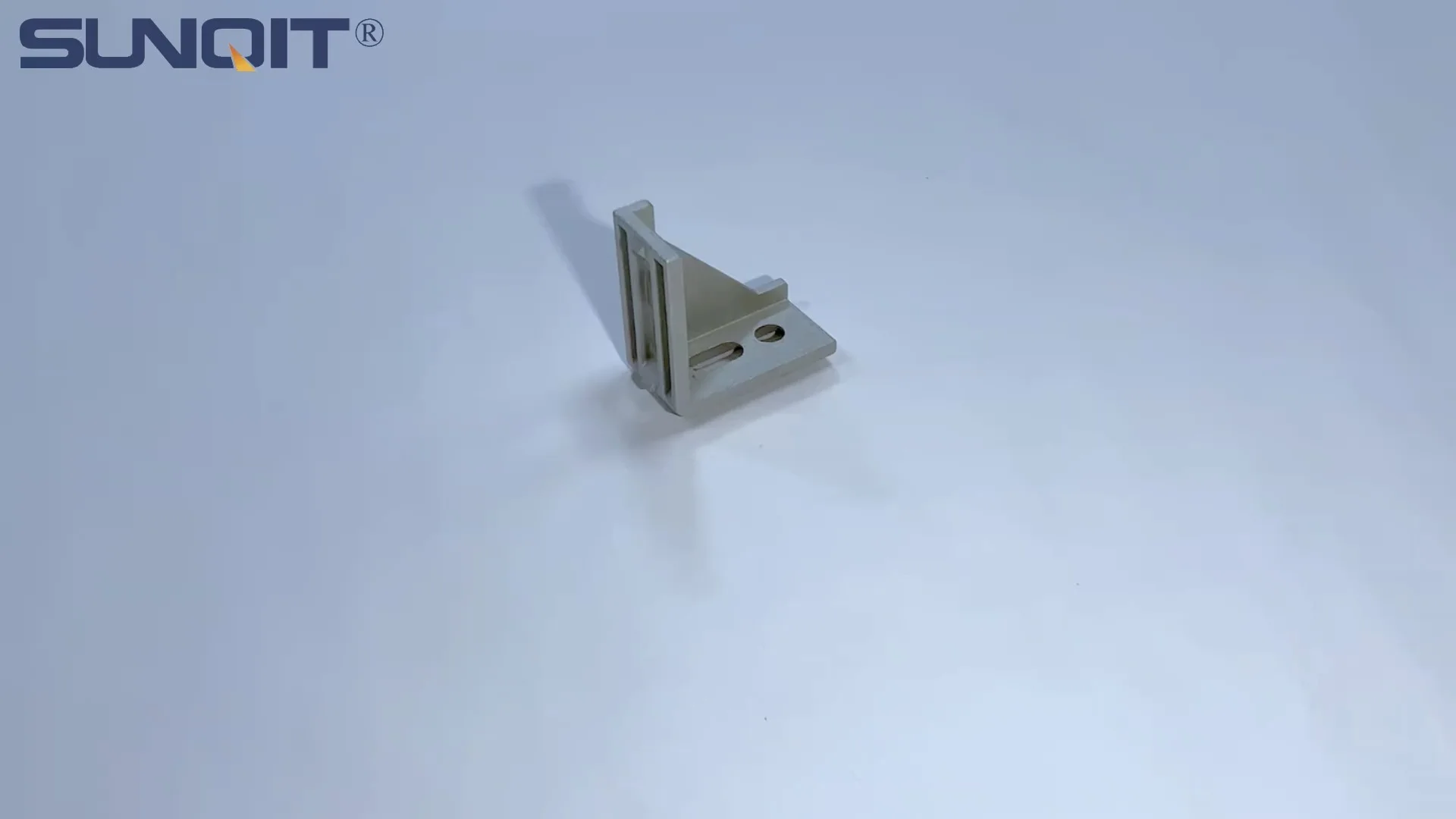
It used for 90° flat connection for 20 series aluminum profile.
Imagine walking into a bustling manufacturing facility: conveyor belts hum softly, workbenches are lined with precision tools, and material racks stand tall, holding components ready for assembly. Every corner feels intentional, every process streamlined. Now, zoom in on one of those workbenches—a sturdy frame supporting the daily grind of assembly line workers. What holds it all together? Chances are, it's a set of 3060 aluminum angle yards, quietly ensuring stability, alignment, and efficiency. For manufacturers, these unassuming components are the backbone of lean systems, material racks, and custom workstations. But here's the catch: not all 3060 aluminum angle yards are created equal. And when you're sourcing in bulk, the difference between "good enough" and "high-quality" can mean the difference between smooth production and costly downtime.
If you've ever struggled with loose joints, bent frames, or inconsistent sizing when working with aluminum profiles, you know the frustration. Maybe you've had to halt production to replace faulty angle yards, or watched as a material rack wobbled under load because the connections couldn't hold. These are the hidden costs of cutting corners on sourcing. But it doesn't have to be this way. High-quality 3060 aluminum angle yards—paired with the right 3060 aluminum profile and accessories—can transform your operations, boosting durability, reducing waste, and aligning perfectly with lean manufacturing principles. The question is: where do you find them in bulk, without sacrificing quality for cost?
In this guide, we'll dive deep into the world of 3060 aluminum angle yards. We'll break down what they are, why quality matters, and most importantly, how to source them in bulk from reliable suppliers. Whether you're a small workshop scaling up or a large manufacturer overhauling your lean system, this article will equip you with the knowledge to make confident, cost-effective sourcing decisions. Let's start by understanding the basics.
What Are 3060 Aluminum Angle Yards, Anyway?
Let's start with the basics: 3060 aluminum angle yards are specialized components within the broader family of aluminum profile accessories. As the name suggests, they're designed to work seamlessly with 3060 aluminum profile—a common extrusion with dimensions of 30mm by 60mm. But what exactly do they do? Think of them as the "connectors" that bring aluminum profiles to life. When building a structure—whether it's a workbench, a material rack, or a conveyor frame—angle yards attach to the T-slots of 3060 aluminum profile, creating rigid, right-angle joints. They're the reason your workbench doesn't wobble when you lean on it, or your material rack stays upright when stacked with heavy components.
But their role goes beyond just holding things together. 3060 aluminum angle yards are engineered for precision. A high-quality angle yard will have tight tolerances, ensuring a snug fit with the 3060 aluminum profile. This precision matters because it eliminates "play" in the joints, reducing vibration during operation and extending the lifespan of the entire structure. They're also made from extruded aluminum, which balances strength and lightweight properties—critical for applications where mobility (like turnover trolleys) or weight savings (like overhead racks) are priorities. And thanks to aluminum's natural corrosion resistance, they hold up well in factory environments, even with exposure to moisture or chemicals.
Common applications? You'll find them in nearly every corner of a lean manufacturing setup. Workbench E (single deck, without casters) often relies on 3060 angle yards to secure its frame. Material Rack B (3 rows, 3 floors) uses them to connect vertical and horizontal 3060 aluminum profiles, ensuring each shelf can bear the weight of tools or components. Even conveyor systems, like roller tracks, depend on angle yards to align rails and maintain stability. In short, they're the unsung heroes of modular, customizable industrial structures.
Why Quality Can't Be Compromised
Let's paint a picture: A mid-sized electronics manufacturer decides to upgrade its assembly line with new workstations. They source 3060 aluminum angle yards in bulk from a low-cost supplier, eager to save on upfront costs. The first few weeks go smoothly—the workbenches look great, and the team is excited about the upgrade. But by month three, problems start. A worker notices a corner of their workbench has started to sag; upon inspection, the angle yard has bent slightly where it connects to the 3060 aluminum profile. Then, a material rack in the warehouse tilts, spilling components onto the floor. The culprit? Inconsistent wall thickness in the angle yards, leading to uneven load distribution.
This scenario isn't hypothetical—it's a common consequence of prioritizing price over quality. Poorly manufactured 3060 aluminum angle yards often suffer from:
- Imprecise extrusion: Inconsistent dimensions mean some angle yards fit too loosely (causing wobble) or too tightly (damaging the T-slots of the 3060 aluminum profile).
- Weak material grades: Using low-grade aluminum (instead of industry-standard 6061 or 6063) leads to reduced tensile strength, making them prone to bending or breaking under load.
- Poor surface finish: Rough edges or incomplete anodization can cause corrosion over time, especially in humid or chemical-exposed environments.
- Shoddy machining: Misaligned holes or uneven mounting surfaces make it impossible to achieve flush, secure connections with other aluminum profile accessories.
The costs of these issues add up quickly: downtime for repairs, replacement parts, wasted labor, and even safety risks. On the flip side, high-quality 3060 aluminum angle yards offer tangible benefits:
- Durability: Made from high-grade aluminum alloys, they resist bending, corrosion, and wear, even in high-traffic industrial settings.
- Precision fit: Tight tolerances ensure they slot perfectly into 3060 aluminum profile T-slots, creating rigid, vibration-resistant joints.
- Compatibility: Designed to work seamlessly with other aluminum profile accessories—like internal rotary aluminum joints or aluminum guide rails—reducing the need for custom modifications.
- Compliance: Many high-quality angle yards meet industry standards (e.g., ISO 9001) for material safety and performance, critical for regulated industries like aerospace or medical device manufacturing.
In short, investing in quality upfront saves money in the long run. Now, let's explore what to look for when sourcing 3060 aluminum angle yards in bulk.

Key Factors to Consider When Sourcing in Bulk
Sourcing 3060 aluminum angle yards in bulk isn't just about finding the lowest price—it's about finding a partner who can deliver consistent quality, reliable lead times, and the right support. Here are the critical factors to evaluate:
1. Material Grade and Extrusion Quality
The foundation of a high-quality angle yard is the aluminum alloy used. Most reputable suppliers use either 6061 or 6063 aluminum. 6061 is known for its high tensile strength and weldability, making it ideal for heavy-duty applications like material racks or conveyor frames. 6063, on the other hand, offers superior surface finish and is easier to extrude with tight tolerances, perfect for precision components like workbench frames. Ask suppliers for material certificates (e.g., mill test reports) to verify the alloy grade—any hesitation here is a red flag.
2. Tolerance and Dimensional Consistency
3060 aluminum angle yards are designed to fit specific profiles, so dimensional accuracy is non-negotiable. The best suppliers will have extrusion processes with tight tolerances—typically ±0.1mm for length and ±0.05mm for slot width. This ensures that every angle yard in your bulk order will fit the 3060 aluminum profile identically, eliminating the need for on-site adjustments. To test this, request a sample batch and measure a few pieces with calipers. Inconsistent sizing is a clear sign of poor extrusion control.
3. Surface Treatment and Corrosion Resistance
Aluminum naturally forms a protective oxide layer, but additional surface treatments enhance durability. Anodization is the most common option—it creates a hard, wear-resistant coating that also adds corrosion resistance. Look for suppliers offering anodized finishes with a thickness of at least 10μm (Class 1) for industrial use. Powder coating is another option, though it's more prone to chipping in high-impact areas. Avoid "raw" or uncoated angle yards unless your application is strictly indoor and low-moisture.
4. Supplier Reliability and Lead Times
Bulk sourcing means you're trusting a supplier with your production timeline. A reliable supplier should offer clear, consistent lead times (typically 2–4 weeks for standard orders) and have contingency plans for delays (e.g., backup production lines). Check their track record by asking for references or reading reviews from other manufacturers. A supplier with a history of missed deadlines or communication gaps will cost you more than just time—it could disrupt your entire lean system.
5. Minimum Order Quantities (MOQ) and Pricing
Bulk pricing often depends on MOQs, which can range from 500 to 5,000 units, depending on the supplier. If you're a small manufacturer, look for suppliers willing to negotiate MOQs or offer tiered pricing (e.g., lower per-unit costs for larger orders). But be wary of rock-bottom prices—if a quote seems too good to be true, it probably is. Compare prices across 2–3 suppliers, factoring in quality (e.g., material grade, finish) and service (e.g., shipping, returns) to get a true apples-to-apples comparison.

Top Sources for Bulk 3060 Aluminum Angle Yards
Now that you know what to look for, let's explore the best places to source high-quality 3060 aluminum angle yards in bulk. From specialized suppliers to global marketplaces, each option has its pros and cons—we'll break them down to help you choose.
1. Specialized Aluminum Profile Suppliers
Specialized suppliers focus exclusively on aluminum extrusion profiles and accessories, making them the gold standard for quality and expertise. These companies often have in-house design teams, allowing them to customize angle yards to your exact specifications (e.g., custom hole patterns or lengths). They also tend to stock a wide range of complementary products, like 3060 aluminum profile, aluminum guide rails, and internal rotary aluminum joints—so you can source your entire lean system from one partner, ensuring compatibility.
Examples of reputable specialized suppliers include companies with decades of experience in industrial aluminum solutions. Many are certified ISO 9001, ensuring strict quality control, and offer global shipping. The downside? Their MOQs are often higher (1,000+ units), and prices may be 10–15% higher than generic suppliers. But for critical applications (e.g., medical device manufacturing), the investment is worth it.
2. Regional Aluminum Extrusion Mills
If you're based in a region with a strong manufacturing sector (e.g., the Midwest U.S., Eastern China, or Western Europe), regional extrusion mills can be a cost-effective option. These mills produce aluminum profiles in bulk and often offer angle yards as secondary products. The advantage? Shorter lead times (thanks to local production) and lower shipping costs. They may also be more flexible with MOQs for local businesses.
However, regional mills vary widely in quality. Some focus on high-volume, low-cost extrusion (think construction-grade profiles) and may not have the precision needed for 3060 aluminum angle yards. Always request samples and verify extrusion tolerances before placing a bulk order. A good regional mill will welcome the scrutiny—they know their reputation depends on it.
Comparing Bulk Sourcing Options: A Quick Reference Table
| Source Type | Pros | Cons | Best For |
|---|---|---|---|
| Specialized Aluminum Profile Suppliers | High quality, customization, complementary products, ISO certified | Higher MOQs, premium pricing | Large manufacturers, critical applications (medical, aerospace) |
| Regional Extrusion Mills | Shorter lead times, lower shipping costs, flexible MOQs | Inconsistent quality, limited customization | Small-to-medium businesses, local production |
| Online B2B Platforms (e.g., Alibaba) | Wide supplier selection, competitive pricing | Risk of counterfeit products, language barriers | Experienced buyers with strict vetting processes |
| Local Distributors | Immediate availability, small MOQs, hands-on support | Higher per-unit costs, limited inventory | Emergency orders, small-scale projects |

How to Verify Quality Before You Buy: A Step-by-Step Checklist
You've narrowed down your suppliers, reviewed their specs, and requested quotes. Now it's time to verify quality—before you commit to a bulk order. Here's a step-by-step checklist to ensure you're getting what you pay for:
Step 1: Request Samples
Never buy bulk without testing samples first. Ask for 5–10 pieces of 3060 aluminum angle yards (most suppliers will send these for free or at cost). Inspect them visually: Are the edges smooth, or do they have burrs? Is the surface finish consistent, or are there discolorations? A quick visual check can reveal red flags like uneven extrusion or poor coating.
Step 2: Test Dimensional Accuracy
Grab a digital caliper and measure the key dimensions: length, width, slot depth, and wall thickness. Compare these to the supplier's specs. For example, a 3060 angle yard should measure 30mm x 60mm at the base, with a wall thickness of 1.5–2.0mm (depending on the alloy). If measurements vary by more than ±0.1mm, the supplier's extrusion process is inconsistent.
Step 3: Check Load Capacity
Simulate real-world use by testing the angle yard's load capacity. Mount a sample to a 3060 aluminum profile using standard aluminum profile accessories (e.g., T-bolts, nuts) and apply gradual pressure with a weight scale. A high-quality angle yard should support at least 50kg of vertical load without bending. If it deforms under 30kg, it's not suitable for industrial use.
Step 4: Evaluate Corrosion Resistance (If Needed)
For outdoor or high-moisture applications, perform a simple corrosion test. Submerge a sample in saltwater (3% NaCl solution) for 24 hours, then inspect for pitting or discoloration. Anodized samples should show no signs of corrosion; uncoated samples may develop a thin oxide layer, but it should wipe off easily without damaging the base material.
Step 5: Review Certifications and Compliance
Ask for copies of material certificates (e.g., EN AW-6063 for extrusion), ISO 9001 certification for quality management, and RoHS compliance if you're manufacturing electronics. A reputable supplier will have these documents readily available. If they hesitate or provide vague responses, walk away.
Case Study: How One Manufacturer Cut Costs by Sourcing Smart
Let's look at a real-world example of how strategic sourcing transformed a company's operations. PrecisionWorks, a mid-sized manufacturer of medical device components, was struggling with frequent workbench failures. Their existing setup used generic steel angle brackets, which were heavy, prone to rust, and required custom drilling to fit their lean system. When they decided to switch to aluminum profiles, they initially sourced 3060 aluminum angle yards from a low-cost online supplier to save money.
The first batch arrived quickly and cheaply—but problems arose within weeks. The angle yards had inconsistent slot widths, so some fit too loosely, causing workbenches to wobble. Others were too tight, stripping the T-slots of the 3060 aluminum profile. PrecisionWorks had to halt production twice in three months to replace faulty components, costing them over $10,000 in downtime.
Frustrated, they decided to invest in quality. After researching specialized aluminum profile suppliers, they partnered with a company that focused on lean system components. The new 3060 aluminum angle yards were made from 6063 aluminum, anodized for corrosion resistance, and had tight tolerances. The supplier also provided complementary aluminum profile accessories, ensuring a perfect fit with their 3060 aluminum profile frames.
The results? Production downtime dropped by 90%, and the workbenches now have a projected lifespan of 10+ years (up from 2–3 years with steel brackets). While the upfront cost was 30% higher, the long-term savings in replacement parts and labor made it worthwhile. As PrecisionWorks' operations manager put it: "We used to think we were saving money by buying cheap. Now we know—quality pays for itself."
Final Thoughts: Your Sourcing Journey Starts Here
Sourcing high-quality 3060 aluminum angle yards in bulk isn't just about finding a supplier—it's about building a partnership that aligns with your lean system goals. By prioritizing material grade, precision, and supplier reliability, you'll avoid the hidden costs of poor quality and set your operations up for long-term success. Remember: the best suppliers aren't just vendors—they're collaborators who understand your needs and deliver solutions that make your job easier.
So, where do you start? Begin by defining your requirements: What's your MOQ? What load capacity do you need? Do you require custom finishes or certifications? Armed with this information, reach out to 2–3 specialized suppliers, request samples, and put them through the quality checks outlined above. Don't rush the process—taking the time to vet suppliers now will save you headaches (and money) later.
At the end of the day, 3060 aluminum angle yards may be small components, but they play a big role in your manufacturing ecosystem. Invest in quality, source smart, and watch as your lean system runs smoother, lasts longer, and delivers the efficiency you've been striving for.