- Company Articles
- Products and Technology
- Solution
- Why 40 Aluminum Roller Track Grey is a Staple in Lean Six Sigma Facilities

Why 40 Aluminum Roller Track Grey is a Staple in Lean Six Sigma Facilities
Related Product
40 Aluminum Roller Track Grey
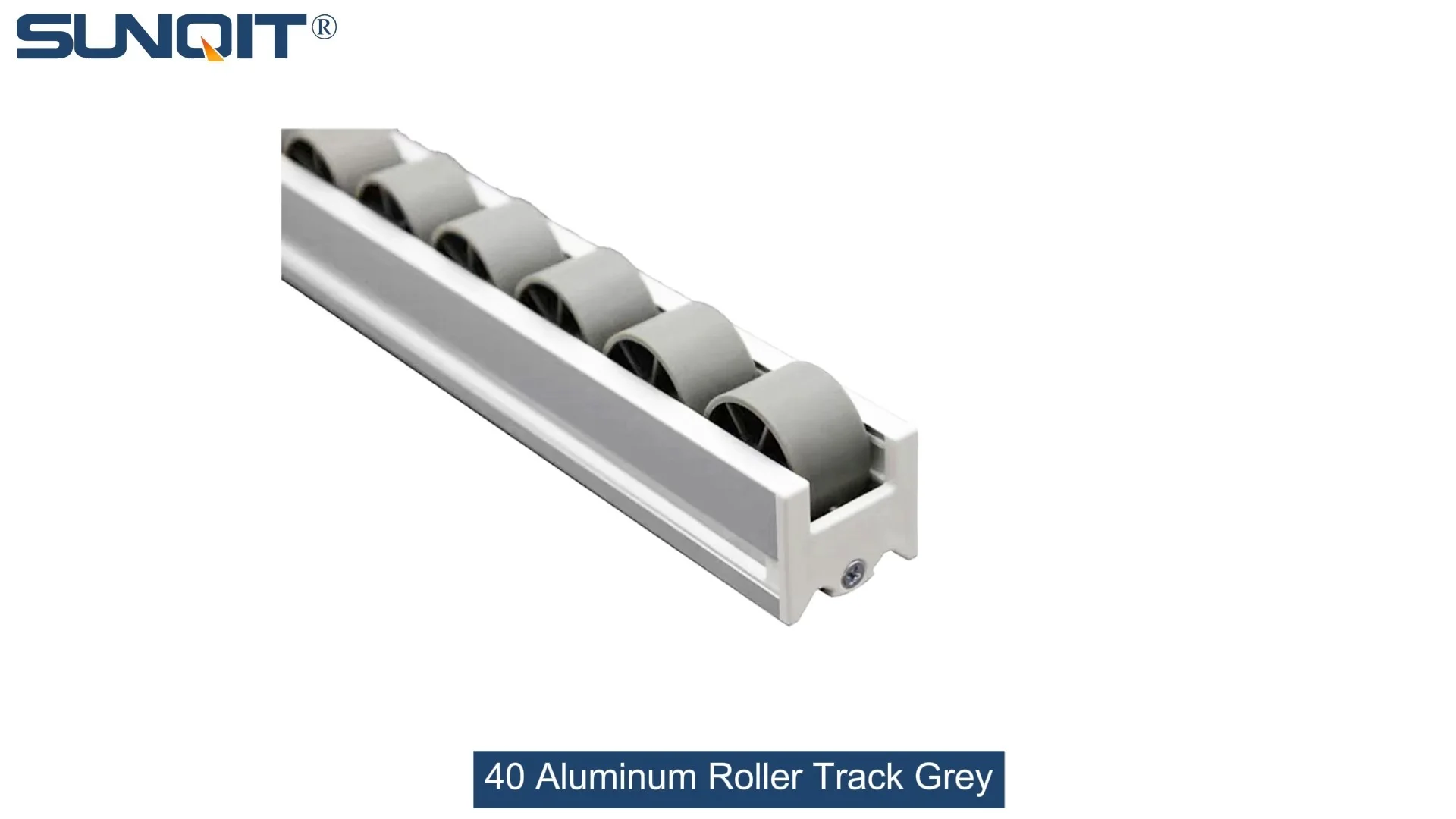
Durable and smooth-running modular roller rails. The system is fully assembled. The roller rail profile contains plastic rollers mounted on steel axles. Aluminum frame with plastic wheel make it anti corrosion,and material convey more smooth.
In the world of manufacturing and warehouse operations, where every second counts and efficiency is the name of the game, the tools we rely on often fly under the radar—until they fail. Lean Six Sigma facilities, in particular, thrive on eliminating waste, streamlining processes, and creating systems that run like well-oiled machines. But even the most carefully designed lean system can grind to a halt without the right material handling equipment. Enter the unsung hero of many a smooth-running operation: the 40 Aluminum Roller Track Grey. It's not flashy, it doesn't make headlines, but walk through any top-performing facility, and you'll likely find it hard at work, moving materials, reducing friction, and keeping the flow steady. Today, we're diving into why this humble piece of equipment has become a non-negotiable staple in Lean Six Sigma environments.
Lean Six Sigma 101: The Quest for Perfection
Before we get into the nitty-gritty of roller tracks, let's take a step back to understand the principles that drive Lean Six Sigma facilities. At its core, Lean Six Sigma is about two things: eliminating waste (Lean) and reducing variation (Six Sigma). Together, these methodologies aim to create processes that are not just efficient, but consistently efficient—so efficient, in fact, that defects, delays, and downtime become rare exceptions rather than daily headaches.
Waste, in Lean terms, comes in many forms: there's overproduction (making more than needed), waiting (idle time for workers or machines), transportation (unnecessary movement of materials), motion (unneeded physical movement by employees), inventory (excess stock sitting unused), defects (products that need rework), and overprocessing (doing more than required to meet standards). For material handling teams, the biggest culprits are often transportation, motion, and waiting—all of which stem from clunky, unreliable, or poorly designed equipment.
Six Sigma, on the other hand, focuses on variation. If a process works perfectly 90% of the time but fails 10% of the time, that 10% can derail an entire operation. In material handling, variation might look like a bin that slides smoothly one day but jams the next, or a track that supports heavy loads sometimes but buckles under the same weight later. Consistency is key—and that's where the right tools, like the 40 Aluminum Roller Track Grey, come into play.
The Heart of the Matter: Material Flow in Lean Systems
In any Lean Six Sigma facility, material flow is the lifeblood of the operation. Raw materials need to move from receiving to production, work-in-progress (WIP) needs to flow between stations, and finished goods need to get to shipping—all without bottlenecks, delays, or damage. When material flow is disrupted, everything downstream suffers: workers wait, machines sit idle, deadlines slip, and costs rise.
This is where roller tracks shine. By providing a low-friction surface for materials to glide along, they turn manual lifting, pushing, and pulling into smooth, almost effortless movement. But not all roller tracks are created equal. Steel tracks might be durable but heavy and prone to rust. Plastic tracks could be lightweight but lack the strength for heavy loads. And then there's aluminum—lightweight, strong, resistant to corrosion, and infinitely customizable. When you pair that with a neutral, high-visibility color like grey and a 40mm width (a sweet spot for balancing load capacity and flexibility), you get a tool that's tailor-made for Lean systems.

Meet the 40 Aluminum Roller Track Grey: What Makes It Tick?
Let's start with the basics: what exactly is the 40 Aluminum Roller Track Grey? At its simplest, it's a linear track made from aluminum extrusion profile—think of it as a sturdy, grooved rail with integrated rollers that allow bins, totes, or components to slide along its length. The "40" refers to its width (40mm), which is wide enough to support standard industrial bins and totes without being overly bulky. The "grey" is more than just a color choice; it's a practical one—neutral enough to blend into any facility's color scheme, yet light enough to highlight debris or spills that might cause jams (a critical detail for maintaining 5S standards, another cornerstone of Lean methodology).
But the real magic is in the details. Let's break down its key components and why they matter:
1. Aluminum Extrusion Profile: Strength Meets Lightweight Design
Aluminum isn't just a material choice here—it's a strategic one. Unlike steel, aluminum is lightweight, which makes installation and reconfiguration a breeze. In Lean facilities, where processes are constantly being optimized (hello, continuous improvement!), the ability to quickly adjust or relocate a roller track without heavy machinery or a team of workers is a game-changer. Need to shift a production line to accommodate a new product? With aluminum tracks, you can disassemble, move, and reassemble in hours, not days.
But don't let the lightweight fool you—aluminum extrusion profile is surprisingly strong. Thanks to its hollow, ribbed internal structure (a result of the extrusion process), it can support loads of up to 50kg per meter (depending on the roller spacing) without bending or warping. That means it's tough enough for metal parts, automotive components, or heavy electronics, yet gentle enough for delicate items like circuit boards or medical devices (when paired with soft rollers).
And let's not forget corrosion resistance. In facilities where moisture, oils, or chemicals are present (think automotive or food processing), steel tracks would rust, creating rough spots that jam materials and breed bacteria. Aluminum, on the other hand, forms a natural oxide layer that protects against rust, ensuring the track stays smooth and hygienic for years.
2. The Grey Color: More Than Just Aesthetic
You might be thinking, "Why grey? Why not bright yellow or red for visibility?" Here's the thing: in a busy facility, bright colors can be distracting. They might draw the eye, but they also fade over time and show dirt easily. Grey, by contrast, is a workhorse color. It's neutral enough to not clash with other equipment or safety markings (like yellow caution lines or red emergency stops), but light enough that spills, debris, or damaged rollers stand out. A quick glance down a grey track, and you can spot a loose roller or a dust buildup that might cause a jam—before it becomes a problem. That's proactive maintenance, a key part of Lean Six Sigma's focus on preventing issues rather than reacting to them.
3. Rollers: The Unsung Heroes of Smooth Flow
What good is a track without reliable rollers? The 40 Aluminum Roller Track Grey typically comes with high-quality plastic or steel rollers (depending on the application), spaced evenly along the track to ensure even weight distribution. The rollers are designed to spin freely with minimal friction, so even a fully loaded bin can be moved with a gentle push—reducing the physical strain on workers (goodbye, motion waste!) and speeding up material transfer.
Many models also feature swivel roller balls or flanged wheels, which help guide bins along the track and prevent them from slipping off—another layer of consistency that reduces variation in the process. And because the track is part of a modular system, rollers can be easily replaced if they wear out, extending the track's lifespan and keeping maintenance costs low.

By the Numbers: Key Specs at a Glance
| Feature | Details | Lean Benefit |
|---|---|---|
| Material | Aluminum extrusion profile (6063-T5 grade) | Lightweight for easy reconfiguration; corrosion-resistant for long life |
| Width | 40mm | Balances load capacity (up to 50kg/m) with flexibility for tight spaces |
| Color | Grey (RAL 7035) | High visibility for debris detection; neutral for facility integration |
| Roller Type | Polypropylene or steel rollers, 16-20mm diameter | Low friction for smooth flow; durable for heavy loads |
| Length Options | 1m, 2m, or custom-cut | Modular to fit any facility layout; reduces waste from over-cutting |
| Accessory Compatibility | Roller track placon mount, aluminum guide rail, caster wheels | Integrates with flow racks, workbenches, and conveyors for seamless systems |

Real-World Impact: How It Transforms Lean Facilities
Numbers and specs tell part of the story, but let's get into the real-world impact. How does the 40 Aluminum Roller Track Grey actually make a difference on the shop floor? Let's look at a few scenarios:
Case Study 1: Automotive Assembly Line
A mid-sized automotive parts manufacturer was struggling with bottlenecks in their assembly line. Workers at Station 3 were spending 15-20 minutes per hour just retrieving WIP from a nearby storage area—walking back and forth, lifting heavy bins, and occasionally dropping parts (defects and motion waste, all in one). The facility manager decided to install a 40 Aluminum Roller Track Grey system connecting the storage area directly to Station 3, using flow rack b (3 row and 3 floor) to hold the bins. Overnight, the walk time disappeared. Bins now glide from storage to the station with a gentle push, and the grey track makes it easy to spot any parts that might fall off the rollers. Result: a 22% increase in throughput at Station 3, and a 35% reduction in reported worker fatigue.
Case Study 2: Electronics Manufacturing Facility
An electronics plant producing circuit boards needed a way to move sensitive components between inspection stations without damaging them. Their old steel tracks were rusting in the humid environment, leaving metal shavings that contaminated components (defects and waste). They switched to 40 Aluminum Roller Track Grey with plastic roller track guide rail grey (matching the track for a seamless look) and stainless steel swivel roller balls 1 inch (for extra smooth movement). The aluminum's corrosion resistance eliminated rust, and the plastic guide rails protected components from scratches. Defect rates dropped by 18%, and the lightweight tracks made it easy to reconfigure the line when they introduced a new circuit board model.
In both cases, the track wasn't just a tool—it was a catalyst for Lean improvement. It eliminated waste (motion, defects, waiting), improved flow (smoother material transfer), and enhanced flexibility (easy reconfiguration). That's the power of a tool designed with Lean principles in mind.
Why Not Steel? Or Plastic? The Case for Aluminum
You might be wondering: why aluminum over other materials? Let's break it down:
Steel vs. Aluminum
Steel is strong, no doubt—but it's heavy. A 2m steel track can weigh 15-20kg, making it hard to install or move without help. It's also prone to rust, which means regular maintenance (painting, oiling) to keep it smooth. In contrast, a 2m 40 Aluminum Roller Track Grey weighs just 4-5kg, and its natural corrosion resistance means zero rust. For Lean facilities focused on reducing maintenance costs and improving flexibility, aluminum wins hands down.
Plastic vs. Aluminum
Plastic tracks are lightweight and cheap, but they lack the structural integrity of aluminum. A plastic track might bow under a 30kg load, causing bins to jam. Aluminum extrusion profile, with its ribbed internal structure, can handle 50kg/m without breaking a sweat. Plus, plastic can warp in high temperatures (common in manufacturing facilities), while aluminum maintains its shape even in heat. For facilities that need both strength and lightweight design, aluminum is the clear choice.
Beyond the Track: Integration with Lean Ecosystems
The 40 Aluminum Roller Track Grey doesn't work in isolation—it's part of a larger ecosystem of Lean tools. Here's how it plays well with others:
Flow Racks
Flow racks (like the material rack b mentioned earlier) are a staple in Lean inventory management, using gravity to feed materials to the front as they're used. The 40 Aluminum Roller Track Grey is the perfect complement, providing the low-friction surface needed for gravity flow. Its 40mm width fits standard flow rack depths, and its lightweight design makes it easy to install in multi-level racks without adding excess weight.
Workbenches
Aluminum workbench k or workbench e (single deck-without caster) often integrate roller tracks as part of their design, allowing workers to slide materials directly from the bench to a conveyor or storage area. The grey track blends with the workbench's aluminum frame, creating a clean, organized workspace that supports 5S principles (sort, set in order, shine, standardize, sustain).
Conveyors and Roller Tracks
For longer distances, the 40 Aluminum Roller Track Grey can connect to powered conveyors, acting as a "bridge" between stations. Roller track placon mount for rail connection and roller track placon mount for aluminum profile flat make it easy to link tracks together or attach them to other equipment, creating a seamless material flow system from receiving to shipping.
The Bottom Line: Why It's a Staple
At the end of the day, the 40 Aluminum Roller Track Grey has earned its spot as a staple in Lean Six Sigma facilities because it aligns perfectly with the methodologies' core principles: eliminate waste, reduce variation, improve flow, and empower continuous improvement. It's lightweight enough to be reconfigured on the fly (no more waiting for maintenance to move a heavy steel track), strong enough to handle daily abuse, and designed with visibility and durability in mind (so small issues don't become big problems).
In a world where Lean Six Sigma success hinges on the details—the 1% improvements that add up to massive gains—having reliable, flexible, and efficient material handling equipment isn't a luxury; it's a necessity. The 40 Aluminum Roller Track Grey isn't just a track—it's a tool that turns chaos into order, friction into flow, and wasted time into productivity. And in Lean facilities, that's the difference between good and great.
Looking Ahead: The Future of Lean Material Handling
As facilities continue to embrace automation, IoT, and smart manufacturing, will the humble roller track become obsolete? Unlikely. If anything, the demand for flexible, durable, and integrable tools like the 40 Aluminum Roller Track Grey will only grow. Imagine a future where sensors embedded in the track alert maintenance teams to worn rollers before they jam, or where AI optimizes track layouts in real time based on production demand. With aluminum's compatibility with new technologies (it's easy to drill, tap, or attach sensors to), the 40 Aluminum Roller Track Grey is poised to evolve right alongside the facilities that rely on it.
For now, though, it remains a quiet workhorse—unassuming, reliable, and essential. So the next time you walk through a Lean Six Sigma facility and see bins gliding effortlessly along a grey aluminum track, take a moment to appreciate it. That's not just metal and rollers; that's Lean in action.