- Company Articles
- Products and Technology
- Product knowledge
- Why 40 Aluminum Roller Track Grey is Ideal for Computer Peripheral Manufacturing

Why 40 Aluminum Roller Track Grey is Ideal for Computer Peripheral Manufacturing
Related Product
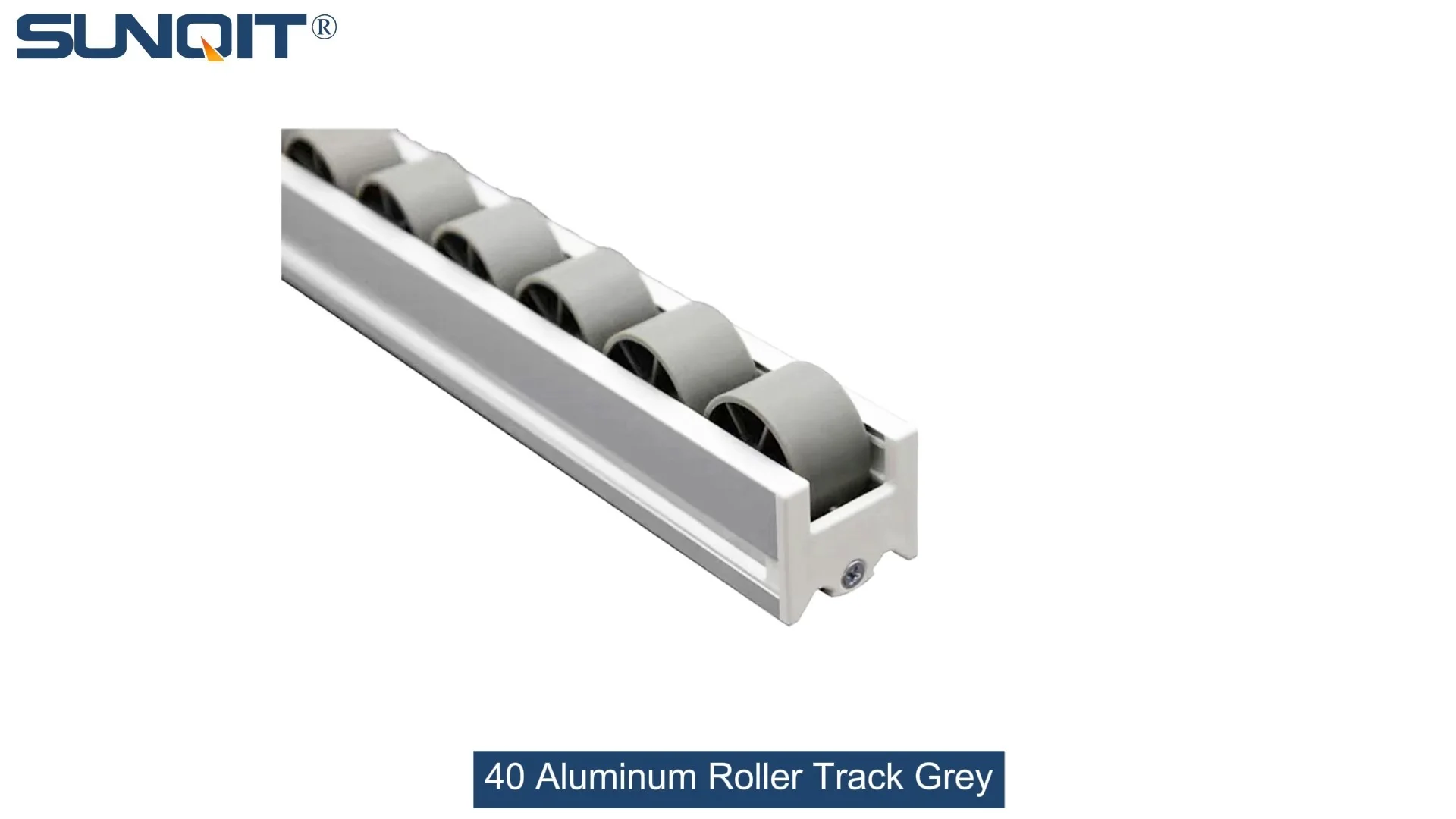
40 Aluminum Roller Track Grey
Durable and smooth-running modular roller rails. The system is fully assembled. The roller rail profile contains plastic rollers mounted on steel axles. Aluminum frame with plastic wheel make it anti corrosion,and material convey more smooth.
Walk into any computer peripheral manufacturing facility, and you'll quickly notice the rhythm of precision: tiny circuit boards gliding between stations, keycaps clicking into place on keyboard assemblies, and mouse sensors being tested for responsiveness. In this world of small, delicate components—where even a minor jam or misalignment can disrupt production timelines—every tool and system matters. Among these, the 40 Aluminum Roller Track Grey has emerged as an unsung hero, quietly transforming how manufacturers handle materials, streamline workflows, and maintain the efficiency demanded by today's tech-driven market. Let's dive into why this unassuming piece of equipment has become a cornerstone of modern computer peripheral production.
The Unique Challenges of Computer Peripheral Manufacturing
Computer peripherals—think keyboards, mice, webcams, and printers—are deceptively complex. Unlike bulkier electronics, they're built from countless small, often fragile parts: microchips the size of a fingernail, thin plastic casings, and sensitive wiring. These components require careful handling to avoid damage, static electricity (ESD) protection to prevent circuit fry-outs, and a production line that can adapt quickly to design changes (think gaming mice with customizable buttons vs. standard office mice).
Traditional material handling systems often fall short here. Heavy steel conveyors are overkill for lightweight parts and tough to reconfigure. Plastic tracks, while cheap, can warp under constant use or generate static. What manufacturers need is a balance of durability, flexibility, and precision—exactly what the 40 Aluminum Roller Track Grey delivers.
What Makes 40 Aluminum Roller Track Grey Stand Out?
At first glance, it's easy to mistake roller tracks for simple pieces of hardware. But the 40 Aluminum Roller Track Grey is engineered with the unique needs of computer peripheral manufacturing in mind. Let's break down its key features:
1. Aluminum: The Material Advantage
Aluminum isn't just lightweight—it's a manufacturing workhorse. Unlike steel, it resists corrosion, so even in factories with humidity control (critical for electronics), the track won't rust or degrade over time. Its natural smoothness means less friction between rollers and parts, reducing the risk of scratches on delicate plastic or metal components. And because aluminum is malleable, the track can be shaped into precise 40mm widths—perfect for guiding small parts like keyboard switches or mouse scroll wheels without wasted space.
But perhaps most importantly, aluminum pairs seamlessly with aluminum profile accessories . From brackets to guide rails, these accessories let manufacturers mount the track onto workbenches, racks, or even mobile trolleys, creating a modular system that grows with production needs. Need to add a curve to route parts around a new assembly station? Just swap out a straight section for a curved one using compatible connectors—no welding or heavy tools required.
2. The "40" and "Grey" in the Name: Precision by Design
The "40" refers to the track's width: 40mm. This isn't arbitrary. Computer peripheral parts are often small—think 10mm keycaps or 15mm sensor modules—and a 40mm track provides enough stability to keep them centered without being overly bulky. Wider tracks would take up valuable floor space, while narrower ones risk parts slipping off during transport.
Then there's the "Grey." While color might seem trivial, grey is a deliberate choice for factory environments. Unlike bright yellow or red tracks, grey doesn't reflect harsh overhead lighting, reducing eye strain for operators. It also hides minor dust and scuffs, maintaining a clean appearance in environments where cleanliness is tied to product quality (no one wants a dusty keyboard leaving the line).
3. Smooth Rollers for Delicate Parts
The track's rollers are its heart. Made from high-density plastic (often ESD-safe), they glide with minimal resistance, ensuring parts move steadily without jolting. For computer peripherals, this smoothness is critical: a sudden stop could misalign a tiny LED in a webcam or damage a fragile ribbon cable in a printer. The 40 Aluminum Roller Track Grey's rollers are spaced evenly—typically 50-60mm apart—to provide consistent support, even for irregularly shaped parts.

Integrating with Lean Systems: Reducing Waste, Boosting Efficiency
Modern manufacturing thrives on lean systems —processes designed to eliminate waste, from excess inventory to unnecessary movement. The 40 Aluminum Roller Track Grey is a lean dream come true. Here's how:
Just-In-Time (JIT) Material Delivery
Instead of piling parts on workbenches (wasting space and risking damage), manufacturers use the track to deliver components exactly when operators need them. For example, a keyboard assembly line might have a track feeding keycaps directly to a workstation. As the operator places the last key, the next batch rolls in—no waiting, no stockpiling. This cuts down on inventory costs and keeps the line moving at a steady pace.
Flexible Workflows for Changing Demands
Computer peripheral trends shift fast. One quarter, it's slim wireless keyboards; the next, mechanical gaming keyboards with extra switches. A lean system needs to adapt, and the 40 Aluminum Roller Track Grey makes reconfiguration a breeze. Using aluminum profile accessories like roller track placon mount for aluminum profile flat , teams can disassemble and rebuild tracks in hours, not days. This agility lets manufacturers pivot quickly, reducing downtime between product launches.
Ergonomic Benefits for Operators
Waste isn't just about materials—it's about people, too. Bending to lift parts from bins or reaching across cluttered workbenches leads to fatigue and errors. By mounting the 40 Aluminum Roller Track Grey at waist height on workbenches , operators can slide parts directly onto their workspace with minimal movement. This reduces strain and keeps focus where it matters: assembling high-quality peripherals.

Comparing 40 Aluminum Roller Track Grey to Other Options
To truly see its value, let's compare the 40 Aluminum Roller Track Grey to common alternatives:
| Feature | 40 Aluminum Roller Track Grey | Plastic Roller Track (Yellow/Grey) | Steel Roller Track |
|---|---|---|---|
| Weight | Lightweight (easy to reconfigure) | Lightest, but less durable | Heavy (hard to move; requires permanent installation) |
| Durability | High (resists corrosion, dents) | Low (can warp in heat/humidity) | High, but prone to rust |
| ESD Safety | Yes (with ESD-safe rollers) | Yes (some models), but plastic can generate static over time | No (steel conducts electricity; risks ESD damage) |
| Customization | High (works with aluminum profile accessories) | Low (limited accessory compatibility) | Medium (requires welding for changes) |
| Cost (Long-Term) | Moderate upfront, low maintenance | Low upfront, high replacement cost | High upfront, high maintenance (rust, painting) |
As the table shows, aluminum strikes the perfect balance: it's durable enough for daily use, flexible enough for lean systems, and safe enough for sensitive electronics. Plastic might be cheaper initially, but frequent replacements add up. Steel, while tough, is overkill for lightweight peripherals and locks manufacturers into fixed layouts—exactly what lean systems aim to avoid.

Real-World Impact: A Day in the Life of a Peripheral Factory
To understand why manufacturers swear by the 40 Aluminum Roller Track Grey, let's walk through a hypothetical day at a keyboard production plant:
7:00 AM: The line starts up. Keycap molds are loaded into an injection molding machine, and finished keycaps (still warm) roll onto a 40 Aluminum Roller Track Grey. The track, mounted on a workbench with aluminum legs, carries them to a cooling station. The aluminum track dissipates heat quickly, preventing warping.
9:00 AM: Cooled keycaps move to the assembly line. Here, the track splits into three branches, each feeding a workstation where operators place keycaps onto switch matrices. Because the track is modular, managers added a fourth branch last month when demand spiked—no downtime, just a few new aluminum profile brackets.
1:00 PM: A quality control check reveals a batch of defective keycaps. Operators simply lift the track's end stop, and the faulty parts slide into a bin—no need to shut down the line. The track's smooth surface ensures only the bad parts are removed, keeping good ones flowing.
5:00 PM: The day ends. A quick wipe with a damp cloth cleans the track—no rust, no stuck rollers. Tomorrow, the line will run again, and the 40 Aluminum Roller Track Grey will be ready, just like it has been for the past three years.
Why It's More Than a Track: Building a Lean Future
Computer peripheral manufacturing isn't just about making products—it's about staying competitive in a fast-paced industry. The 40 Aluminum Roller Track Grey isn't just a tool; it's a foundation for lean system success. Its lightweight design, compatibility with aluminum profile accessories, and focus on precision make it ideal for handling small, delicate parts. It reduces waste, adapts to change, and keeps operators efficient—all while ensuring the high quality customers expect from tech products.
So the next time you type on a keyboard or click a mouse, remember: behind that seamless experience is a track that quietly, reliably, and efficiently helped bring it to life. The 40 Aluminum Roller Track Grey might not be the star of the factory, but it's the unsung hero keeping the wheels (and rollers) turning.