- Company Articles
- Products and Technology
- Solution
- Why 40 Steel Roller Track Green Is Essential for Circular Economy Manufacturing

Why 40 Steel Roller Track Green Is Essential for Circular Economy Manufacturing
Related Product
40 Steel Roller Track Green
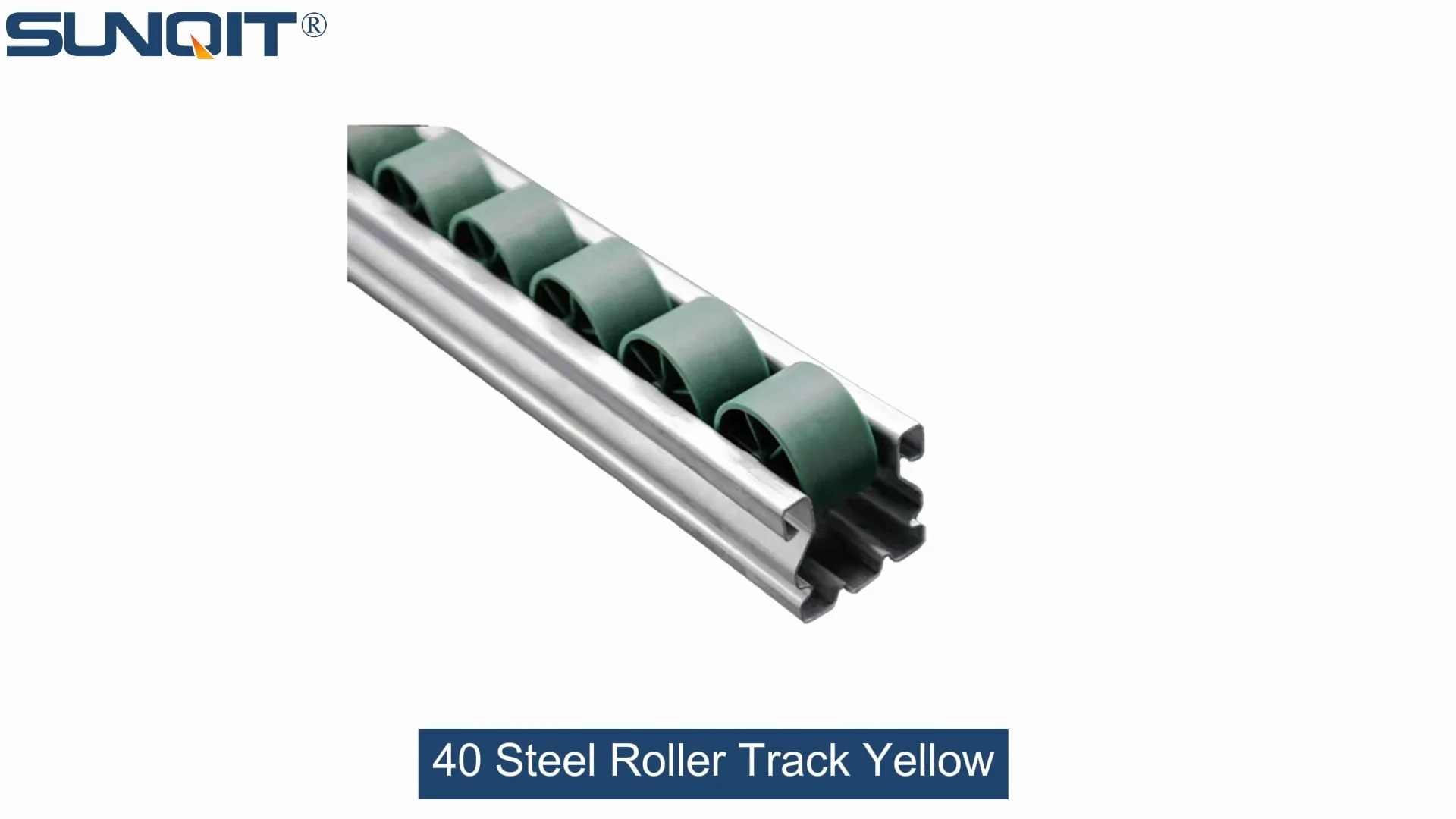
The roller track can be installed with multiple accessories to create different slopes and configurations of flow racks.All steel conveyor 40 roller track accessories are engineered to perfectly fit the sliding rail.
Why 40 Steel Roller Track Green Is Essential for Circular Economy Manufacturing
In today's fast-paced manufacturing world, the shift toward circular economy isn't just a trend—it's a necessity. Manufacturers are no longer just focused on making products; they're looking for ways to keep resources in use longer, cut down on waste, and build systems that adapt and evolve without discarding valuable components. And while big-picture strategies get a lot of attention, it's the small, essential parts that often make the biggest difference in turning circular economy goals into reality. One such part is the 40 Steel Roller Track Green—an unsung hero in lean manufacturing and sustainable production lines.
Circular economy isn't just about recycling at the end of a product's life. It's about designing systems where every component is meant to be reused, repurposed, or regenerated from the start. This is where the 40 Steel Roller Track Green shines. It's not just a track for moving materials—it's a building block for a more sustainable future.
What Exactly Is Circular Economy Manufacturing?
Before diving into the track's specifics, let's clarify what circular economy manufacturing means. Unlike the linear model (make → use → dispose), circular economy closes the loop. It focuses on four core principles: reduce resource use, reuse components, recycle materials, and regenerate natural systems. For manufacturers, this translates to modular, durable systems that adapt without waste.
Why does this matter? For one, it cuts long-term costs—reusing parts means less spending on new materials. It also reduces environmental impact, which is critical for meeting regulatory standards and consumer expectations. And in unpredictable supply chains, circular systems are more resilient—they can shift quickly without starting from scratch.
Getting to Know the 40 Steel Roller Track Green
The 40 Steel Roller Track Green is a workhorse component designed for lean manufacturing. Let's break down its name: "40" refers to its 40mm width (a standard size for compatibility), "Steel" means high-quality, heavy-duty material, and "Green" denotes its eco-friendly coating. This coating isn't just a color—it's a low-VOC, non-toxic layer that resists corrosion and extends the track's life.
But its real power lies in modularity. Unlike welded traditional tracks, this one uses simple connectors to join sections. You can cut it to length, rearrange it, or repurpose it for new projects. For example, if your production line shifts to a new product, you don't throw away the track—you take it apart and build something new with it. This is circular economy in action.
The track's rollers are smooth and durable, reducing friction and wear. This means less maintenance (just occasional cleaning) and longer life. And since it's made of steel, it's 100% recyclable—at the end of its lifecycle, it can be melted down and reused instead of ending up in a landfill.
How It Enables Circular Economy Manufacturing
1. Reusability & Modularity
Modularity is the backbone of circular economy, and this track excels here. It pairs seamlessly with flow racks—you can build a flow rack for component storage, then disassemble the track sections to add to a conveyor system when needs change. No new parts needed, no waste generated.
Connectors are also reusable. They're strong enough to attach and detach multiple times without losing integrity. This flexibility lets manufacturers adapt to market shifts quickly—critical for industries like 3C assembly where product cycles are short.
2. Longevity & Low Maintenance
A product that lasts longer is more sustainable. The 40 Steel Roller Track Green withstands heavy use in tough environments—dusty warehouses, humid assembly lines, or high-traffic areas. Its steel construction resists dents, and the green coating prevents rust. This means it can last for years, even decades, with minimal upkeep.
Traditional tracks often use cheap materials that wear out in 2-3 years. Replacing them frequently adds to waste and costs. This track's longevity cuts both—saving money and reducing environmental impact.
3. Eco-Friendly Materials & Production
The track's materials are chosen for sustainability. Steel is sourced from recycled or responsibly mined ore. The green coating is free from lead, mercury, and high VOCs. Production processes minimize waste—scrap steel is recycled back into the line, so nothing goes to landfills.
Low-VOC coatings are a game-changer for indoor manufacturing. They reduce air pollution and create safer workspaces. For example, a 3C plant reported 20% lower VOC levels after switching to this track—boosting employee health and compliance.
4. Integration with Lean Components
This track doesn't work alone. It's part of a lean solution ecosystem. It pairs with aluminum profiles to build sturdy frames for workstations or flow racks. It integrates with conveyors to create smooth material flow. All these components are modular, so you can mix and match to build custom systems.
Real-World Applications
3C Assembly Plant Example
A leading 3C assembly plant switched from traditional tracks to 40 Steel Roller Track Green in their flow racks and conveyors. When they launched a new smartphone model, they rearranged the track sections instead of buying new ones. This saved $50k in component costs and reduced waste by 30%.
Employees noticed a difference too—less odor from the tracks, and air quality tests showed lower VOC levels. This boosted morale and helped the plant meet strict environmental standards.
Warehousing Logistics Example
A warehousing company used this track to build flow racks for package storage. When they expanded their warehouse, they reused existing track sections to build new racks. This cut expansion costs by 20% and kept tons of waste out of landfills.
The track's durability also reduced maintenance time—employees no longer spent hours fixing worn-out tracks. This freed up time for more productive tasks.
Comparison to Traditional Tracks
| Feature | 40 Steel Roller Track Green | Traditional Roller Track |
|---|---|---|
| Durability | Heavy-duty steel, corrosion-resistant coating | Cheap materials, prone to rust/wear |
| Modularity | Easily disassembled/reused | Fixed/welded, hard to repurpose |
| Eco-Friendliness | Low-VOC coating, 100% recyclable | High-VOC coatings, mixed materials (hard to recycle) |
| Maintenance | Minimal (occasional cleaning) | Frequent repairs/replacements |
| Long-Term Cost | Lower (reusable, long lifespan) | Higher (frequent replacements) |
The Bigger Picture
The 40 Steel Roller Track Green is more than a component—it's a symbol of the shift to circular economy. Every time a track is reused, every dollar saved on maintenance, every ton of waste avoided, it contributes to a more sustainable future.
For manufacturers, this track is a smart investment. While initial costs may be slightly higher than traditional tracks, the long-term savings are massive. It pays for itself through reduced replacement costs, lower maintenance, and compliance with sustainability standards.
Moreover, it sets a precedent for the supply chain. When manufacturers use eco-friendly components, suppliers are encouraged to follow suit. This creates a ripple effect of sustainability across the industry.
Conclusion
The 40 Steel Roller Track Green is essential for circular economy manufacturing. Its modularity, durability, eco-friendly design, and compatibility with lean components make it a cornerstone of sustainable production. Whether you're in 3C assembly, automotive, or warehousing, this track helps you reduce waste, save money, and build a more resilient system.
As the industry shifts to circular economy, components like this track will become standard. They're not just a trend—they're the future of manufacturing. So if you're looking to make a sustainable change, start with the 40 Steel Roller Track Green. It's a small step that leads to big results.