
- Company Articles
- Products and Technology
- Product knowledge
- Why 40 Steel Roller Track Yellow Is a Staple in Lean Production Systems
For anyone who's worked in a manufacturing line, you know the frustration of bottlenecks: parts getting stuck, workers wasting time fetching materials, and lines grinding to a halt over small hiccups. In automotive assembly, a delayed component delivery can throw off an entire shift's schedule. In 3C assembly (like phone or laptop production), a clunky material handling system can lead to scratched parts or missed deadlines. Lean production systems were built to fix these issues, and at the heart of many successful lean setups is a simple yet powerful tool: the 40 Steel Roller Track Yellow. This unassuming piece of equipment isn't just another part of the line—it's a backbone of efficient, smooth, and safe material flow that every lean-focused manufacturer should have in their toolkit.
What Exactly Is 40 Steel Roller Track Yellow?
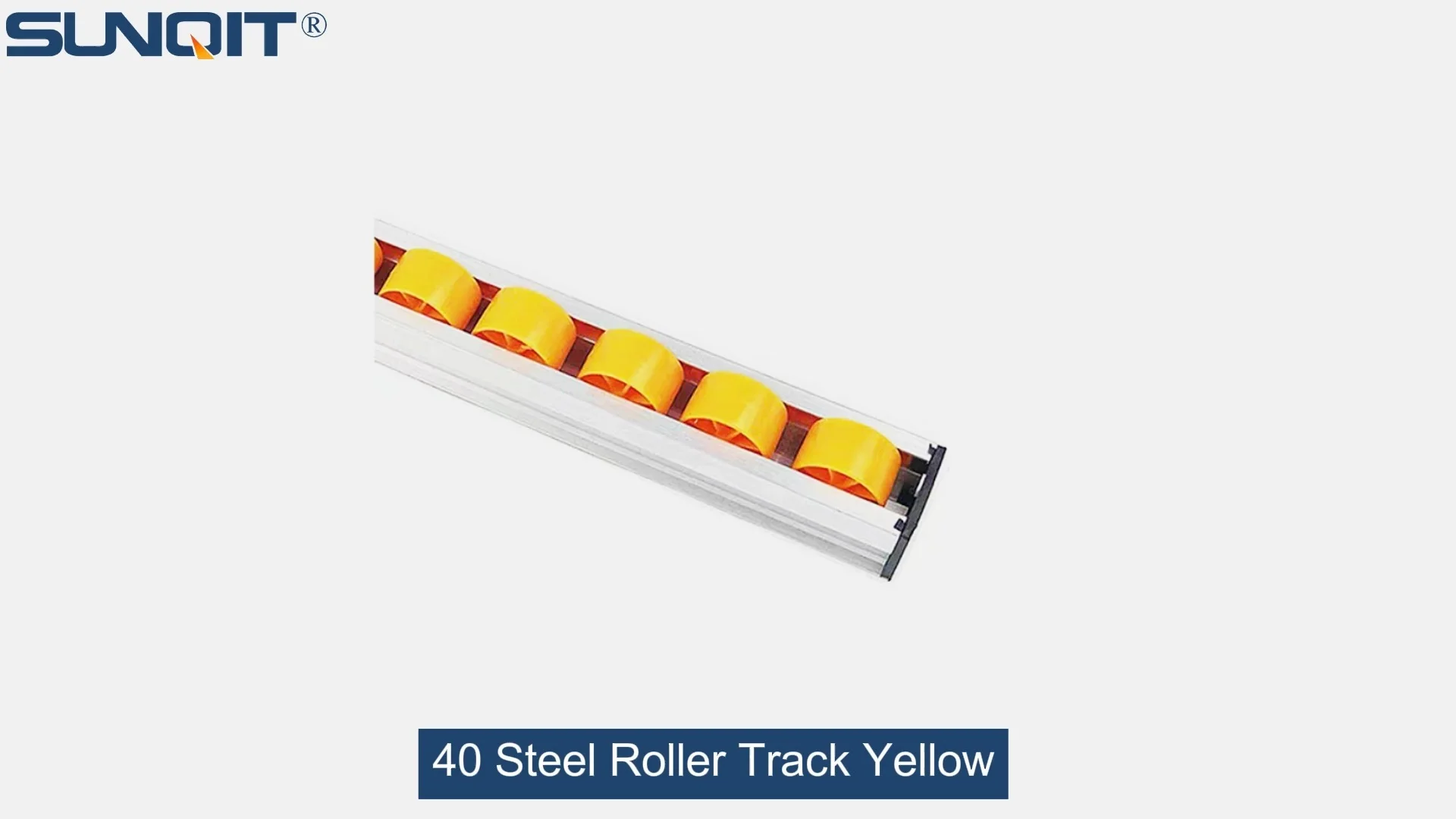
Let's break down what this tool is, beyond its name. First, the "40" refers to its standard width (40mm)—a size that's become a sweet spot in lean production: wide enough to handle most small-to-medium components, yet compact enough to fit into tight workspaces. The "Steel" tag tells you about its core material: high-gauge steel that's built to withstand the wear and tear of industrial environments. Then there's the "Yellow" — a deliberate choice, not just for aesthetics. Yellow is a universal safety color in manufacturing, designed to stand out against gray metal floors or cluttered workstations, reducing the risk of accidents.
The real value lies in its design: the track features a series of yellow-coated steel wheels (from the product line's 40 steel roller track yellow wheel) that rotate with minimal friction, allowing trays, boxes, or components to glide seamlessly. The wheels are spaced evenly to ensure stability, even for unevenly weighted items. Unlike plastic alternatives, this steel track can handle significantly heavier loads—enough to carry metal parts for automotive assembly or sterile trays for medical devices. It's also modular: sections can be connected, extended, or rearranged without specialized tools, making it easy to adapt to changing production needs.
Core Reasons It's a Staple in Lean Systems
1. Seamless Material Flow (The Heart of Lean)
Lean systems prioritize "flow"—the idea that materials should move from one step to the next without interruption. The 40 Steel Roller Track Yellow excels here. It integrates seamlessly with flow racks (a key lean tool) and conveyors, creating a continuous path for materials. For example, in a flow rack setup, the track is installed on shelves, allowing parts to slide down to the worker's station as needed. No more reaching for parts or walking across the line to fetch them—workers get exactly what they need, right at their fingertips.
Take a 3C assembly line for smartphones: trays of inspected circuit boards are placed on the track. They slide directly to the worker responsible for attaching cameras, who then sends the completed board to the next station via another track. This eliminates waiting time, cuts down on worker fatigue, and ensures that every component is where it needs to be, exactly when it needs to be there. Over a full shift, this small efficiency gain translates to hundreds of extra units produced.
2. Flexibility & Adaptability (Aligns with Continuous Improvement)
Lean manufacturing isn't a one-time fix—it's a culture of continuous improvement (kaizen). The 40 Steel Roller Track Yellow fits perfectly into this mindset. Unlike fixed conveyor belts, it's modular: you can add sections to extend the track, rearrange it to change flow direction, or even repurpose it for a completely new line. This flexibility means your investment won't become obsolete as your production needs evolve.
For example, a medical device factory might start using the track for surgical instrument trays, then later repurpose it for vaccine vial containers as demand shifts. Since it's made of steel, it can be reused again and again—aligning with the lean principle of "reusable, sustainable improvement" (from the company's core values). This adaptability saves you from buying new equipment every time your line changes, reducing both cost and waste.
3. Safety & Visibility (Critical for Busy Lines)
In busy manufacturing environments, safety is non-negotiable. The yellow color of the track plays a huge role here: it stands out against the usual gray or metal backgrounds, making it easy for workers to see where materials are moving. This reduces the risk of tripping, getting hands caught in moving parts, or knocking over trays. Additionally, the smooth rotation of the wheels minimizes jams—so parts don't fall off and cause injuries or damage.
In automotive plants, where heavy parts are moving constantly, the yellow track is a lifesaver. Workers can spot the track from across the line, so they're ready to receive parts without rushing. In medical facilities, the track's visibility ensures that sterile trays are handled with care—no one accidentally bumps into the track and disrupts the sterile process.
4. Cost-Effectiveness (Long-Term Savings)
Lean systems are all about eliminating waste, and this track helps with that in multiple ways. First, its steel construction means it has a long lifespan—far longer than plastic tracks, which crack or wear out after a few years. A single steel track can last decades with minimal maintenance, reducing replacement costs. Second, its seamless flow reduces waste from waiting, overproduction, and damaged parts. For example, if a track eliminates 10 minutes of waiting per worker per shift, that's 80 minutes saved per day for an 8-person team—time that can be used to produce more units.
Maintenance is also cheap: just occasional cleaning to remove dust from the wheels and lubrication once every few months. Compare that to plastic tracks, which need to be replaced every 2-3 years, or aluminum tracks that require corrosion treatment. The 40 Steel Roller Track Yellow is a smart investment that pays off over time.
5. Compatibility with Other Lean Tools
This track doesn't work in isolation—it plays well with other lean tools, making it even more valuable. For example, it can be integrated into lean pipe workbenches to create a complete workstation where materials flow directly to the worker. In esd workstations (used for static-sensitive components like circuit boards), it can be paired with esd-compliant parts to ensure static control. It also works with turnover trolleys and material racks, allowing you to build a fully integrated lean system that covers every aspect of material handling.

How It Compares to Other Tracks
| Feature | 40 Steel Roller Track Yellow | Plastic Roller Track | Aluminum Roller Track |
|---|---|---|---|
| Durability | High (steel construction, resistant to wear) | Low (prone to cracking and fading) | Medium (lightweight but can dent) |
| Load Capacity | High (handles up to 50kg per meter) | Low (max 15kg per meter) | Medium (max 30kg per meter) |
| Visibility | Excellent (yellow color stands out) | Variable (often gray/black) | Good (silver but less noticeable) |
| Cost Over Time | Low (decades of use, minimal maintenance) | High (frequent replacements) | Medium (occasional maintenance) |
| Flexibility | High (modular, easy to rearrange) | Medium (modular but fragile) | High (lightweight but less durable) |

Real-World Applications Across Industries
3C Assembly
In factories making smartphones or laptops, the track is used to move small components like screens or batteries between stations. For example, an iPhone assembly line uses the track to send inspected screens from the quality check station to the battery installation station. Workers don't leave their posts—they just take the next tray from the track, install the battery, and send it to the next station. This reduces time per unit by 10 seconds—multiply that by 10,000 units a day, and you get 27 extra hours of production per day.
Medical Device Production
In medical facilities, the track is used to move sterile instrument trays from the sterilization room to the packaging room. The yellow color ensures workers in the busy packaging area can see the trays coming, so they're ready to package them immediately. Since it's made of steel, it's easy to clean and sanitize—critical for meeting medical industry standards. For vaccine production lines, the track carries vial trays from filling to labeling, ensuring no delays in getting vaccines to market.
Automotive Industry
Car factories use the track to move heavy parts like door panels or engine components from the painting shop to the assembly line. The steel track handles the weight easily, and the yellow color helps workers spot the parts coming, so they can prepare to install them. This reduces the time between painting and assembly, keeping the line moving smoothly. For example, a Toyota assembly line uses the track to move dashboard panels—cutting down on installation time by 15% per car.
Warehousing & Logistics
In warehouses, the track is installed on flow racks to store parts for suppliers. When an order comes in, boxes slide down the track to the picking station—workers don't climb ladders or reach into deep shelves. This reduces picking time by 30%, making the warehouse more efficient. For example, a logistics warehouse supplying automotive parts uses the track to handle boxes of bolts and nuts—picking 500 more orders per day than before.

Common Misconceptions Debunked
Myth:
It's only for heavy industries.
Fact: No—its 40mm width is perfect for light industries like 3C assembly. The smooth wheels ensure delicate parts (like phone screens) aren't damaged.
Fact: No—its 40mm width is perfect for light industries like 3C assembly. The smooth wheels ensure delicate parts (like phone screens) aren't damaged.
Myth:
The yellow color is just for looks.
Fact: Yellow is a safety color that increases visibility, reducing accidents. It's a standard in industrial settings for material handling equipment.
Fact: Yellow is a safety color that increases visibility, reducing accidents. It's a standard in industrial settings for material handling equipment.
Myth:
It's too expensive compared to plastic tracks.
Fact: While initial cost is higher, its long lifespan (decades vs. 2-3 years for plastic) makes it cheaper over time. Maintenance is minimal, so you save on replacement costs.
Fact: While initial cost is higher, its long lifespan (decades vs. 2-3 years for plastic) makes it cheaper over time. Maintenance is minimal, so you save on replacement costs.
Conclusion
The 40 Steel Roller Track Yellow isn't just a piece of metal with wheels—it's a core component of any successful lean system. Its ability to enable seamless flow, adapt to changing needs, ensure safety, and save costs makes it a staple in manufacturing lines across industries. Whether you're running a 3C assembly line, a medical device factory, or an automotive plant, this track can help you reduce waste, improve efficiency, and align with the lean principles of continuous improvement. It's a small investment that delivers big returns—one that every lean-focused manufacturer should consider.