- Company Articles
- Products and Technology
- Product knowledge
- Why Aluminum Castor Install Bases Are Preferred for Medical Device Manufacturing

Why Aluminum Castor Install Bases Are Preferred for Medical Device Manufacturing
Related Product
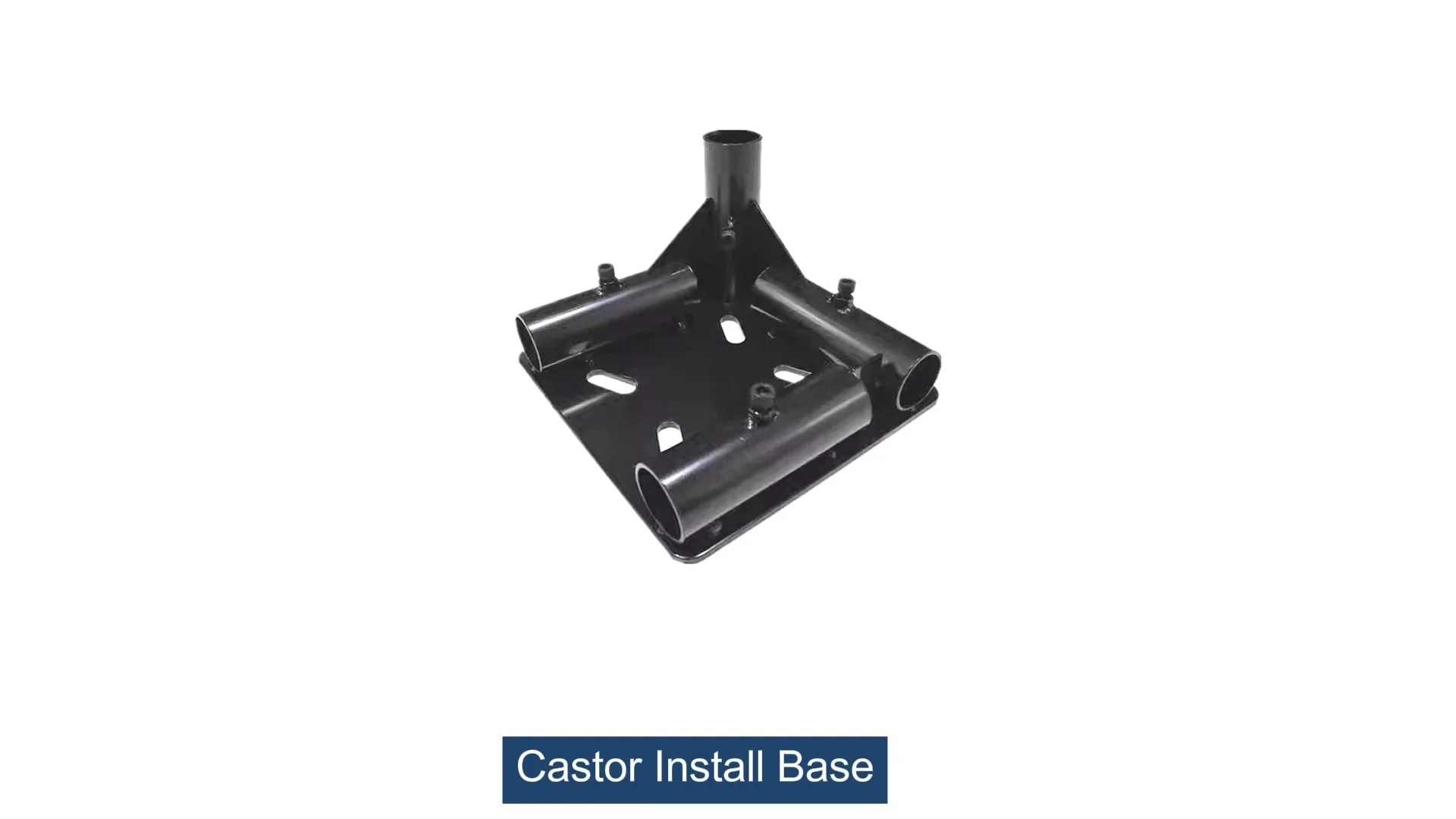
Castor Install Base
Castor install base, used for connection between pipe and castor, it can connect 4 pcs pipe by 1 pcs castor base, to make the structure strong and stable.
The Unsung Backbone of Precision: Why Details Matter in Medical Manufacturing
Walk into any medical device manufacturing facility, and your eyes might be drawn to the high-tech machinery, the sterile white workstations, or the teams in crisp lab coats meticulously assembling components. But if you look closer—past the robots and the microscopes—you'll notice something smaller, quieter, yet infinitely critical: the humble castor install base. These unassuming platforms, often made of aluminum, are the silent workhorses that keep assembly lines moving, ensure precision in delicate tasks, and uphold the strict standards that define medical manufacturing. In an industry where a fraction of a millimeter can mean the difference between a life-saving device and a costly error, choosing the right castor install base isn't just a practical decision—it's a commitment to excellence. And when it comes to material choice, aluminum has emerged as the clear favorite. Let's dive into why.
Medical Device Manufacturing: A World of Uncompromising Standards
To understand why aluminum castor install bases matter, we first need to grasp the unique demands of medical device manufacturing. Unlike consumer goods or automotive parts, medical devices—from surgical tools to diagnostic equipment—must adhere to rigorous regulations (think FDA, ISO 13485, and CE marking) designed to protect patient safety. These rules govern everything from material purity to cleanability, from structural stability to resistance to corrosion and chemicals. On top of compliance, manufacturers face pressure to maximize efficiency: assembly lines must be flexible enough to adapt to small-batch production, yet stable enough to ensure consistency in every unit. Workers, meanwhile, need ergonomic setups that reduce strain during long shifts, especially when handling fragile or heavy components. Add in the need for frequent cleaning (often with harsh disinfectants) and the requirement for mobility (to reconfigure workstations or transport), and it's clear: the "small parts" like castor install bases can't be an afterthought. They need to check every box.

Aluminum: The Material That Checks All the Boxes
So why aluminum? Let's start with the basics: aluminum is lightweight, yet surprisingly strong. For medical manufacturing, this balance is a game-changer. A heavy steel base might offer stability, but moving it across a factory floor—especially when loaded with sensitive equipment—could strain workers or damage floors. Aluminum, by contrast, keeps the overall weight of workstations manageable, making it easy to reposition lines for new product runs or maintenance. But don't mistake "lightweight" for "flimsy": aluminum alloys (like those used in medical-grade components) boast impressive strength-to-weight ratios, easily supporting the load of tools, materials, and even automated arms without bending or warping over time.
Then there's corrosion resistance. Medical facilities are no strangers to moisture, disinfectants, and cleaning agents—think daily wipe-downs with alcohol or bleach-based solutions. Steel, if not properly coated, can rust; plastic might degrade or crack under repeated exposure to chemicals. Aluminum, however, forms a natural oxide layer when exposed to air, creating a barrier that resists rust and corrosion. This means aluminum castor install bases stay looking and performing like new, even after years of heavy use and harsh cleaning. For manufacturers, this translates to lower replacement costs and less downtime—both critical for meeting tight production deadlines.
But perhaps most importantly for medical applications, aluminum is inherently non-porous and easy to clean. Unlike materials with crevices or rough surfaces (which can harbor bacteria or residue), aluminum bases can be polished to a smooth finish, leaving no hiding spots for contaminants. This is non-negotiable in environments where sterility is paramount—after all, even a tiny particle of dust could compromise a surgical instrument or a diagnostic sensor. Aluminum's cleanability isn't just a convenience; it's a compliance requirement.

Integration with Lean Systems: Flexibility Meets Functionality
Modern medical device manufacturing thrives on lean principles—eliminating waste, streamlining workflows, and adapting quickly to change. This is where aluminum castor install bases truly shine, thanks to their seamless integration with lean system components, particularly aluminum lean pipe . Aluminum lean pipe (also called "lean tube") is a cornerstone of flexible manufacturing: these lightweight, modular tubes can be combined with joints and accessories to build custom workstations, racks, and flow systems that adjust as needs evolve. When paired with aluminum castor install bases, the result is a workstation that's both mobile and modular. Need to shift an assembly line to make space for a new machine? Unlock the casters, roll the workstation, and lock it back into place. Want to add a shelf or a tool holder? Use aluminum lean pipe and joints to extend the setup in minutes. This flexibility isn't just efficient—it's essential in an industry where product lines can change quarterly (or even monthly) to keep up with innovation.
Aluminum's compatibility with other lean accessories—like adjustable leveling feet —adds another layer of practicality. Imagine a scenario: a workstation on casters is moved to a new location, but the floor isn't perfectly level. Without leveling feet, the workstation might wobble, making it impossible to assemble tiny components with precision. Adjustable leveling feet solve this problem: simply twist the feet to raise or lower one side, ensuring the base sits perfectly flat, even on uneven surfaces. For medical device assembly, where tasks like soldering microelectronics or aligning optical lenses demand steady hands and stable platforms, this stability is non-negotiable. Aluminum castor install bases often come pre-fitted with these feet, turning a potential headache into a non-issue.

Durability: Built to Last in High-Traffic Environments
Medical manufacturing facilities are busy places. Workstations are moved multiple times a day, loaded with heavy tools, and subjected to constant vibrations from nearby machinery. A flimsy base would quickly show signs of wear—bending, cracking, or failing to lock into place—putting both workers and products at risk. Aluminum, however, is built to withstand this kind of abuse. Its natural resilience means it resists dents and scratches, even in high-traffic areas. Unlike plastic bases, which can become brittle over time (especially under UV light or chemical exposure), aluminum maintains its integrity for years. This durability translates to a lower total cost of ownership: while aluminum might have a slightly higher upfront price than plastic, it rarely needs replacement, saving manufacturers money in the long run. For a industry where reliability is everything, this peace of mind is priceless.
Comparing Materials: Aluminum vs. Steel vs. Plastic
Still not convinced aluminum is the best choice? Let's put it head-to-head with two common alternatives: steel and plastic. The table below breaks down how each material stacks up against the key demands of medical device manufacturing:
| Feature | Aluminum | Steel | Plastic |
|---|---|---|---|
| Weight | Lightweight (easy to move) | Heavy (difficult to reposition) | Lightweight (but less stable under load) |
| Corrosion Resistance | Excellent (natural oxide layer) | Poor (requires coating; prone to rust) | Good (but may degrade with chemicals) |
| Cleanability | High (smooth, non-porous surface) | Medium (may have weld seams/crevices) | Medium (can develop scratches that trap bacteria) |
| Strength-to-Weight Ratio | Excellent (strong for its weight) | Good (strong but heavy) | Poor (bends under heavy loads) |
| Compatibility with Lean Systems | High (works with aluminum lean pipe, adjustable feet) | Medium (heavier, less modular) | Low (limited to lightweight accessories) |
The verdict? Aluminum outperforms steel and plastic in the areas that matter most to medical manufacturers: mobility, compliance, and long-term reliability. It's not just a material choice—it's a strategic one.
Real-World Impact: How Aluminum Bases Improve Outcomes
Let's ground this in a hypothetical (but realistic) scenario. Imagine a manufacturer of minimally invasive surgical tools. Their assembly line requires workers to handle tiny, sharp components—scalpels, forceps, and endoscopic parts—with absolute precision. The workstations must be mobile (to accommodate batch changes) but stable (to prevent accidents). They also need to be cleaned twice daily with industrial-grade disinfectants. Initially, the facility used steel castor bases. But over time, issues arose: the bases were heavy, making reconfiguration a two-person job; they began to rust around the welds, even with coatings; and the rough surfaces were hard to sanitize, leading to frequent quality control checks. After switching to aluminum castor install bases, the changes were immediate: workers could reposition workstations alone, reducing downtime; the aluminum surfaces resisted rust and cleaned easily, cutting sanitization time by 30%; and the adjustable leveling feet eliminated wobbling, reducing component errors by 15%. For a company producing 10,000 units a month, that 15% error reduction translated to thousands of saved dollars—and, more importantly, fewer defective tools reaching hospitals. That's the impact of choosing the right base.
Looking Ahead: Aluminum's Role in the Future of Medical Manufacturing
As medical device manufacturing evolves—with trends like 3D printing, AI-driven quality control, and personalized medicine—so too will the demands on manufacturing equipment. Aluminum castor install bases are poised to keep up. Innovations in aluminum alloys (like those with enhanced strength or antimicrobial properties) are making them even more suitable for next-gen facilities. Meanwhile, the push for sustainability is driving manufacturers to choose recyclable materials like aluminum, which can be melted down and reused without losing quality. In a world where "green manufacturing" is no longer a buzzword but a business imperative, aluminum's eco-friendly credentials are an added bonus.
Conclusion: The Foundation of Excellence
At the end of the day, medical device manufacturing is about trust. Patients trust that the tools used in their care are safe, precise, and reliable. Manufacturers trust that their processes can deliver on that promise, day in and day out. Aluminum castor install bases might not be the most glamorous part of that process, but they're undeniably foundational. They embody the industry's commitment to quality—proving that even the smallest components can have a big impact. So the next time you see a medical device, take a moment to appreciate the unseen: the aluminum base that helped build it, one precise, stable, and compliant step at a time. In medical manufacturing, excellence truly is in the details—and aluminum castor install bases are a detail worth investing in.