- Company Articles
- Products and Technology
- Product knowledge
- Why Aluminum Pipe Clamps Are Essential for Lean Manufacturing Principles

Why Aluminum Pipe Clamps Are Essential for Lean Manufacturing Principles
Related Product
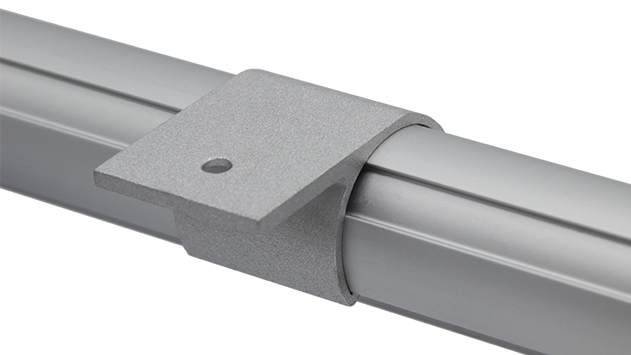
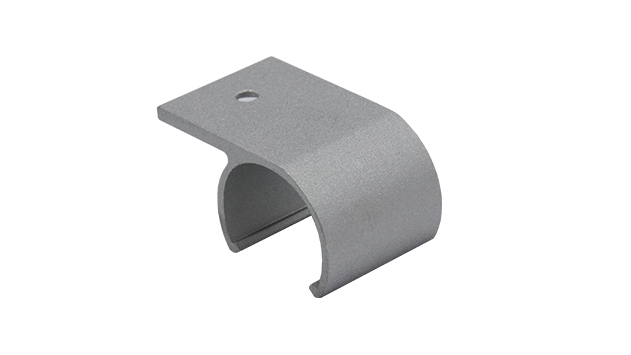
Aluminum Pipe Clamp
Aluminum pipe side clamp used for 28mm aluminum pipe connect with table top, or other accessories.

Introduction: The Unsung Heroes of Lean Efficiency
Lean manufacturing isn't just a buzzword—it's a mindset, a way of working that revolves around one core goal: doing more with less. At its heart are principles like eliminating waste, streamlining processes, and fostering continuous improvement. But here's the thing about lean: it doesn't happen by accident. It relies on the right tools, the kind that work quietly in the background to keep operations running smoothly, adapt to change, and cut out inefficiencies.
Among these tools, there's one that often flies under the radar: the aluminum pipe clamp. You might not think much about it when you walk through a factory floor, but this small, unassuming component plays a critical role in building the flexible, organized, and waste-free workspaces that lean manufacturing demands. From holding together workbenches where products are assembled to securing the flow racks that keep materials moving, aluminum pipe clamps are the glue that holds lean systems together.
In this article, we'll dive into why these clamps matter so much. We'll explore how they align with key lean principles, how they outperform alternatives, and why manufacturers who prioritize them often find themselves a step ahead in the race for efficiency. Whether you're deep into lean implementation or just starting to explore its benefits, understanding the value of aluminum pipe clamps could be the missing piece in your operational puzzle.
The Core of Lean: Principles That Drive Success
Before we get into the specifics of aluminum pipe clamps, let's take a moment to ground ourselves in what lean manufacturing really means. At its core, lean is about creating value for the customer while minimizing everything else—time, resources, space, and effort. To do that, it relies on several key principles:
1. Waste Reduction (Muda):
Lean identifies seven types of waste, from excess inventory to unnecessary motion. The goal is to root these out wherever they exist.
2. Flexibility and Adaptability: Markets change, customer demands shift, and production needs evolve. Lean systems must be able to pivot quickly without major overhauls.
3. Continuous Improvement (Kaizen): Small, incremental changes add up over time. Lean thrives on a culture where everyone is looking for ways to make processes better.
4. Workplace Organization (5S): A clean, organized workspace reduces errors, speeds up tasks, and makes waste visible. Think "a place for everything and everything in its place."
5. Value Stream Mapping: Understanding every step of the production process to ensure each action adds value—no more, no less. Now, here's where tools like aluminum pipe clamps come in. They don't just support one or two of these principles—they embody all of them. Let's break down how.
2. Flexibility and Adaptability: Markets change, customer demands shift, and production needs evolve. Lean systems must be able to pivot quickly without major overhauls.
3. Continuous Improvement (Kaizen): Small, incremental changes add up over time. Lean thrives on a culture where everyone is looking for ways to make processes better.
4. Workplace Organization (5S): A clean, organized workspace reduces errors, speeds up tasks, and makes waste visible. Think "a place for everything and everything in its place."
5. Value Stream Mapping: Understanding every step of the production process to ensure each action adds value—no more, no less. Now, here's where tools like aluminum pipe clamps come in. They don't just support one or two of these principles—they embody all of them. Let's break down how.
Aluminum Pipe Clamps: What Are They, Anyway?
Let's start with the basics. Aluminum pipe clamps are mechanical fasteners designed to connect aluminum pipes, profiles, or tubes securely. They're typically made from lightweight, corrosion-resistant aluminum alloy, though some may have steel or plastic components for added strength. What sets them apart is their design: most feature a simple, intuitive structure—often with screws, levers, or locking mechanisms—that allows for quick assembly and disassembly without specialized tools.
Unlike rigid, one-size-fits-all fasteners, aluminum pipe clamps are built for versatility. They come in various shapes and sizes to accommodate different pipe diameters, angles, and connection types. For example, a 90-degree aluminum crossing joint clamp might be used to build the frame of a workbench, while a parallel aluminum joint could secure two pipes side by side in a flow rack. Some are even designed for rotational movement, letting parts of a structure pivot or adjust as needed.
But what really makes them stand out is their compatibility with aluminum profiles and pipes—a material that's already a favorite in lean manufacturing for its light weight, strength, and recyclability. Together, aluminum pipes and clamps form a modular system that can be configured, reconfigured, and repurposed with minimal effort. That modularity is key to their role in lean systems.
How Aluminum Pipe Clamps Support Lean Principles
Let's get to the heart of the matter: why do aluminum pipe clamps matter for lean manufacturing? Let's walk through each lean principle and see how these clamps make a difference.
1. Waste Reduction: Less Inventory, Less Time, Less Waste
One of the biggest sources of waste in manufacturing is excess inventory—whether it's extra materials, tools, or even finished products sitting idle. Aluminum pipe clamps tackle this head-on through modularity. Instead of stocking pre-built, fixed structures (like custom workbenches or rigid shelving), manufacturers can stock a few standard sizes of aluminum pipes and clamps. When a new structure is needed, they assemble it on the spot. No more storing half-a-dozen different workbench models "just in case." Time waste is another big issue. Traditional steel clamps or welded connections often require tools, skilled labor, and time to set up. Aluminum pipe clamps? Many can be tightened by hand or with a basic wrench in minutes. A team that once took hours to build a flow rack can now do it in under an hour—freeing up time for more value-added tasks. And when a structure is no longer needed? Disassemble the clamps, pack up the pipes, and reuse them elsewhere. No wasteful disposal, no need to buy new materials.2. Flexibility & Adaptability: Pivoting Without Panic
Lean manufacturing thrives on flexibility. A product line might need to scale up one month, shift to a new design the next, or downsize temporarily. Rigid structures—think welded steel frames or bolted-together workbenches—can't keep up. They're expensive to modify, time-consuming to replace, and often end up collecting dust in a corner when no longer needed. Aluminum pipe clamps change the game. Because they're easy to loosen and reattach, structures built with them can be reconfigured in hours, not days. For example, imagine a electronics manufacturer that suddenly needs to adjust its assembly line for a new phone model. With aluminum pipe clamps, the team can quickly modify their workbenches to accommodate new tools, reposition flow racks to shorten material travel distances, or even build temporary stations to handle a surge in demand. This adaptability ensures the production line never gets stuck in a rigid "this is how we've always done it" mindset—a cornerstone of continuous improvement.3. Workplace Organization: Tidy, Efficient, and Safe
A messy workspace is a breeding ground for waste. Tools get lost, materials pile up, and workers spend precious time searching instead of producing. The 5S principle (Sort, Set in Order, Shine, Standardize, Sustain) aims to fix this, and aluminum pipe clamps are a 5S dream come true. When you use clamps to build structures like workbenches or flow racks, everything has a defined place. Pipes are securely fastened, so shelves don't wobble, and materials don't topple. Cables can be routed through clamp openings or along aluminum profiles, keeping floors clear. Even better, because the structures are modular, it's easy to adjust their height, width, or layout to fit the workspace perfectly—no more cramming oversized equipment into tight corners or leaving wasted space unused. Take a typical assembly area: a workbench built with aluminum pipe clamps might have designated slots for tools, a flow rack attached to one side for incoming parts, and a roller track (secured with clamps) for moving finished products to the next station. Every inch is intentional, every component has a purpose. That's the kind of organization lean manufacturing craves.4. Durability & Cost-Effectiveness: Long-Term Savings, Short-Term Gains
Lean isn't just about cutting costs today—it's about sustainable efficiency. Aluminum pipe clamps deliver on both fronts. Aluminum is naturally resistant to rust and corrosion, making these clamps ideal for factories where moisture, chemicals, or humidity might be an issue. Unlike plastic clamps, which can crack or degrade over time, or low-quality steel clamps that rust, aluminum clamps hold up to daily wear and tear, reducing the need for frequent replacements. And because they're reusable, they offer long-term cost savings. A set of clamps bought today might build a workbench this month, a turnover trolley next quarter, and a material rack next year. Compare that to disposable fasteners or custom-built structures, which end up in the trash when their original purpose is done. Over time, the savings add up—money that can be reinvested into other lean initiatives, like employee training or process optimization.
Real-World Impact: Case Study
How a Automotive Parts Manufacturer Cut Waste by 30% with Aluminum Pipe Clamps
Let's put this into context with a real example. A mid-sized automotive parts manufacturer was struggling with inefficiencies in its assembly line. Their workbenches were old, welded steel structures that couldn't be adjusted—some were too low, others too high, leading to worker fatigue and slowdowns. Their material racks were a hodgepodge of wooden shelves and plastic bins, which often collapsed under heavy parts, causing delays and waste. And whenever they needed to reconfigure the line for a new part, they had to hire contractors to cut and weld new frames, costing thousands and taking weeks.
The solution? They switched to a modular system built with aluminum pipes, profiles, and clamps. Within a month, they'd replaced all their old workbenches with adjustable models—using clamps to set the height for each worker, reducing fatigue-related errors by 25%. They built custom flow racks with roller tracks (secured with clamps) to move parts directly to the assembly stations, cutting material travel time by 40%. And when a new part design required a line reconfiguration? The team disassembled the clamps, repositioned the pipes, and had the new setup ready in a single day—no contractors, no downtime.
Result? The manufacturer reported a 30% reduction in overall waste (time, materials, and labor) within six months. Workers were happier, production speeds increased, and the company saved over $50,000 in the first year alone by avoiding custom steel fabrication and reducing material waste. All because of a simple switch to aluminum pipe clamps and modular structures.
Aluminum Pipe Clamps vs. Alternatives: A Comparison
To really understand why aluminum pipe clamps are essential for lean, it helps to see how they stack up against other fasteners. Let's compare them to two common alternatives: traditional steel clamps and plastic clamps.
As the table shows, aluminum pipe clamps outshine alternatives in nearly every category that matters for lean manufacturing. They're lightweight, durable, easy to use, and built for the kind of flexibility that modern production lines demand.
| Feature | Aluminum Pipe Clamps | Traditional Steel Clamps | Plastic Clamps |
|---|---|---|---|
| Weight | Lightweight (easy to handle and transport) | Heavy (increases labor time and structural load) | Very light (but less stable for heavy loads) |
| Corrosion Resistance | High (ideal for humid or chemical-exposed environments) | Low (prone to rust without regular maintenance) | High (but can degrade in extreme temperatures) |
| Assembly/Disassembly Speed | Fast (often tool-free or requires basic tools) | Slow (may require welding, bolts, or specialized tools) | Fast (but can strip or break with repeated use) |
| Reusability | High (can be disassembled and reused indefinitely) | Low (welded connections are permanent; bolts may strip) | Medium (plastic weakens over time with reconfiguration) |
| Cost Over Time | Low (initial investment pays off via reusability and durability) | High (frequent replacement and maintenance costs) | Low upfront, but high long-term (needs replacement often) |
| Compatibility with Lean Systems | Excellent (modular, flexible, supports continuous improvement) | Poor (rigid, limits adaptability) | Fair (flexible but lacks durability for heavy use) |
Choosing the Right Aluminum Pipe Clamps for Your Needs
Not all aluminum pipe clamps are created equal. To get the most out of them, you'll need to choose the right ones for your specific application. Here are a few key factors to consider:
Load Capacity:
How much weight will the structure need to support? A small workbench for hand tools might only need light-duty clamps, while a flow rack holding heavy machinery parts will require heavy-duty, reinforced models.
Environment: Will the clamps be used in a dry factory, a humid warehouse, or an area with chemicals? Look for corrosion-resistant finishes or specialized coatings if needed.
Compatibility: Ensure the clamps fit your existing aluminum pipes or profiles. Most manufacturers specify the pipe diameter (e.g., 20mm, 30mm) and profile type (e.g., T-slot aluminum pipe) they work with.
Connection Type: Do you need a fixed angle (like a 90-degree joint), a swivel joint, or a parallel connection? Choose clamps designed for the specific angles and movements your structure requires.
Ease of Use: If your team will be reconfiguring structures frequently, opt for clamps with tool-free adjustment (e.g., lever-operated or quick-release mechanisms) to save time. It's also worth partnering with a reputable aluminum pipe clamp supplier who understands lean manufacturing. They can help you select the right products, provide samples for testing, and even offer design support to ensure your modular structures are optimized for efficiency.
Environment: Will the clamps be used in a dry factory, a humid warehouse, or an area with chemicals? Look for corrosion-resistant finishes or specialized coatings if needed.
Compatibility: Ensure the clamps fit your existing aluminum pipes or profiles. Most manufacturers specify the pipe diameter (e.g., 20mm, 30mm) and profile type (e.g., T-slot aluminum pipe) they work with.
Connection Type: Do you need a fixed angle (like a 90-degree joint), a swivel joint, or a parallel connection? Choose clamps designed for the specific angles and movements your structure requires.
Ease of Use: If your team will be reconfiguring structures frequently, opt for clamps with tool-free adjustment (e.g., lever-operated or quick-release mechanisms) to save time. It's also worth partnering with a reputable aluminum pipe clamp supplier who understands lean manufacturing. They can help you select the right products, provide samples for testing, and even offer design support to ensure your modular structures are optimized for efficiency.
Conclusion: The Small Tool That Drives Big Lean Results
Lean manufacturing is about the details—the small, incremental changes that add up to big results. Aluminum pipe clamps might seem like just another detail, but they're the kind of detail that can transform a struggling production line into a lean, mean, efficiency machine.
By reducing waste through modularity, enabling flexibility to adapt to change, supporting workplace organization, and delivering long-term cost savings, these clamps embody every lean principle. They're not just fasteners—they're enablers of continuous improvement, tools that empower teams to work smarter, not harder.
So the next time you walk through a factory floor, take a closer look at those workbenches, flow racks, and assembly lines. Chances are, if they're part of a truly lean operation, aluminum pipe clamps are holding them together. And now that you know why, you'll understand just how essential they are.