- Company Articles
- Products and Technology
- Solution
- Why Aluminum Workbench D Is a Top Choice for Lean Six Sigma Implementation

Why Aluminum Workbench D Is a Top Choice for Lean Six Sigma Implementation
Related Product
Aluminum Workbench D
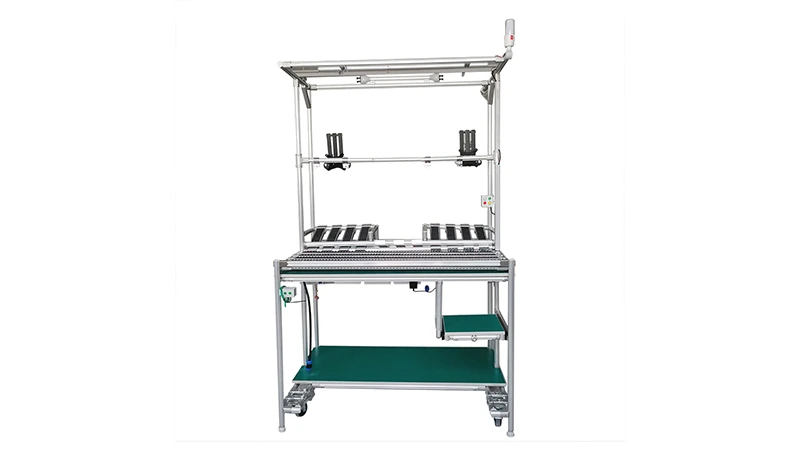
Aluminum tube workbench is more flexible and durable, compared with traditional PE/ABS coated steel tube. It is easy to assemble, anti corrosion, rust protection, and recycle use after disassemble.
Introduction: The Pulse of Lean Six Sigma in Modern Manufacturing
In the fast-paced world of manufacturing, where every second counts and efficiency is the lifeblood of success, Lean Six Sigma has emerged not just as a methodology, but as a mindset. It's about stripping away waste, refining processes, and creating systems that work
with
your team, not against them. At the heart of this mindset lies a often-overlooked hero: the workspace itself. A well-designed workstation isn't just a table where tasks happen—it's the foundation upon which Lean principles come to life. Today, we're diving into why one particular tool has become a game-changer for teams serious about Lean Six Sigma: Aluminum Workbench D. This isn't just another piece of equipment; it's a strategic investment in smoother workflows, happier teams, and bottom-line results. Let's explore why it's quickly becoming the top choice for manufacturers aiming to turn Lean goals into daily reality.
The Heart of Lean: Why Workbenches Matter More Than You Think
Think about a typical day on the factory floor. A worker reaches for a tool, pauses to search through a cluttered drawer, then walks 10 feet to grab a component from a disorganized shelf. Multiply that by hundreds of workers and thousands of tasks, and suddenly "small" inefficiencies add up to lost hours, frustrated teams, and missed deadlines. This is where the workbench steps in. It's the central hub of production—where assembly happens, tools live, and materials flow in and out. A poorly designed workbench becomes a silent thief of productivity: it traps waste (motion, inventory, waiting), disrupts flow, and makes standardization nearly impossible. A great workbench, though, does the opposite. It reduces unnecessary movement, keeps materials within arm's reach, and adapts to changing needs—all critical for Lean Six Sigma's focus on continuous improvement. Aluminum Workbench D, with its aluminum profile construction and thoughtful design, isn't just keeping up with these demands; it's setting a new standard.

Meet Aluminum Workbench D: More Than Just a Surface
Let's start with the basics: Aluminum Workbench D is defined by its single-deck design and intentional lack of built-in casters (though it's fully customizable to add them later). At first glance, that might sound underwhelming—until you realize why those choices matter. The single-deck layout is a masterclass in simplicity: it eliminates the clutter of lower shelves that often become dumping grounds for unused tools or outdated components, forcing teams to keep only what's essential (hello, 5S "Sort" principle). And while casters might seem like a convenience, fixed positioning (when needed) ensures stability during precision work—no more wobbly surfaces when assembling delicate parts. But the real star here is the material: aluminum profile. Unlike heavy steel, flimsy plastic, or warprone wood, aluminum profile strikes the perfect balance of strength and flexibility. It's lightweight enough to reconfigure when workflows change, yet durable enough to withstand the daily grind of manufacturing. Plus, its smooth, non-porous surface is a breeze to clean—no more hiding spots for dirt or grime, which is a game-changer for maintaining the "Shine" step in 5S. Aluminum Workbench D isn't just built to last; it's built to evolve with your Lean journey.

How Aluminum Workbench D Solves Common Lean Pain Points
Let's get practical. Lean Six Sigma thrives on solving specific, tangible problems—and Aluminum Workbench D checks off boxes that many traditional workbenches don't even consider. Take waste reduction, for example. One of the biggest sources of waste in manufacturing is
motion
: workers walking to grab tools, stretching to reach materials, or rearranging cluttered surfaces. Aluminum Workbench D addresses this head-on. Its height is adjustable (thanks to aluminum profile accessories like telescopic legs), ensuring that every team member can work comfortably without straining. Add-ons like tool holders, bins, and side racks (all compatible with the aluminum profile's T-slot design) keep essentials within arm's reach, cutting down on unnecessary movement. Then there's
inventory waste
—the pile-up of excess materials because there's no clear system for replenishment. Pair Aluminum Workbench D with a flow rack, and suddenly materials glide directly to the bench as needed, instead of sitting idle. It's a small change that eliminates stockpiles and keeps cash flow healthy.
Now, let's talk about 5S—the backbone of Lean workplace organization. "Sort" (removing unneeded items) is easier when the bench itself doesn't have hidden corners to stash clutter. "Set in Order" (organizing what's left) becomes second nature with customizable tool mounts and labeled bins that lock into the aluminum profile. "Shine" (cleaning regularly) is simplified by the bench's smooth aluminum surface—wiping it down at the end of a shift takes seconds, not minutes. "Standardize" (making processes consistent) is a cinch because every Aluminum Workbench D can be configured identically across the factory floor, so workers know exactly where to find tools, no matter which station they're at. And "Sustain" (maintaining the system) is possible because the bench is built to last—no more replacing warped wooden tops or rusted steel frames that force teams to rebuild their organization from scratch every few years. Aluminum Workbench D doesn't just support 5S; it makes living 5S feel effortless.
Now, let's talk about 5S—the backbone of Lean workplace organization. "Sort" (removing unneeded items) is easier when the bench itself doesn't have hidden corners to stash clutter. "Set in Order" (organizing what's left) becomes second nature with customizable tool mounts and labeled bins that lock into the aluminum profile. "Shine" (cleaning regularly) is simplified by the bench's smooth aluminum surface—wiping it down at the end of a shift takes seconds, not minutes. "Standardize" (making processes consistent) is a cinch because every Aluminum Workbench D can be configured identically across the factory floor, so workers know exactly where to find tools, no matter which station they're at. And "Sustain" (maintaining the system) is possible because the bench is built to last—no more replacing warped wooden tops or rusted steel frames that force teams to rebuild their organization from scratch every few years. Aluminum Workbench D doesn't just support 5S; it makes living 5S feel effortless.
Comparing Materials: Why Aluminum Stands Out
To truly appreciate Aluminum Workbench D, it helps to see how it stacks up against other common workbench materials. Let's break it down:
The verdict? Aluminum profile isn't just a middle ground—it's a clear winner for Lean environments. It combines the best of portability and durability, while its customization options mean it can grow with your processes. When you factor in long-term costs (fewer replacements, less maintenance), Aluminum Workbench D becomes an investment that pays for itself.
| Material | Weight (Portability) | Durability | Customization | Cleanliness | Cost Over Time |
|---|---|---|---|---|---|
| Wood | Heavy; hard to move | Warped by moisture; scratches easily | Limited (nails/screws damage the surface) | Porous; traps dirt and bacteria | Low upfront, but high replacement cost |
| Steel | Very heavy; nearly immovable | Strong, but prone to rust without constant maintenance | Difficult (welding required for modifications) | Prone to rust; paint chips over time | High upfront; maintenance adds long-term costs |
| Plastic | Lightweight, but flimsy | Bends under heavy loads; fades in sunlight | Minimal (no built-in mounting points) | Easy to clean, but scratches show easily | Low upfront, but short lifespan |
| Aluminum Profile (Aluminum Workbench D) | Lightweight; easy to reconfigure | Weather-resistant; scratch-resistant; no rust | High (T-slot design accepts endless accessories) | Smooth, non-porous surface; wipes clean in seconds | Moderate upfront, but minimal maintenance and long lifespan |
Real-World Impact: Stories from the Factory Floor
Numbers and features tell part of the story, but nothing beats hearing from teams who've actually made the switch. Take the example of a mid-sized electronics manufacturer we worked with last year. Their assembly line was struggling with two major issues: high error rates and low team morale. Workers complained about disorganized workbenches, with tools scattered across wooden surfaces that were sticky with glue residue and impossible to clean properly. Materials often piled up because there was no clear way to integrate a conveyor system, leading to delays and missed deadlines. After switching to Aluminum Workbench D, paired with a flow rack and a simple conveyor for material transport, the results were striking. Within three months, error rates dropped by 18%—a direct result of standardized, clutter-free workstations. Setup time between shifts decreased by 25% because tools and materials had fixed, labeled positions on the bench. And perhaps most importantly, team members reported feeling "valued" and "supported" by the new setup. One worker put it best: "I don't have to fight the bench anymore. I can just focus on building the product right." That's the power of a tool that's designed with Lean principles in mind—it doesn't just improve processes; it empowers people.
Case Study: A Automotive Parts Supplier's Lean Transformation
A automotive parts supplier with 120 employees was struggling to meet increasing demand while maintaining quality. Their old steel workbenches were heavy and immovable, making it impossible to adjust workflows when new parts were introduced. Workers spent 15-20 minutes per shift just rearranging tools and materials. After installing 30 Aluminum Workbench D stations, paired with aluminum profile accessories like tool rails and bin holders, they saw immediate changes. Material flow became smoother (thanks to integration with a conveyor system), and workers reported a 30% reduction in time spent searching for tools. Within six months, the supplier increased production output by 12% without adding extra shifts—all because their workbenches finally supported their Lean goals, instead of hindering them.
Beyond the Bench: Building a Complete Lean Ecosystem
Aluminum Workbench D is powerful on its own, but its true potential shines when it's part of a larger Lean system. Think of it as the hub that connects other essential tools: flow racks for storing materials, conveyors for moving parts to the bench, and aluminum profile accessories for customizing the space to your exact needs. For example, a flow rack positioned next to the workbench ensures that components arrive just in time, eliminating overstock and freeing up floor space. A conveyor belt integrated into the bench's edge can carry finished products to the next station without manual lifting, reducing the risk of injury and speeding up throughput. Even small additions, like swivel roller balls (1 inch or 0.5 inch) mounted on the bench's surface, make sliding heavy materials across the deck effortless—no more straining or dropping parts. Aluminum Workbench D isn't a standalone solution; it's the centerpiece of a ecosystem where every element works together to minimize waste and maximize efficiency. It's Lean Six Sigma in action, from the ground up.
Choosing the Right Supplier: Why Quality Matters
Of course, not all Aluminum Workbench D models are created equal. To truly reap the benefits, you need a supplier who understands both the technical specs and the philosophy of Lean Six Sigma. Look for a partner who offers not just the bench, but a range of compatible aluminum profile accessories—tool holders, bin rails, adjustable legs—to ensure you can customize as needed. They should also provide guidance on integration with other systems like flow racks or conveyors, because a workbench is only as good as how it connects to the rest of your workflow. Avoid suppliers who treat the bench as a "one-size-fits-all" product; Lean is about continuous improvement, and your supplier should be willing to adapt as your needs change. A great supplier doesn't just sell you a workbench—they become a partner in your Lean journey, helping you troubleshoot, reconfigure, and grow.
Conclusion: Investing in Your Team's Success
At the end of the day, Lean Six Sigma isn't just about processes—it's about people. Aluminum Workbench D embodies this truth by putting the needs of your team front and center. It reduces frustration by eliminating clutter and unnecessary motion. It builds confidence by providing a stable, reliable workspace where mistakes are less likely. And it fosters pride by showing your team that you're invested in their success. This bench is more than a tool; it's a statement: "We value efficiency, we value quality, and we value
you
." In a world where manufacturing margins are tight and competition is fierce, that's not just a nice sentiment—it's a strategic advantage. So if you're serious about making Lean Six Sigma more than a buzzword, start with the foundation. Start with Aluminum Workbench D. Your team, your processes, and your bottom line will thank you.