- Company Articles
- Products and Technology
- Product knowledge
- Why Aluminum Workbench D Is Preferred for Rapid Prototyping Workstations

Why Aluminum Workbench D Is Preferred for Rapid Prototyping Workstations
Related Product
Aluminum Workbench D
Aluminum tube workbench is more flexible and durable, compared with traditional PE/ABS coated steel tube. It is easy to assemble, anti corrosion, rust protection, and recycle use after disassemble.
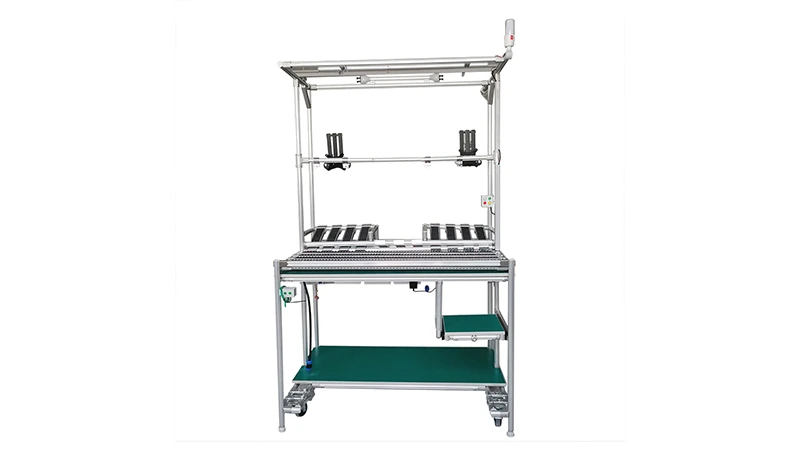
In the fast-paced world of rapid prototyping, where ideas evolve overnight and projects shift direction in the blink of an eye, the tools and workspaces that support innovation matter as much as the creativity behind the designs. Prototypers, engineers, and product developers don't just need a surface to work on—they need a workstation that keeps up with their pace, adapts to their changing needs, and stands firm through countless iterations. Enter the Aluminum Workbench D: a hero in the realm of rapid prototyping, quietly revolutionizing how teams turn concepts into tangible models. But what makes this particular workbench so indispensable? Let's dive into the details, exploring why Aluminum Workbench D has become the go-to choice for professionals who refuse to be limited by rigid, one-size-fits-all workspaces.
Rapid prototyping isn't just about speed—it's about flexibility, precision, and efficiency. A workstation in this environment must handle everything from delicate 3D-printed components to heavy machinery, all while allowing teams to reconfigure layouts in hours (not days) when a project takes an unexpected turn. Traditional workbenches, often made of wood, steel, or generic plastic, fall short here: wood warps under heat and moisture, steel is bulky and hard to modify, and plastic lacks the structural integrity for heavy tools. Aluminum Workbench D, built from high-grade aluminum extrusion profile and paired with intuitive aluminum pipe accessories, addresses these pain points head-on. It's not just a table; it's a dynamic platform that grows, changes, and improves alongside your projects.
The Aluminum Advantage: Why Extrusion Profile Changes the Game
At the heart of Aluminum Workbench D lies one key material: aluminum extrusion profile. This isn't your average aluminum sheet or pipe—extruded aluminum is engineered for strength, precision, and adaptability. Here's why it matters for rapid prototyping:
- Strength without the bulk : Aluminum extrusion profile is surprisingly strong for its weight. Unlike steel workbenches, which require heavy lifting equipment to reposition, Aluminum Workbench D can be moved by two people, making it easy to rearrange a lab or workshop when a new project demands a different layout. This lightweight nature doesn't compromise durability, though—extruded aluminum can support up to 500kg of evenly distributed weight, enough for 3D printers, laser cutters, and stacks of prototype materials.
- Corrosion resistance for longevity : Rapid prototyping environments are often messy. Chemicals, adhesives, and even spilled coffee can take a toll on work surfaces. Aluminum's natural resistance to rust and corrosion means Aluminum Workbench D stays looking (and functioning) like new, even after years of heavy use. Compare that to wood, which stains and warps, or steel, which rusts without constant maintenance.
- Precision-engineered for modularity : Extruded aluminum profiles feature T-slots—longitudinal grooves that run the length of the material. These slots are the secret to Aluminum Workbench D's adaptability. Using aluminum profile accessories like brackets, clamps, and shelves, teams can attach tools, storage units, or custom fixtures anywhere along the profile, no drilling or welding required. Need a tool rack on the left today and a monitor arm on the right tomorrow? Just slide the accessories into the T-slots and tighten—done.
To put this in perspective, consider a team working on a consumer electronics prototype. One week, they're testing circuit boards, needing a flat, static-free surface (easily achieved with an ESD mat on Aluminum Workbench D). The next week, they're assembling plastic casings, requiring a shelf for screws and a holder for a heat gun. With aluminum pipe accessories, they can add these elements in minutes, without disrupting the workflow. Steel workbenches would require drilling holes (permanently damaging the surface), while wood would splinter under repeated modifications.
Aluminum Workbench D: Designed for the Way Rapid Prototypers Work
Beyond its material benefits, Aluminum Workbench D is purpose-built for the unique demands of rapid prototyping. Let's break down its standout features:
1. Single-Deck Simplicity (Without the Fuss of Casters)
Aluminum Workbench D is often configured as a single-deck workstation (similar to the "workbench e (single deck-without caster)" design, but optimized for prototyping). While casters are useful for some setups, rapid prototyping teams often prefer stability—especially when working with delicate tools or precision measurements. A fixed, caster-free base ensures the workbench stays perfectly level, preventing errors in 3D printing alignment or laser cutting accuracy. That said, if mobility is needed later, aluminum pipe accessories like detachable caster wheels can be added via the T-slots, offering the best of both worlds.
2. Modular Design for Endless Customization
Rapid prototyping is all about iteration, and your workstation should iterate too. Aluminum Workbench D's modular design means it grows with your projects. Need extra storage? Add a "material rack b (3 row and 3 floor)" using aluminum pipe connectors—no tools required. Want to integrate a whiteboard for brainstorming? Attach it to the back using aluminum profile accessories like angle brackets. Even the height can be adjusted by swapping out the leg profiles, ensuring ergonomic comfort for team members of different heights.
Consider a startup developing wearable tech. Their first prototype might require a small workspace for Arduino boards and sensors. Six months later, they're scaling up, needing space for a 3D scanner and a testing rig. With Aluminum Workbench D, they can add a second tier using aluminum guide rails and roller tracks, turning a single-deck bench into a multi-level workstation—all without buying a new bench.
3. Compatibility with Lean Systems for Smarter Workflows
Rapid prototyping thrives on lean principles: minimize waste, maximize value, and streamline processes. Aluminum Workbench D fits seamlessly into lean systems by reducing setup time, optimizing space, and eliminating unnecessary steps. For example, instead of wasting hours building a custom workbench for a new project, teams can reconfigure Aluminum Workbench D in minutes using pre-made aluminum pipe accessories. This aligns with lean's focus on eliminating "non-value-added" activities, letting teams spend more time designing and testing.
One manufacturing lab reported cutting project setup time by 40% after switching to Aluminum Workbench D. By using roller tracks and swivel roller balls (1 inch) to create a gravity-fed material chute, they reduced the time spent fetching parts from storage—another lean win.

Aluminum Workbench D vs. the Competition: A Clear Winner for Rapid Prototyping
To truly appreciate Aluminum Workbench D, it helps to see how it stacks up against other common workbench materials. The table below compares key factors for rapid prototyping environments:
| Feature | Aluminum Workbench D (Aluminum Extrusion Profile) | Steel Workbench | Wooden Workbench | Plastic Workbench |
|---|---|---|---|---|
| Weight | Lightweight (easily movable by 2 people) | Heavy (requires machinery to reposition) | Moderate (but prone to warping, increasing weight over time) | Lightweight (but low weight = low load capacity) |
| Customization | High (T-slots + aluminum profile accessories) | Low (requires welding/drilling) | Moderate (but damages surface when modified) | Very low (fixed design, no modification) |
| Durability | High (corrosion-resistant, scratch-resistant) | High (but prone to rust without coating) | Low (stains, warps, splinters) | Low (cracks under heavy weight, melts near heat sources) |
| Lean System Compatibility | High (quick reconfiguration, minimal waste) | Low (fixed design, high setup time) | Low (disposable, not reusable for new projects) | Very low (not built for adaptability) |
The data speaks for itself: Aluminum Workbench D outperforms alternatives in the areas that matter most for rapid prototyping. Its blend of lightweight strength, modularity, and lean compatibility makes it the clear choice for teams that can't afford to be slowed down by rigid workspaces.

Real-World Impact: How Teams Are Winning with Aluminum Workbench D
Numbers and features tell part of the story, but real-world examples show Aluminum Workbench D in action. Let's look at two teams that transformed their prototyping process after switching:
Case Study 1: A Robotics Startup's Iterative Journey
BotWorks, a startup building autonomous delivery robots, faced a common challenge: their prototyping needs changed weekly. One week, they were testing sensor arrays, requiring a clutter-free surface. The next, they were assembling robot chassis, needing space for power tools and spare parts. Their old steel workbench was too heavy to move and impossible to modify without a welder, so they often worked around it—wasting time fetching tools from other tables or balancing parts on the floor.
After switching to Aluminum Workbench D, everything changed. Using aluminum pipe accessories, they added a fold-down shelf for tools, a vertical rack for cables, and a roller track for sliding prototype components. When they needed to test the robot's mobility, they removed the shelf and added a low-profile aluminum guide rail to simulate a "road" for the robot to traverse. The result? BotWorks cut prototype assembly time by 30% and reduced errors from misplaced tools by 50%. "We used to spend an hour setting up for each test," says lead engineer Mia Chen. "Now, we reconfigure the bench in 10 minutes and get straight to work."
Case Study 2: A University Lab's Space-Saving Solution
The Product Design Lab at State University had a different problem: limited space. With 15 student teams sharing a single workshop, workbenches had to multitask. Their wooden benches were bulky and permanent, leaving little room to maneuver. When a team needed a larger surface for a furniture prototype, they'd have to clear an entire bench, disrupting other projects.
Aluminum Workbench D solved their space crunch. The lab replaced four wooden benches with six Aluminum Workbench D units, arranged in a flexible "U" shape that could be reconfigured. Using aluminum profile accessories like swivel roller balls (1 inch), they created a central material transfer area, letting teams pass parts between benches without walking across the lab. When a team needed extra space, they simply folded down the side shelves of adjacent benches, merging two workstations into one. "We've increased our usable workspace by 40% without expanding the lab," says lab manager Dr. James Lee. "And because the benches are lightweight, students can rearrange them for group projects—something we never could do with wood."
Why It's More Than a Workbench—It's a Prototyping Partner
Rapid prototyping isn't just about building things—it's about learning fast, adapting faster, and turning ideas into reality before the competition. Aluminum Workbench D doesn't just provide a surface to work on; it becomes an extension of your team's creativity. Its aluminum extrusion profile offers the strength to support your boldest ideas, its modular design adapts to your changing needs, and its compatibility with aluminum pipe accessories ensures you never outgrow it.
For teams that refuse to be limited by rigid tools, Aluminum Workbench D is more than a purchase—it's an investment in speed, flexibility, and innovation. In a world where the next big idea could be just one prototype away, why settle for a workbench that holds you back? Choose the one that grows with you.