- Company Articles
- Products and Technology
- Product knowledge
- Why Anti-Slip Adjustable Leveling Feet Are Ideal for Sustainable Manufacturing

Why Anti-Slip Adjustable Leveling Feet Are Ideal for Sustainable Manufacturing
Related Product
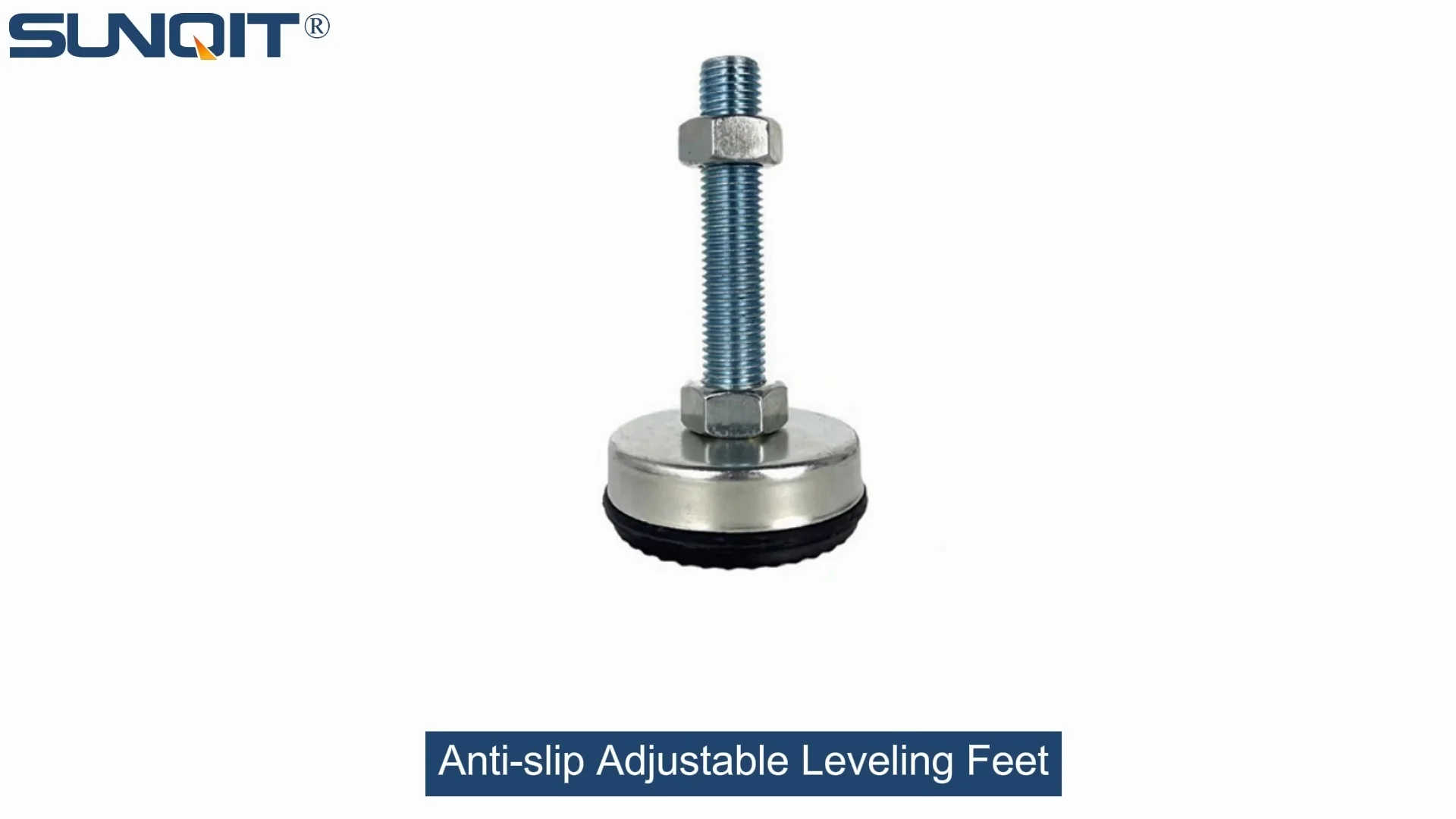
Anti-slip Adjustable Leveling Feet
Anti-slip Adjustable Leveling Feet are designed to keep machines level when placed on uneven or sloped ground, the rubber base will prevent product slip during work.
In the world of manufacturing, sustainability isn't just a buzzword—it's a critical goal that shapes everything from material choices to workflow design. But here's the thing: sustainability often gets tied to big-picture solutions, like solar panels or recycled materials, while the smaller, everyday components that keep factories running get overlooked. Today, let's zoom in on one such unsung hero: the anti-slip adjustable leveling foot. It might not grab headlines, but this humble component plays a huge role in making manufacturing more sustainable, efficient, and worker-friendly. And when paired with systems like lean pipe workbenches and aluminum profile setups, it becomes even more powerful.
The Hidden Cost of Unstable Workspaces
Picture this: You walk into a busy electronics assembly plant. Rows of workbenches line the floor, each cluttered with circuit boards, tools, and half-assembled devices. Workers lean over, focused, but every so often, a bench wobbles slightly as someone shifts their weight. A screwdriver rolls off the edge. A circuit board slips, scratching its surface. Later, that scratched board is deemed defective and tossed in the trash. Multiply that by hundreds of workbenches and thousands of shifts, and suddenly you're looking at mountains of wasted materials, lost time, and frustrated employees. That's the hidden cost of unstable workspaces—and it's a sustainability killer.
Unstable workbenches don't just waste materials. They also hurt efficiency. When a surface isn't level, tasks take longer: measuring becomes trickier, parts don't align properly, and workers slow down to avoid mistakes. Over time, this inefficiency adds up, driving up energy use (since machines and lights stay on longer) and increasing operational costs. And let's not forget worker safety. A wobbly bench increases the risk of slips, trips, and falls, leading to injuries, downtime, and higher workers' compensation claims. None of this aligns with the goals of sustainable manufacturing, which aims to minimize waste, reduce energy consumption, and protect human capital.
Enter Anti-Slip Adjustable Leveling Feet: Small Component, Big Impact
Anti-slip adjustable leveling feet are exactly what their name suggests: small, often metal or rubber components attached to the bottom of equipment (like workbenches, material racks, or conveyor systems) that can be adjusted to level the surface and prevent slipping. At first glance, they might seem like a basic fix, but their design is surprisingly thoughtful. Most feature a threaded stem that screws into the equipment, allowing users to raise or lower each foot independently. The base is usually coated in rubber or another high-friction material to grip the floor, while some models include locking mechanisms to keep the adjustment in place once set.
But why does this matter for sustainability? Let's break it down. Sustainable manufacturing isn't just about using "green" materials—it's about creating systems that are durable, efficient, and low-waste over the long haul. Anti-slip adjustable leveling feet check all these boxes, and they do it in ways that ripple through the entire production process.
1. Durability: Reducing the Need for Replacements
One of the biggest sustainability wins with these leveling feet is their durability. Traditional fixed feet or makeshift solutions (like stacking washers or wooden shims) wear out quickly. Shims crack, washers rust, and fixed feet can't adapt to floor unevenness, leading to uneven stress on the equipment. Over time, this stress causes the workbench or rack to warp, bend, or break, forcing manufacturers to replace the entire unit. That's a lot of waste—both in terms of the old equipment and the resources needed to produce a new one.
Anti-slip adjustable leveling feet, on the other hand, are built to last. Many are made from corrosion-resistant materials like stainless steel or reinforced plastic, which stand up to the wear and tear of factory environments (think oil, grease, and constant foot traffic). Their adjustable design also means they absorb stress more evenly. Instead of the equipment bending to fit the floor, the feet adjust to the floor, keeping the structure level and reducing strain. This extends the lifespan of the workbench or rack, sometimes by years. Fewer replacements mean less waste sent to landfills and fewer resources used in manufacturing new equipment—a direct win for sustainability.
2. Precision Adjustment: Cutting Waste and Energy Use
Factories rarely have perfectly even floors. Concrete slabs settle over time, heavy machinery creates indentations, and spills can erode surfaces. In a traditional setup, this unevenness leads to the wobbling we discussed earlier, which in turn leads to defects and inefficiency. Anti-slip adjustable leveling feet solve this by letting users fine-tune each foot to the floor's contours. Even a small adjustment—say, turning the stem a few times to raise one corner by 5mm—can make a world of difference in stability.
This precision has a direct impact on waste reduction. When a workbench is level, parts align correctly during assembly, reducing the number of defective products. For example, in electronics manufacturing, a level surface ensures that solder paste is applied evenly, reducing the risk of short circuits or faulty connections. In automotive plants, level material racks keep parts from rolling off and getting damaged. Over time, these small improvements add up to significant waste reduction. A 2022 study by the Manufacturing Sustainability Institute found that factories using adjustable leveling feet on assembly workbenches reduced material waste by an average of 12%—simply by minimizing defects caused by unstable surfaces.
Energy efficiency gets a boost too. When tasks are completed faster and with fewer mistakes, production lines run more smoothly. Machines don't idle as long, and workers don't need to redo tasks, which cuts down on energy use. For instance, a conveyor system with level feet operates more efficiently: belts don't slip, motors don't overwork, and the system requires less maintenance. Over a year, this can reduce a factory's energy consumption by 5-8%, according to industry estimates.
3. Anti-Slip Design: Protecting Workers and Reducing Downtime
The "anti-slip" part of these feet is just as crucial as the adjustability. Factories are messy places: oil drips, water spills, and dust accumulate on floors, creating slippery surfaces. Traditional feet with smooth metal bases can slide, even on dry floors, but anti-slip models use rubber or textured bases that grip tightly. This isn't just about preventing the workbench itself from moving—it's about keeping workers safe.
Slips and falls are among the most common workplace injuries in manufacturing, accounting for 25% of all non-fatal workplace accidents, according to OSHA. These injuries don't just harm workers; they also disrupt production. A single injury can lead to hours or days of downtime as teams investigate, rearrange workflows, or train temporary replacements. Anti-slip leveling feet reduce this risk by anchoring equipment in place, even on slick floors. In one case study from a food packaging plant, installing anti-slip feet on material racks reduced slip-related incidents by 40% in six months, cutting downtime by over 100 hours annually.
Safer workers are also more engaged and productive. When employees trust that their workspace is stable, they focus better, work faster, and take fewer breaks. This boost in morale and productivity indirectly supports sustainability by making the most of the workforce—a critical, often overlooked resource in sustainable manufacturing models.
4. Compatibility with Lean Systems and Modular Setups
Sustainable manufacturing often goes hand-in-hand with lean principles, which emphasize minimizing waste and maximizing value. Lean systems rely heavily on modular equipment—like lean pipe workbenches and aluminum profile racks—that can be reconfigured quickly as production needs change. Anti-slip adjustable leveling feet are a perfect fit for these setups because they're adaptable and easy to install.
Take lean pipe workbenches, for example. These workbenches are built using lightweight metal pipes (lean pipes) and joints, allowing teams to customize the height, width, and layout. But without stable feet, their modularity is less useful. A reconfigured bench might sit unevenly on a new part of the factory floor, undoing the efficiency gains of the redesign. Anti-slip adjustable feet solve this by letting workers level the bench in minutes, no matter where it's moved. This flexibility means factories can reuse equipment instead of buying new, reducing waste and saving money.
Aluminum profile systems, another staple of lean manufacturing, benefit similarly. Aluminum profiles are lightweight, strong, and easy to assemble into workbenches, racks, or conveyor frames. When paired with adjustable feet, these systems become even more versatile. For instance, a material rack made with aluminum extrusion profiles can be adjusted to fit different floor conditions in different parts of the factory, ensuring it stays stable whether it's holding heavy machinery parts or delicate electronics. This adaptability extends the life of the equipment, as it can be repurposed instead of replaced when production needs shift.

Comparing Traditional vs. Anti-Slip Adjustable Leveling Feet: A Sustainability Showdown
To truly understand the impact of anti-slip adjustable leveling feet, let's compare them to common alternatives in a table. This side-by-side look highlights why they're the more sustainable choice:
| Feature | Traditional Fixed Feet | Wooden Shims/Washers (Makeshift Fixes) | Anti-Slip Adjustable Leveling Feet |
|---|---|---|---|
| Durability | Low: Can't adapt to uneven floors, leading to stress and warping of equipment. | Very Low: Shims crack, washers rust; need frequent replacement. | High: Made from corrosion-resistant materials; adjustable design reduces stress on equipment. |
| Adjustability | None: Fixed height means uneven floors cause wobbling. | Limited: Temporary fixes that shift over time; imprecise. | High: Threaded stem allows precise, independent adjustment of each foot. |
| Slip Resistance | Low: Smooth metal bases slide easily on wet or dusty floors. | Very Low: No grip; shims can shift, increasing instability. | High: Rubber or textured bases grip floors, even in slippery conditions. |
| Waste Reduction | Low: Leads to defective products and frequent equipment replacement. | Very Low: Constantly need replacement; shims/washers end up in landfills. | High: Reduces defects, extends equipment life, and eliminates need for disposable fixes. |
| Energy Efficiency | Low: Unstable equipment increases production time and energy use. | Low: Temporary fixes don't solve inefficiency; wobbling persists. | High: Stable equipment speeds up tasks and reduces energy consumption. |
| Sustainability Impact | Negative: Short lifespan, high waste, and increased energy use. | Very Negative: High waste from disposable fixes; no long-term benefits. | Positive: Long-lasting, reduces waste and energy use, supports worker safety. |

Real-World Applications: How Factories Are Using These Feet to Go Green
To see anti-slip adjustable leveling feet in action, let's look at a few real-world examples. These stories show how even small components can drive big sustainability wins.
Case Study 1: Electronics Assembly Plant Cuts Waste by 15%
A mid-sized electronics manufacturer in California was struggling with high defect rates on its circuit board assembly line. The issue? Wobbly workbenches caused by uneven concrete floors. Workers reported that parts often slipped during soldering, leading to short circuits and rework. The factory tried wooden shims, but they kept cracking, and the benches would wobble again within weeks. Frustrated, the plant manager invested in anti-slip adjustable leveling feet for 20 workbenches.
The results were striking. Within three months, defect rates dropped by 15%, saving the company over $50,000 in wasted materials. Workers reported that tasks took 10% less time, and energy use on the assembly line fell by 7% as machines ran more efficiently. The plant also noted a 30% reduction in worker complaints about fatigue, likely because the stable surface reduced the need for constant readjustment and focus on balancing parts. "We didn't realize how much time we were wasting on fixing mistakes until the benches stopped wobbling," said one production supervisor.
Case Study 2: Automotive Supplier Reduces Downtime with Caster-Compatible Feet
An automotive parts supplier in Michigan uses mobile workbenches (fitted with caster wheels) to move materials between assembly stations. While the casters made the benches easy to move, they also made them unstable when stationary—especially on the factory's oil-stained floors. The benches would roll slightly during use, leading to misaligned parts and occasional collisions. The solution? Workbenches with both caster wheels and anti-slip adjustable leveling feet. When the bench needs to move, the feet are raised, and the casters take over. When stationary, the feet are lowered, gripping the floor and locking the bench in place.
The change reduced collisions by 60% and cut downtime from misaligned parts by 25 hours per month. The supplier also saved money on caster replacements, as the feet reduced wear and tear on the wheels (since the bench wasn't rolling unintentionally). "It's the best of both worlds," said the plant engineer. "We keep the mobility of casters but gain the stability of fixed feet—all while making the workspace safer and more efficient."

Beyond Workbenches: Other Uses for Anti-Slip Adjustable Leveling Feet
While workbenches are a common application, anti-slip adjustable leveling feet are versatile enough to enhance sustainability across many types of equipment:
- Material Racks and Shelving: Racks holding heavy parts (like automotive components or industrial tools) need to stay stable to prevent collapses. Adjustable feet ensure even weight distribution, reducing the risk of rack failure and material damage.
- Conveyor Systems: Conveyors rely on level surfaces to keep belts aligned and products moving smoothly. Misaligned conveyors cause jams, product damage, and motor strain—all of which waste energy and materials.
- Testing Equipment: Precision instruments (like calibration tools or quality control machines) require stable surfaces to produce accurate results. Even a small wobble can lead to incorrect readings, which in turn lead to flawed products or unnecessary rejections.
- Assembly Tables for Heavy Machinery: When building large equipment (like industrial ovens or printing presses), level surfaces are critical for aligning heavy parts. Adjustable feet make it easier to position components correctly, reducing the need for rework and cutting assembly time.
Choosing the Right Feet: Key Features to Look For
Not all anti-slip adjustable leveling feet are created equal. To maximize sustainability, look for these features when shopping:
Material Quality
Opt for feet made from durable, corrosion-resistant materials like stainless steel or reinforced plastic. These materials last longer, even in harsh factory environments (think humidity, oil, or chemicals), reducing the need for replacements.
Adjustment Range
Choose feet with a wide adjustment range (at least 10-20mm) to accommodate uneven floors. Some models offer up to 50mm of adjustment, which is ideal for older factories with heavily worn floors.
Anti-Slip Base
Look for bases made from high-quality rubber or thermoplastic elastomer (TPE), which offer excellent grip on both dry and wet surfaces. Avoid hard plastic bases, which can crack or slide over time.
Locking Mechanism
A locking nut or thread-locking adhesive prevents the feet from unscrewing over time, ensuring the adjustment stays in place. This is especially important for equipment that vibrates during use (like conveyor motors).
Load Capacity
Check the load capacity to ensure the feet can support the weight of your equipment. Overloading feet leads to premature wear and instability, so err on the side of higher capacity if you're unsure.
Conclusion: Small Changes, Big Steps Toward Sustainability
Sustainable manufacturing is a journey, not a destination. It requires looking beyond the obvious solutions and embracing the small, often overlooked components that keep operations running smoothly. Anti-slip adjustable leveling feet are a perfect example of this. They might not be as flashy as solar panels or as trendy as 3D printing, but their impact is undeniable: reducing waste, cutting energy use, protecting workers, and extending the life of equipment.
As factories around the world strive to become more sustainable, it's worth remembering that sustainability isn't just about grand gestures. It's about the workbench that stays level, the parts that don't slip, and the workers who can focus on creating value instead of fixing mistakes. Anti-slip adjustable leveling feet make all of this possible—and in doing so, they prove that sometimes, the smallest components are the ones that lay the foundation for a greener, more efficient future.
So, the next time you walk through a factory, take a moment to look down. Those little feet under the workbenches? They're not just keeping things steady—they're helping build a more sustainable world, one level surface at a time.