- Company Articles
- Products and Technology
- Product knowledge
- Why Anti-Slip Adjustable Leveling Feet Matter for Sustainable Production Improvement

Why Anti-Slip Adjustable Leveling Feet Matter for Sustainable Production Improvement
Related Product
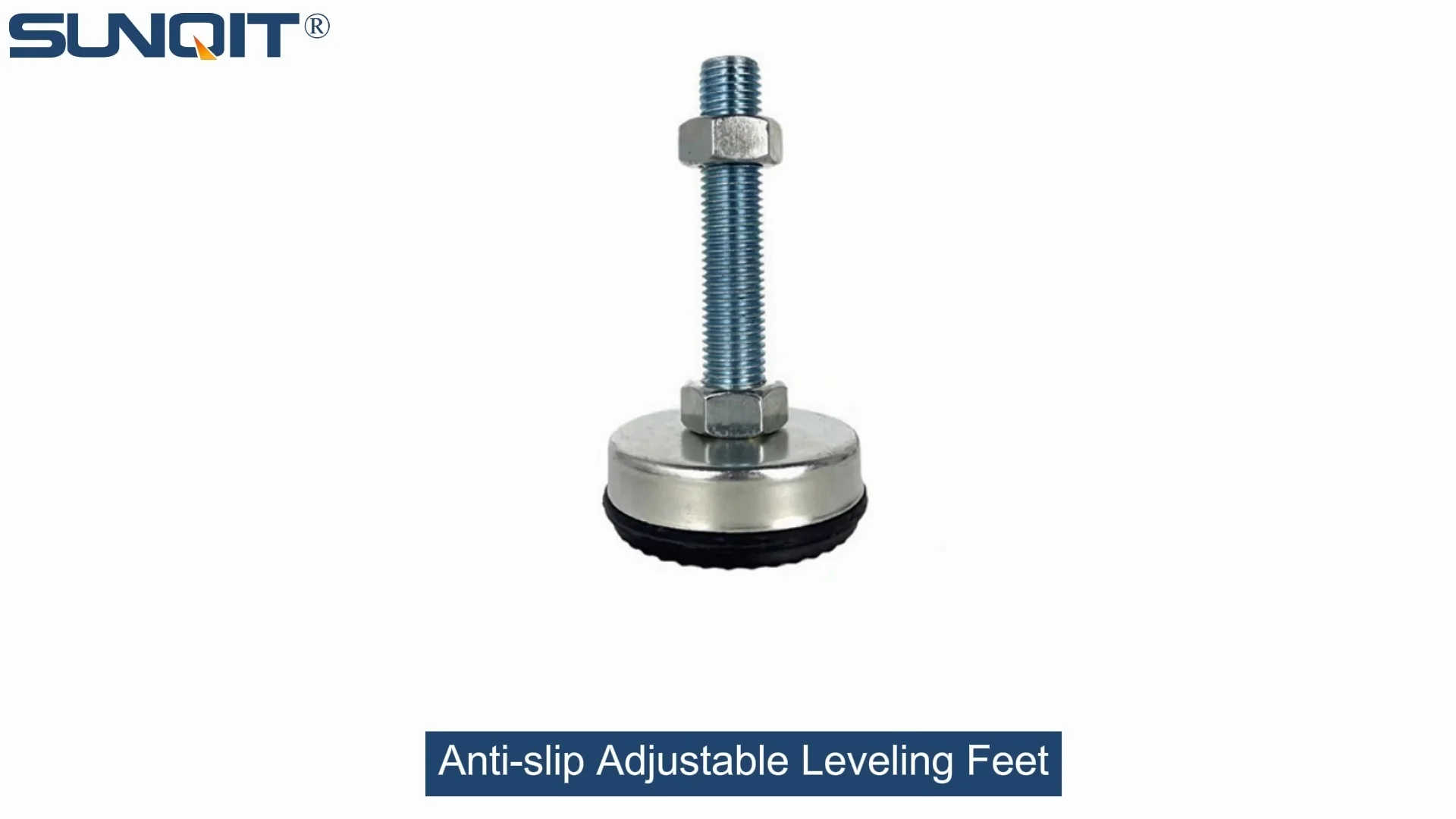
Anti-slip Adjustable Leveling Feet
Anti-slip Adjustable Leveling Feet are designed to keep machines level when placed on uneven or sloped ground, the rubber base will prevent product slip during work.
Walk into any manufacturing facility, and you'll notice a quiet hero working behind the scenes: the workbench. It's where assembly lines hum, where components are sorted, where precision meets productivity. But here's a question that often gets overlooked: What happens when that workbench isn't quite right? Maybe it wobbles slightly on an uneven floor, causing tools to slide. Or perhaps it sits just a hair too low, forcing workers to hunch over for hours. These might seem like small annoyances, but in the world of production, small issues add up—fast. They eat into efficiency, compromise safety, and even derail sustainability goals. That's where anti-slip adjustable leveling feet come in. These unassuming components might not grab headlines, but they're the unsung champions of stable, efficient, and sustainable manufacturing. Let's dive into why they matter, and how they can transform the way your facility operates.
First Things First: What Are Anti-Slip Adjustable Leveling Feet?
Let's start with the basics. Anti-slip adjustable leveling feet are exactly what their name suggests: devices attached to the bottom of equipment—like workbenches, conveyor systems, or material racks—to stabilize them on uneven surfaces. They're designed with two key features: adjustability and anti-slip grip. The "adjustable" part means you can twist or extend them to fine-tune the height of the equipment, ensuring it sits perfectly level even if the floor has bumps, cracks, or slopes. The "anti-slip" element, usually a rubber or textured base, prevents the equipment from sliding or shifting during use, even when vibrations or heavy loads are involved.
You might be thinking, "Aren't all leveling feet the same?" Not quite. Standard adjustable leveling feet work for basic stability, but the anti-slip variety takes it a step further. In production environments, where floors are often concrete (and rarely perfectly smooth), where machinery vibrates, and where workers are constantly moving materials, that extra grip isn't just a nice-to-have—it's a necessity. And when paired with durable materials like stainless steel or reinforced plastic, these feet become long-lasting solutions that stand up to the wear and tear of daily operations.
The Hidden Power of Anti-Slip Adjustable Leveling Feet: Key Features That Drive Impact
To understand why these feet are critical for sustainable production, let's break down their key features and how each contributes to better outcomes:
1. Precision Adjustability: No More "Close Enough"
Floors in manufacturing facilities are rarely perfect. Years of heavy equipment, spills, and general wear leave them uneven. A workbench that's off by even half an inch can throw off assembly line alignment, leading to misaligned parts, increased errors, and wasted materials. Anti-slip adjustable leveling feet solve this by letting you dial in the height with precision—often down to fractions of a millimeter. This level of control ensures that every workstation, conveyor, or rack is perfectly aligned with the next, creating a seamless flow of materials and reducing the risk of jams or bottlenecks.
2. Superior Grip: Safety That Doesn't Compromise
Slipping equipment is a safety hazard. A workbench that shifts during use can cause tools to fall, injuring workers, or damage delicate components. The anti-slip base—typically made of high-friction rubber or polyurethane—creates a strong bond with the floor, even when oil, coolant, or water is present. This isn't just about preventing accidents; it's about building a culture of safety where workers feel confident in their environment, leading to higher morale and lower turnover. And when safety incidents decrease, so do downtime and workers' compensation costs—both of which eat into sustainability budgets.
3. Durability: Built to Last, Reducing Waste
Sustainability isn't just about energy efficiency or recycling—it's also about reducing waste from frequent replacements. Cheap leveling feet might work for a few months, but they'll crack, corrode, or lose their grip under heavy loads or harsh conditions. Anti-slip adjustable leveling feet, however, are built with durability in mind. Many are made from corrosion-resistant materials like stainless steel or aluminum, with reinforced bases that stand up to constant use. This means fewer replacements, less waste sent to landfills, and lower long-term costs—all key pillars of sustainable manufacturing.
4. Compatibility: Works with Your Existing Setup
One of the biggest barriers to adopting new tools is the fear that they won't integrate with existing equipment. Anti-slip adjustable leveling feet are designed to be versatile. They come in various sizes, thread types, and mounting styles, making them compatible with everything from lightweight aluminum profile workbenches to heavy-duty stainless steel material racks. This means you don't have to overhaul your entire facility to benefit—you can upgrade incrementally, reducing disruption and keeping costs manageable.

Comparing Leveling Feet: Why Anti-Slip Adjustable Stands Out
Still not convinced these feet are worth the investment? Let's compare them to other common options. The table below breaks down the pros and cons of standard leveling feet, fixed non-adjustable feet, and anti-slip adjustable leveling feet across key metrics:
| Feature | Standard Adjustable Leveling Feet | Fixed Non-Adjustable Feet | Anti-Slip Adjustable Leveling Feet |
|---|---|---|---|
| Stability on Uneven Floors | Good (adjustable, but no anti-slip grip) | Poor (fixed height, wobbles easily) | Excellent (adjustable + anti-slip base) |
| Safety (Slip Resistance) | Moderate (metal/plastic base may slip) | Low (no grip, high risk of shifting) | High (rubber/polyurethane anti-slip base) |
| Durability | Moderate (may corrode or wear quickly) | Low (fixed height, no room for wear adjustment) | High (stainless steel/aluminum construction, reinforced base) |
| Waste Reduction (Replacement Frequency) | Moderate (replaced every 1-2 years) | High (replaced every 6-12 months) | Low (replaced every 3-5+ years) |
| Integration with Lean Systems | Limited (stability helps, but slip risk causes waste) | Poor (wobbling leads to errors and downtime) | Excellent (aligns with waste reduction and safety goals) |
As you can see, anti-slip adjustable leveling feet outperform the competition across the board—especially when it comes to sustainability metrics like durability and waste reduction. But their impact goes beyond just the feet themselves; they're a critical piece of the larger lean system puzzle.

Anti-Slip Adjustable Leveling Feet and Lean Systems: A Match Made for Efficiency
Lean manufacturing is all about eliminating waste—whether it's time, materials, or energy. Every inefficiency, no matter how small, adds up to higher costs and a bigger environmental footprint. Anti-slip adjustable leveling feet align perfectly with lean principles by addressing three major sources of waste:
1. Waste from Errors and Rework
An unsteady workbench isn't just annoying—it's a recipe for mistakes. When a surface wobbles, workers have to slow down to compensate, or worse, parts get misaligned during assembly. This leads to rework (fixing mistakes) or scrap (throwing away defective parts). Both are huge drains on resources. Anti-slip adjustable leveling feet stabilize workstations, reducing errors by ensuring tools and components stay exactly where they need to be. Fewer errors mean less rework, less scrap, and lower material costs—all of which make your production process more sustainable.
2. Waste from Downtime
Equipment that slips or breaks down causes downtime. A conveyor that jams because it's not level, or a workbench that shifts and damages a machine—these incidents stop production in its tracks. Every minute of downtime wastes energy (machines running idle), labor (workers waiting), and time (delayed orders). Anti-slip adjustable leveling feet prevent these issues by keeping equipment stable and operational. Less downtime means more consistent production, better on-time delivery rates, and a lower carbon footprint (since you're not wasting energy restarting or repairing equipment).
3. Waste from Unnecessary Movement
Lean systems emphasize "motion efficiency"—ensuring workers don't waste time moving around unnecessarily. An unsteady workstation might force a worker to constantly adjust tools, reach awkwardly, or even leave their post to fetch a leveler. These small movements add up over a shift, leading to fatigue and reduced productivity. Anti-slip adjustable leveling feet create a stable, ergonomic workspace where everything is within easy reach. Workers can focus on their tasks instead of fighting with the equipment, which boosts productivity and reduces the risk of repetitive strain injuries (another source of downtime).
Think of it this way: lean manufacturing is like building a house. You can have the best blueprint (processes) and high-quality materials (components), but if the foundation (stability) is weak, the whole structure suffers. Anti-slip adjustable leveling feet are the foundation of a stable, efficient, lean operation.

Pairing with Aluminum Profile: The Perfect Combination for Modern Workbenches
Now, let's talk about materials. In today's manufacturing facilities, aluminum profile has become a go-to choice for building workbenches, racks, and conveyor systems. Why? It's lightweight, strong, corrosion-resistant, and infinitely customizable—thanks to its modular design and T-slot connections. But even the best aluminum profile workbench is only as good as its base. That's where anti-slip adjustable leveling feet shine.
Aluminum profile workbenches are designed to be flexible. They can be reconfigured for different tasks, extended to accommodate new equipment, or moved to different areas of the facility. But flexibility means they need a stable base that can adapt to new environments. Anti-slip adjustable leveling feet provide that stability, even when the workbench is moved to a new spot with uneven flooring. The feet screw easily into the aluminum profile's T-slots or mounting holes, creating a secure connection that won't loosen over time.
What's more, aluminum and anti-slip adjustable leveling feet are both sustainable materials. Aluminum is 100% recyclable, and many leveling feet are made from recycled stainless steel or aluminum. Together, they create a workstation that's not only durable and efficient but also eco-friendly. When the time comes to reconfigure or replace the workbench, the aluminum profile can be recycled, and the leveling feet can be reused on another piece of equipment—minimizing waste and maximizing resource use.
Let's take a concrete example: a electronics manufacturing plant that uses aluminum profile workbenches for circuit board assembly. Before installing anti-slip adjustable leveling feet, workers complained about the benches wobbling, leading to tiny misalignments in component placement. This caused a 5% defect rate, which meant thousands of dollars in scrap each month. After upgrading to anti-slip adjustable feet, the defect rate dropped to 1%—a 80% reduction in waste. The benches stayed stable, even when workers leaned on them or moved tools across the surface. The plant saved money on materials, reduced its environmental impact, and improved worker satisfaction—all from a simple upgrade to the base of their workbenches.
Real-World Impact: How These Feet Transform Facilities
Numbers tell the story best. Let's look at two case studies of facilities that implemented anti-slip adjustable leveling feet and saw measurable improvements in sustainability and efficiency:
Case Study 1: Automotive Parts Manufacturer
A mid-sized automotive parts plant was struggling with frequent conveyor jams. The issue? The conveyor system, built on standard adjustable leveling feet, would slip slightly on the factory's uneven concrete floor, causing products to misalign and jam. Each jam took 20 minutes to fix, and they happened 3-4 times per shift. That's up to 80 minutes of downtime daily—over 65 hours per month. The plant was also seeing a 3% scrap rate due to damaged parts from jams.
After switching to anti-slip adjustable leveling feet, the jams stopped completely. The anti-slip base prevented the conveyor from shifting, even during peak production. Downtime dropped to zero, and the scrap rate fell to 0.5%. The results? The plant saved $12,000 per month in labor (no more fixing jams) and $8,000 per month in materials (less scrap). Plus, they reduced energy use by 5% since the conveyor ran continuously without restarting—lowering their carbon footprint by an estimated 15 tons per year.
Case Study 2: Medical Device Assembly Facility
A medical device manufacturer needed to meet strict safety standards for its cleanroom production line. Their existing workbenches, equipped with fixed non-adjustable feet, wobbled on the cleanroom's slightly sloped floor, creating a risk of contamination (dust and particles shifting) and worker injury. The facility was spending $5,000 per month on additional cleaning and safety audits to compensate.
They replaced the fixed feet with anti-slip adjustable leveling feet, which stabilized the workbenches and prevented slipping. The result? Cleaning costs dropped by 40% (no more dust stirred up by wobbling benches), and safety audits showed a 60% reduction in near-miss incidents. The facility not only saved $2,000 per month but also improved compliance with regulatory standards, avoiding potential fines and reputational damage.
The Bottom Line: Small Components, Big Impact
Anti-slip adjustable leveling feet might not be the most glamorous part of your production line, but they're a critical investment in sustainability, efficiency, and safety. By stabilizing equipment, reducing errors, minimizing downtime, and cutting waste, these small components deliver big returns—both financially and environmentally. They integrate seamlessly with lean systems and aluminum profile workbenches, making them a versatile solution for modern manufacturing facilities.
So, the next time you walk through your production floor, take a look at the bases of your workbenches, conveyors, and racks. Are they stable? Are they slip-resistant? If not, it might be time to consider upgrading to anti-slip adjustable leveling feet. Your workers, your bottom line, and the planet will thank you.