- Company Articles
- Products and Technology
- Product knowledge
- Why Are Lean Pipe Clamps Essential for Lean Management?

Why Are Lean Pipe Clamps Essential for Lean Management?
Related Product
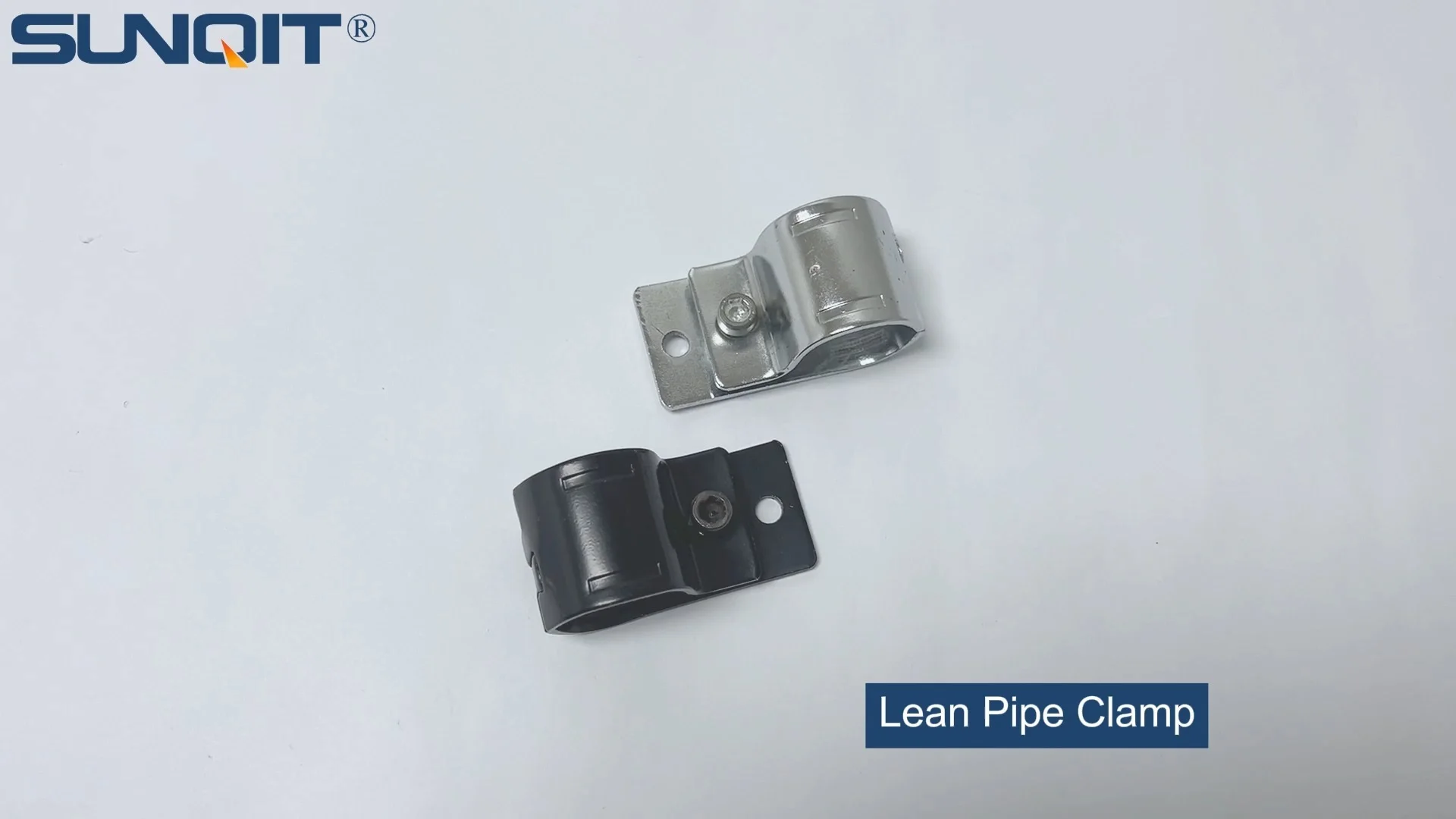
Lean Pipe Clamp
Lean pipe clamp is used for rack system hang monitor or other panel for workbenck, flowrack in production daily use.
Introduction: The Heart of Lean Management Lies in the Details
Lean management isn't just a buzzword thrown around in boardrooms—it's a philosophy that transforms how businesses operate, from the factory floor to the warehouse, and even into office spaces. At its core, lean is about eliminating waste, streamlining processes, and creating systems that adapt and grow with your needs. But here's the thing: while we often talk about big-picture strategies and high-tech solutions, the true magic of lean management often lies in the smallest components. Components like lean pipe clamps.
Think about it: a well-oiled lean system relies on structures that are flexible, modular, and easy to reconfigure. Whether it's a workbench where assembly line workers spend their days, a flow rack that keeps materials moving smoothly, or a conveyor system that connects different stages of production—each of these structures needs to be sturdy yet adaptable. That's where lean pipe clamps come in. They're the unsung heroes holding everything together, quite literally, while still allowing for the adjustments that make lean systems so powerful.
In this article, we'll dive deep into why lean pipe clamps are more than just "parts"—they're essential tools for anyone serious about implementing lean management. We'll explore what they are, how they work, and the tangible impact they have on efficiency, cost savings, and overall productivity. By the end, you'll understand why choosing the right lean pipe clamps (and the right supplier) can make or break your lean journey.
Understanding Lean Pipe Clamps: Small Parts, Big Impact
Before we can appreciate their role in lean management, let's start with the basics: what exactly are lean pipe clamps? At first glance, they might seem like simple pieces of hardware—just metal or plastic connectors that hold pipes together. But that simplicity is deceptive. Lean pipe clamps are engineered with a specific purpose in mind: to create strong, stable structures that can be easily modified, disassembled, and reassembled as needed.
Most lean pipe clamps are designed to work with lean pipes (also known as "lean tubes"), which are typically made of steel, aluminum, or plastic-coated steel. The clamps themselves come in various shapes and sizes, from 90-degree elbows to T-joints, crosses, and straight connectors. What makes them unique is their modular design: they don't require welding, drilling, or specialized tools to install. Instead, they use friction, bolts, or locking mechanisms to secure pipes in place, making setup and adjustments quick and straightforward.
Materials matter, too. Many lean pipe clamps are made from durable materials like aluminum or stainless steel, ensuring they can withstand the wear and tear of daily use in industrial settings. Some are even coated with anti-corrosive finishes to resist rust, which is crucial in environments where moisture or chemicals are present. Plastic clamps, on the other hand, might be used in lighter applications or where weight is a concern. The key is that each clamp is designed to balance strength with flexibility—a balance that's central to lean principles.

The Role of Lean Pipe Clamps in Lean Systems: Flexibility That Drives Efficiency
Lean systems are all about adaptability. Markets change, customer demands shift, and production needs evolve—your infrastructure should keep up without requiring a complete overhaul. This is where lean pipe clamps shine. They're the building blocks of modularity, allowing you to create structures that grow, shrink, or transform as your business does.
Let's break it down: traditional fixed structures (think welded steel racks or bolted-down workbenches) are rigid by nature. If you need to adjust the height of a workbench, add a shelf to a flow rack, or reconfigure a conveyor system, you're looking at hours (or even days) of work, not to mention the cost of new materials and labor. With lean pipe clamps, though, that same adjustment might take minutes. Loosen a few bolts, reposition the pipes, tighten the clamps, and you're done. No welding, no cutting, no downtime.
This flexibility directly aligns with two core lean principles: just-in-time (JIT) production and continuous improvement (kaizen) . JIT relies on having the right materials in the right place at the right time, which means your storage and material handling systems need to adapt to changing production schedules. Lean pipe clamps make it easy to adjust flow racks to accommodate different part sizes or reconfigure workbenches to match new assembly steps. Kaizen, on the other hand, encourages ongoing small improvements—and with clamps, employees can experiment with better layouts without fear of "breaking" the system. If a new workbench setup doesn't work, you can simply rearrange it back.
Another key role of lean pipe clamps is in reducing waste, one of the primary goals of lean management. In manufacturing, waste comes in many forms: wasted time, wasted materials, wasted space. Rigid structures often lead to all three. For example, a fixed workbench that's too tall for a new task forces workers to bend or stretch, wasting time and increasing the risk of injury. A flow rack that can't be adjusted might leave unused space, or worse, cause materials to pile up, leading to waste from damage or obsolescence. Lean pipe clamps eliminate these issues by letting you tailor structures to the task at hand, ensuring every inch of space is used efficiently and every workflow is optimized.

Real-World Applications: How Lean Pipe Clamps Power Everyday Lean Systems
To truly grasp the importance of lean pipe clamps, let's look at how they're used in three common lean systems: workbenches, flow racks, and conveyors. These are the backbone of many manufacturing and warehouse operations, and in each case, clamps play a critical role in making them "lean."
Workbenches: Customization at Your Fingertips
A workbench is where the rubber meets the road for many employees—whether they're assembling electronics, packing orders, or inspecting products. The ideal workbench should be at the right height, have storage for tools, and adapt to different tasks. With lean pipe clamps, creating such a workbench isn't just possible; it's easy.
Imagine a manufacturing plant that produces both small gadgets and larger appliances. For the gadget assembly line, workers need a lower workbench with built-in tool holders and bins for small parts. For appliances, the bench needs to be taller, with space for larger components and maybe a shelf for manuals. With traditional benches, the plant would need two separate sets of furniture—costly and space-consuming. But with lean pipe clamps, they can use the same base pipes and simply reconfigure the height, add or remove shelves, and adjust the layout using clamps. A few turns of a wrench, and the workbench transforms from gadget-ready to appliance-ready in under an hour.
Lean pipe clamps also make it easy to add accessories: lighting, ESD (electrostatic discharge) mats for sensitive electronics, or even monitor arms for digital work instructions. Since the clamps secure these additions firmly, workers don't have to worry about instability—even when the bench is reconfigured.
Flow Racks: Streamlining Material Flow
Flow racks are designed to keep materials moving from receiving to production, or from one workstation to the next, using gravity. They're a cornerstone of JIT production, ensuring that workers always have the parts they need right in front of them, without excess inventory piling up. But a flow rack is only as good as its ability to adapt to different material sizes and weights—and that's where lean pipe clamps come in.
Consider a warehouse that distributes automotive parts. One day, they're handling small screws and bolts; the next, larger components like brake pads or hoses. A fixed flow rack with rigid dividers would struggle to accommodate these changes. Either the small parts would fall through gaps, or the larger parts would get stuck. With lean pipe clamps, though, the dividers can be adjusted in width and height. The clamps hold the divider pipes securely, but when you need to change the spacing, you just loosen the clamps, slide the pipes to the new position, and retighten. No tools beyond a hex key, and no need to replace the entire rack.
Flow racks also rely on roller tracks to let materials glide smoothly. Lean pipe clamps secure these tracks to the rack structure, ensuring they're level and stable. If a roller gets damaged, you can easily remove the affected section bying the clamps, replace the roller, and reattach it—minimizing downtime. In a traditional rack, replacing a roller might mean taking apart the entire section, leading to hours of lost productivity.
Conveyors: Ensuring Smooth Operations
Conveyors are the arteries of production lines, moving products from one stage to the next—think assembly lines in car factories or packaging lines in food processing plants. For conveyors to work in a lean system, they need to be reliable, easy to maintain, and adaptable to changes in product size or production speed. Lean pipe clamps help achieve all three.
Many modern conveyors are modular, made up of sections that can be connected or disconnected as needed. Lean pipe clamps are often used to join these sections, creating a seamless flow while still allowing for disassembly. For example, if a section of the conveyor belt wears out, maintenance teams can use clamps to detach that section, replace the belt, and reattach it—all without stopping the entire line. In contrast, a welded conveyor would require cutting and rewelding, leading to longer downtime and higher repair costs.
Conveyors also need to be adjustable in height or angle to align with different workstations. A lean pipe clamp system lets you raise or lower sections by adjusting the supporting pipes, ensuring that products flow smoothly from one station to the next. This is especially useful in facilities with multiple product lines, where conveyor needs can vary drastically from one line to the next.

The Tangible Benefits: Why Businesses Can't Afford to Overlook Lean Pipe Clamps
By now, it's clear that lean pipe clamps are more than just connectors—they're enablers of lean management. But what does that mean for your bottom line? Let's break down the concrete benefits businesses see when they invest in quality lean pipe clamps.
Cost Savings: Less Waste, More Value
Lean pipe clamps might seem like a small expense, but their impact on costs is significant. First, they reduce the need for new equipment. Instead of buying a new workbench or flow rack every time your needs change, you can reuse existing pipes and just adjust the clamps. Over time, this adds up to major savings on furniture and infrastructure.
They also cut labor costs. Reconfiguring a lean structure with clamps takes a fraction of the time it would take to build or modify a traditional structure. A team of two workers can reconfigure a flow rack in an hour, whereas building a new welded rack might take a full day. Less labor time means lower wages spent on setup and reconfiguration.
Finally, lean pipe clamps reduce waste from damaged materials. Since structures are easy to adjust, there's less risk of forcing materials into ill-fitting racks or workbenches, which often leads to scratches, dents, or breakage. For high-value items, this alone can justify the cost of clamps.
Increased Efficiency: Time is Money
Efficiency is the name of the game in lean management, and lean pipe clamps deliver in spades. When workers don't have to waste time searching for tools or stretching to reach materials on a poorly designed workbench, they can focus on what they do best: producing quality products. Studies have shown that well-designed, adaptable workspaces (enabled by tools like lean pipe clamps) can boost productivity by 15-20%.
Flow racks with adjustable clamps also speed up material handling. Workers spend less time walking to retrieve parts and more time assembling products. Conveyors with clamp-connected sections minimize jams and downtime, keeping production moving at full speed.
Employee Satisfaction: Happy Workers, Better Results
It's easy to overlook, but the physical environment has a huge impact on employee morale. Rigid, uncomfortable workspaces lead to frustration, fatigue, and even injuries. Lean pipe clamps let workers customize their stations to fit their needs—adjusting the height of a chair, adding a footrest, or rearranging tools for easier access. When employees feel that their workspace is designed for them, they're more engaged, motivated, and less likely to take time off due to strain or injury.
Plus, the ability to quickly reconfigure spaces empowers employees to suggest improvements. In a kaizen meeting, a worker might say, "If we moved this shelf up, I could reach parts faster." With lean pipe clamps, that change can be tested the same day. This sense of ownership leads to a more collaborative, innovative workplace.
Scalability: Grow Without Growing Pains
As your business grows, your infrastructure needs to grow with it. Whether you're expanding production lines, adding new product lines, or moving to a larger facility, lean pipe clamps make scaling easy. You can start small—with a few workbenches and flow racks—and add more pipes and clamps as needed. There's no need to overinvest in infrastructure upfront; you can scale incrementally, matching your growth pace.
Even if you downsize or pivot to new products, your lean structures won't go to waste. Disassemble them, repurpose the pipes and clamps, and build something new. It's sustainability in action—both for your budget and the planet.
The Cost of Cutting Corners: What Happens Without Lean Pipe Clamps
To truly appreciate lean pipe clamps, it helps to consider the alternative: what happens when businesses rely on rigid, non-modular structures instead? The answer is often a laundry list of lean violations—waste, inefficiency, and frustration.
Take a typical scenario: a small manufacturer starts with a few fixed workbenches and welded flow racks. At first, things run smoothly. But as they add products, the workbenches become too small, and the flow racks can't accommodate new part sizes. The solution? Buy more benches and racks. Now the factory floor is cluttered, with unused space between structures. Workers have to walk farther to retrieve materials, and the company is stuck with equipment that's too rigid to adapt.
When a new product launch requires a different workflow, the manufacturer has two choices: spend weeks and thousands of dollars building new structures, or force the new workflow into the existing setup—leading to bottlenecks and errors. Either way, the business loses time and money, and employees grow frustrated with a system that doesn't support their work.
Even maintenance becomes a headache. A loose shelf on a welded rack can't be easily tightened—you have to call in a welder, which might take days. In the meantime, materials pile up on the floor, increasing the risk of trips and falls. With lean pipe clamps, that loose shelf would be fixed in five minutes with a hex key.
In short, without lean pipe clamps, businesses end up with systems that fight against lean principles instead of supporting them. Waste creeps in, efficiency drops, and growth becomes a struggle rather than a smooth journey.
Choosing the Right Lean Pipe Clamps: What to Look For
Not all lean pipe clamps are created equal. To get the most out of your lean system, you need to choose clamps that are durable, compatible with your pipes, and suited to your specific application. Here are the key factors to consider:
Material Matters
Lean pipe clamps are typically made from aluminum, steel, or plastic. Aluminum clamps are lightweight and resistant to corrosion, making them ideal for clean environments or areas with moisture. Steel clamps are stronger and better for heavy-duty applications, like supporting large flow racks or conveyors. Plastic clamps are affordable and lightweight but best for light use, such as in office settings or for temporary structures.
Consider your environment: if you're working with food processing, stainless steel clamps might be necessary for hygiene. If you're in electronics manufacturing, ESD-safe clamps can prevent static damage to components.
Compatibility with Pipes
Not all clamps fit all pipes. Make sure the clamps you choose are designed for the diameter and material of your lean pipes. For example, aluminum lean pipes require clamps with a specific inner diameter to ensure a tight fit. Mismatched clamps and pipes can lead to instability, which defeats the purpose of a lean system.
If you're unsure, work with a reputable lean pipe supplier who can help you match clamps to pipes. A good supplier will also offer samples, so you can test the fit and durability before buying in bulk.
Ease of Use
The best lean pipe clamps are easy to install and adjust. Look for clamps with tool-free designs (like quick-release levers) or those that require only a basic hex key. The goal is to minimize the time and effort needed to reconfigure structures, so avoid clamps that require specialized tools or complicated assembly.
Supplier Reliability
Finally, choose a supplier with a track record of quality and reliability. A cheap clamp might save you money upfront, but if it breaks or wears out quickly, you'll end up replacing it—and dealing with downtime. Look for suppliers who offer warranties, have positive customer reviews, and can provide consistent stock. After all, when you need to reconfigure a structure in a hurry, you don't want to wait weeks for clamp deliveries.
Traditional vs. Lean Pipe Clamp Systems: A Comparison
| Feature | Traditional Fixed Structures | Lean Pipe Clamp Systems |
|---|---|---|
| Flexibility | Rigid; cannot be reconfigured without rebuilding. | Highly flexible; easy to adjust, add, or remove components. |
| Setup/Reconfiguration Time | Days to weeks (requires welding, cutting, or specialized labor). | Minutes to hours (basic tools, minimal labor). |
| Cost Over Time | High (need to buy new structures for changes). | Low (reuse existing components; minimal new purchases). |
| Adaptability to New Products | Poor (struggles with size/weight changes). | Excellent (easily adjusts to new part sizes or workflows). |
| Maintenance | Difficult (requires specialized skills like welding). | Simple (tighten clamps or replace parts with basic tools). |
| Space Efficiency | Low (fixed size leads to unused space). | High (customizable to fit available space). |
Conclusion: Lean Pipe Clamps—The Foundation of a Lean Future
Lean management is about more than big ideas; it's about the small, intentional choices that add up to big change. Lean pipe clamps are one of those choices. They're not flashy, but they're essential—holding together the structures that make lean systems work, while still allowing for the flexibility and adaptability that define lean.
Whether you're a small business just starting your lean journey or a large enterprise looking to optimize existing systems, investing in quality lean pipe clamps is a decision that pays off. They reduce costs, boost efficiency, empower employees, and help your business grow without the usual growing pains. And when paired with a reliable supplier and a commitment to continuous improvement, they become a cornerstone of your success.
So the next time you walk through your facility, take a look at the workbenches, flow racks, and conveyors. Are they holding your team back with rigidity, or supporting them with flexibility? If it's the former, maybe it's time to give lean pipe clamps a closer look. Your bottom line—and your employees—will thank you.