- Company Articles
- Products and Technology
- Product knowledge
- Why Automotive Factories Prefer One Side Rotatory Chrome Parallel Lean Pipe Joints

Why Automotive Factories Prefer One Side Rotatory Chrome Parallel Lean Pipe Joints
Related Product
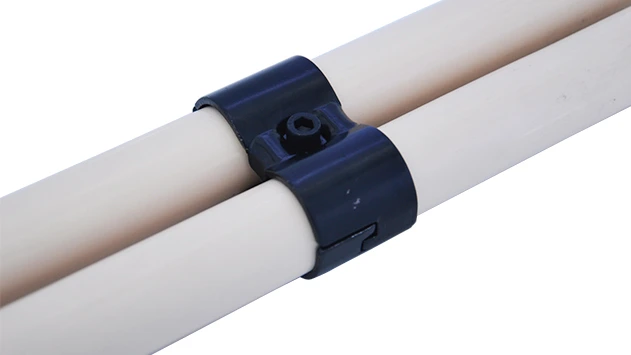
Parallel Lean Pipe Joint
Parallel lean pipe joint used for 2 pcs 28MM lean pipe connection in parallel direction to enhance frame structure, usually for heavy payload requirement for workbench. flow rack, hand trolley.
Unpacking the unsung hero of flexible, efficient, and lean production lines
The Pressure Cooker of Modern Automotive Manufacturing
Walk into any automotive factory today, and you'll feel it immediately—the hum of machinery, the precise rhythm of assembly lines, and the quiet urgency of meeting tight deadlines. Car manufacturers don't just build vehicles; they orchestrate a symphony of moving parts, where a single delay can ripple through an entire production schedule. In this high-stakes environment, flexibility isn't a luxury—it's survival. Models change yearly, consumer demands shift overnight, and global supply chains throw curveballs that require (production lines) to pivot on a dime. This is where lean system principles step in, turning chaos into order by eliminating waste, streamlining workflows, and prioritizing adaptability.
At the heart of these lean systems lies a network of modular structures: workbenches, material racks, conveyor lines, and assembly stations, all built to adjust, grow, or reconfigure as needs change. And if lean systems are the backbone of modern automotive manufacturing, then the components that hold them together are its joints. Not just any joints, though—factories are increasingly turning to a specific type: the one side rotatory chrome parallel lean pipe joint. It sounds technical, but once you see it in action, you'll wonder how factories ever managed without it.
Lean Systems 101: Why "Flexible" Beats "Fixed" Every Time
Before diving into the specifics of these joints, let's ground ourselves in what lean system really means for automotive factories. Lean isn't just about cutting costs (though that's a nice bonus). It's about creating a production environment where every square inch of space, every minute of labor, and every piece of equipment serves a purpose. Waste—whether it's time wasted searching for tools, space wasted on unused inventory, or effort wasted on reworking flawed assemblies—is the enemy.
Traditional manufacturing setups often relied on rigid, permanent structures: heavy steel workbenches bolted to the floor, fixed shelving units, and conveyor lines that required a team of engineers to reconfigure. But in a lean system, the goal is to build with change in mind . If next month's model requires a taller workstation, or if a new safety protocol demands more space between assembly stations, the factory should adapt without halting production for days. This is where modularity becomes critical—and modularity starts with the connections between components.
Enter lean pipe systems: lightweight, durable pipes (often steel, aluminum, or coated with plastic) and joints that snap together to form everything from workbenches to material racks. These systems are like industrial Erector sets for factories, allowing teams to build, modify, and dismantle structures in hours instead of weeks. But not all joints are created equal. Fixed joints, for example, lock pipes into place at rigid angles—great for stability but terrible for flexibility. Adjustable joints, on the other hand, offer movement, but many are clunky, prone to slipping, or require tools to reposition. That's where the one side rotatory chrome parallel lean pipe joint shines: it balances stability, adjustability, and speed in a way that's tailor-made for the chaos of automotive assembly.

Meet the Star: What Is a One Side Rotatory Chrome Parallel Lean Pipe Joint?
Let's break down the name first—it's a mouthful, but each word hints at why it's so valuable. "One side rotatory" means the joint can pivot on one axis, allowing connected pipes to rotate up, down, or sideways within a specific range. "Chrome" refers to its plating, which adds corrosion resistance and a smooth, low-friction surface. "Parallel" indicates that the joint is designed to connect pipes in parallel alignment, ensuring stability even when under load. And "lean pipe joint" places it firmly in the family of components that make lean systems possible.
Picture this: A lean pipe workbench on an automotive assembly line, where workers attach door panels to car frames. The workbench has a side rack holding screws, clips, and adhesive strips—all the small parts needed for the task. On Monday, the team is building compact cars, so the rack is positioned at waist height for easy reach. On Tuesday, they switch to SUVs, which have taller door frames. With a traditional fixed joint, adjusting the rack would mean unbolting it, finding new mounting points, and resecuring it—wasting 20 minutes per workstation. With a one side rotatory chrome parallel joint? A worker simply lifts the rack, rotates it up a few inches, and locks it into place with a quick twist. Done. No tools, no hassle, no downtime.
But it's not just about height adjustments. These joints excel at creating dynamic material flow systems, too. Imagine a conveyor line feeding parts to the assembly station. Sometimes, the parts need to slide toward the worker; other times, they need to angle slightly to avoid collisions with nearby equipment. The rotatory feature lets supervisors tweak the conveyor's angle on the fly, ensuring parts glide smoothly without jamming. And because the joint is chrome-plated, it resists the oil, grease, and occasional spills common in automotive environments—no rust, no sticking, just reliable movement day in and day out.

Why Chrome? Why Rotatory? The Engineering Behind the Preference
Automotive factories aren't gentle places. They're full of metal-on-metal contact, chemical exposure, and constant vibration. A joint that works in a quiet electronics lab might fail in weeks here. So why do manufacturers swear by the chrome plating and rotatory design?
Chrome plating: Durability meets low maintenance. Steel joints without plating rust quickly when exposed to moisture or automotive fluids. Rust doesn't just look bad—it weakens the joint, making it prone to slipping or breaking under load. Chrome plating acts as a shield, preventing corrosion and extending the joint's lifespan by years. It also creates a smooth surface, so when the joint rotates, there's less friction—meaning adjustments require less force, and the mechanism wears down more slowly. For factory workers who adjust setups multiple times a day, this translates to less fatigue and fewer repetitive strain injuries.
One-side rotation: Controlled flexibility. Some joints rotate 360 degrees, which sounds versatile, but in practice, that's overkill for most automotive tasks. Unrestricted rotation can lead to instability—imagine a material rack that swivels too far and dumps parts on the floor. One-side rotatory joints solve this by limiting movement to a specific arc (often 180 degrees or less), so workers can adjust angles without risking accidents. The "parallel" design adds another layer of stability: by keeping connected pipes aligned in parallel, the joint distributes weight evenly, preventing wobbling even when the rack is fully loaded with heavy parts like engine components or battery packs.
Tool-free operation: Speed is everything. In automotive manufacturing, production assemble lines run 24/7, and every minute of downtime costs money. Traditional joints often require wrenches, Allen keys, or specialized tools to adjust—tools that get misplaced, require training to use, or slow down the process. One side rotatory chrome parallel joints, by contrast, typically use a lever or twist-lock mechanism. A quick pull, rotate, and push locks the joint into the new position. Even a new hire can master it in minutes, which is critical in factories with high turnover or temporary staff.
From Blueprints to Bay: How These Joints Transform Production Assemble
To truly grasp their impact, let's walk through a typical scenario on an automotive production assemble line. Let's say a factory is launching a new electric vehicle (EV) model. Unlike gas-powered cars, EVs have larger battery packs, which change the layout of the assembly line. The team needs to reconfigure 12 workstations to accommodate the new battery installation process—fast.
At workstation 5, the old setup had a fixed shelf holding battery tools at knee height. For the EV, workers need that shelf at chest height to avoid bending over the battery pack (a safety hazard and a fatigue risk). With a one side rotatory chrome parallel joint, the supervisor grabs the shelf, rotates it up 18 inches, and locks it. Total time: 45 seconds. Next, workstation 8 has a conveyor feeding battery cells to the line. The cells are heavier than the old parts, so the conveyor needs a steeper angle to keep them moving. A worker adjusts the joint connecting the conveyor to the frame, tilting it up 5 degrees. Done in 30 seconds. By lunch, all 12 workstations are ready. With traditional joints? That reconfiguration would take a team of 4 workers 8 hours—missing the day's production quota.
But the benefits go beyond speed. These joints also improve consistency . In automotive manufacturing, even small variations in workstation setup can lead to quality issues. For example, if one worker's tool rack is an inch lower than another's, they might apply slightly more pressure when tightening a bolt, leading to inconsistent torque and potential part failures. With rotatory joints, supervisors can standardize heights and angles across all workstations—simply rotate to the marked position and lock. No more "eyeballing it" or measuring with a tape. This level of precision is why quality control teams often advocate for these joints, too.
"We used to spend 2 hours every morning adjusting workstations for different shifts—first shift liked the racks low, second shift liked them high. Now, with these rotatory joints, each team adjusts their stations in 5 minutes. It's cut our pre-shift prep time by 75%." — Maria Gonzalez, Production Supervisor at a Midwest Automotive Plant
Synergy with Lean Pipe Workbenches: A Match Made in Factory Heaven
While these joints are versatile, they truly shine when paired with lean pipe workbench setups—the workhorses of automotive assembly lines. A lean pipe workbench isn't just a table; it's a customized command center, with built-in tool holders, part bins, lighting, and even ESD (electrostatic discharge) protection for sensitive electronics. And the one side rotatory chrome parallel joint is the key to making that customization possible.
Take, for example, a workbench where workers install dashboard wiring harnesses—intricate bundles of wires that vary slightly between car models. The workbench needs a way to hold the harnesses at different angles to prevent tangling. With fixed joints, the solution would be multiple dedicated holders, cluttering the bench. With rotatory joints? A single adjustable arm that rotates 180 degrees, adapting to each harness's shape. When the model changes, the arm rotates to the new position, and the bench is ready. No extra parts, no wasted space.
Or consider ergonomics, a top priority in factories to reduce injuries and boost morale. Workers come in all heights, and a "one-size-fits-all" workbench leads to strained backs, sore shoulders, and higher turnover. With rotatory joints, the bench's height, the angle of the tool tray, and even the position of the monitor displaying assembly instructions can be adjusted to fit each worker. A 5'2" technician can lower the work surface; a 6'4" colleague can raise it—all in seconds. Happier workers are more productive workers, and these joints make that happiness possible.
Comparing the Competition: Why These Joints Outperform Traditional Options
You might be wondering: Are there other adjustable joints out there? Absolutely. So why do automotive factories keep choosing one side rotatory chrome parallel lean pipe joints? Let's compare them to three common alternatives:
| Feature | Traditional Fixed Joints | 360-Degree Rotatory Joints | One Side Rotatory Chrome Parallel Joints |
|---|---|---|---|
| Adjustment Speed | Slow (requires tools, 15–20 min/ adjustment) | Medium (tools sometimes needed, 5–10 min/adjustment) | Fast (tool-free, 30–60 sec/adjustment) |
| Stability Under Load | High (rigid, no movement) | Low (prone to wobbling with heavy parts) | High (parallel design distributes weight evenly) |
| Durability in Harsh Environments | Medium (prone to rust without plating) | Low (exposed moving parts attract debris) | High (chrome plating resists corrosion, sealed mechanism) |
| Safety | Medium (fixed position reduces user error, but hard to adapt for safety changes) | Low (unrestricted rotation can lead to collisions) | High (controlled rotation arc, quick locking prevents accidental movement) |
| Cost Over Time | High (needs replacement when reconfiguring; labor costs for adjustments) | Medium (frequent repairs due to wear; higher initial cost) | Low (long lifespan; minimal labor for adjustments; no replacement needed for reconfigurations) |
The table tells the story: one side rotatory chrome parallel joints strike the perfect balance of speed, stability, durability, and safety—all critical in automotive manufacturing. They're not the cheapest upfront, but their long-term cost savings (from reduced downtime, lower labor, and fewer replacements) make them the smart choice for factories focused on efficiency.
Future-Proofing Factories: Adaptability in an Uncertain World
Automotive manufacturing isn't getting simpler. If anything, it's becoming more complex: electric vehicles, autonomous driving features, and sustainability mandates are forcing factories to evolve faster than ever. A joint that works today might not work tomorrow—but one side rotatory chrome parallel lean pipe joints are built to adapt.
Consider sustainability, a growing priority for the industry. Factories are under pressure to reduce waste, including the waste from discarded equipment. Traditional fixed joints often end up in landfills when layouts change, but lean pipe systems with rotatory joints are reusable. When a factory reconfigures, the joints are simply disconnected and reused elsewhere. Some automotive plants report reusing the same joints for 5+ years across multiple model launches, drastically cutting down on waste.
Then there's the rise of "smart factories," where IoT sensors and AI monitor production in real time. These systems generate data on bottlenecks, equipment wear, and workflow inefficiencies—data that often leads to quick layout changes. A sensor might flag that a conveyor is causing delays because parts are piling up; with a rotatory joint, the conveyor angle is adjusted in minutes, and the data improves instantly. In a smart factory, agility isn't optional—it's how you stay competitive.
Finally, there's the human element. As automotive factories face labor shortages, they're investing in tools that make jobs easier, safer, and more satisfying. One side rotatory chrome parallel joints do exactly that. They reduce physical strain, eliminate frustrating delays, and give workers more control over their environment. When employees feel empowered to adjust their workstations to fit their needs, they're more engaged, more productive, and less likely to leave. In an industry where retaining skilled workers is a constant battle, that's priceless.
The Verdict: More Than a Joint—A Catalyst for Lean Excellence
At first glance, a one side rotatory chrome parallel lean pipe joint might seem like just another piece of hardware. But in the fast-paced, ever-changing world of automotive manufacturing, it's so much more. It's the difference between a factory that struggles to keep up and one that leads the pack. It's the bridge between lean system principles and real-world execution, turning "waste reduction" from a buzzword into a daily reality.
These joints excel because they solve three critical challenges: they save time, improve flexibility, and enhance durability—all while keeping workers safe and productive. Whether it's adjusting a lean pipe workbench for a new model, reconfiguring a conveyor line to fix a bottleneck, or standardizing setups across shifts, they do it all with minimal effort and maximum impact.
So the next time you see a car roll off the lot, remember: behind that sleek exterior is a factory floor full of small, unsung innovations. And among them, the one side rotatory chrome parallel lean pipe joint stands tall—quietly, reliably, and relentlessly keeping the wheels of automotive manufacturing turning.