- Company Articles
- Products and Technology
- Product knowledge
- Why Automotive Plants Prefer Flat Rigid Castor Wheels for Fixed Assembly Stations

Why Automotive Plants Prefer Flat Rigid Castor Wheels for Fixed Assembly Stations
Related Product
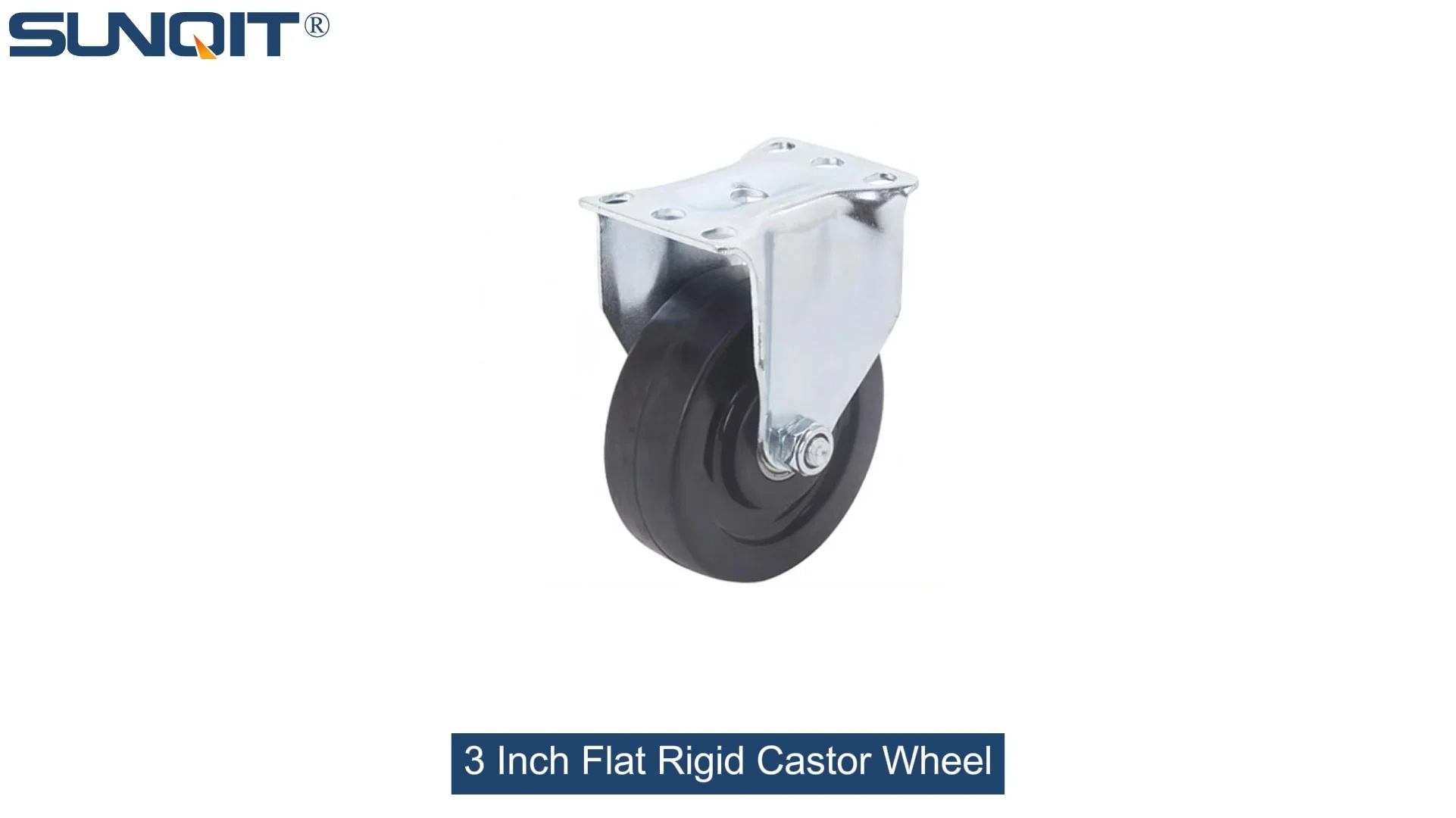
Flat Rigid Castor Wheel
Chair Casters Ball Bearing Wheels Rubber Base. Resistant to abrasion, impact and corrosion. Heavy payload can hold 70Kgs per pcs,which can make it works at a stable and smooth status.
Exploring the stability, efficiency, and lean system alignment that make these components indispensable in modern manufacturing
The Backbone of Automotive Assembly: Fixed Stations and the Need for Unwavering Stability
Walk into any automotive manufacturing plant, and you'll be met with a symphony of precision: robots welding frames, workers installing intricate electronics, and conveyor belts carrying components to their next destination. At the heart of this orchestration lie fixed assembly stations—dedicated workspaces where critical tasks like engine mounting, dashboard installation, or quality inspections unfold. These stations are the unsung anchors of production, requiring a delicate balance of mobility (to adapt to workflow changes) and stability (to ensure accuracy in repetitive, high-stakes tasks).
For decades, automotive manufacturers have grappled with a fundamental challenge: how to keep these stations steady enough to support precise work, yet mobile enough to reconfigure when production lines shift. Enter castor wheels—the small but mighty components that bridge this gap. But not all castors are created equal. In recent years, flat rigid castor wheels have emerged as the preferred choice for fixed assembly stations, outperforming swivel, locking, and other designs in key areas that matter most to automotive plants: load capacity, positional accuracy, and long-term reliability.
This article dives into why flat rigid castor wheels have become a staple in automotive manufacturing, exploring their design, benefits, and integration with lean systems and workbench setups. We'll also compare them to other caster types, examine real-world applications, and discuss how they contribute to safer, more efficient production lines.
What Are Flat Rigid Castor Wheels, and How Do They Differ?
Before we unpack their advantages, let's clarify what sets flat rigid castor wheels apart. Unlike swivel castors, which rotate 360 degrees to allow multidirectional movement, rigid castors are fixed in a straight-ahead position—they only roll forward or backward, no side-to-side swiveling. The "flat" descriptor refers to their wheel design: a broad, flat tread (often made of polyurethane, rubber, or steel) that sits close to the mounting plate, distributing weight evenly across the floor.
This simplicity is intentional. Flat rigid castors prioritize stability over maneuverability, making them ideal for equipment that needs to stay in one place during operation but may need to be repositioned occasionally (e.g., during line reconfigurations or maintenance). In automotive assembly, where even a millimeter of misalignment can lead to faulty part fits or safety risks, this fixed orientation is a game-changer.
Key Design Features of Flat Rigid Castor Wheels
To understand why automotive plants favor these castors, let's break down their critical design elements:
- Rigid Fork Construction: The fork (the metal frame holding the wheel) is fixed at a 90-degree angle to the mounting plate, preventing swiveling. This eliminates "drift"—unintended movement that can throw off workstation alignment.
- Flat, Wide Tread: The wheel's flat surface area reduces pressure on the floor (important for protecting delicate factory flooring like epoxy or concrete) and minimizes bouncing, even when rolling over small debris or floor seams.
- Heavy-Duty Materials: Most flat rigid castors for automotive use are built with steel or aluminum frames and polyurethane or rubber treads. Polyurethane, in particular, offers a winning combo: high load capacity (often up to 1,500 lbs per caster), resistance to oil and chemicals (common in automotive environments), and quiet operation.
- Low Profile: A shorter mounting height (distance from the floor to the mounting plate) lowers the center of gravity of the equipment they support, reducing the risk of tipping—critical when workers are handling heavy tools or components overhead.

5 Core Benefits of Flat Rigid Castor Wheels for Fixed Assembly Stations
Automotive plants don't adopt new components lightly—every decision is weighed against strict criteria: cost, durability, safety, and impact on production speed. Flat rigid castor wheels excel in all these areas, but four benefits stand out as particularly compelling for fixed assembly stations.
1. Unmatched Stability for Precision Work
In automotive assembly, precision is non-negotiable. When a worker is torqueing bolts on a transmission or aligning a wiring harness, even the slightest movement of the workstation can lead to errors, rework, or worse—recalls. Flat rigid castors eliminate this risk by keeping the station locked into position during use. Unlike swivel castors, which can shift if bumped or overloaded, rigid castors maintain their trajectory unless intentionally moved.
Consider a dashboard assembly station: workers spend hours attaching sensors, airbags, and wiring looms to a plastic frame. If the workbench drifts even 2 inches left or right over the course of a shift, the alignment of these components could be off, leading to fit issues when the dashboard is installed in the vehicle. With flat rigid castors, the workbench stays put, ensuring each part is placed with pinpoint accuracy.
2. Superior Load Capacity for Heavy Automotive Components
Automotive parts are heavy. An engine block can weigh 400+ lbs, a battery pack for an electric vehicle upwards of 1,000 lbs, and even smaller components like door panels or seats add up quickly. Fixed assembly stations must support not just these parts but also tools, fixtures, and sometimes the workers themselves (e.g., when standing on a platform to reach overhead). Flat rigid castors are engineered to handle these loads with ease.
Their rigid fork design and flat tread distribute weight evenly, reducing stress on both the caster and the floor. For example, a set of four 6-inch flat rigid castors with polyurethane treads can typically support 4,000–6,000 lbs total—more than enough for most assembly station setups. Swivel castors, by contrast, concentrate weight on a smaller swivel bearing, making them prone to wear or failure under heavy loads over time.
3. Resistance to Industrial Hazards
Automotive plants are tough environments. Floors are often slick with oil or coolant, debris like metal shavings or plastic fragments litters work areas, and temperatures can fluctuate (especially near welding or painting zones). Flat rigid castors are built to withstand these conditions:
- Chemical Resistance: Polyurethane and rubber treads resist degradation from oils, solvents, and coolants, ensuring the wheels don't crack or lose traction.
- Debris Clearance: The flat tread design is less likely to catch on small debris compared to grooved or spiked wheels, reducing jamming and downtime.
- Heat Tolerance: Steel-frame castors can withstand high temperatures near welding stations, while heat-resistant treads (common in automotive-grade models) prevent melting or warping.
4. Alignment with Lean System Principles
Modern automotive manufacturing is deeply rooted in lean systems—methodologies focused on minimizing waste (time, movement, materials) and maximizing value. Flat rigid castor wheels align perfectly with two core lean principles: standardization and stability .
Standardization ensures that every workstation is set up the same way, reducing variability in output. Flat rigid castors keep workbenches and tool carts in precise positions, so workers don't waste time readjusting equipment or compensating for misalignment. Stability, meanwhile, eliminates "motion waste"—the unnecessary movement of workers or tools to correct for a shifting station. In a lean system, even a few seconds saved per task adds up to hours of increased productivity over a shift.

Flat Rigid vs. Other Castor Types: A Head-to-Head Comparison
To appreciate why flat rigid castors are preferred for fixed assembly stations, it helps to see how they stack up against other common designs. Below is a comparison of flat rigid castors with swivel, locking swivel, and heavy-duty swivel castors across key metrics for automotive applications.
| Feature | Flat Rigid Castor Wheels | Swivel Castors (No Lock) | Locking Swivel Castors | Heavy-Duty Swivel Castors |
|---|---|---|---|---|
| Mobility | Limited (forward/backward only) | High (360° rotation) | High (360° rotation when unlocked) | Moderate (360° rotation, but due to size) |
| Stability During Use | Excellent (no unintended movement) | Poor (prone to drifting when bumped) | Good (locked position prevents swiveling, but may still shift slightly) | Fair (heavy weight reduces drift, but swivel joint can loosen over time) |
| Load Capacity (Per Caster) | High (up to 1,500 lbs) | Low to Moderate (300–800 lbs) | Moderate (500–1,000 lbs) | Very High (1,000–3,000 lbs) |
| Suitability for Fixed Stations | Excellent (ideal for long-term positioning) | Poor (too much movement) | Fair (locks can fail; adds complexity) | Moderate (overkill for most fixed tasks; higher cost) |
| Cost (Per Unit) | Low to Moderate | Low | Moderate (due to locking mechanism) | High |
| Maintenance Needs | Low (no swivel joint to lubricate) | Moderate (swivel joint requires regular lubrication) | High (locks and swivel joint need upkeep) | High (large bearings and swivel joints require frequent maintenance) |
The table reveals a clear pattern: while swivel castors offer more mobility and heavy-duty swivels handle extreme loads, flat rigid castors strike the best balance for fixed assembly stations. They're stable, affordable, low-maintenance, and well-suited to the repetitive, precision-driven work of automotive manufacturing.

Real-World Applications: How Automotive Plants Use Flat Rigid Castor Wheels
To put these benefits into context, let's look at three common scenarios where flat rigid castor wheels shine in automotive plants:
Case Study 1: Engine Assembly Workbenches
At a major U.S.-based automotive plant, engine assembly stations require workers to mount cylinder heads, injectors, and turbochargers onto engine blocks weighing 500+ lbs. Previously, the plant used locking swivel castors, but workers complained that even with locks engaged, the benches would shift slightly under the weight of tools and components. This led to misaligned bolt holes and rework rates of 8%—far above the plant's 2% target.
After switching to 5-inch flat rigid castor wheels with polyurethane treads, the benches stayed in place. Rework rates dropped to 1.5%, and workers reported feeling more confident in their precision. The plant also noted a 12% reduction in "adjustment time"—the minutes spent realigning the bench between tasks—translating to 40+ extra productive hours per line per month.
Case Study 2: Tool and Fixture Carts
Tool carts carry expensive, specialized equipment (e.g., torque wrenches, diagnostic scanners) to assembly stations. A European automotive manufacturer was struggling with swivel castor-equipped carts that would "wander" when pushed, requiring workers to guide them carefully to avoid collisions with other equipment. This not only slowed down tool delivery but also increased the risk of damaging tools.
By replacing swivel castors with flat rigid models, the carts moved in straight lines, making them easier to push and park precisely at each station. Tool delivery time decreased by 15%, and tool damage incidents dropped by 22% in the first quarter after the switch.
Case Study 3: Quality Inspection Stations
Quality inspectors at a Japanese automotive plant use optical measurement tools to check part dimensions within microns. Even minor vibrations or shifts in the inspection table could throw off readings, leading to false rejects or missed defects. The plant initially used non-castered tables bolted to the floor, but reconfiguring the line for new vehicle models required expensive, time-consuming floor modifications.
Flat rigid castor wheels solved both problems. The tables could be rolled into place during reconfigurations (saving 2–3 days of downtime per line change) and stayed stable enough for precise measurements. The castors' low profile also reduced table height by 2 inches, improving ergonomics for inspectors who spent hours bent over the tables.
Integrating Flat Rigid Castors with Workbenches and Lean System Setups
Flat rigid castor wheels don't operate in isolation—they're part of larger workstation ecosystems, often paired with workbenches, material racks, and tool storage. To maximize their benefits, automotive plants must integrate them thoughtfully into these setups, aligning with both ergonomic best practices and lean system goals.
Workbench Compatibility: Choosing the Right Mounting and Configuration
Workbenches are the centerpiece of fixed assembly stations, and their design must complement flat rigid castors. Key considerations include:
- Mounting Plate Strength: The workbench's legs or frame must have sturdy mounting plates to attach the castors. Thin or flimsy plates can bend under load, compromising stability.
- Caster Quantity: Most workbenches use four castors, but heavier setups (e.g., those holding engines) may require six or eight to distribute weight evenly. Flat rigid castors' wide treads help prevent "tipping points" even with fewer castors.
- Height Adjustment: Some flat rigid castors come with adjustable mounting plates, allowing workers to level the bench on uneven floors—critical for precision tasks like electronics assembly.
Many manufacturers now offer workbenches pre-fitted with flat rigid castors, designed specifically for automotive use. These models often include features like steel frames, non-slip tops, and built-in cable management—all optimized to work with the castors' stability.
Lean System Alignment: From 5S to Continuous Improvement
Beyond stability, flat rigid castors support lean systems in subtle but impactful ways:
- 5S Organization: The 5S methodology (Sort, Set in Order, Shine, Standardize, Sustain) relies on visual order. Flat rigid castors keep workbenches in marked "zones" on the factory floor, making it easy to spot when a station is out of place.
- Quick Changeovers: When production shifts to a new vehicle model, flat rigid castors allow stations to be rolled to new positions quickly, reducing "changeover waste" (the time between the last unit of one model and the first of the next).
- Continuous Improvement (Kaizen): By keeping stations stable, flat rigid castors make it easier to measure and analyze workflow bottlenecks. If a process is slow, managers can trust that the station itself isn't the variable—freeing them to focus on tools, training, or material flow.
Maintenance and Longevity: Keeping Flat Rigid Castors Rolling Strong
Like any industrial component, flat rigid castor wheels require basic maintenance to perform at their best. Fortunately, their simple design means upkeep is minimal compared to swivel or locking castors. Here's what automotive plant maintenance teams should prioritize:
Regular Inspection: Catching Wear Before It Causes Downtime
Weekly inspections should check for:
- Tread Wear: Look for cracks, chunking, or uneven wear—signs the tread is degrading. Polyurethane treads typically last 2–3 years in heavy use; rubber may wear faster in oily environments.
- Loose Hardware: Tighten mounting bolts and axle nuts, which can loosen from vibration.
- Debris Buildup: Clean out dirt, metal shavings, or thread from around the axle and fork to prevent jamming.
Lubrication: Keeping Axles Smooth
While flat rigid castors lack swivel joints (which require frequent lubrication), their axles still need occasional oiling to reduce friction. Use a high-temperature, waterproof grease (rated for industrial use) every 3–6 months, depending on usage. This prevents rust and ensures the wheels roll smoothly when repositioning the station.
Replacement: Knowing When to Upgrade
Even with maintenance, flat rigid castors will eventually need replacement. Signs it's time for new castors include:
- Persistent wobbling or uneven rolling, even after tightening hardware.
- Tread that's worn down to the core (exposing the wheel's metal or plastic core).
- Bent forks or cracked mounting plates (often caused by overloading or impact).
Most automotive plants schedule castor replacement during planned downtime (e.g., model changeovers), minimizing disruption to production.
The Future of Flat Rigid Castor Wheels in Automotive Manufacturing
As automotive manufacturing evolves—with the rise of electric vehicles, automation, and smart factories—flat rigid castor wheels are poised to adapt. Here are three trends shaping their future:
Smart Castors with Embedded Sensors
Emerging "smart" castor designs include sensors that monitor load, temperature, and wear. In a smart factory, these sensors could send real-time data to maintenance teams, alerting them to potential failures before they cause downtime. For example, a sensor detecting unusual vibration in a flat rigid castor might indicate a worn axle, prompting proactive replacement.
Eco-Friendly Materials
Automotive plants are increasingly focused on sustainability, driving demand for castors made from recycled or biodegradable materials. Manufacturers are experimenting with recycled polyurethane treads and aluminum (instead of steel) frames to reduce carbon footprints without sacrificing durability.
Integration with Cobots and Automation
Collaborative robots ("cobots") are becoming common in automotive plants, working alongside humans to handle heavy lifting or repetitive tasks. Flat rigid castors will play a role here, too—stabilizing cobot workstations so these machines can operate with pinpoint accuracy. Some cobot manufacturers are even designing mobile bases with flat rigid castors, allowing the robots to be rolled to different stations while maintaining stability during operation.
Conclusion: Small Components, Big Impact
Flat rigid castor wheels may not grab headlines like autonomous vehicles or AI-powered robots, but they're foundational to the efficiency, precision, and safety of automotive assembly lines. By prioritizing stability over maneuverability, they solve a critical challenge for fixed assembly stations: how to stay steady enough for precise work, yet mobile enough to adapt to changing production needs.
Their alignment with lean systems, compatibility with workbenches, and resistance to industrial hazards make them indispensable in modern automotive plants. As manufacturing continues to evolve, flat rigid castors will no doubt adapt—incorporating new materials, smart technology, and designs that keep pace with the industry's demands.
For automotive manufacturers, the message is clear: when it comes to fixed assembly stations, the right castor choice isn't just about mobility—it's about building a foundation for excellence. And that foundation, more often than not, rests on flat rigid castor wheels.