- Company Articles
- Products and Technology
- Product knowledge
- Why Choose 3030a EU Standard Aluminum Profile for Material Handling Trolleys

Why Choose 3030a EU Standard Aluminum Profile for Material Handling Trolleys
Related Product
3030A EU Standard Aluminum Profile
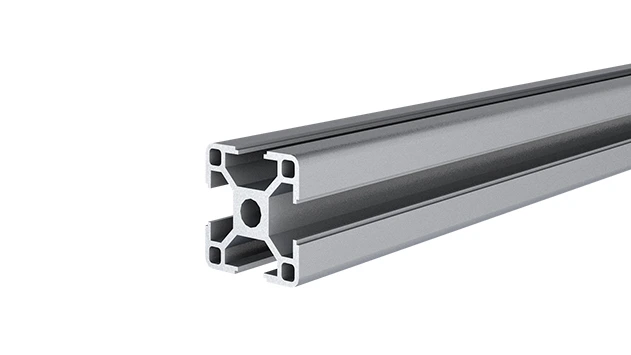
3030 is a 3.00 x 3.00CM fractional 30 series square extrusion T-slot profile with four open T-slots, each side with 3.00cm face. The profile has align-a-grooves to assist in aligning connecting profiles.
Walk into any manufacturing plant, warehouse, or distribution center, and you'll quickly spot the unsung workhorses keeping operations humming: material handling trolleys. These simple yet essential tools ferry everything from raw components to finished products, weaving through assembly lines, storage areas, and shipping docks. But if you've ever dealt with a trolley that bends under load, rattles uncontrollably, or can't be adjusted for new tasks, you know how much they can slow things down. That's where the right materials make all the difference. Today, we're zeroing in on a solution that's transforming how facilities build these workhorses: the 3030a EU Standard Aluminum Profile. Let's explore why this material has become the go-to choice for teams prioritizing durability, flexibility, and efficiency in their material handling setups.
What Even Is the 3030a EU Standard Aluminum Profile?
Before we dive into why it's perfect for trolleys, let's demystify the name. The "3030a" refers to a specific type of aluminum extrusion profile. The numbers "3030" indicate its cross-sectional dimensions: 30mm by 30mm—slim enough to keep trolleys compact but sturdy enough to handle heavy loads. The "a" denotes a particular grade or design variation, optimized for structural applications (think frames, supports, and yes, trolleys). Then there's the "EU Standard" part: this isn't just a marketing term. EU standards (like EN 755) set strict guidelines for aluminum profiles, covering everything from material composition (alloy type, temper) to dimensional accuracy (how straight the profile is, how consistent the T-slots are) and mechanical properties (tensile strength, hardness). For manufacturers, this means every 3030a profile you buy—whether from Germany, Poland, or China—will perform consistently, making it easy to source and scale.
Aluminum profiles are made via extrusion: molten aluminum is forced through a die to create the 30x30mm shape, complete with T-slots (those groove-like channels running along the length). These T-slots are game-changers—they let you attach accessories without drilling or welding, turning a basic frame into a customized tool in minutes. We'll circle back to that later, but first: why aluminum? Why not steel, plastic, or wood?
Aluminum vs. the Rest: Why It's a No-Brainer for Trolleys
Let's cut to the chase: material handling trolleys have one job—move stuff reliably, safely, and efficiently. Let's see how aluminum (and specifically 3030a) stacks up against common alternatives:
| Material | Strength | Weight | Durability | Customization |
|---|---|---|---|---|
| 3030a Aluminum | High (handles 200-300kg loads) | Light (1/3 the weight of steel) | Corrosion-resistant, dent-proof | T-slots for easy accessory attachment |
| Steel | Very high (but overkill for most trolleys) | Heavy (strains workers, hard to maneuver) | Prone to rust; needs painting | Requires welding/drilling for changes |
| Plastic | Low (bends under heavy loads) | Light (but flimsy) | Scratches easily; melts in heat | Limited—molded shapes can't be modified |
| Wood | Moderate (but rots/warps) | Heavy and uneven | Absorbs moisture; splinters | Permanent—no easy adjustments |
Steel is strong, sure, but have you ever tried pushing a steel trolley loaded with 200kg across a warehouse? It's like dragging a small car—exhausting for workers, and the risk of strain injuries skyrockets. Plus, steel rusts, so you're stuck repainting it every year. Plastic is lightweight but bends if you look at it wrong; good for office mail carts, not industrial parts. Wood warps, splinters, and attracts pests. Aluminum? It hits the sweet spot: strong enough to carry heavy loads, light enough to push with one hand, and tough enough to handle daily bumps without breaking a sweat.

5 Reasons 3030a Aluminum Profile Stands Out for Trolleys
Okay, so aluminum is better than steel, plastic, or wood. But why specifically the 3030a EU Standard? Let's break down its superpowers:
1. Strength-to-Weight Ratio: The "Strong but Light" Miracle
3030a is made from high-grade aluminum alloy (often 6063-T5, a common structural alloy), which gives it impressive tensile strength—around 215 MPa. In plain English? A 3030a trolley frame can comfortably carry 250kg (that's about 550 pounds!) while weighing just 15-20kg itself. Compare that to a steel trolley of the same load capacity, which might weigh 40kg or more. For workers pushing these trolleys 50+ times a day, that difference is huge. Less fatigue means fewer mistakes, fewer sick days, and a happier team. Plus, lighter trolleys are easier to maneuver in tight spaces—no more struggling to navigate around corners or between workbenches.
2. T-Slots: Customization Without the Headache
Remember those T-slots we mentioned earlier? They're the reason 3030a trolleys are so versatile. Imagine you need a trolley to carry small electronic components one week, then larger toolboxes the next. With steel, you'd have to weld on new shelves or drill holes—time-consuming and permanent. With 3030a, you just grab some aluminum profile accessories (like brackets, clamps, or dividers) and slide them into the T-slots. Tighten a bolt, and you're done. Need to add a handle? Screw a handle bracket into the slot. Want to keep parts from sliding off? Attach a rubber strip using T-slot nuts. Even caster wheels—critical for mobility—bolt right into the profile's slots. No special tools, no downtime, no stress. It's like building with giant, industrial Legos.
3. Durability That Lasts (Even in Tough Environments)
Warehouses and factories are rough places. Trolleys get bumped into walls, rained on (if used outdoors), and covered in oil or chemicals. 3030a laughs this off. Aluminum naturally forms a thin oxide layer that resists corrosion, so even if you spill water or cleaning fluid on it, it won't rust. Unlike steel, you'll never see flaky paint or orange streaks. It's also dent-resistant—those accidental collisions with pallet jacks? They might leave a mark, but the profile won't bend or collapse. And since it's non-porous, it's easy to clean: wipe it down with a damp cloth, and it looks as good as new. We've seen 3030a trolleys in use for 10+ years with minimal signs of wear—try that with a plastic trolley.
4. Safety First: No Sharp Edges, No Heavy Lifting
Safety isn't optional in material handling. 3030a profiles are extruded with smooth, rounded edges—no sharp corners to catch on clothing or skin. That's a big deal when workers are loading/unloading trolleys in a hurry. The lightweight design also cuts down on musculoskeletal injuries; pushing a 15kg trolley is way easier on the back than a 40kg steel one. And let's not forget caster wheels: 3030a's T-slots work seamlessly with locking caster wheels, so you can secure the trolley in place while loading it, preventing accidental rolls that could injure someone or damage parts. Some facilities even add aluminum profile rubber strips to shelves to reduce noise (no more clanging parts!) and prevent slips.
5. EU Standard Compliance: Quality You Can Trust
Here's the thing about EU standards: they're strict. To call a profile "3030a EU Standard," manufacturers have to meet rigorous criteria for straightness, slot dimensions, and material purity. That means when you order 3030a from two different suppliers, the profiles will fit together perfectly. No more "this bracket from Supplier A doesn't fit the slot from Supplier B" headaches. It also ensures consistent performance—you won't get a batch that's weaker or bendier than the last. For businesses scaling their operations, this consistency is gold. You can order 10 trolleys today and 10 more next year, and they'll all work the same way, with interchangeable parts.
Accessories That Make 3030a Trolleys Even Better
A 3030a profile is just the starting point. The real magic happens when you pair it with the right aluminum profile accessories. Think of it like a smartphone—great on its own, but apps make it indispensable. Here are the must-have accessories for any 3030a material handling trolley:
- Caster Wheels: The unsung heroes of mobility. Look for heavy-duty caster wheels with brakes (to lock the trolley in place) and polyurethane treads (they're quiet and gentle on floors). For rough surfaces, go with larger wheels (5-6 inches); for smooth warehouse floors, 3-4 inches work fine.
- Shelves & Dividers: Turn a single-level trolley into a multi-tiered organizer. Use flat aluminum panels or wire mesh shelves, attached via T-slot brackets. Dividers help separate different parts—no more hunting for that one small widget at the bottom of a pile.
- Handle Grips: A soft, ergonomic handle makes pushing the trolley more comfortable, especially for long shifts. Look for rubberized grips that reduce hand fatigue.
- End Caps & Rubber Strips: End caps cover the T-slots at the ends of profiles, preventing dust buildup and eliminating sharp edges. Rubber strips line shelves to keep parts from sliding and reduce noise.
- Tool Hooks & Holders: Attach hooks to the sides of the trolley to hang tools, cables, or cleaning supplies—everything you need within arm's reach.
The best part? All these accessories are designed to work with 3030a's T-slots, so you can mix and match without compatibility issues. Need a trolley for fragile glass parts? Add padded dividers and soft-cushion caster wheels. Need one for heavy machinery parts? Swap in steel shelves and locking casters. It's customization on demand.
Real-World Wins: How 3030a Trolleys Are Transforming Operations
Let's get concrete. We've talked about specs and benefits, but how does this play out in real facilities? Here are two examples:
Case Study 1: Automotive Parts Supplier Cuts Transport Time by 25%
A mid-sized automotive parts supplier was struggling with steel trolleys that were slow to move and hard to customize. Workers spent 2 hours daily just ferrying parts between assembly lines and storage. They switched to 3030a trolleys, adding dividers to separate different part types and upgrading to swivel caster wheels for better maneuverability. The result? Transport time dropped by 25%, and workers reported less fatigue. They also customized some trolleys with fold-down shelves, allowing them to carry larger batches when needed. "We used to have one trolley per part type," said the facility manager. "Now we can reconfigure a single trolley in 5 minutes—no more cluttering the floor with extra carts."
Case Study 2: Electronics Warehouse Reduces Damaged Goods by 40%
An electronics warehouse was losing $10,000 annually to damaged circuit boards—many crushed by heavy steel trolleys or jostled loose during transport. They switched to 3030a trolleys with padded shelves (attached via T-slots) and locking caster wheels. The aluminum's lightweight design meant workers could move the trolleys more carefully, and the dividers kept boards from shifting. Within six months, damaged goods dropped by 40%. "The best part? We didn't have to buy new trolleys for each product line," noted the warehouse supervisor. "We just swap out the padding and dividers—saves us money and space."
How to Get Started with 3030a Trolleys
Ready to upgrade your material handling? Here's a quick checklist to ensure you get the most out of 3030a EU Standard Aluminum Profile trolleys:
- Assess Your Needs: What will you carry? How heavy are the loads? Will the trolley be used indoors or outdoors? This determines load capacity, caster wheel type, and accessories.
- Choose Quality Suppliers: Stick to suppliers who explicitly state "3030a EU Standard" to ensure compliance and consistency. Ask for material certificates if needed.
- Plan for Customization: Don't just buy a basic trolley—think about future needs. Leave extra T-slots open for adding shelves or dividers later.
- Test Before Scaling: Start with 1-2 trolleys to test how they perform in your facility. Adjust accessories as needed, then roll out more.
- Train Your Team: Show workers how to adjust accessories, lock caster wheels, and maintain the trolleys. A little training goes a long way in maximizing lifespan.
Final Thoughts: More Than a Trolley—A Tool for Efficiency
Material handling trolleys might not get the glory, but they're the backbone of efficient operations. And when it comes to building trolleys that are strong, lightweight, customizable, and durable, the 3030a EU Standard Aluminum Profile is in a league of its own. It solves the biggest pain points of traditional trolleys—weight, rigidity, and maintenance—while adding flexibility that grows with your business. Pair it with the right aluminum profile accessories and caster wheels, and you've got a tool that doesn't just move stuff—it transforms how your team works. So the next time you're evaluating material handling equipment, remember: the right material makes all the difference. And for trolleys, that material is 3030a.