- Company Articles
- Products and Technology
- Product knowledge
- Why Choose 3030b EU Standard Aluminum Profile for Industrial Applications?

Why Choose 3030b EU Standard Aluminum Profile for Industrial Applications?
Related Product
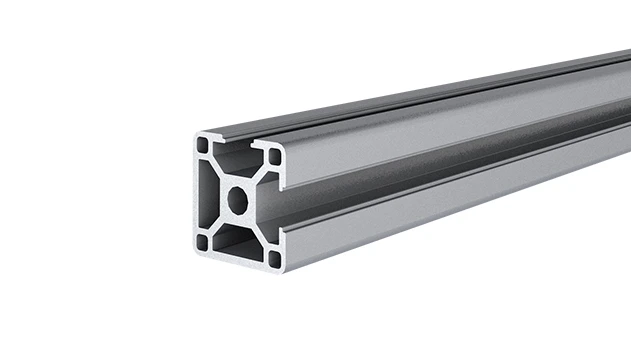
3030B EU Standard Aluminum Profile
3030 is a 3.00 x 3.00CM fractional 30 series square extrusion T-slot profile with two side open T-slots, each side with 3.00cm face, 2 side with open slot, 2 side with closed face. The profile has align-a-grooves to assist in aligning connecting profiles.
Walk into any modern manufacturing facility, and you'll notice a silent hero shaping the workflow: the materials that form the backbone of production lines, workbenches, and storage systems. For years, industrial managers have grappled with a familiar set of challenges: How do we balance durability with flexibility? Can we reduce downtime when reconfiguring workspaces? Is there a material that doesn't compromise on strength but still keeps installation and maintenance costs in check? If these questions sound familiar, you're not alone. The answer, for many forward-thinking operations, lies in a seemingly simple component: the 3030b EU Standard Aluminum Profile.
At first glance, aluminum profiles might seem like just another industrial supply item. But the 3030b EU Standard isn't just any profile. It's a meticulously engineered solution designed to address the unique demands of modern industrial environments—from automotive assembly lines to electronics workshops, from small-scale workshops to large manufacturing plants. In this article, we'll dive into why this specific profile has become a go-to choice for engineers, facility managers, and lean system advocates alike. We'll explore its design, benefits, real-world applications, and why choosing an EU-standard product matters in an industry where precision and reliability can't be compromised.
Understanding the 3030b EU Standard Aluminum Profile: More Than Just a "Metal Bar"
Before we jump into its benefits, let's clarify what the 3030b EU Standard Aluminum Profile actually is. At its core, it's an extruded aluminum product with a square cross-section, measuring 30mm by 30mm—hence the "3030" in its name. The "b" refers to specific design variations, often related to groove depth, wall thickness, or accessory compatibility, depending on the manufacturer's specifications. But what truly sets it apart is the "EU Standard" label. This isn't just a marketing term; it's a guarantee of compliance with rigorous European union regulations governing material quality, safety, and performance.
Quick Fact: EU-standard aluminum profiles like the 3030b undergo strict testing for factors like tensile strength, corrosion resistance, and dimensional accuracy. This ensures that regardless of where you source the profile (within the EU or from certified global suppliers), you're getting a product that meets uniform quality benchmarks—no more guessing if a batch will fit with existing components or withstand operational stress.
The 3030b is typically made from 6063-T5 aluminum alloy, a popular choice for extruded profiles. Why 6063-T5? This alloy offers an ideal balance of strength, weldability, and formability. It's lightweight (about 1/3 the weight of steel) but surprisingly rigid, making it easy to handle during installation while still supporting heavy loads. The "T5" designation indicates that the alloy is artificially aged to enhance its mechanical properties—resulting in a profile that can withstand repeated use, minor impacts, and even exposure to harsh industrial environments without warping or deforming.
But what really makes the 3030b stand out is its extrusion process. Aluminum extrusion involves forcing heated aluminum billets through a die to create complex cross-sectional shapes. For the 3030b, this process isn't just about creating a square tube; it's about integrating precision-engineered grooves (or "T-slots") along its length. These T-slots are the profile's secret weapon. They allow for quick, tool-less attachment of accessories—brackets, connectors, panels, and more—turning a simple aluminum bar into a versatile building block for almost any industrial structure.
Key Advantages: Why 3030b Stands Out in Industrial Settings
Now that we know what the 3030b is, let's explore why it's become a staple in industrial applications. Below are the core benefits that make it a superior choice over alternatives like steel, non-standard aluminum, or even other aluminum profile sizes.
1. Unmatched Modularity: Adapt Fast, Reduce Downtime
In today's manufacturing landscape, adaptability is everything. Product lines change, order volumes fluctuate, and new technologies require reconfigured workspaces. Traditional materials like steel or welded iron are notoriously hard to modify—reconfiguring a steel workbench might involve cutting, welding, or hiring specialized labor, leading to hours (or days) of downtime. The 3030b, however, thrives on change.
Thanks to its T-slot design, the 3030b works seamlessly with a wide range of aluminum profile accessories—think 90° aluminum profile connectors, gusset plates, end caps, and adjustable brackets. These accessories lock into the T-slots using simple fasteners (like bolts or spring nuts), allowing you to assemble, disassemble, or reconfigure structures in minutes, not days. Imagine needing to shift a production line to accommodate a new product size: with 3030b, you could loosen a few bolts, adjust the frame, and have the line up and running again in under an hour. No welding, no heavy machinery, no lost production time.
This modularity also extends to scalability. Need to expand a storage rack from 3 levels to 5? Add more 3030b sections and connectors. Want to turn a fixed workbench into a mobile one? Attach caster wheels (another common accessory) to the base. The profile's standardized design ensures that components from different suppliers will work together, so you're not locked into a single brand—giving you the freedom to source the best accessories for your budget.
2. Strength-to-Weight Ratio: Lightweight but Surprisingly Tough
One of the biggest myths about aluminum is that it's "weak" compared to steel. While it's true that steel has a higher absolute tensile strength, the 3030b's strength-to-weight ratio tells a different story. Let's break it down: a 3030b profile with a 1.5mm wall thickness weighs roughly 1.2 kg per meter—far lighter than a comparable steel profile (which might weigh 3-4 kg per meter). Yet, it can still support static loads of up to 200 kg per linear meter (depending on the setup). For most industrial applications—workbenches, material racks, or conveyor supports—this is more than enough.
Why does this matter? For starters, lighter materials mean easier handling. Installing a steel frame might require 2-3 people and heavy lifting equipment; a 3030b frame can often be assembled by a single worker with basic tools. This reduces labor costs and speeds up installation. It also lowers the risk of workplace injuries from lifting heavy materials—a critical factor in industries prioritizing safety.
Lightweight doesn't mean flimsy, either. The 3030b's rigid structure resists bending under dynamic loads, making it ideal for applications like roller tracks or assembly line workstations where materials are constantly moving. Unlike plastic or wood, it won't warp with temperature changes or degrade over time, ensuring that structures remain stable and safe for years.
3. Corrosion Resistance: Built to Last in Harsh Environments
Industrial settings are rarely "gentle" on equipment. From oil and grease in automotive workshops to humidity in electronics manufacturing, materials are exposed to elements that can cause rust, decay, or degradation. Steel profiles, for example, require regular painting or coating to prevent corrosion—a maintenance chore that adds up over time. The 3030b, however, is inherently corrosion-resistant.
Aluminum forms a natural oxide layer when exposed to air, acting as a protective barrier against moisture, chemicals, and oxidation. For added protection, many 3030b profiles undergo anodization—a process that thickens this oxide layer, enhancing resistance to scratches and corrosion. This means the profile can withstand exposure to water, mild acids, and industrial cleaning agents without rusting or pitting. In environments like food processing or pharmaceutical manufacturing, where cleanliness is critical, anodized 3030b profiles can even be sanitized with high-pressure washers or chemical cleaners without damage.
The result? Less maintenance, longer lifespan, and lower long-term costs. Unlike steel, you won't need to replace rusted sections or repaint frames every few years. The 3030b simply keeps performing, even in the toughest conditions.
4. Cost-Effective: Investing in Long-Term Value
Let's address the elephant in the room: upfront cost. At first glance, 3030b EU Standard Aluminum Profiles might seem pricier than non-standard aluminum or even steel. It's true—quality comes with a cost. But industrial managers who focus solely on upfront expenses often miss the bigger picture: total cost of ownership (TCO). When you factor in installation, maintenance, and adaptability, the 3030b often emerges as the more economical choice.
Consider installation costs: as mentioned earlier, the 3030b's lightweight design and modular assembly cut labor time significantly. A steel frame that takes a team of 4 workers 8 hours to install might take 2 workers 4 hours with 3030b—halving labor costs. Then there's maintenance: no painting, no rust removal, no replacing corroded parts. Over 5-10 years, these savings add up dramatically.
Perhaps the biggest cost-saver, though, is adaptability. In a fast-paced industry, the ability to reconfigure structures (rather than replace them) is invaluable. A steel workbench that becomes obsolete when production needs change is a sunk cost. A 3030b workbench, however, can be disassembled, and its components reused to build a new rack, conveyor support, or assembly station. This "reusability" reduces waste and eliminates the need to purchase new materials for every workflow change.

The Power of Compatibility: Working with Aluminum Profile Accessories
A profile is only as useful as the accessories it works with—and the 3030b's design shines here. EU-standard profiles are engineered to be compatible with a vast ecosystem of aluminum profile accessories, turning a simple 30x30mm bar into a versatile building block for almost any structure. Let's explore some of the most common accessories and how they enhance the 3030b's functionality:
- Connectors and Brackets: These are the "glue" that holds 3030b structures together. 90° aluminum profile connectors, for example, allow you to join two profiles at right angles without welding—perfect for building workbench frames or shelving units. Parallel connectors let you attach profiles side-by-side, increasing load capacity, while swivel connectors enable angled joints for custom designs.
- End Caps and Covers: These simple accessories plug the ends of profiles, preventing dust, debris, or moisture from entering the T-slots. They also give structures a clean, finished look—important in customer-facing areas like showrooms or demo labs.
- Panels and Work Surfaces: From plywood to stainless steel, panels can be attached directly to 3030b frames using T-slot bolts, creating workbenches, machine guards, or storage cabinet doors. In electronics manufacturing, ESD (electrostatic discharge) panels can even be integrated to protect sensitive components.
- Casters and Leveling Feet: Adding casters to a 3030b frame transforms a fixed structure into a mobile cart—ideal for moving materials between workstations. Leveling feet, on the other hand, ensure stability on uneven floors, critical for precision work like assembly or inspection.
The beauty of these accessories is that they're designed to work seamlessly with the 3030b's T-slots. No drilling, no tapping, no custom fabrication—just slide a bolt into the slot, tighten, and you're done. This not only speeds up assembly but also allows for on-the-fly adjustments. For example, if a workbench needs to be taller to accommodate a new machine, you can simply loosen the brackets, adjust the height, and retighten—no need to rebuild the entire structure.
Real-World Applications: Where the 3030b Shines Brightest
Theory is one thing, but real-world performance is what truly matters. Let's look at some common industrial applications where the 3030b has proven its worth:
Workbenches: The Heart of the Workshop
Workbenches are the workhorses of any industrial facility—used for assembly, inspection, packaging, and more. A poorly designed workbench can slow down productivity, cause ergonomic issues, or even lead to errors. The 3030b excels here. By combining 3030b frames with accessories like adjustable height legs, ESD work surfaces, and tool holders, you can create a workbench tailored to specific tasks. For example:
In an electronics workshop, a 3030b workbench might feature a static-dissipative top, built-in cable management (using T-slots to route wires), and shelves for component storage. In an automotive repair shop, it could have a heavy-duty plywood top, integrated vice mounts, and hooks for tools. Because the frame is modular, the workbench can be adjusted as needs change—adding a shelf, raising the height, or even converting it into a mobile cart with casters.
Lean Systems: Streamlining Production with Flow Racks and Conveyors
Lean manufacturing principles focus on eliminating waste and improving workflow—and the 3030b is a natural fit for lean system design. Flow racks, for example, use gravity to feed materials to workers, reducing the need for manual handling. A 3030b frame, combined with roller track accessories, creates a durable, adjustable flow rack that can be customized for different part sizes and weights. Similarly, 3030b profiles are often used as supports for conveyor systems, providing a lightweight yet rigid structure that can be extended or modified as production lines expand.
One electronics manufacturer in Germany reported a 25% reduction in material handling time after switching to 3030b-based flow racks. By adjusting the rack's angle and adding dividers (using 3030b connectors), they were able to organize components more efficiently, reducing the time workers spent searching for parts.
Material Storage and Racks: Organized, Accessible, and Adaptable
Storage racks need to be strong, space-efficient, and easy to access. The 3030b's load-bearing capacity and modularity make it ideal for this. A basic storage rack built with 3030b profiles can hold everything from small parts bins to heavy equipment. By adding accessories like shelf brackets, wire mesh panels, or label holders, you can create a system that keeps inventory organized and visible. Best of all, if storage needs grow, the rack can be expanded by adding more 3030b sections and connectors—no need to replace the entire unit.
Why "EU Standard" Matters: Quality, Safety, and Consistency
In a global market, where industrial supplies are sourced from around the world, the "EU Standard" label on the 3030b is more than just a stamp of approval—it's a promise of quality and consistency. Here's why it matters:
- Quality Control: EU standards require strict testing for material composition, dimensional accuracy, and mechanical properties. This means every 3030b profile you receive will have consistent wall thickness, straightness, and groove dimensions—critical for ensuring that accessories fit properly and structures are stable.
- Safety Compliance: Industrial structures must meet safety regulations to protect workers. EU-standard profiles are tested for load capacity, impact resistance, and fire safety, ensuring that they meet or exceed OSHA, CE, and other international safety standards. This reduces liability risks and ensures a safer workplace.
- Interoperability: EU standards ensure that profiles and accessories from different manufacturers are compatible. This means you're not locked into a single supplier—you can mix and match components from various brands, giving you more flexibility and control over costs.
Comparing 3030b to Alternatives: A Clear Winner
To truly appreciate the 3030b's value, let's compare it to common alternatives in a side-by-side table:
| Feature | 3030b EU Aluminum Profile | Steel Profile | Non-Standard Aluminum Profile |
|---|---|---|---|
| Weight (per meter) | ~1.2 kg | ~3-4 kg | ~1.0-1.3 kg |
| Strength-to-Weight Ratio | High (supports ~200 kg/m) | High (but heavier) | Variable (often lower due to thinner walls) |
| Corrosion Resistance | Excellent (natural oxide layer + anodization) | Poor (requires coating) | Good (but inconsistent quality) |
| Modularity | High (T-slots + compatible accessories) | Low (requires welding/cutting) | Low (inconsistent T-slot designs) |
| Long-Term Cost | Low (minimal maintenance, reusable) | High (maintenance, replacement costs) | Medium (may need replacement due to poor quality) |
| Safety Compliance | High (EU standards, tested load limits) | High (but heavier, higher injury risk) | Low (unregulated, untested) |
As the table shows, while steel offers raw strength, it's let down by weight and maintenance. Non-standard aluminum profiles may be cheaper upfront, but their inconsistency and lack of modularity make them a risky long-term bet. The 3030b, by contrast, strikes a balance across all key metrics—making it the most reliable and cost-effective choice for most industrial applications.
Choosing the Right Supplier: What to Look For
Not all 3030b profiles are created equal. To ensure you're getting the full benefits of an EU-standard product, it's critical to choose a reputable supplier. Here are key factors to consider:
- Certifications: Look for suppliers who can provide documentation of EU compliance (e.g., CE marking, EN standard certifications). This ensures the profile meets quality and safety requirements.
- Material Quality: Ask about the aluminum alloy and temper (e.g., 6063-T5). Reputable suppliers will be transparent about material sourcing and testing.
- Accessory Range: A good supplier should offer a wide range of compatible accessories (connectors, brackets, panels) to avoid compatibility issues.
- Technical Support: Industrial projects often require custom designs. Choose a supplier with knowledgeable staff who can help with engineering questions or provide design assistance.
- Lead Times and Reliability: Consistent supply is critical for industrial operations. Ask about production lead times and backup inventory to avoid delays.
Conclusion: Investing in a Material That Grows with Your Business
The 3030b EU Standard Aluminum Profile isn't just a material—it's an investment in your facility's efficiency, adaptability, and long-term success. Its modular design, strength-to-weight ratio, corrosion resistance, and compatibility with aluminum profile accessories make it a versatile solution for everything from workbenches to lean systems. By choosing an EU-standard product, you're ensuring quality, safety, and consistency—factors that directly impact productivity and bottom-line results.
Whether you're upgrading an existing facility, building a new workshop, or looking to streamline your production line, the 3030b offers a level of flexibility and reliability that's hard to match. It's a material that doesn't just meet today's needs but adapts to tomorrow's challenges—proving that sometimes, the right building block can transform an entire operation.
So, the next time you're staring at a cluttered workshop, struggling with rigid, outdated equipment, remember: the solution might be as simple as a 30mm by 30mm aluminum profile. It's time to build smarter, not harder—and the 3030b is here to help.